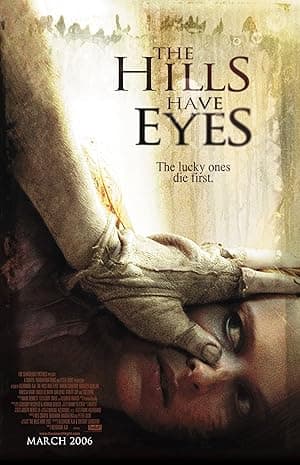
The Hills Have Eyes
A back-road shortcut, a family under siege — and Doug Bukowski, who refuses to be helpless.
Feature presentation
Alexandre Aja's 2006 remake of The Hills Have Eyes is the sort of horror that grabs you by the shoulders and won't let go. It's blunt, uncomfortable and built around one stubborn truth: when a middle-class family gets stranded and hunted, the fight falls to the son—Doug Bukowski.
THE MOVIE
Doug Bukowski is still the reason this movie works
What keeps The Hills Have Eyes moving isn't a single shock or a gory set-piece. It's Doug Bukowski — the kid who keeps stepping forward when the rest of his family are trapped. The film repeatedly positions him as the family's defender and often lets us see the ordeal through his eyes.
The premise is devastatingly straightforward: the Carter family are stranded in a desert after their vehicle is wrecked when a back‑road shortcut goes wrong, and they become the prey of a clan of cannibalistic hill dwellers. That blunt setup funnels everything into survival and family under siege.
Released in 2006 and directed by Alexandre Aja, this remake keeps the action tight over roughly 107 minutes and stakes its central drama on how ordinary people react when there's nowhere to run. Aaron Stanford is credited as Doug, and the film gives that character the kind of responsibility that turns a thriller into something a bit messier — and, crucially, memorable.
THE SETUP
The idea that sets The Hills Have Eyes in motion
At its simplest, the movie drops a family into a deadly isolation. Their vehicle is wrecked after they take a back-road shortcut; cut off from help, they must defend themselves against local dwellers who have turned to cannibalism.
That immediate survival problem is the engine: it's not a complicated mystery to solve, it's a test of endurance and resourcefulness. The Carters' options shrink fast because the environment and the attackers cooperate to make escape almost impossible.
The remake also supplies a reason for the dwellers' existence. This version links their origins to decades of nearby atmospheric nuclear testing, which the filmmakers use to give the antagonists a darker, cause-and-effect weight beyond the usual backwoods trope.
And because the 2006 film was followed by a direct sequel in 2007, the setup was deliberately built to carry forward — it's a closed, brutal world that the filmmakers intended to revisit.
THE CHARACTER
Why Doug Bukowski matters
Doug isn't a noble hero swept in at the last minute. He's the son who keeps showing up when the family needs someone to do the dirty work. The film frequently places him centre-stage as the main point‑of‑view survivor for key sequences, so his choices shape how the story feels.
That repeated positioning matters because the movie is interested in family under siege — and Doug is how that interest is personalised. The danger isn't abstract; it lands on him and the people he loves, and the narrative asks what an ordinary person will do when the rules break down.
Aaron Stanford is credited in the role, and the production clusters him among a cast that includes the wider Carter family. The effect is to make the film feel like a household forced into improvisation rather than a squad of prepared fighters.
Put bluntly: the movie gives you someone to follow whose survival instincts and moral compromises are the quickest route into the chaos.
UNDER THE SURFACE
The Hills Have Eyes has more on its mind than the plot suggests
On the surface it's survival horror: a family versus a hostile environment and its inhabitants. But the film keeps nudging in the direction of something sharper — what happens to people when a long-standing wrong turns into new violence.
That wrong is explicitly connected in this version to atmospheric nuclear testing. By doing so the movie frames the carnage as a form of retribution and a cycle of violence rooted in historical abuse rather than random cruelty.
Because it wears the survival-horror label, the film is often judged by its shocks. Yet those shocks are organised around very ordinary stakes: keep your children alive, protect your parents, get out. Those familial imperatives give the violence a moral texture.
So yes, it's a slasher and a backwoods horror, but it's also asking a simple question about what a family will become when forced to fight for everything.
THE FILMMAKING
How The Hills Have Eyes was put together
On the production side the credits are concise but telling: the film lists a single‑name editor, Baxter, and names Joseph C. Nemec III as production designer. Those are the real, visible craftsmen whose choices shape the film's pace and surroundings.
Naming the editor in that shorthand and calling out the production designer lets you see this as a tightly assembled machine: editing and design are the practical levers that turn a handful of set pieces into a continuous ordeal.
Alexandre Aja directed and co-wrote the film, so the construction of those sequences carries an authorial stamp; the production credits point to a small, focused crew assembling the world quickly and deliberately.
PRACTICAL EFFECTS
The effects work that gives The Hills Have Eyes its physical personality
A large chunk of the film's physical personality comes from credited special make‑up effects personnel, including the KNB EFX Group; Greg Nicotero is named on the production and even appears briefly on-screen.
For one principal character, Ruby, the filmmakers mixed on-set make-up — dirt and dental work among the elements — with a digital process that tracked facial markers and retouched features afterwards. That hybrid approach meant practical work and post-production were used together to make the characters feel both tactile and altered.
The combination keeps some moments grotesque in a way that feels intentionally crafted, rather than purely digital, which suits the film's insistently physical nastiness.
PURE 00s
The Hills Have Eyes could not belong to any other decade
This remake arrived in 2006 during a clear wave of studio horror reworkings. The choice to revisit a 1977 title and place Wes Craven in a producer role is exactly the sort of early‑2000s move that saw familiar brand names dusted off for a new audience.
Alexandre Aja co-wrote the script with Grégory Levasseur and steered the remake toward being an explicitly contemporary reworking of the original rather than a shot-for-shot repeat. The production's positioning was deliberate: a modernised take while keeping the original's basic anatomy.
Its release in 2006 and the fact that a direct sequel followed in 2007 underline how the remake was intended to be part of a continuing commercial and narrative impulse, not just a one-off update.
Seen this way, the film is a product of its moment — a tidy example of how the 2000s handled horror properties with one foot in nostalgia and the other in escalation.
WATCHING IT NOW
What has aged — and what hasn't
The movie's insistence on family under siege still hits. The stakes — parents, infants and kids threatened — are immediate and timeless; that kind of pressure doesn't soften with dates on the cover.
Some of the film's explanatory choices also help it age better than a shock‑of-the-month picture. Alexandre Aja made a point of tying the dwellers' origins to atmospheric nuclear testing, which gives their cruelty a cause and a historical weight that keeps the story from feeling like pure sensationalism.
Technically, one small detail — the mix of on‑set make‑up and a digital marker/retouch method for a key character — was a pragmatic answer to a practical problem, and it still reads as a thoughtful use of available tools rather than gimmickry.
THE LEGACY
Why The Hills Have Eyes still matters
Part of the film's afterlife is simply structural: it's an authorised remake of a well-known 1977 horror, and Wes Craven's role as a producer ties the two versions together in a way that invites comparison.
That comparison is useful because the remake did more than ape its predecessor — it restarted the story in a form that could be continued, which it was with the 2007 sequel. So the 2006 film matters as both a reinterpretation and the beginning of its own mini‑franchise.
Put another way: whether people return to it out of curiosity or to judge the new against the old, the movie endures as an example of how a classic can be refitted for the 2000s without simply repeating the original.
THE VERDICT
Does The Hills Have Eyes still hold up?
Short answer: yes — with a caveat. If you're after stripped‑back survival horror that makes family loyalty the battleground, this remake delivers. The Carters' ordeal begins when a back‑road shortcut disables their vehicle and forces them into a fight for survival; that simple premise allows the film to concentrate on escalating pressure rather than plot gymnastics.
Doug is crucial. Aaron Stanford is credited in the role, and the film repeatedly places him as the family's primary defender and main point‑of‑view survivor, so the emotional freight is often carried on his shoulders. The siege mechanics — interior trailer scenes and a prolonged blockade — are deliberately constructed set pieces that keep the tension tight.
Be warned: the movie makes repeated use of infants and small children as immediate stressors. That choice amplifies the horror for some viewers and will put others off. Also, the film frames the violence as part of a larger reckoning — the attackers are shaped by decades of atmospheric nuclear testing — which gives the clash between two social orders a grim logic.
If you want modern horror that is blunt, purposeful and unglamorous, give it a watch. Take a friend, perhaps — and don't pretend the back roads are ever worth the shortcut.
Share this movie
Keep watching
More movies from the 00s

2002
The Pianist
A quiet life unmade by war — and a pianist who refuses to stop listening.
Read the retrospective
→
2006
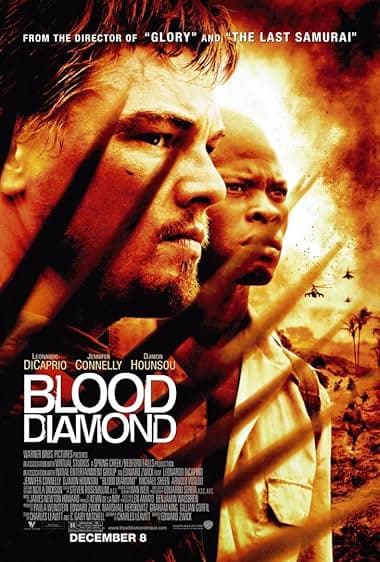
Blood Diamond
A mercenary, a fisherman and a pink diamond — and a film that still asks who pays for our jewellery.
Read the retrospective
→
2003
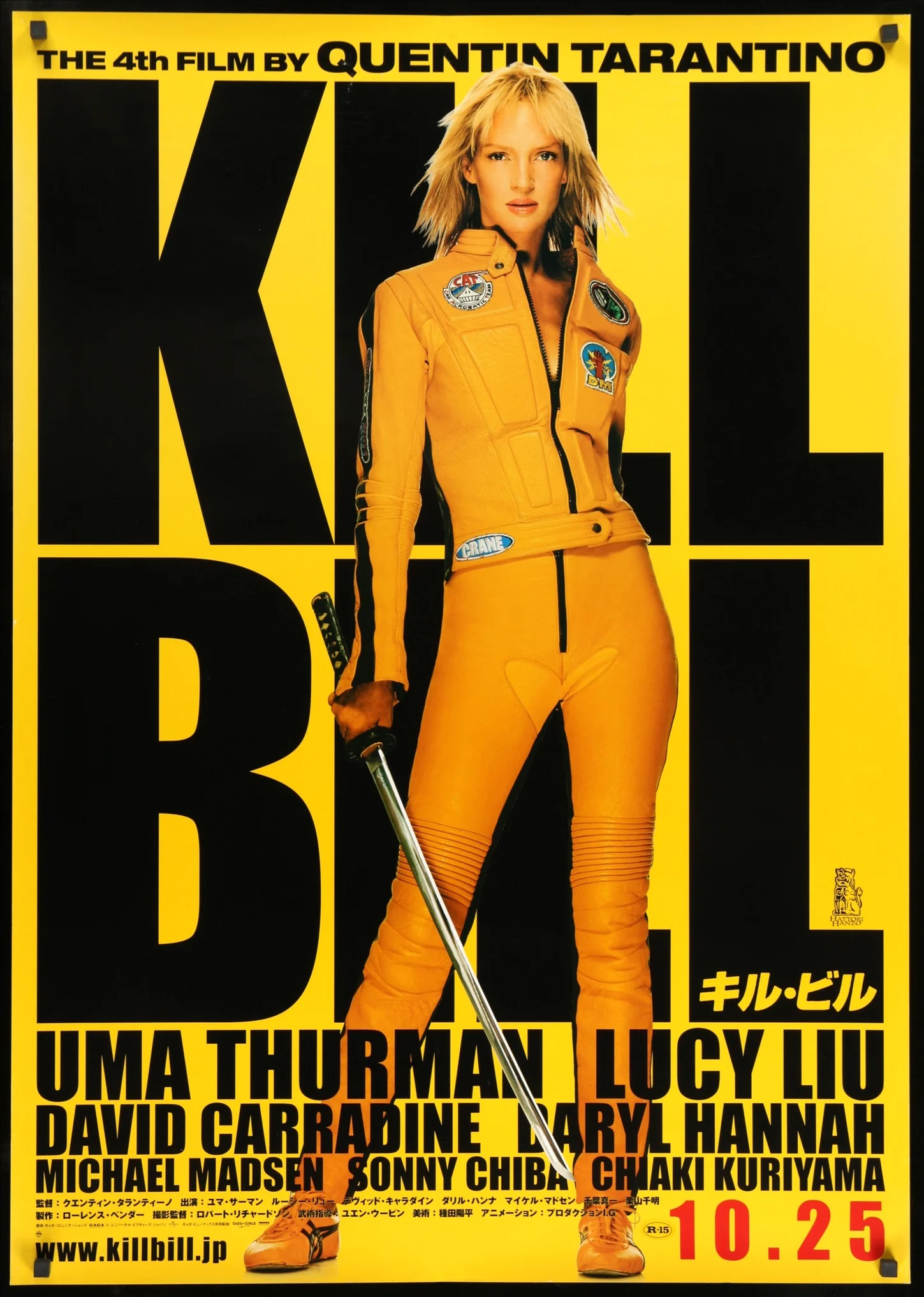
Kill Bill: Volume 1
A yellow jumpsuit, a long list of enemies and one woman who refuses to be finished.
Read the retrospective
→