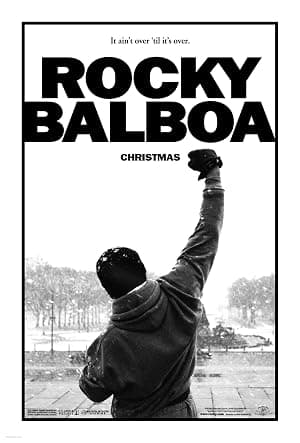
Rocky Balboa
An older fighter, an old grief, and the small, stubborn reasons we go back into the ring.
Feature presentation
Rocky Balboa isn’t a fireworks-heavy comeback so much as a quiet reckoning: an ex-champion who now runs a modest restaurant, keeps his dead wife’s memory close and is nudged back into boxing by a ridiculous media spark. Watching it again today, you notice how comfortably it sits between nostalgia and a genuine story about getting older and trying to matter.
THE MOVIE
Robert 'Rocky' Balboa is still the reason this movie works
This is a Rocky movie that knows it has fewer tricks left. Rocky runs a small Philadelphia restaurant called Adrian’s; he visits his wife’s grave; his life is measured in rituals rather than title belts. That domestic loop is what makes Stallone’s return feel specific instead of sentimental.
The plot asks a deliberately silly question — what if an ESPN computer simulation pitted Rocky at his peak against the current heavyweight champion, Mason 'The Line' Dixon? — and then uses the viral fuss it creates to get Rocky back into training. It’s an odd little contemporary hinge that keeps the story believable without turning the film into a nostalgia reel.
Underneath that publicity engine is something quieter and tougher: grief and the desire to know if there’s still ‘some stuff in the basement’. It’s a personal, stubborn drive — not for fame, but for proof to himself — and it’s why the film keeps circling back to the man, not the myth.
THE SETUP
The idea that sets Rocky Balboa in motion
Rocky has settled into a quieter life: Adrian’s is his day job, and he spends time commemorating the wife he lost. That ordinary rhythm gives the film something to upset.
The upset comes via a contemporary media gag — an ESPN simulation that imagines Rocky in his prime versus Mason 'The Line' Dixon — and the publicity that follows. The simulation feels like a tiny modern absurdity that grows teeth, offering Rocky a reason to test himself again.
There’s a procedural hurdle, too. Rocky’s licence is briefly denied on age-and-safety grounds, and he has to clear that administrative wall before anything else can happen. It’s a neat, practical obstacle that makes his return feel official rather than theatrical.
Once those pieces are in place, the film can do two things at once: stage a late-career fight set-up and let a much older Rocky reconnect with people he’s drifted from. That combination — a public spark and private stakes — is the engine that drives the story forward.
THE CHARACTER
Why Robert 'Rocky' Balboa matters
This film rests on the fact that Rocky is already a known thing. That helps — you don’t need to teach us who he is — but it also raises the bar: the movie has to make us care about a man whose best days are behind him.
Rocky’s relationships are the short-hand for that care. Paulie returns as the awkward, loyal friend who keeps the rituals going; there’s an ongoing, tender rehearsal of memory that centres on Adrian. The film uses those familiar characters to show what time has taken and what remains.
There’s also a familial crack the story wants to mend: Rocky Jr. starts the film distant from his father, and part of the plot is a reconciliation between father and son. It’s small-scale and human, and it gives the boxing plot something that actually matters off the canvas.
Finally, this entry is literal continuation: Stallone again wrote, directed and played Rocky, and the movie directly references earlier franchise figures through archive material. It’s a proper chapter meant to close — at least for a while — the arc we’ve followed since the original film.
UNDER THE SURFACE
Rocky Balboa has more on its mind than the plot suggests
On the surface it’s a comeback sports movie; underneath it’s preoccupied with getting older and what that actually feels like. Physical decline isn’t just a plot inconvenience — it’s the lens through which almost every scene is read.
Grief sits next to that ageing. The film makes Adrian’s absence a constant: the restaurant, the graveside visits, the rituals. That loss is part of why Rocky wants to return — not for glory, but for a private test that’s equal parts stubbornness and mourning.
Redemption here isn’t a flashy moral transformation. It’s about dignity: proving to yourself that you can still stand in the ring, literally and metaphorically. The climactic fight doubles as a public contest and a private accounting.
There’s also a quiet interest in legacy and memory — how a man’s past is carried forward into his relationships, especially with his son. The movie navigates nostalgia without letting it replace the work of reconciling what’s been lost.
THE FILMMAKING
How Rocky Balboa was put together
The movie treats its climactic contest with a purposeful unevenness. The fight sequence is cut and staged in ways that deliberately emphasise the speed difference between Rocky and the younger Dixon, while also making Rocky’s endurance feel vivid.
That editing choice does two things: it sells the physical mismatch so you believe the danger, and it dramatizes Rocky’s stubborn durability. The result keeps the sequence tense without needing cartoonish spectacle.
It’s a modest, economical approach — not camera-conspicuous, but shaped so that the audience feels where Rocky’s limits are and where his heart still sits.
PURE 00s
Rocky Balboa could not belong to any other decade
This is very much a mid-2000s kind of picture: a time when studios and stars were openly returning to old franchises with quieter, character-driven stories rather than trying to recapture youth with glossy reboots. Rocky Balboa sits neatly in that trend.
It arrived late in 2006 as a studio-era, star-led film — a recognizable brand adjusted for a world that had changed since Rocky’s first fights. That decision to age the character rather than reset him feels in tune with the decade’s appetite for emotional comebacks.
Within the story, there are also touches that anchor it to a recent past — Adrian’s in-universe death is placed in 2002, so the film doesn’t pretend it’s a distant, untouchable memory but a loss still raw in the early 2000s timeline.
The film’s distribution by MGM marked it as a fairly high-profile return for both the studio and the character at a moment when legacy was being reshaped across Hollywood.
WATCHING IT NOW
What has aged — and what hasn't
If you rewatch Rocky Balboa now, one of the first things you notice is how deliberately modest it feels compared with some louder franchise entries. That small-scale, character-focused approach is a quality many critics and aggregators singled out as ageing more gracefully.
The decision to lean on archive material and the long continuity of the character helps the film feel like a genuine late chapter rather than a cynical cash-in. It treats memory carefully, using past touches to add weight rather than just nostalgia.
Because Stallone once again anchors the piece as writer, director and lead, the film reads as a coherent, personal closing note in that original arc rather than a scattershot sequel.
All that means it plays as a film about a man confronting time — and in that honesty, it still holds up better than entries in the series that favoured spectacle over story.
THE LEGACY
Why Rocky Balboa still matters
For a while Rocky Balboa was discussed as the closing chapter of the original Rocky arc. It’s structured and voiced as a kind of valedictory note, intentionally wrapping up the protagonist’s story for the time being.
That focus on an older Rocky confronting his past and reputation also left tonal groundwork that later films would pick up. The Creed films that began in 2015 revisit and expand the themes of legacy and what one generation leaves to the next — threads that this movie reasserted within the franchise.
Put simply: even if it wasn’t the last word in Rocky’s afterlife, this instalment narrowed the emotional field and re-centred the idea of legacy in a way that mattered for the stories that followed.
THE VERDICT
Does Rocky Balboa still hold up?
Yes — if your interest is in a character-driven late-career story rather than knockout spectacle. The movie’s engine is an odd mix of modern media fun (that ESPN simulation that kicks everything off) and very personal stakes: a man testing himself while carrying grief for his wife.
Practical plot steps — Rocky’s licence being briefly denied and then reinstated, the way he’s nudged from local bouts toward an exhibition at the MGM Grand against Dixon — keep the story grounded. They turn what could be a sentimental nostalgia piece into a film about doing the work and answering for yourself.
The fight at the MGM Grand functions on two levels: it’s a real, public contest with a younger champion and also an internal reckoning about pride, identity and loss. Add the father-son reconciliation thread and the presence of old friends like Paulie and Duke, and you’ve got stakes that feel lived-in rather than manufactured.
If you’re deciding whether to watch it now: go for the human shape of the story. It’s 102 minutes of a man trying to know where he stands. That’s a tidy reason to step back into Rocky’s ring.
Featured in
Explore more about Rocky Balboa
Share this movie
Keep watching
More movies from the 00s
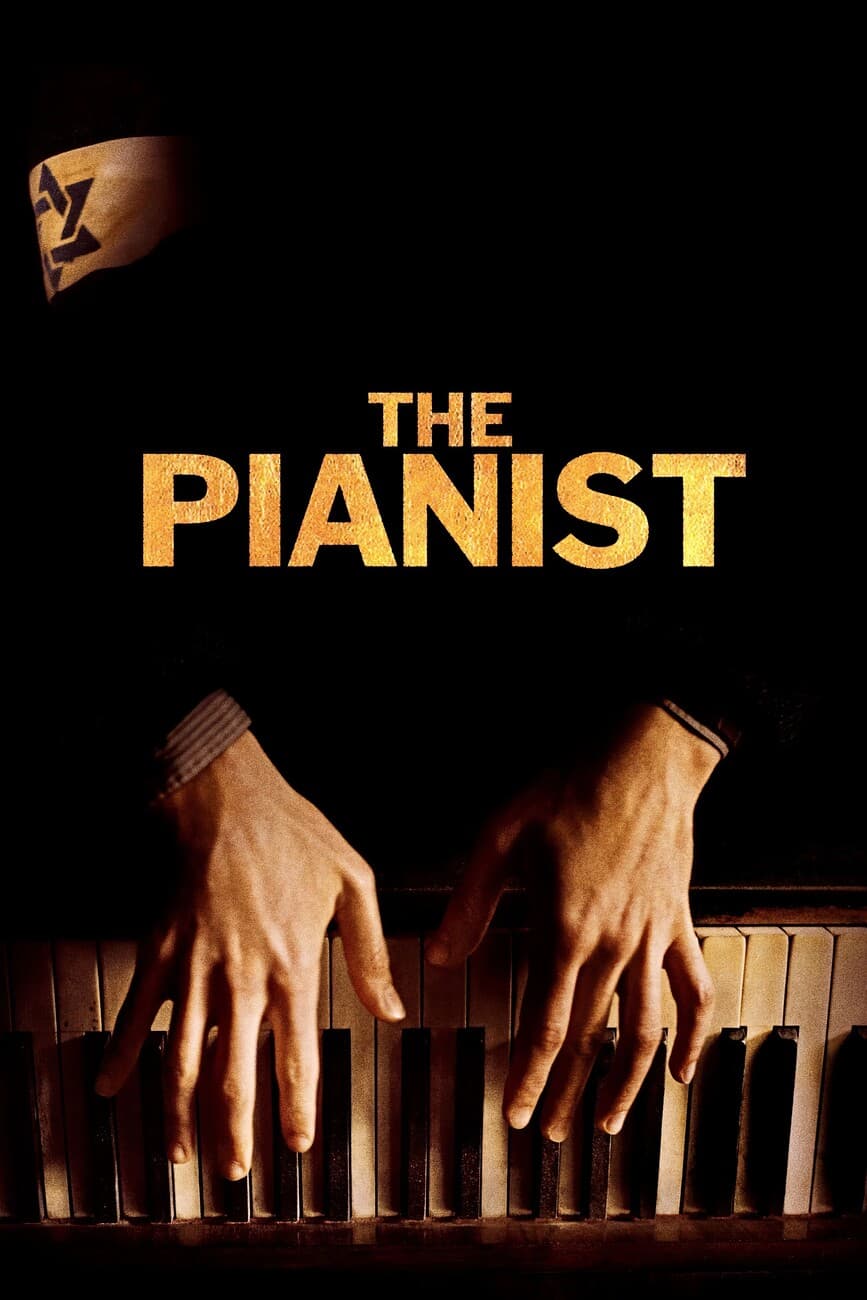
2002
The Pianist
A quiet life unmade by war — and a pianist who refuses to stop listening.
Read the retrospective
→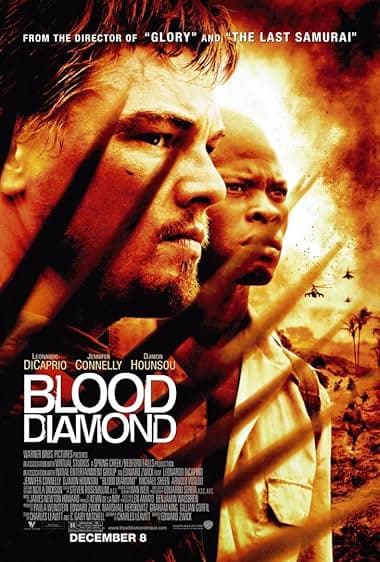
2006
Blood Diamond
A mercenary, a fisherman and a pink diamond — and a film that still asks who pays for our jewellery.
Read the retrospective
→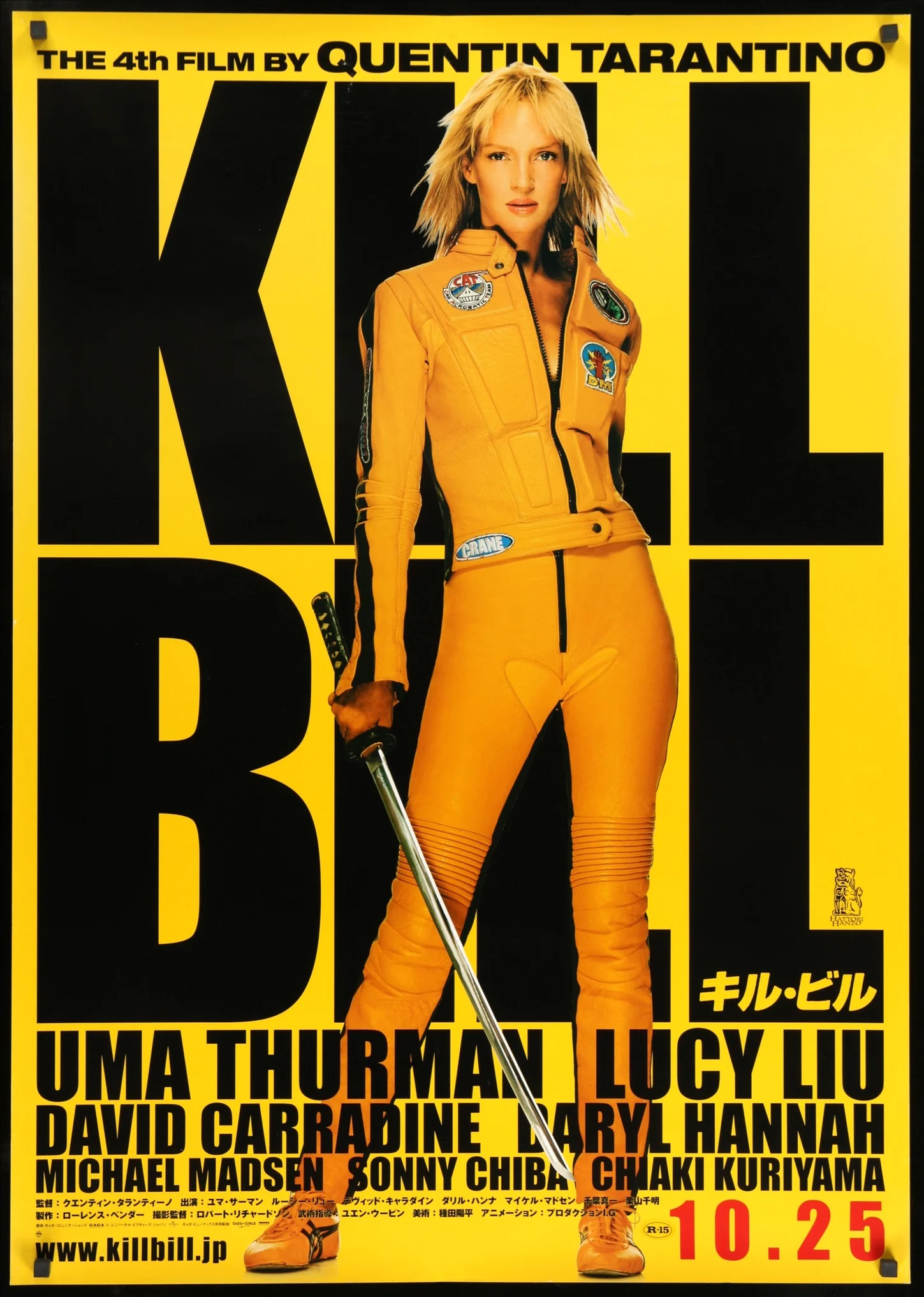
2003
Kill Bill: Volume 1
A yellow jumpsuit, a long list of enemies and one woman who refuses to be finished.
Read the retrospective
→