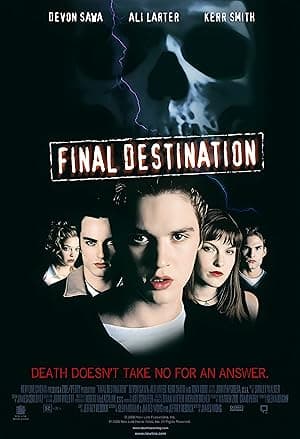
Feature presentation
Final Destination isn't a whodunnit or a possession picture; it's the horror movie that turned mundanity into menace. What keeps it ticking is a single kid — Alex Browning — whose vision of a plane exploding forces a group of classmates out of a false safety and into a slow, inevitable game of survival.
THE MOVIE
Alex Browning is still the reason this movie works
There are two things you remember from Final Destination before you can name a single death: the image of a teenage boy convinced a plane will blow up, and the way that certainty forces action. Alex Browning has a premonition of Flight 180 exploding and talks classmates out of boarding — that single choice is the engine of the whole film.
What follows is not a hunt for a murderer but a catalogue of improbable accidents that seem to be Death itself tidying up a disrupted plan. The survivors don't face an obvious antagonist; they face inevitability, and the movie makes that dread personal by keeping Alex at the centre.
James Wong directs a tight, 98‑minute horror thriller that wears its teen‑movie bones on its sleeve while refusing to treat the premise as a joke. Devon Sawa plays Alex — the kid who refuses to let ordinary moments remain ordinary — and that refusal is what gives the film its spine.
THE SETUP
The idea that sets Final Destination in motion
The film opens with a straightforward, high‑concept hook: Alex Browning sees a violent premonition of his plane exploding and convinces several classmates to step off Flight 180 before it takes off. It’s a tidy, dramatic inciting incident — believable enough inside the movie’s logic to carry the audience along.
Rather than turning into a rescue thriller, Final Destination turns inward. The survivors start dying one by one in bizarre, everyday accidents, and the film's tension comes from recognising patterns rather than chasing a visible killer.
An explicit storytelling rule keeps everything focused: the group discover they die in the same order they would have on the plane. That order becomes a grim ledger the characters (and investigators) use to predict who might go next.
The film leans on explanation rather than spectacle for its premise — a mortician figure explains that escaping the crash messed with Death's plan — and that rule fuels the plot without needing a conventional antagonist to stalk the survivors.
THE CHARACTER
Why Alex Browning matters
Alex is the hinge the whole movie swings on. He sees the disaster, acts on it, and then spends the rest of the film driven by guilt and the need to stop more deaths. That sense of responsibility gives his choices weight; he's not an every‑teen, he's the kid who feels he caused a (partial) salvation and refuses to let it be for nothing.
His motivation isn't abstract. The film makes it practical: Alex tries to predict and prevent the next deaths because the list of who survives is not random. That relentless focus turns what could be a caper about spectacular deaths into something oddly moral — or at least moralistic.
The social dynamic matters too. Carter Horton exists as a rival and early antagonist in Alex’s life; their conflict helps kickstart the plane incident and keeps the drama rooted in recognizable teen tensions rather than pure supernatural terror.
And because the movie keeps returning to the original vision — the crashed plane and the order of deaths — Alex remains the emotional lodestone. The plot mechanics revolve around him, and that simple centre keeps the film lean and watchable.
THE PERFORMANCE
Why Devon Sawa's performance matters
We don't have to guess whether Alex connects with audiences: Devon Sawa's portrayal earned industry recognition. He won the Saturn Award for Best Performance by a Younger Actor for playing Alex Browning.
That kind of recognition is a useful shorthand. It suggests the part landed with enough clarity and presence to be noticed beyond the usual teen‑horror chatter.
More than that, the award points to Alex being written and staged in a way that allowed the role to register. On paper he's a fairly simple moral engine; the accolade shows that, in execution, the character read clearly and mattered to viewers and voters at the time.
So while we shouldn't conflate awards with timeless greatness, the Saturn nod is evidence that Alex was a memorable centrepiece in a crowded genre picture.
UNDER THE SURFACE
Final Destination has more on its mind than the plot suggests
On the surface it's a popcorn thriller about grisly accidents. Underneath it runs a few very simple ideas: death, inevitability and what happens when human control is stripped away.
The film sets up a debate between fate and free will: Alex insists he can change outcomes because he acted on the vision, but the survivors' pattern of dying in that original order keeps pushing back. It’s less a philosophical treatise than a constant collision between trying and being told you can't.
Survivor guilt is baked into the premise. Those who walked away are haunted — not just by being alive, but by the responsibility that came with that survival. The movie turns that emotional awkwardness into motive and momentum.
And it does something neat with setting: everyday objects and routine mechanisms become potential killers. By treating the mundane as hazardous, the film keeps you looking at ordinary life with a small, tense suspicion.
THE FILMMAKING
How Final Destination was put together
There are a few practical fingerprints you can point to when saying why Final Destination feels the way it does. Robert McLachlan handled the cinematography and James Coblentz edited the picture, and together they steer the movie's mood.
The visual plan is straightforward and functional: the film opens brighter and more ordinary, then moves toward a paler, more fatalistic look as deaths begin. That shift keeps the audience emotionally aligned with the survivors — life draining into something colder.
Editing plays a part too. The movie needs to hold tension on perfectly ordinary moments — a hairline crack of timing, a dropped object — and the cut choices keep those beats taut without over‑explaining.
All of this is in service of a tight, 98‑minute thriller that puts the premise first: the direction, photography and editing are workmanlike, clear and aimed at keeping the chain‑reaction beats audible and frightening.
PRACTICAL EFFECTS
The effects work that gives Final Destination its physical personality
Final Destination doesn't rely on one kind of trick. It mixes mechanical, on‑set effects with CGI to pull off elaborate accident sequences while operating on a modest budget.
That hybrid approach lets the film sell a lot of its smaller‑scale horrors — a sequence will feel physically grounded because something tangible is happening, then nudged into spectacle with digital help where necessary.
The main titles and some sequences also use optical title work and practical optical effects, giving the film a tactile opening and occasional pieces of in‑camera polish.
All of this contributes to the movie's personality: it's a grime‑and‑gadget kind of horror where engineering and timing matter as much as shock value.
PURE 00s
Final Destination could not belong to any other decade
Final Destination arrived at the turn of the century — it premiered in the United States on 17 March 2000 — and it sits neatly in that moment where teen horror was getting cleverer about premise over blood alone.
James Wong, making an assured feature debut, set up a tone that would be followed through in later franchise entries. His later return to direct Final Destination 3 in 2006 underlines the film's continuity of voice across the series.
The movie captures a specific appetite of that moment: audiences wanted high‑concept horror you could explain in a sentence and then watch unfurl into unpredictable physical set pieces.
In short: it owes as much to its timing as to its premise. The year matters because the film's concept — and the way it was marketed around a young ensemble — fit the era's appetite for smart teen scares.
WATCHING IT NOW
What has aged — and what hasn't
One thing that still reads cleanly is the teen‑movie structure. The ensemble cast and high‑school dynamics are unmistakable and act as a quick shorthand for relationships and stakes.
The film's place in the late‑1990s teen‑slasher revival helps explain why it focused on an ensemble of recognisable archetypes: they make it easy to keep the story moving without bogging down in backstory.
Mechanically, the screenplay's central rule — that survivors die in the same order they would have on the plane — still functions as an effective device. It gives the movie an internal logic that sustains tension across scenes.
So while fashions and peripheral details may feel dated to some viewers, the core mechanics and the ensemble backbone still provide a coherent and watchable horror experience.
THE LEGACY
Why Final Destination still matters
The simplest legacy is literal: the film's commercial success led to multiple sequels released over the following decade. What began with Flight 180 turned into a franchise that kept returning to the same central conceit.
More importantly, Final Destination established the series' signature approach: Rube‑Goldberg‑style chain reactions that turn ordinary environments into death traps. That inventiveness — the idea that a falling object or a snapped wire can be the mechanism of horror — became the franchise's shorthand.
Because the original nailed that template, later entries had a clear formal language to play with. The chain‑reaction concept is the thing people remember and the thing the series kept refining.
So its afterlife isn't just sequels on a release schedule; it's that the film gave the franchise a mechanic worth repeating and escalating.
THE VERDICT
Does Final Destination still hold up?
Yes — but with a clear rider. If you go for spectacle alone, you’ll enjoy the chain‑reaction set pieces; they’re the film’s calling card. The movie frames those sequences as a consequence of a single, stubborn act: Alex convinces classmates to leave Flight 180 and then refuses to let the aftermath go unchallenged.
What keeps the film from being merely a catalogue of grisly accidents is that the survivors' deaths follow an internal rule — they die in the same order they would have on the plane — and that rule gives the story momentum and stakes. It turns clever shocks into consequences.
The emotional throughline matters too. Alex is driven by guilt and responsibility, and Clear Rivers becomes his primary ally in trying to stop the pattern. That moral urgency makes the thriller feel less like set pieces stitched together and more like a human story with an odd premise.
If you want a tight, sub‑two‑hour horror that blends teen dynamics with a relentless idea about fate, Final Destination still delivers. It’s not flawless, but it’s a neat little machine: simple, focused and stubborn enough — like its hero — to keep you watching until the very end.
Share this movie
Keep watching
More movies from the 00s

2002
The Pianist
A quiet life unmade by war — and a pianist who refuses to stop listening.
Read the retrospective
→
2006
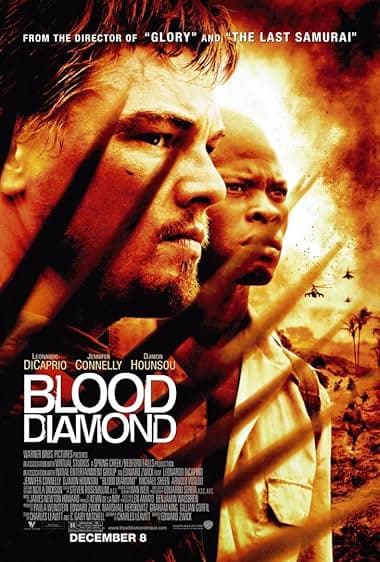
Blood Diamond
A mercenary, a fisherman and a pink diamond — and a film that still asks who pays for our jewellery.
Read the retrospective
→
2003
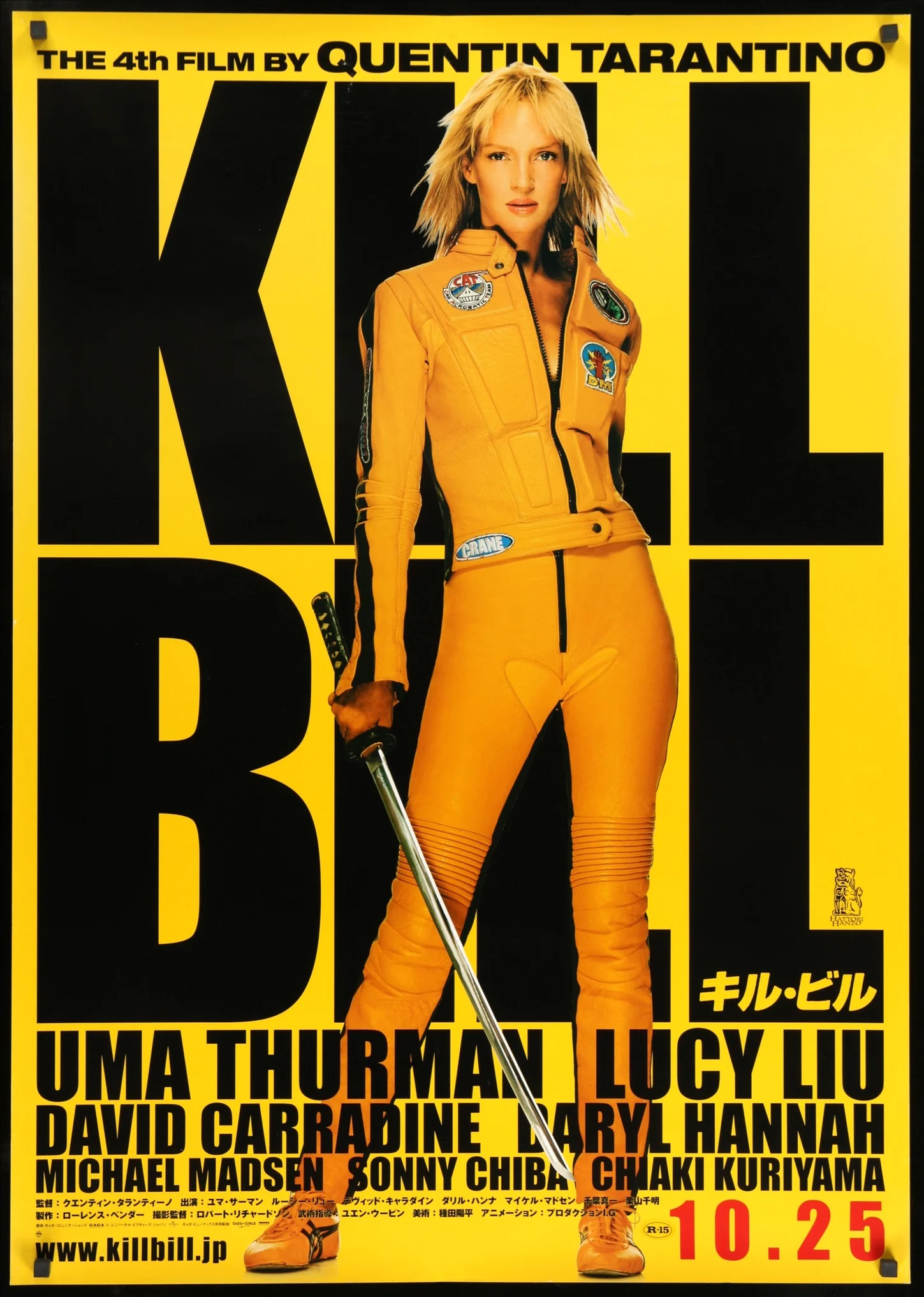
Kill Bill: Volume 1
A yellow jumpsuit, a long list of enemies and one woman who refuses to be finished.
Read the retrospective
→