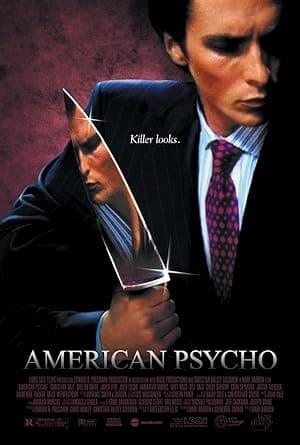
Feature presentation
Revisiting American Psycho feels a little like overhearing a stranger's rant at a perfectly curated dinner party: uncomfortable, rude, and impossible to ignore. Mary Harron and Guinevere Turner turned Bret Easton Ellis's unnerving first-person novel into a film that asks us to pay attention to the voice as much as the actions.
THE MOVIE
Patrick Bateman is still the reason this movie works
American Psycho begins, for most viewers, with a voice you can't look away from — a yuppie's internal commentary that keeps returning to brands, appointments and the exact way to talk about success. Harron and Turner had the awkward task of translating that stream-of-consciousness into cinema, and the film lives or dies by that decision.
What the adaptation makes clear is simple: the story isn't primarily about tidy plot mechanics. It's about a man for whom surface always comes first. Patrick Bateman is a picture of status obsession — all neat routines and brittle manners — whose thoughts reveal a hollowness and violence that the movie deliberately refuses to pin down as objectively real or purely imagined.
Put another way: this is a satire aimed at 1980s consumerism and Wall Street image culture, directed by Mary Harron and anchored by a central performance from Christian Bale. That mix — voice-driven, clinical and almost clinical in its social eye — is the engine that keeps people talking about the film two decades on.
THE SETUP
The idea that sets American Psycho in motion
At its simplest, the film follows Patrick Bateman, a wealthy Manhattan banker whose narration is obsessively occupied with status and image — and with violent fantasies that the movie treats with unsettling ambiguity.
That ambiguity is the clever bit. Harron and Turner keep us off-balance about whether the horrors Bateman describes actually occur or are a private fantasy. The story teases that line repeatedly, so suspense becomes less about 'what will happen' and more about 'what, if anything, can we trust?'
All of this plays out against a uniform social backdrop: colleagues who could swap faces, rituals of one-upmanship and a world where business cards and club access matter as much as actual human connection.
Small recurring motifs — the relentless comparison of possessions and manners — do the heavy lifting. They turn Bateman's private breakdown into a comment on how appearance governs behaviour in that milieu.
THE CHARACTER
Why Patrick Bateman matters
Patrick Bateman matters because he's a study in contradiction: pristine external control and a private voice that leaks cruelty and confusion. The movie presents him as a man defined by surface — image, routine, status — while his inner narration pulls the rug away.
His engagement to Evelyn reads less like love and more like performance; relationships in the film are commodities, exchanged and displayed. That performative intimacy underlines how Bateman's world reduces people to status markers.
Because the narrative lives so much in his head, Bateman also becomes a test case for the film's satire. Do we condemn him for what he claims to have done, or do we watch the spectacle of his mind unravel and judge the culture that shaped it?
And on a practical level, having that voice front and centre gives the movie its distinct rhythm: equal parts catalogue and confession, which makes Bateman hard to forget.
THE PERFORMANCE
Why Christian Bale's performance matters
Contemporary reviews singled out Christian Bale's portrayal as central to the film's reception. His Bateman is the voice the adaptation depends on — precise, controlled and quietly unnerving.
That mattered because the whole movie turns on the audience's willingness to live inside Bateman's perspective. Critics at the time repeatedly pointed to the central performance when discussing how the film balances satire with horror.
So the casting choice isn't incidental. The performance is the bridge between the novel's interior monologue and cinema's need to externalise that voice.
Even if you find the character repellant, the presence that anchors him is what keeps the film coherent.
UNDER THE SURFACE
American Psycho has more on its mind than the plot suggests
The film's most obvious target is consumerism and status. Everything from conversations to conflicts is staged around who owns what and who can signal success most convincingly.
Closely tied to that is a portrait of toxic, performed masculinity: men who police each other's worth by displays, jibes and posturing rather than anything resembling vulnerability.
Then there's the structural trick of unreliable narration. By making Bateman's account ambiguous, the film forces viewers to ask whether violence is literal, symbolic, or both — and what it means when a society privileges appearance over accountability.
Put together, these themes aren't separate; they're facets of the same idea: a world where surface has colonised interior life, leaving a vacancy that paranoia, envy and fantasy rush to fill.
THE FILMMAKING
How American Psycho was put together
American Psycho is a collaborative, craft-led piece. The production credits underline that: producers steering the project, Andrzej Sekuła behind the camera, Andrew Marcus editing the rhythm, and John Cale supplying the score.
That combination helps the film sustain its peculiar tone — clinical when it needs to be, satirical when it needs to sting. You can hear the shaping choices at work in how the voice and visuals converse.
Mary Harron's direction ties those elements together, keeping the film focused on the narrator's perspective rather than turning it into a conventional thriller.
It’s a film that depends on disciplined technical choices to make an unreliable internal world feel watchable.
PURE 00s
American Psycho could not belong to any other decade
Although its story is set in the late 1980s, American Psycho arrived in 2000 and carries with it the specific framings of that moment. The film consciously stages a critique of late-1980s Wall Street excess even as it premiered at the cusp of a new millennium.
That timing matters because the movie came out after a lengthy, controversial development history and at Sundance, where debates about adaptation and on-screen violence were already in the air.
Those conversations—about what you can show, and what a novel's interior voice means when translated to film—felt particularly 2000 in their intensity and media attention.
So while the setting is eighties, the film's life as a cultural object is very much anchored to its 2000 release and the debates that surrounded it.
WATCHING IT NOW
What has aged — and what hasn't
A lot of modern commentary circles back to the same point: the film’s satire of consumerism and status obsession still hits. The critique of a culture that prizes image over substance remains recognisable to viewers today.
At the same time, some aspects of the film’s tone and pacing read as products of their moment — the indie sensibility of the late 1990s into 2000 feels present in how the story breathes and moves.
Those traits don't fatally date the film; they simply mark it. For some viewers that accentuates the satire; for others it highlights how film language has shifted since 2000.
Small details in the cast and production — such as writers appearing on-screen and memorable bit roles — are part of what keeps people returning to discuss it.
THE LEGACY
Why American Psycho still matters
The film helped establish Christian Bale in a major leading role, and that casting choice is a big part of why it remains a touchstone in discussions about daring adaptations.
The soundtrack — notable for its use of 1980s pop alongside John Cale's score — generated its own publicity and a licensing controversy, which is part of the movie's afterlife in pop-cultural conversation.
Since 2000, American Psycho has repeatedly returned to critical and popular writing as a prominent cinematic satire of late-20th-century American consumer culture.
Those three threads — a central casting that defined careers, a talked-about soundtrack, and ongoing critical interest — explain why it still turns up in conversation.
THE VERDICT
Does American Psycho still hold up?
Yes — with a caveat. If you respond to films that interrogate image, status and the unreliability of the narrator, American Psycho still rewards you. It’s an adaptation that intentionally keeps us unsure about what actually happens, and that ambiguity is central to its power.
The movie's repeated framing of Bateman's fantasies against a backdrop of interchangeable colleagues and social rituals keeps the satire sharp. The Paul Allen storyline, in particular, functions as a dramatic escalation that crystallises Bateman's envy and the film's interest in status violence.
Mary Harron and Guinevere Turner's decision to preserve the novel's interior voice in cinematic form is what allows those ideas to land. And having a figure like Detective Donald Kimball trying to piece things together gives the film a procedural thread that helps balance the interior chaos.
So, should you watch it now? If you want a film that still pricks at image-obsessed culture and gives you a voice you won't easily forget, it's worth a watch. Patrick Bateman is the engine here — whether you’re fascinated, disgusted, or both — and that's precisely why the film keeps working.
Share this movie
Keep watching
More movies from the 00s
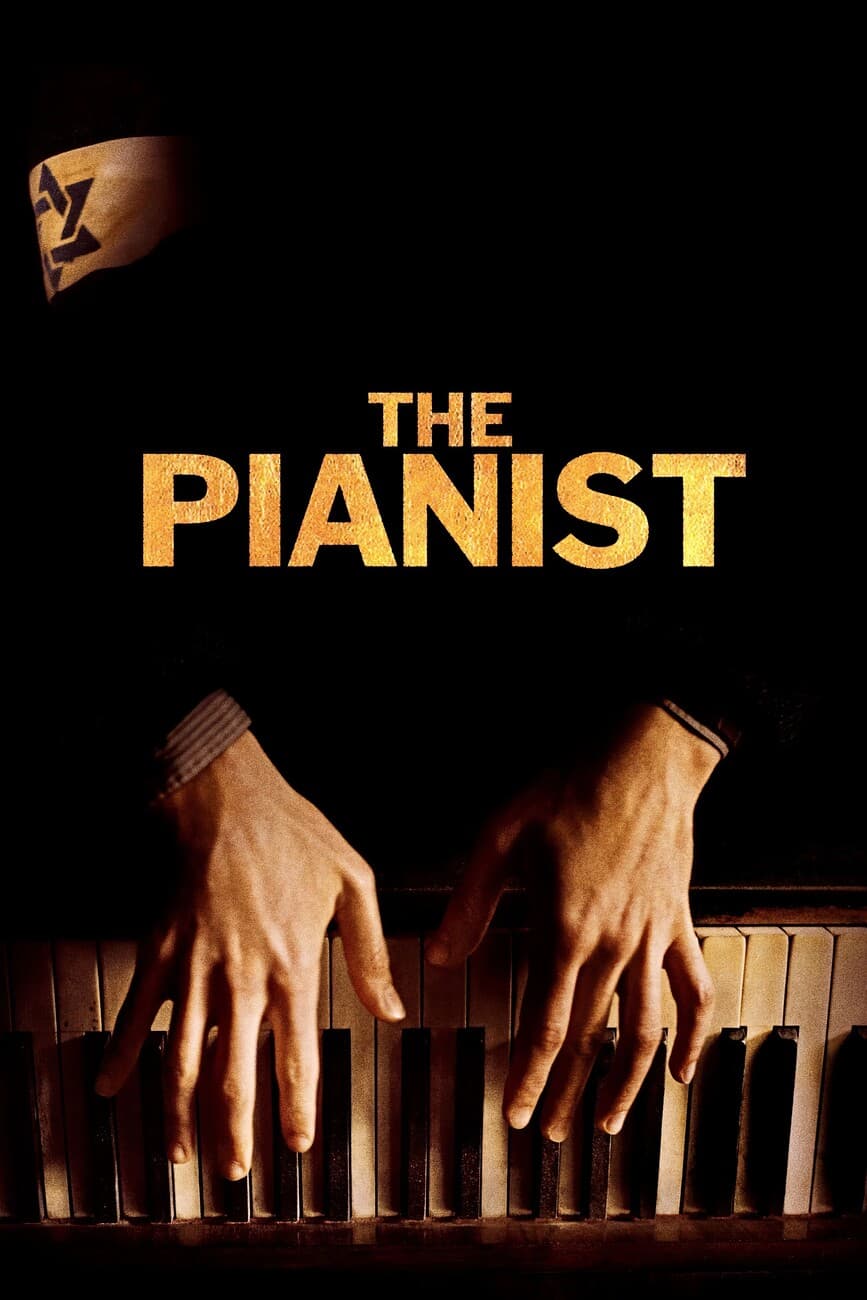
2002
The Pianist
A quiet life unmade by war — and a pianist who refuses to stop listening.
Read the retrospective
→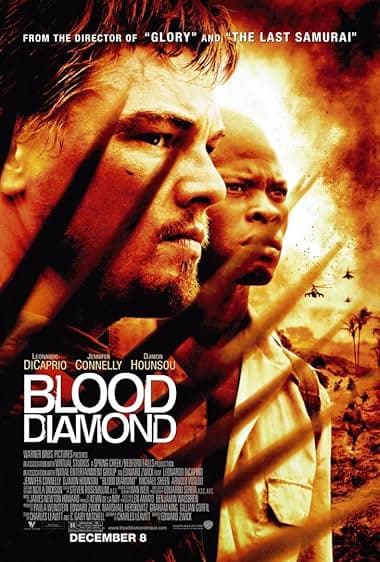
2006
Blood Diamond
A mercenary, a fisherman and a pink diamond — and a film that still asks who pays for our jewellery.
Read the retrospective
→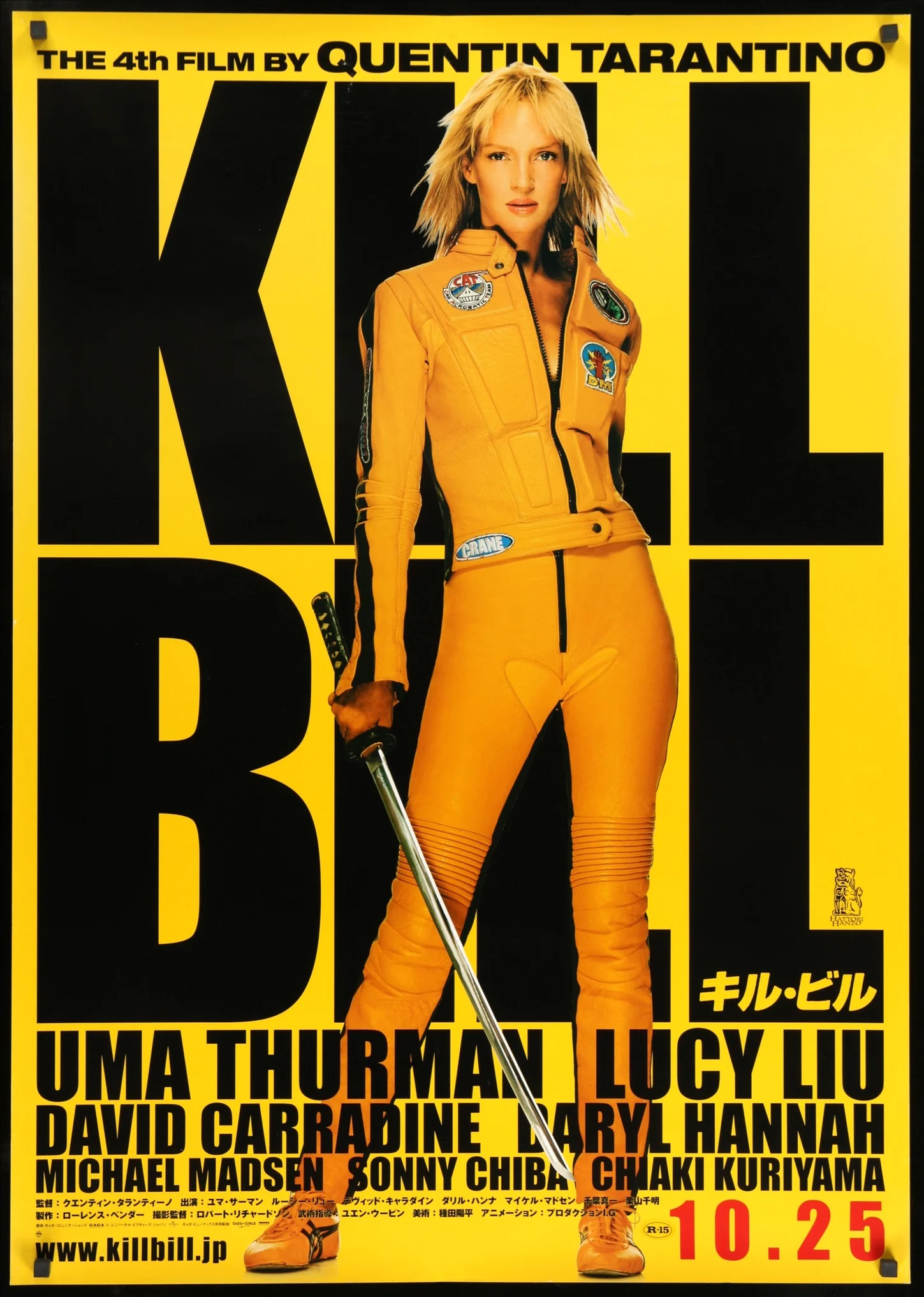
2003
Kill Bill: Volume 1
A yellow jumpsuit, a long list of enemies and one woman who refuses to be finished.
Read the retrospective
→