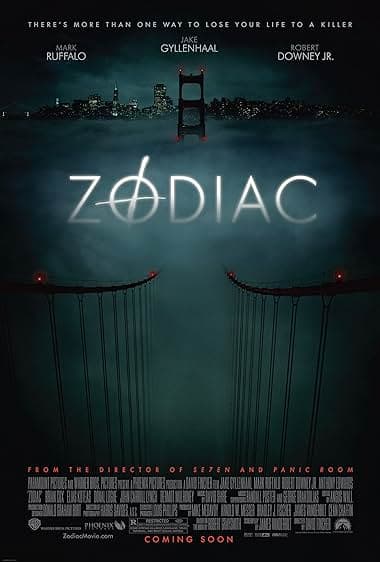
Feature presentation
Zodiac still hooks you before you know it’s set up: the film begins with the Zodiac’s first letters and cipher, and that act of communication is what drags reporters and police into the same orbit. From there David Fincher follows a few men — most notably the cartoonist Robert Graysmith — whose curiosity becomes something harder to put down. It’s a long movie about the small, grinding work of finding answers.
THE MOVIE
Robert Graysmith is still the reason this movie works
People keep talking about Zodiac because it doesn’t treat the case as a headline or a boogeyman — it treats it as a string of communications that draw different careers and lives into their own private orbits. The film dramatizes the multi-year investigation into the Zodiac Killer and spends most of its time with the men who find themselves caught up in it: reporters, detectives and the cartoonist who won’t let the story go.
It hooks you with the simple, unnerving business of letters and a cipher landing on a newsroom desk. That opening — the Zodiac’s early communications — explains everything: why journalists and police begin exchanging facts, rumours and suspicion, and why an apparently small act of attention becomes an engine for obsession.
And at the centre of that engine is Robert Graysmith, a shy, puzzle-obsessed cartoonist whose taste for ciphers turns curiosity into a decades-long pursuit. Run time or scale aren’t the point; the film is calibrated to show how single-minded attention changes people, and that’s why it still rewards revisits.
THE SETUP
The idea that sets Zodiac in motion
At its simplest, Zodiac is an investigation movie that refuses the neat, single-night climax. It follows the multi-year inquiry into the Zodiac Killer and the men whose lives the case rearranges, chiefly the cartoonist Robert Graysmith, Chronicle reporter Paul Avery and inspectors David Toschi and William Armstrong.
Rather than relying on dramatic explosions, the film moves by accumulation: interviews, poring over documents, comparing fingerprints and handwriting, and the tedious, essential crossing of jurisdictional lines. The slow accretion of details is the engine — not a ticking-bomb set-piece.
That method works because the screenplay treats investigation as labour. Small discoveries, contradictions and dead-ends keep the audience occupied in the same way the characters are: you collect scraps of evidence and then wait to see which scraps fit together.
Which brings us back to Graysmith. His particular interest in ciphers and patterns gives the story a single-minded spine, so the film can be both a procedural about police work and a portrait of someone who takes an unofficial path through the case.
THE CHARACTER
Why Robert Graysmith matters
Robert Graysmith is the film’s private magnet. He starts as a newsroom cartoonist — quiet, meticulous, inclined toward puzzles — and those small traits are what turn him into someone who can’t leave the case alone. That gradual escalation from interested bystander to obsessive compiler is the movie’s emotional through-line.
This isn’t a portrait of heroics. The screenplay is interested in how a person’s strengths — curiosity, patience with detail, a taste for patterns — can also become liabilities when they’re applied to something as unnerving as the Zodiac letters and ciphers.
Graysmith gives the audience a place to stand when official investigations stall. Because he isn’t a cop, he approaches the material differently: he organises, annotates and builds an archive. The film lets you watch that archive grow, and in doing so it shows why a private obsession can feel like the only way to keep a story alive.
Crucially, his presence reframes the investigation from a headline to a lifelong task. The film is as much about the person who keeps taking notes as it is about the crimes those notes try to explain.
UNDER THE SURFACE
Zodiac has more on its mind than the plot suggests
On the surface Zodiac is a crime thriller and a procedural. Underneath, it’s a study of obsession and what that obsession costs — to careers, relationships and tranquillity. The film repeatedly shows how pursuing answers can hollow out ordinary life.
It also refuses easy comfort about truth. The story is obsessed with evidence — with fingerprints, handwriting, ciphers and archived documents — and it keeps reminding you there’s a difference between suspicion and legal proof. That tension, between what you can reasonably claim and what you merely suspect, runs through the whole film.
There’s another strand: the friction between the press and the police. Letters to newspapers, reportage and law-enforcement work are all part of the same noisy ecosystem, and the film traces how publicity and policing can push on each other in ways both useful and destructive.
Finally, Zodiac is conscious of how history gets assembled. By foregrounding documents, interviews and the act of archiving, the film asks you to think about the construction of truth — how decades of records and recollections are stitched together into a version of events that still leaves spaces where certainty doesn’t fit.
THE FILMMAKING
How Zodiac was put together
Zodiac’s look and handling are part of its personality. Fincher and cinematographer Harris Savides used a mostly digital capture workflow with Thomson Viper FilmStream cameras, while still incorporating selective film photography — a choice that let them chase a period feel without abandoning the clarity of high-definition capture.
That technical decision isn’t decoration; it lets the movie be exacting about detail. When a scene depends on a document, a photograph or a marginal scrawl being legible, the imaging choices matter. The production also made a point of building careful period workplaces and streets, so the world the characters catalogue feels materially anchored in the late 1960s and 1970s.
Behind the scenes, the editing approach is as disciplined as the story itself. Angus Wall and the production used extensive previsualisation and a tightly information-driven editing method to fold a sprawling, nonlinear timespan into a single, focused narrative that privileges procedural accumulation over blockbuster spectacle.
Put together, those choices make Zodiac feel less like a stylised thriller and more like an exacting reconstruction — a film that wants you to watch the work of investigation happen, rather than watch someone theatrically solve everything in the final reel.
PRACTICAL EFFECTS
The effects work that gives Zodiac its physical personality
A surprising amount of what looks like production photography was actually assisted or extended with digital visual-effects work. Vendors such as Digital Domain and others reconstructed period environments, including stretches of San Francisco streets and helicopter-style overheads, to make the city read as late-60s/70s without relying solely on location dressing.
The production also used CGI in places audiences might not expect: the film’s murder scenes include digitally added pools of blood and crime-scene staining rather than depending entirely on practical blood effects. Those choices helped keep the imagery controlled and consistent across shots.
In short, Zodiac mixes photographed detail and digital extension to make a convincing archive of a past era. The aim wasn’t flashy VFX for their own sake but tidy, often invisible work that supports the investigation on screen.
That hybrid approach keeps the film grounded: the effects serve the record-keeping impulse of the story, rather than calling attention to themselves.
PURE 00s
Zodiac could not belong to any other decade
Zodiac arrived in 2007, at a moment when major films were increasingly embracing high-definition digital cinematography. Fincher and Savides’s public choices about digital workflows made the production feel like part of that technical conversation — a film very much of the 00s in how it was made.
It also fits squarely into the decade’s taste for literary, investigative true-crime adaptations: movies that favour archival reconstruction and procedural patience over sensationalised showmanship. Zodiac’s emphasis on documents, legible detail and long-form inquiry is exactly the sort of thing 00s critics and audiences gravitated toward.
The film’s home-video life — notably a director’s-cut released in January 2008 with extra material — also reflects the era’s appetite for extended editions and bonus context, where viewers wanted the full forensic experience beyond a theatrical run.
So while its subject matter reaches back decades, Zodiac’s production methods and public framing are products of the 2000s rather than accidental retro pastiche.
THE LEGACY
Why Zodiac still matters
Zodiac’s festival reception — it screened in the main competition at the 2007 Cannes Film Festival — marked it out as a serious, not simply commercial, entry in Fincher’s career. That seriousness has followed the movie into later conversations.
Its director’s-cut home video release in January 2008, with extra visual-effects and making-of material, gave viewers a chance to live with the film’s method and the choices behind it. Those supplementary materials fed the impression that Zodiac was meant to be studied as much as watched.
Critically, the film is often discussed as a moment of maturation for Fincher: a director still interested in darkness and detail but willing to slow the tempo and let procedure dominate. That reputation keeps it in lists and discussions about 2000s procedural filmmaking.
Put simply: Zodiac endures because it offers a model of how to dramatise investigation — precise, patient and stubborn about the limits of what evidence can prove.
THE VERDICT
Does Zodiac still hold up?
Yes — but with an important rider. Zodiac is not the movie you pick when you want tidy answers or a propulsive, blockbuster thriller. It’s the movie you pick when you want to watch investigation itself: how letters and ciphers land on desks, how interviews and document searches accumulate, and how that slow accretion alters people.
If you’re interested in the human cost of curiosity, it still hits. The screenplay carefully shows Robert Graysmith’s escalation from curious cartoonist into someone for whom the case becomes a decades-long occupation, and that rise is the film’s emotional backbone. The movie makes clear that obsession has costs — to careers, relationships and peace of mind — and it doesn’t neatly exonerate or condemn its players.
It also remains a smart account of limits: Zodiac repeatedly distinguishes suspicion from legal proof and emphasises the institutional barriers that keep investigations partial. That refusal to manufacture a cinematic resolution is what will frustrate some viewers and satisfy others, but it’s also precisely why the film feels honest.
So should you watch it today? If you like patient, intelligence-driven cinema and the idea of a film that treats archival material and procedure as dramatic material, Zodiac still rewards. If you want closure, look elsewhere. Zodiac is less about answering a whodunnit and more about watching what happens to the people who try.
Share this movie
Keep watching
More movies from the 00s
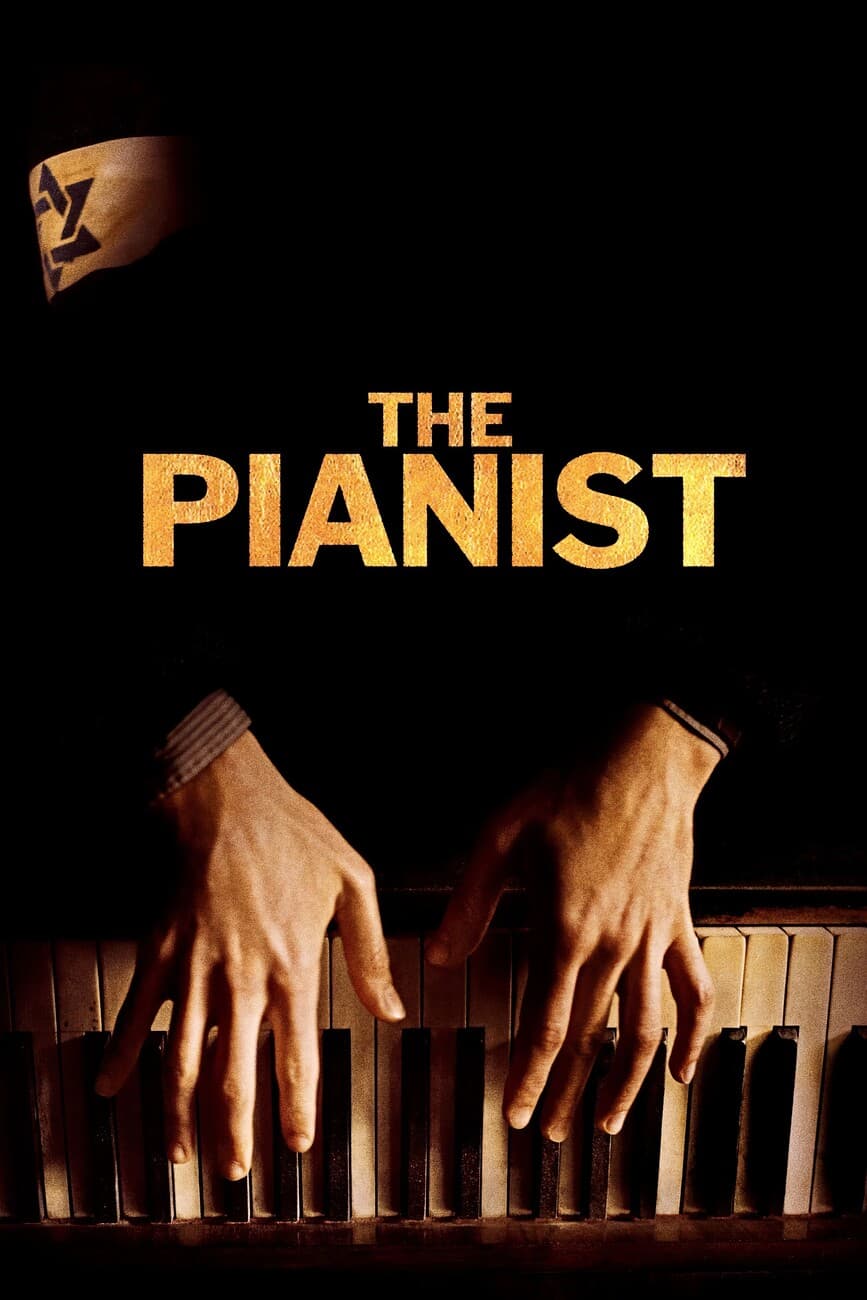
2002
The Pianist
A quiet life unmade by war — and a pianist who refuses to stop listening.
Read the retrospective
→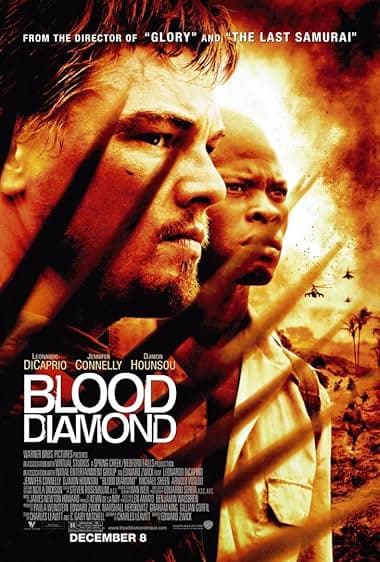
2006
Blood Diamond
A mercenary, a fisherman and a pink diamond — and a film that still asks who pays for our jewellery.
Read the retrospective
→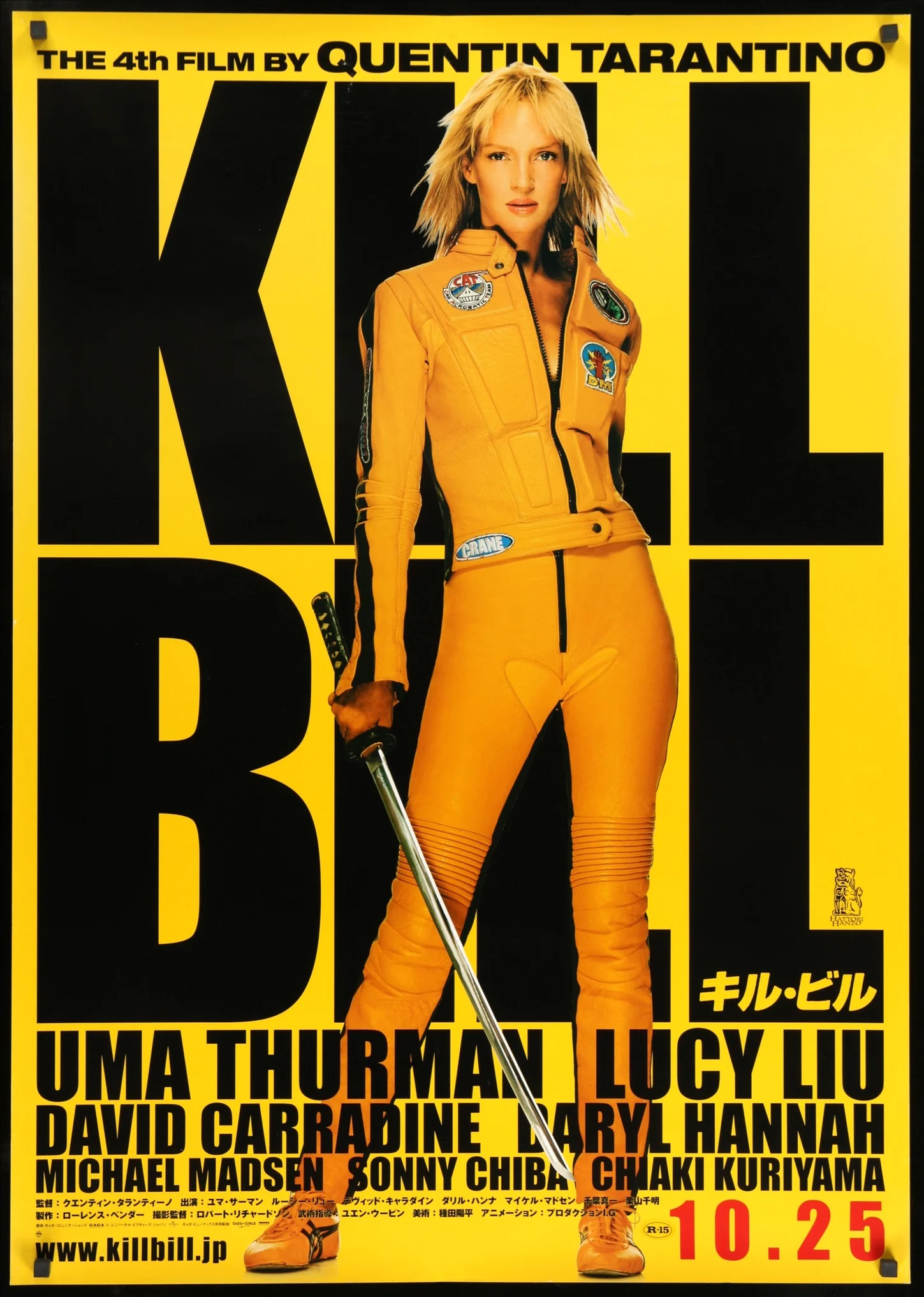
2003
Kill Bill: Volume 1
A yellow jumpsuit, a long list of enemies and one woman who refuses to be finished.
Read the retrospective
→