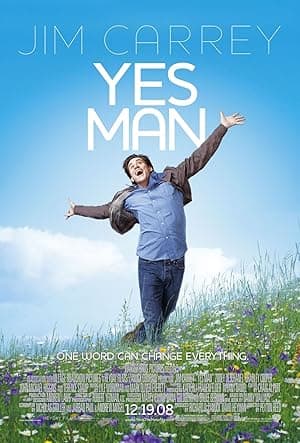
Feature presentation
Yes Man still talks to you like a very enthusiastic self-help audiobook with a sense of mischief. Peyton Reed’s 2008 romantic comedy uses a single daft rule — say 'yes' to everything — to kick a closed-off bloke into a series of choices that are funny, awkward and occasionally sharp. Carl Allen’s stubborn no-ness is the engine here: once it’s gone, the film gets to ask what you actually sacrifice when you swap safety for spectacle.
THE MOVIE
Carl Allen is still the reason this movie works
At the centre of Yes Man is a very simple set-up: Carl Allen, an L.A. loan officer, has closed himself off after a breakup and answers life with a practiced no. It’s a recognisable human posture — protection dressed up as routine — and the film leans on that truth hard.
The plot flips when Carl turns up at a charismatic self-help seminar and takes a covenant to say yes to every opportunity he’s offered. That bargain — one committed word that rewires behaviour — is the movie’s turbocharger: it forces Carl out of avoidance and into new choices, some small, some embarrassingly large.
That combination of personal reinvention, romantic manoeuvring and a string of episodic set pieces gives Yes Man its tone. Peyton Reed directs the engine, Jim Carrey drives it as Carl, and the movie treats self-help as both a plot device and a conversation starter about risk, consent and the cost of being suddenly unstoppable.
THE SETUP
The idea that sets Yes Man in motion
You don’t need a long synopsis to see why the premise works: Carl’s default refusal gives the movie an immediately serviceable problem to fix. He’s safe, stuck and avoiding, and that’s the baseline the story spends its runtime upsetting.
The inciting turn — a self-help seminar led by a charismatic guru and the subsequent agreement to say 'yes' to everything — is brilliantly economical. One decision changes the rules of every scene that follows, so each comedy moment becomes shorthand for a deeper behavioural experiment.
From there the film unfolds in a series of episodic set pieces: new skills learned, awkward social encounters, and the appearance of Allison and her band, which act as both catalyst and counterpoint to Carl’s old life. The structure keeps the stakes light but meaningful.
That episodic design is what allows the movie to escalate. Saying yes produces opportunity, yes, but it also creates complications — the central conflict is that the same mechanism that opens Carl up also tests his relationships and sense of control.
THE CHARACTER
Why Carl Allen matters
Carl matters because he’s the mirror the film holds up to anyone who’s ever retreated into the same small life. He’s not a cartoon villain; he’s the kind of bloke who believes safety equals sanity, until the obvious truth shows itself: safety can be a trap.
The covenant to say yes is less about a gimmick and more about exposing Carl’s avoidance. The rule forces him into behaviour he otherwise evaded and makes visible the cost of shutting people and chances out.
His friends — Peter and Rooney — aren’t just background laughs. They give him social context: temptation, normality and a sounding board for how the yes experiment lands. That friend-group dynamic helps the film keep Carl tethered to ordinary life even as his choices become increasingly outlandish.
Finally, Carl matters because his journey reframes reinvention as something that happens in fits and starts. The movie is interested in how one decision can both liberate and complicate, and Carl is the man doing the messy living.
THE PERFORMANCE
Why Jim Carrey's performance matters
There’s a measurable industry nod attached to Carrey’s time as Carl: he won the 2009 MTV Movie Award for Best Comedic Performance for the role. That’s not a granular acting verdict, but it’s a useful signpost that his work landed with audiences at the time.
Because the film hinges on one man changing his behaviour, the presence of a recognisable comic lead helps sell the premise. The award underlines that the part of Yes Man that most viewers remember is, to a degree, its central comic engine.
Put simply: the movie gives Carrey a very specific behaviour to embody — the compulsive yes — and the external recognition is evidence that the choice registered with mainstream audiences.
How you respond to that choice will depend on whether you want your romantic comedy loud and kinetic, or quieter and more interior. The award just shows which audience laughed loudest in 2009.
UNDER THE SURFACE
Yes Man has more on its mind than the plot suggests
On the surface Yes Man is a sequence of jokes and romantic beats. Underneath it’s interested in what happens when someone trades safety for risk in midlife — that tension between risk-taking and safety is the movie’s moral tug-of-war.
Another persistent concern is agency and consent. The covenant asks Carl to say yes to everything, which frames consent as a theatrical rule rather than an individual choice. That friction creates some of the film’s more uncomfortable but interesting moments.
Self-help and personal reinvention are the narrative fuel. The seminar functions as more than just a plot trick: it’s a cultural shorthand for the period’s fascination with motivational thinking and quick fixes for complex personal problems.
Finally, there’s the quieter romantic work: reconciliation doesn’t arrive as a tidy miracle. The film points toward the practical labour of rebuilding relationships — the idea that you can’t outsource reconnection to a single catchphrase or seminar.
THE FILMMAKING
How Yes Man was put together
Peyton Reed steers the film and the credits also point to Robert D. Yeoman as principal cinematographer and Craig Alpert as editor. Those names frame Yes Man as a straightforward studio comedy in terms of crew craft.
That combination of director, cinematography and editing credits explains why the movie feels like a polished, well-lighted machine built to deliver jokes and romantic beats on a reliable schedule. The filmmaking choices keep the focus on performance and the premise rather than experimental flourishes.
The production’s international partnerships and studio backing also align the film with mainstream romantic-comedy construction: crisp pacing, clear comedic set pieces and a shape that moves the story from premise to resolution within a compact runtime.
In short, the production apparatus is designed to support the central conceit — an energetic, well-stitched comedy whose technical elements are there to serve the plot’s behavioural experiment.
PURE 00s
Yes Man could not belong to any other decade
Yes Man sits very firmly in the late 2000s mainstream-comedy world. Contemporary reviews placed it in that landscape and repeatedly likened its high-concept engine and star persona to Jim Carrey’s earlier work.
The movie’s reliance on a self-help seminar as the central contrivance taps into the era’s popular fascination with motivational speaking and quick-fix life strategies — a cultural moment when such tropes were everywhere in entertainment and advertising.
Its December 2008 release places it at the tail end of a decade that loved gamified personal-change narratives: the film’s conceit — try this radical behavioural tweak and see what happens — is very much of that time.
Finally, Yes Man’s adaptation from a mid-2000s memoir and its casting choices root it in the period’s appetite for celebrity-driven, premise-first comedies built for broad audiences.
THE LEGACY
Why Yes Man still matters
For a mainstream comedy, Yes Man left a tangible footprint. It opened at No. 1 in its first U.S. weekend and grossed over $220 million worldwide, which marks it as a commercial success for its release period.
Part of its staying power comes from being an easily summarised premise you can pitch in a sentence: a man vows to say yes and things happen. That tidy logline makes it durable in conversations and recommendations.
The soundtrack and musical elements — with original songs by the fictional band featuring Zooey Deschanel and a score credited to Lyle Workman with contributions from Mark Oliver Everett — give the film another point of recall beyond the central joke.
And of course the industry nod — Carrey’s MTV Movie Award for Best Comedic Performance — reminds us that the movie resonated with a broad audience when it came out.
THE VERDICT
Does Yes Man still hold up?
Yes Man is not a revelation, but it still has a useful and enjoyable thing to say: that swapping a lifetime of noes for a relentless yes is complicated, funny and sometimes irresponsible. The central experiment — Carl agreeing to accept every opportunity after a seminar — is straightforward and it stays interesting because it keeps producing consequences.
If you like a romantic-comedy built on an explicit premise, with episodic set pieces that escalate toward a choice about agency and relationships, then the film still delivers. Allison as the eccentric musician and photographer provides a tonal counterweight to Carl’s earlier avoidance, which keeps the emotional trajectory grounded in relationship work rather than pure spectacle.
The movie’s concerns — self-help as a quick fix, the tension between risk and safety, and the labour of romantic reconciliation — are still relatable. The seminar leader operates as a charismatic plot device that tests Carl’s limits, and the friend dynamics with Peter and Rooney help keep his choices believable within the film’s rules.
So should you watch it? If you want a tidy, loud romantic comedy about reinvention that knows how to milk a single premise for laughs and occasional sincerity, Yes Man is worth the runtime. It doesn’t pretend to answer every question about consent or change, but it does make you notice that saying yes is easy; taking responsibility for what follows is the tricky part.
Share this movie
Keep watching
More movies from the 00s

2002
The Pianist
A quiet life unmade by war — and a pianist who refuses to stop listening.
Read the retrospective
→
2006
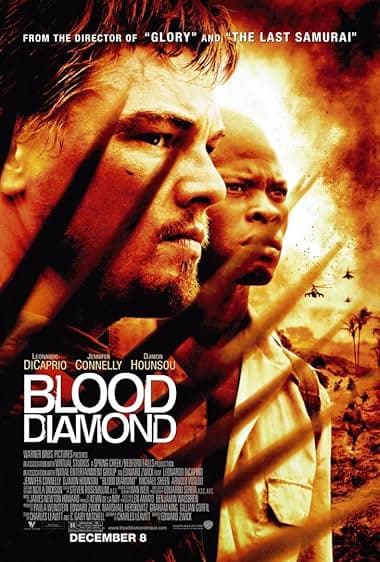
Blood Diamond
A mercenary, a fisherman and a pink diamond — and a film that still asks who pays for our jewellery.
Read the retrospective
→
2003
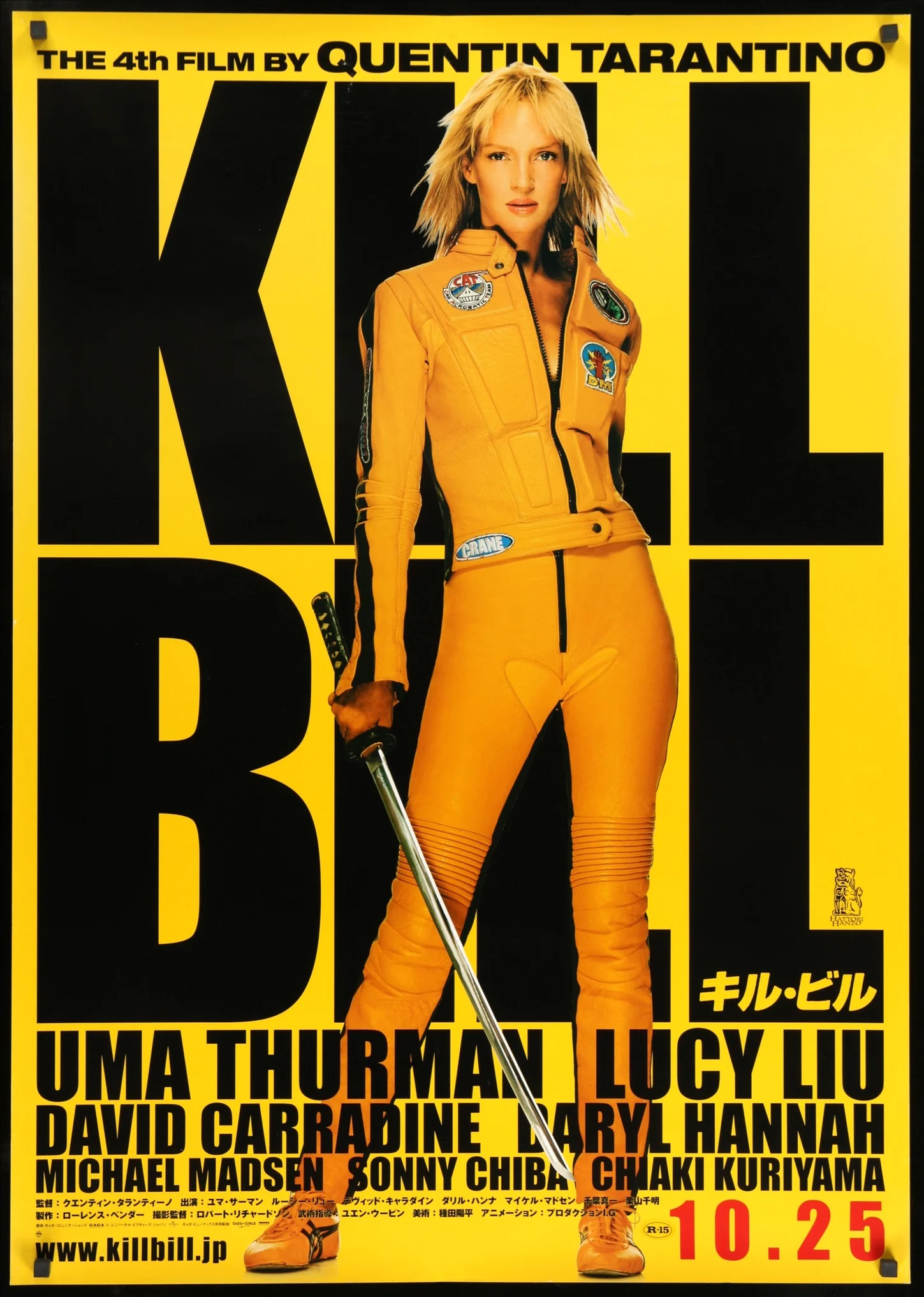
Kill Bill: Volume 1
A yellow jumpsuit, a long list of enemies and one woman who refuses to be finished.
Read the retrospective
→