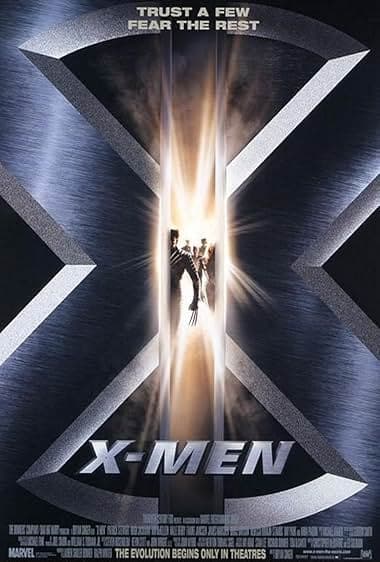
Feature presentation
X-Men still feels like a film that knows which scenes the audience came for: a handful of thoughtful ideas about prejudice, and a gruff, clawed loner who refuses to be anything less than watchable. Bryan Singer’s 2000 adaptation funnels big themes through character moments and a political snag (the Mutant Registration Act) so the spectacle never quite drowns the argument.
THE MOVIE
Logan / Wolverine is still the reason this movie works
X-Men stages a recognisable sort of story: a visible minority — mutants with superhuman gifts — live in a world that mistrusts them. That mistrust is the engine; it pushes everyone into hard choices and ugly politics.
At the centre are two newcomers, Logan and Marie, who arrive as audience surrogates and get pulled into a showdown between Charles Xavier’s X-Men and Erik Lehnsherr’s Brotherhood. Xavier is explicitly presented as a telepathic leader who runs a school and argues for peaceful coexistence, which gives the film a clear moral counterpoint.
All of that arrives with a late-90s/early-00s polish: it’s Bryan Singer’s film, released in 2000, running a tight 104 minutes, and anchored by a cast that includes Patrick Stewart and Ian McKellen alongside Hugh Jackman as Logan / Wolverine.
THE SETUP
The idea that sets X-Men in motion
Rather than opening with a vast origin myth, X-Men drops two fresh faces into the middle of a brewing crisis. Logan and Marie arrive already complicated, and the story lets the world unfold around them.
The political pressure comes early and plainly: Senator Robert Kelly’s push for a Mutant Registration Act raises the stakes and forces the question of how society should treat people who are different. That push is the kind of plot device that turns theoretical prejudice into immediate peril.
Magneto’s response to the registration drive — taking direct action instead of lobbying for tolerance — supplies the film’s central friction. That clash maps cleanly onto two competing reactions to oppression: persuasion and confrontation.
On a smaller, human scale, Rogue’s inability to touch others without harming them is introduced early and kept as a recurring emotional obstacle. It turns the politics into a daily, private problem as well as a public one.
THE CHARACTER
Why Logan / Wolverine matters
Hugh Jackman plays Logan, better known as Wolverine — one of the two newcomers the movie funnels through the world of mutants and humans. He’s the rough-edged entry point: not a polished recruit, but someone dragged into a bigger fight.
Logan is introduced as a loner with mysterious gaps in his history and obvious physical gifts — accelerated healing and retractable claws — which gives him a sense of danger and unpredictability without needing pages of backstory.
That mystery matters because it keeps us curious. The film doesn’t immediately explain everything about him; it lets his choices and loyalties do the talking, and that makes his gradual alignment with Xavier feel earned rather than telegraphed.
Finally, he’s also a franchise seed: the film positions him as a durable presence among these characters, one whose story continues in the direct sequel released in 2003.
THE PERFORMANCE
Why Hugh Jackman's performance matters
X-Men’s awards run gives a clue about how audiences and genre voters received the central turns at the time: the film picked up multiple Saturn Awards, including Best Actor for Hugh Jackman and Best Supporting Actress for Rebecca Romijn.
That contemporary recognition is useful shorthand: it shows the film’s leading players were noticed within the genre community, and that the central characters were doing the work the screenplay required of them.
Put simply, the awards don’t tell you how to feel about the performance today, but they do confirm the performances were considered a real contributor to the film’s success when it arrived.
Which matters because this is a film that trades on character gestures as much as spectacle — and the industry nods suggest those gestures landed for a lot of people at the time.
UNDER THE SURFACE
X-Men has more on its mind than the plot suggests
Beneath the action, X-Men frames mutant persecution as an obvious allegory for prejudice and social exclusion. The mutants are a visible minority; distrust of them is structural as well as interpersonal.
That framing lets the film do two things at once: it stages chores of spectacle and it keeps coming back to how people on the margins survive day-to-day. The Mutant Registration Act turns prejudice into policy, which is when the abstract idea becomes concrete and political.
The film also sets up two political responses to that oppression. Xavier runs a school and argues for coexistence; Magneto chooses a more forceful path. That contrast is the movie’s moral hinge — a debate played out in action rather than in lectures.
And finally, the personal side is never far off. Themes of isolation and identity — the private cost of being different — are threaded through character beats like Rogue’s inability to touch others, which keeps the stakes intimate as well as ideological.
THE FILMMAKING
How X-Men was put together
X-Men’s look and production sensibility are anchored by a small list of names on the credits. Newton Thomas Sigel served as director of photography and John Myhre handled production design, which tells you the filmmakers were aiming for a carefully composed, physical world rather than throwaway set-dressing.
Those crafts matter because they shape how the politics read on screen: clear production design helps the story keep its locations legible, which is important when you’re juggling courtroom-style politics and personal scenes.
The film’s roughly 104-minute runtime also forces economy — there isn’t room for indulgence, so the filmmaking choices tend to favour clarity and momentum over flourishes.
In short: the credits point to a production that wanted its visual storytelling to be as straightforward and serviceable as its moral setup, letting the characters and the plot do most of the heavy lifting.
PRACTICAL EFFECTS
The effects work that gives X-Men its physical personality
One of the film’s physical signatures is Mystique’s on-screen look, which was created with extensive prosthetic work and full-body application. That required a dedicated special-makeup crew and significant daily sessions.
Practical prosthetics weren’t limited to one character: the production credited teams of prosthetics artists for character looks such as Mystique, Sabretooth and Toad, which gives the movie a tactile, hands-on aesthetic in its creature work.
Those practical pieces were deliberately combined with digital visual effects. Multiple VFX vendors and digital compositing were used to portray mutant powers and larger sequences, so the film sits somewhere between practical craft and early-2000s digital work.
The result is a film that feels physically made: you can sense the labour of makeup and prosthetics on set, and the digital elements are used to extend and complete those physical choices rather than replace them wholesale.
PURE 00s
X-Men could not belong to any other decade
There’s a historical reason this film reads as a 2000s movie: it arrived in July 2000 at a moment when studios were testing how to translate comic-book teams to live-action without losing the drama that made comics interesting.
X-Men’s commercial success helped establish a multi-film approach for the studio, and the film’s straightforward tone — compact, political and character-led — fits the era’s early method for superhero cinema.
Production itself straddles the turn of the millennium: principal photography ran from September 1999 through March 2000, primarily in Toronto, and the film premiered at Ellis Island before its wide release in July 2000.
In other words, X-Men feels of its moment because it is literally from that moment: an early, high-profile attempt to make a comic-book property behave like a mainstream studio drama as well as a blockbuster.
THE LEGACY
Why X-Men still matters
Practically speaking, X-Men’s theatrical success launched a multi-film franchise for the studio; that business outcome alone kept these characters in cinemas for years and made further storytelling possible.
Beyond the box office, the film received multiple genre awards at the 27th Saturn Awards, including Best Science Fiction Film, Director for Bryan Singer, Actor for Hugh Jackman, Supporting Actress for Rebecca Romijn, and Writing for David Hayter — a contemporary sign that the film resonated within the genre community.
Several cast members from this film later reprised their roles in entries across the extended X-Men cinematic continuum, which is one reason the original film remains a touchstone for fans who follow long-running franchises.
So the legacy is practical and cultural: it’s a film that kept these characters circulating on screen and earned recognition within the genre world when it first arrived.
THE VERDICT
Does X-Men still hold up?
Yes — if you watch X-Men for what it set out to do rather than for what later superhero movies became. It puts a handful of clear ideas about prejudice and political responses to oppression into a tight action framework, and it keeps the story human-sized by following newcomers like Logan and Rogue.
The Mutant Registration Act subplot and Magneto’s dramatic reaction (including the abduction of Senator Kelly and the device intended to force mutation on ordinary people) give the film political teeth: the stakes are not only personal but legislative, which keeps the moral arguments from floating off into abstraction.
Rogue’s touch problem is an emotional throughline that remembers the private cost of being different, and the film balances that intimacy against the larger philosophical contrast between Xavier’s integrationist school and Magneto’s more confrontational tactics.
Put bluntly: it remains worth watching. The movie is compact (104 minutes), often disciplined in tone and anchored by a memorable centre in Logan. It’s not the final word on superhero cinema, but it’s an effective early experiment in turning comic-book politics into a mainstream drama — and it still cuts close enough to the bone to matter.
Share this movie
Keep watching
More movies from the 00s

2002
The Pianist
A quiet life unmade by war — and a pianist who refuses to stop listening.
Read the retrospective
→
2006
Blood Diamond
A mercenary, a fisherman and a pink diamond — and a film that still asks who pays for our jewellery.
Read the retrospective
→
2003
Kill Bill: Volume 1
A yellow jumpsuit, a long list of enemies and one woman who refuses to be finished.
Read the retrospective
→