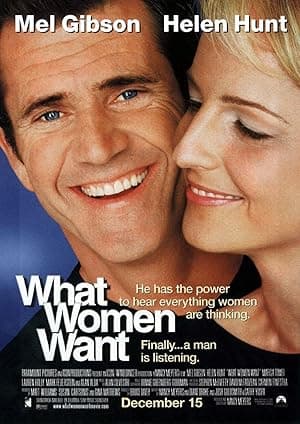
Feature presentation
What Women Want sticks in the memory for one simple trick: Nick Marshall wakes up able to hear women's thoughts. Nancy Meyers takes that premise and builds a crowd-pleasing fantasy around workplace one-upmanship, advertising culture and the clumsy business of learning to listen. It's a movie you remember for its idea before you remember much else.
THE MOVIE
Nick Marshall is still the reason this movie works
There’s a line in the movie’s premise you can explain to someone in a sentence: Nick Marshall, a cocky advertising executive, is accidentally electrocuted and, as a result, can hear women’s thoughts. That one-sentence pitch is the handshake that keeps the whole film moving.
Nancy Meyers trusts that fantasy device. The shock isn’t a cheap gag; it’s literal access to other people’s inner speech, a screenwriting shortcut that lets the comedy and the argument about gender run hand in hand.
Crucially, Nick arrives already full of swagger — a womanising creative whose reflex is charm and bravado. Mel Gibson plays him; Helen Hunt plays Darcy, the new creative director whose arrival sets up both workplace friction and the romance. That combination — a high-concept fantasy with a familiar rom‑com engine — is why the film still gets talked about.
THE SETUP
The idea that sets What Women Want in motion
The premise is tidy: a freak electrical accident gives Nick the ability to hear women’s thoughts. It’s a fantasy that turns private interiority into public comedy.
From there the film jams that premise into two simple conflicts. At work Nick is passed over for a promotion when Darcy Maguire is hired as creative director; their rivalry becomes one of the movie’s engines. At home he has a difficult relationship with his teenage daughter, which the story treats as the emotional yardstick for his changes.
The script uses the mind‑reading repeatedly. Sometimes it’s comic — misunderstandings that could only come from overhearing inner monologues — and sometimes it’s functional, allowing Nick to nudge meetings or conversations so he looks clever. But it also serves a heavier purpose: it forces Nick to confront how he thinks about women.
That mixture — gags and consequences tied to a single high‑concept device — is what keeps the film from being just a string of sketches.
THE CHARACTER
Why Nick Marshall matters
Nick Marshall is the movie’s engine because he’s built to be turned inside out. We meet him as a chauvinistic, womanising creative who skates on charm; the mind‑reading doesn’t magically fix him, it reveals him.
That revelation is what makes him memorable. The film repeatedly places private thoughts next to Nick’s public persona, so you see the gap between how he acts and what other people actually think about him.
His relationship with his teenage daughter, Alex, is important here. Alex functions as a tether: she marks the territory where Nick’s sloppy masculinity has real consequences and where a change in behaviour actually matters.
So the character matters less because of one big heroic moment and more because the premise forces him into interior repair. He’s a vehicle for the idea — and as vehicles go, he’s a lively one.
THE PERFORMANCE
Why Mel Gibson's performance matters
Contemporary reviews noted that Gibson was doing something a little different for him: a lighter, comic turn that leaned on his likability in an upbeat rom‑com rather than anything darker.
Roger Ebert in particular singled out the comic nature of the role, framing it as an unusually light part in Gibson’s career.
That doesn’t mean every critic loved the pairing. Some reviewers flagged uneven chemistry between the leads; the coupling of Gibson and Helen Hunt didn’t cohere for everyone.
Taken together, the contemporary response suggests Gibson’s casting mattered because it gave the film its blunt, confident centre — even if that centre sat uneasily with some viewers.
UNDER THE SURFACE
What Women Want has more on its mind than the plot suggests
At surface level it’s a rom‑com with a gimmick. Underneath, the film consistently returns to gender and empathy: the narrative makes transformation about learning to listen to women rather than about winning a promotion or a date.
Workplace gender politics are baked into the story. Darcy’s hiring as creative director isn’t just a plot nudge; it foregrounds corporate decisions about how to market to women and sparks the resentment that propels Nick’s arc.
That advertising backdrop also matters thematically. The movie is interested in consumer messages and who gets to shape them, which makes the mind‑reading conceit feel thematically resonant rather than arbitrary.
And finally, the father–daughter strand gives the film a personal mirror to its broader social points. Nick’s private failings with Alex echo the public failings the story asks him to correct.
THE FILMMAKING
How What Women Want was put together
Nancy Meyers sits at the film’s centre not only as director but as a creative force — she’s credited as writer, director and producer. That kind of control helps shape the movie’s tone: roomy, character‑forward and commercially minded.
The production credits underline the mainstream professionalism behind the rom‑com. Dean Cundey is listed as director of photography and Jon Hutman as production designer, while Alan Silvestri provided the score — names that point to a conventional, well‑crafted studio project.
Put simply: this is a Nancy Meyers film in the practical, credit‑list sense. It’s built to be slick, accessible and to foreground its performers and situations rather than experimental filmmaking flourishes.
That approach suits the material. A high‑concept romantic comedy needs a clear hand; the credits suggest the movie had one.
PURE 00s
What Women Want could not belong to any other decade
What Women Want opened in December 2000 and performed strongly at the box office; contemporary totals show the film among the commercial hits of that moment.
That commercial success matters because the film sits squarely in a market that, at the turn of the millennium, still had room for adult-skewing romantic comedies with big stars and mainstream hooks.
Its success also helps explain why the idea had staying power: the story lent itself to being revisited, retooled and even gender‑flipped nearly two decades later.
So while the movie feels very much of its time in its casting and studio polish, it’s the marketplace context — a major December release aiming at grown-up audiences — that anchors it to the era.
THE LEGACY
Why What Women Want still matters
Part of the film’s afterlife is simply commercial: its box‑office performance made it a notable title in Nancy Meyers’ filmography and a clear example of how adult romantic comedies could still be big business around 2000.
That economic footprint is part of why conversations about Meyers’ career and the marketplace for grown‑up rom‑coms keep coming back to this film.
And because the premise is straightforward and adaptable, it has a practical legacy too — studios later returned to the idea and reshaped it for different stars and moments.
In short: it matters as a successful, adaptable Hollywood product as much as it does for its domestic story beats.
THE VERDICT
Does What Women Want still hold up?
If you’re wondering whether the film’s central trick still works, the answer is: often. The mind‑reading premise is consistently useful — it creates comic set pieces, drives the workplace story when Darcy is hired as creative director, and forces Nick into situations that expose his attitudes toward women.
Whether the whole package convinces you will depend on what you want from a rom‑com. The movie is upfront about its genres — romantic comedy, a spoonful of fantasy and a screwball undercurrent — and it uses those tools to marry laughable situations with the idea of personal growth. The father–daughter storyline gives Nick stakes beyond the office and the courtship.
There are wrinkles. Mel Gibson’s casting gives the film a blunt, familiar centre — a contemporary reviewer even noted his unusually light comic turn — and some critics found the leads’ chemistry uneven. That means parts of the movie land by charm and premise more than by stealthy emotional truth.
So should you watch it? Yes, if you’re in the mood for a high‑concept, star‑led rom‑com about learning to listen. It’s less a deep interrogation of gender politics than a studio comedy that uses a fantasy device to ask grown‑up questions. And for many viewers, that mix is exactly the point.
Share this movie
Keep watching
More movies from the 00s

2002
The Pianist
A quiet life unmade by war — and a pianist who refuses to stop listening.
Read the retrospective
→
2006
Blood Diamond
A mercenary, a fisherman and a pink diamond — and a film that still asks who pays for our jewellery.
Read the retrospective
→
2003
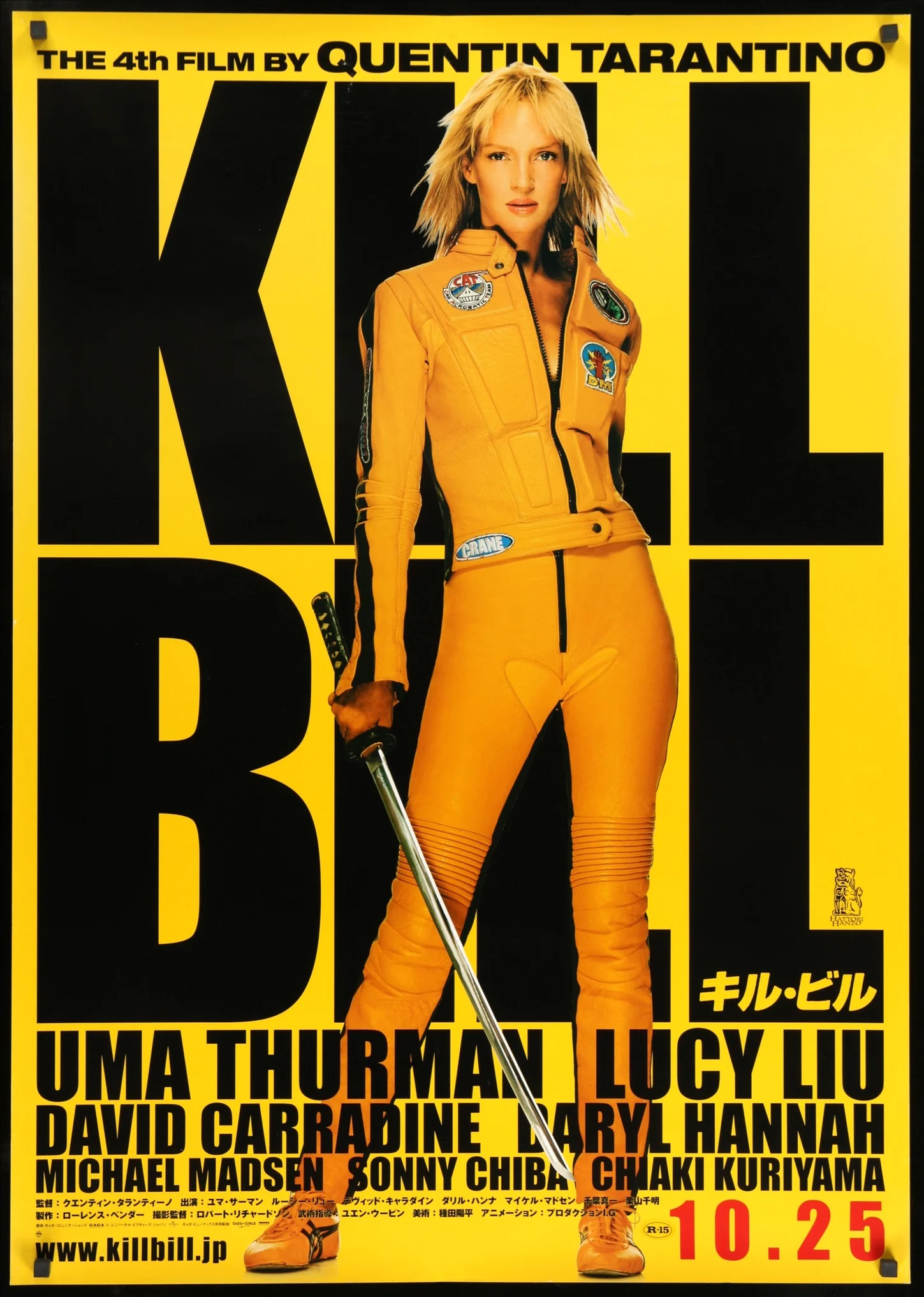
Kill Bill: Volume 1
A yellow jumpsuit, a long list of enemies and one woman who refuses to be finished.
Read the retrospective
→