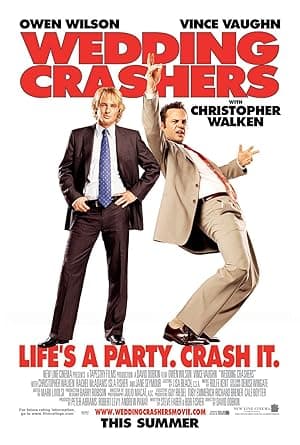
Wedding Crashers
Two mates, one set of wedding rules — and a reason to believe someone can stop treating love like a hobby.
Feature presentation
Wedding Crashers is the film you remember for its party-anarchy and the moment a cheeky hobby becomes a serious problem. Directed by David Dobkin and anchored by John Beckwith’s surprisingly tender turn, it pairs raucous buddy comedy with an actual question about settling down. Revisit it for the jokes, stay for the way the story turns the rules on their head.
THE MOVIE
John Beckwith is still the reason this movie works
Wedding Crashers opens on a simple, gleefully naughty idea: two friends who make their living as divorce mediators spend their nights crashing strangers’ weddings to drink, party and pick up women. It’s a premise built for chaos, and the film leans into that impulse with the kind of confidence that made mid‑2000s studio R‑rated comedies feel unruly again.
Everything shifts when the pair set their sights on a high‑profile wedding — the Treasury Secretary’s daughter — and stumble into the Cleary family. That weekend away is the movie’s pressure cooker: class rituals, family weirdness and old money manners all rubbing up against the crashers’ sloppy playbook.
What keeps the film from being just a string of daft stunts is John Beckwith. He’s the member of the duo whose head gets turned by Claire, whose coming‑up‑against‑actual feeling forces the plot to ask whether the rules of their game can survive a serious connection. Put bluntly: the movie’s jokes land because someone in it starts to care.
THE SETUP
The idea that sets Wedding Crashers in motion
At heart the screenplay sells a very tidy engine: two divorced‑mediator friends treat weddings like open bars with a plan. The film gives them a rules framework — a system for crashing, flirting and getting away — so the audience understands this is a game, not random misbehaviour.
That structure matters because the story is designed to break the rules. John falling for Claire is the deliberate friction that turns the crashers’ pastime into a real test. Suddenly it’s not enough to be good at the game; someone has to decide if they want something more than a one‑night laugh.
Keeping the setup lean like that — game, rule, rule breaks — lets the comedy breathe while giving the romantic stakes a simple shape. It’s efficient storytelling: the contrivance exists to put the characters under pressure, and the movie never forgets why it set them there.
THE CHARACTER
Why John Beckwith matters
Owen Wilson’s John Beckwith is the movie’s soft centre. He’s introduced as the partner in a two‑man operation, but he’s also the one whose heart is most easily tripped up. That tension — between a habit so ingrained it defines him and the sudden, inconvenient possibility of real feeling — is what turns a lot of the film’s antics into something with a bit more bite.
John matters because he’s the friend who can change. The theme of male friendship runs through the film: he and Jeremy have rules, loyalties and rituals. The emotional crux arrives when those rituals collide with a family that stages its own rituals for status and show.
So John functions as the hinge. He carries the personal cost of deception and the awkward business of trying to be sincere within a life built for insincerity. Without that character centre, the movie would be a lighter sort of romp; with him, it becomes a rom‑com that actually asks whether two people who treat love like a sport can ever stop playing.
UNDER THE SURFACE
Wedding Crashers has more on its mind than the plot suggests
On the surface it’s a buddy rom‑com that trades in deceits and pratfalls. But under the punchlines there are a few recurring ideas — male friendship, romantic commitment, deception and the way privileged families treat rituals like theatre.
Male friendship and loyalty are central: the crashers’ relationship is its own institution, complete with rules and consequences. Those rules are what give the comedy momentum, and they’re also the thing that gets questioned when one of them meets someone who refuses to play along.
Deception operates on two levels. There’s the obvious lying — fake names, fake backstories — but there’s also performative sincerity: people putting on a version of themselves to fit into weddings, power circles or sex. The Cleary family’s rituals highlight that performance, and John’s struggle is to find a way to be authentic within it.
Taken together these themes keep the movie from being merely rude and loud. They make it, intermittently, thoughtful about what happens when grown men treat intimacy as a game and what’s required if they want to stop scoring points and start showing up.
THE FILMMAKING
How Wedding Crashers was put together
Wedding Crashers is assembled like a comfortably engineered studio movie: the cast plays the beats and the production elements support the comic set pieces. Production design is worth calling out — the Cleary estate and other set pieces are handled by Barry Robison, which gives the film a consistent backdrop for its social chases and awkward dinners.
The creative backbone includes cinematographer Julio Macat and editor Mark Livolsi, names credited alongside Robison. Those are the hands that shape how the comedy reads onscreen: where to hold a reaction, when to cut for a laugh and how to keep the weekend at the Clearys feeling like a sustained pressure point rather than a series of isolated sketches.
In short, the film’s look and rhythm are the product of a reliable crew doing the job the script requires: clear setups, readable performances and a production environment that makes the Clearys convincingly affluent without overwhelming the jokes.
PURE 00s
Wedding Crashers could not belong to any other decade
Released in the summer of 2005, Wedding Crashers arrived at a moment when R‑rated, adult‑oriented studio comedies were enjoying a real second wind. It was very much of its moment: loud, a little reckless and unabashedly grown‑up in a way that studios were investing in again.
Contemporary critics frequently placed it alongside the mid‑2000s crop of raucous buddy comedies; the film’s energy was often compared to earlier fratty hits like Old School. At the same time it also tapped into a longer tradition of wedding‑set rom‑com mechanics — reviewers kept a running comparison to films such as The Wedding Singer for tone and structure.
That double position — rowdy buddy movie and wedding rom‑com — marks it as a 2000s product. It’s calibrated to an audience that wanted its laughs rougher than traditional romantic comedies, but still expected a recognisable love story to anchor the noise.
WATCHING IT NOW
What has aged — and what hasn't
A lot of the film’s sturdiness comes from its themes rather than specific gags. The male friendship at the centre still reads: the rituals, loyalties and rule‑making feel recognisable and, crucially, dramatic enough to matter to the characters.
Similarly, the Cleary family rituals still function as a dramatic device. The class dynamics and the way family ceremonies expose private faults continue to provide the same kind of friction that propels the story, which means the weekend‑at‑a‑rich‑estate structure still works as a pressure cooker.
What doesn’t age as cleanly are bits that depend purely on a shock value or casual nastiness, but since the film’s engine is emotional — a friend deciding whether to keep playing or to commit — that central motion gives it something that survives beyond topical jokes.
THE LEGACY
Why Wedding Crashers still matters
Part of the film’s afterlife is simply measurable: it was popular enough to spawn a short‑lived NBC hidden‑camera spin‑off, The Real Wedding Crashers, in 2007. That’s a blunt sign the movie had an appetite behind it for a while beyond the box office run.
It also held sway with audiences at the time: the film picked up multiple audience‑voted awards, including MTV Movie Awards for Best Movie and Best On‑Screen Team. Those wins capture how the film landed with viewers who enjoyed its chemistry and feel‑good cruelty in equal measure.
Beyond trophies and spin‑offs, the reason it’s remembered is practical: it combined a buddy dynamic with a recognisable romantic plot and a set of family scenes that stick in the memory. Those elements make it the sort of film people bring up when they want a loud, character‑driven summer comedy.
THE VERDICT
Does Wedding Crashers still hold up?
Yes — with caveats. The engine is simple: two divorce mediators crash weddings for sport, and the story flips when they target the Treasury Secretary’s daughter and John falls for Claire. That setup gives the film a real dramatic fault line: male friendship and hedonism versus the possibility of actual commitment.
The screenplay’s use of a rules system for crashing weddings keeps the jokes moving and makes John’s rule‑breaking feel earned, not merely convenient. The weekend at the Cleary estate deliberately tightens the screws: class rituals and family tensions force choices the characters can’t dodge.
So if you care about character motion — someone actually changing course from a life of games to something messy and sincere — Wedding Crashers still delivers. If you’re watching purely for stand‑alone shock gags, some of those beats may show their age. But the central engine — the friendship, the choice, the forced intimacy of a family weekend — still holds.
Bottom line: watch it for the neat collision of buddy comedy and rom‑com mechanics. The party stunts are the appetizer; John Beckwith’s decision to stick around is the main course.
Share this movie
Keep watching
More movies from the 00s
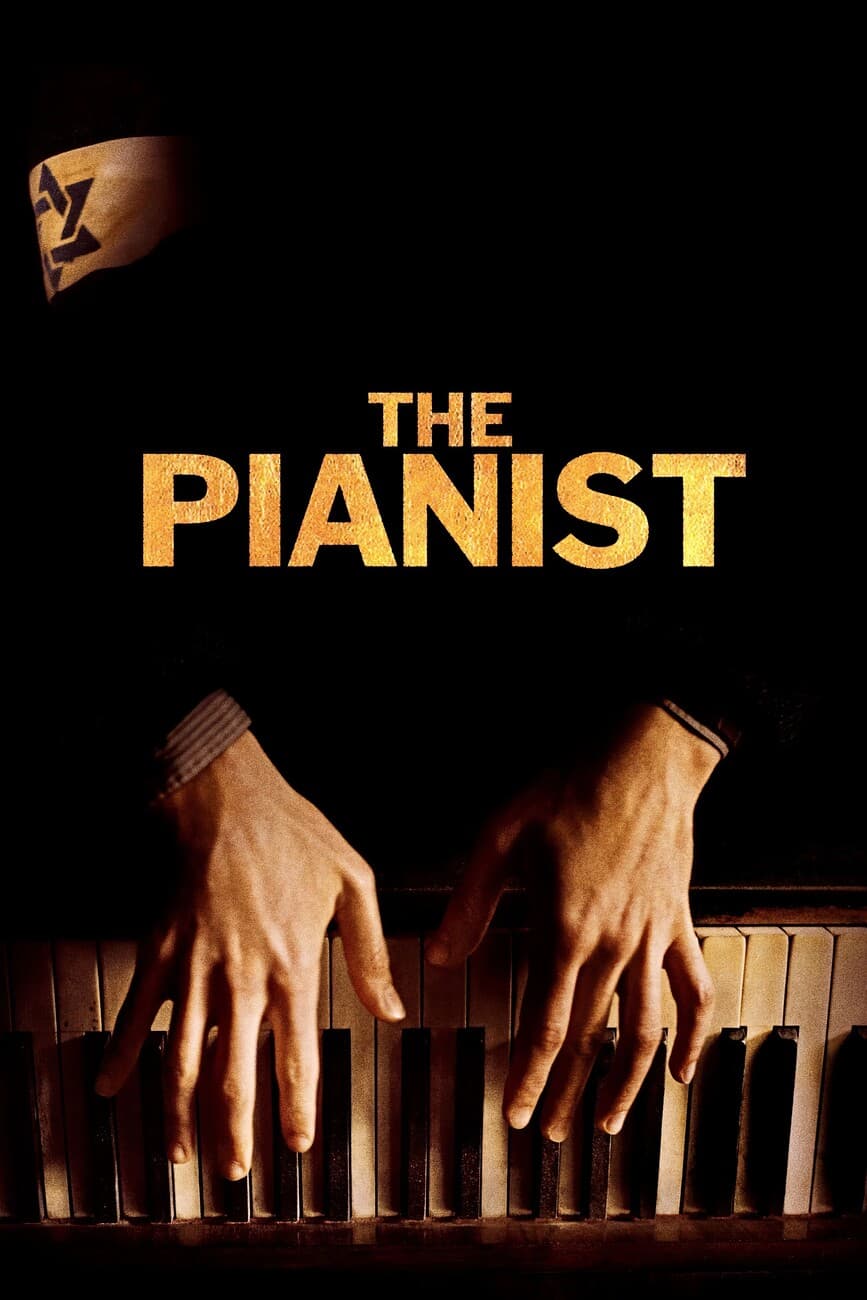
2002
The Pianist
A quiet life unmade by war — and a pianist who refuses to stop listening.
Read the retrospective
→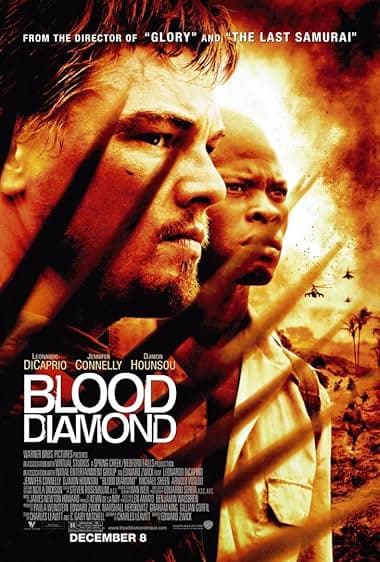
2006
Blood Diamond
A mercenary, a fisherman and a pink diamond — and a film that still asks who pays for our jewellery.
Read the retrospective
→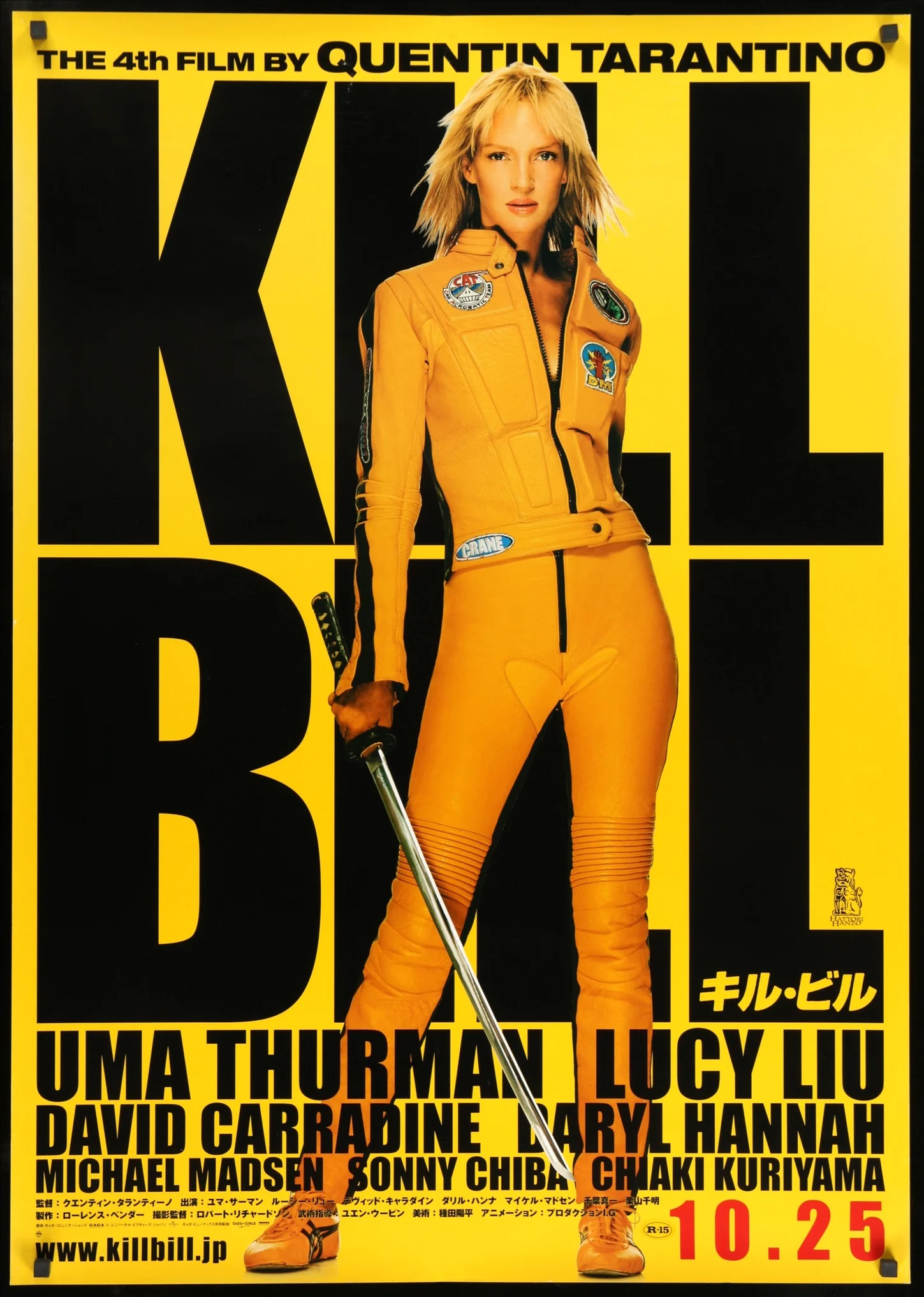
2003
Kill Bill: Volume 1
A yellow jumpsuit, a long list of enemies and one woman who refuses to be finished.
Read the retrospective
→