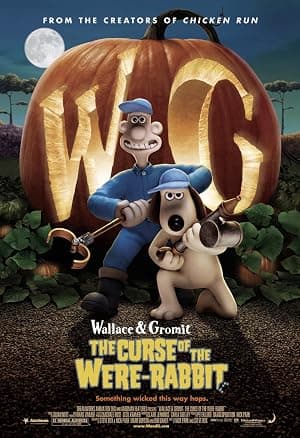
Wallace & Gromit: The Curse of the Were-Rabbit
Friendship, gadgets and a very awkward rabbit—Wallace keeps all the wheels turning.
Feature presentation
You don't need to love vegetable competitions to be won over by Wallace & Gromit: The Curse of the Were-Rabbit. What keeps this 2005 stop-motion caper lively is a very particular mixture of daft inventiveness and steady, affectionate companionship — and, yes, one dog doing the heavy thinking.
THE MOVIE
Wallace is still the reason this movie works
Wallace & Gromit: The Curse of the Were-Rabbit makes a simple promise and then delights in the complications: Wallace and his silent sidekick run a humane pest-control business that catches rabbits instead of killing them. It’s a premise that sets up kindness and comedy in the same breath.
From there the story hands Wallace the sort of problem he can’t resist — a mysterious beast trashing Tottington Hall’s vegetable plots and threatening the town’s Giant Vegetable Competition — and his inventions do the rest. The fun comes from watching well-meaning gadgets create chaos, and from seeing how the pair pick up the pieces.
Bring in the craftsmanship — this was a proper 2005 stop-motion feature directed by Nick Park and Steve Box — and Peter Sallis’s voice for Wallace, and you have a film that feels affectionate without ever getting sentimental.
THE SETUP
The idea that sets Wallace & Gromit: The Curse of the Were-Rabbit in motion
At its most practical the movie gives Wallace and Gromit a job: Anti-Pesto, a humane pest-control service. That occupational detail does a lot of emotional lifting because it tells you straight away what kind of heroes they are — not shooters, but catchers.
Then the town’s Giant Vegetable Competition and the grounds of Tottington Hall start getting devastated by an unknown creature. That mystery supplies the plot with purpose: someone needs to find the beast and stop it before the show is ruined.
So the film keeps things focused. Wallace and Gromit juggle the practicalities of running a local business, the rivalries of the townspeople and a proper detective itch to identify what’s behind the attacks.
It’s tidy storytelling: an approachable problem, a cast of motivated locals, and a duo whose skills — one loves gadgets, the other quietly fixes the fallout — make them the right people to pursue the mystery.
THE CHARACTER
Why Wallace matters
Wallace is the sort of protagonist who seeks elegant mechanical answers to emotional problems. He runs a quirky, gadget-stuffed life and those inventions are both his charm and his undoing — they solve one thing and then create something else to be fixed.
That makes him the engine of the movie. The plot’s propulsive mishaps come from his inventing itch, and the audience stays with him because his intentions are plainly good-natured: he wants to help, to impress, to do right by his neighbours and by Lady Campanula Tottington’s competition.
Crucially, Wallace is never shown alone. Gromit is the quiet counterbalance — the expressive dog who actually does most of the problem-solving — and that friendship gives the story heart. There’s also a social frame: Victor Quartermaine’s rivalries and Tottington Hall’s importance give Wallace something to strive toward beyond pure tinkering.
And because Peter Sallis supplies Wallace’s voice, that particular combination of naff optimism and earnestness is given a recognisable human anchor — which is why Wallace still lodges in the memory long after the vegetables have been carted away.
THE PERFORMANCE
Why Peter Sallis's performance matters
Peter Sallis’s casting as Wallace is an explicit part of the movie’s character design: his voice is the human thread that runs through the film’s mechanical gags and emotional beats.
Industry recognition followed: Sallis received an Annie Award for his vocal work on this production. That’s a concrete signal that his contribution was valued by his peers, not just noticed by audiences.
So when Wallace declares some hare-brained plan or speaks with daft conviction, the line readings have weight because they sit inside a performance the industry singled out. The voice helps sell the contradictions — lovable buffoon and earnest inventor — that the script needs.
In short: the film depends on a recognisable vocal centre, and Sallis provides it.
UNDER THE SURFACE
Wallace & Gromit: The Curse of the Were-Rabbit has more on its mind than the plot suggests
At face value it’s a mystery-comedy about a rabbit-eating menace. But the film runs a steady set of ideas beneath that: the relationship between Wallace and Gromit keeps returning to loyalty — one partner dreaming up plans, the other quietly keeping things running.
Invention is presented as a double-edged sword. Wallace’s gadgets are meant to be solutions; inevitably they produce unintended consequences that escalate the story. The film enjoys that domino effect — it’s where a lot of the comedy and the stakes come from.
There’s also an ethical note about how people deal with nature. The pair’s Anti-Pesto approach — capturing rather than killing pests — frames the film’s humour in a humane register and sets up moral choices that feel native to the story.
Finally, the movie plays with genre. It borrows the trappings of horror and monster pastiche without committing to dread; the pastiche becomes a playful setting in which friendship and invention do the real work.
THE FILMMAKING
How Wallace & Gromit: The Curse of the Were-Rabbit was put together
This was directed by Nick Park and Steve Box, and the production credits name Phil Lewis on production design with Dave Alex Riddett and Tristan Oliver handling cinematography. Those specific credits matter because they point to deliberate craftsmanship rather than off-the-shelf choices.
Naming a dedicated production designer and two cinematographers signals a scaled-up approach: a short-form stop-motion puppet now had the department structure of a feature, and those behind-the-scenes roles shape how the world feels on screen.
That structure makes the movie feel like a proper feature rather than a stretched-out short — the filmmaking choices underline the film’s confidence in treating Wallace and Gromit as long-form protagonists.
It’s not just about cute models; the credited creative team sets the tone and helps the film wear its craftsmanship proudly.
PRACTICAL EFFECTS
The effects work that gives Wallace & Gromit: The Curse of the Were-Rabbit its physical personality
This isn’t digital puppet play. The feature was made using traditional stop-motion model animation and extensive hand-built puppets and sets, which gives every movement a tactile quality.
Aardman built dozens of new character models for the feature and used a multi-animator workflow, meaning only tiny amounts of finished animation were produced each day. That painstaking process is what lets faces and gestures read so precisely.
Knowing those production facts explains why the film’s physical gags and visual ticks land the way they do: small, deliberate movements, not motion-capture approximation.
Put simply, the movie’s personality is partly a product of real hands shaping real models frame by frame.
PURE 00s
Wallace & Gromit: The Curse of the Were-Rabbit could not belong to any other decade
This was Wallace & Gromit’s first theatrical feature-length outing and Aardman’s follow-up to Chicken Run (2000). That move from short films and TV specials into full-length features feels very much of the early 2000s moment when stop-motion studios started aiming at global multiplex audiences.
The feature was produced in partnership with a major US distributor, which was part of a broader trend: UK stop-motion houses finding transatlantic deals so their work could travel farther than before.
Released in 2005, the film sits neatly in that phase of animation history — a time when craft-driven British animation began testing more ambitious runtimes and production scales.
So while the characters and humour are timeless in tone, the film’s very existence as a full-length Wallace & Gromit movie reflects how the 00s altered the possibilities for British animated features.
WATCHING IT NOW
What has aged — and what hasn't
As a family film its core ingredients remain straightforward: loyalty between the central pair and a plot that privileges clarity over ambiguity. Those elements haven’t dated; a dependable buddy dynamic is, thankfully, timeless.
The humane way the film treats pests — Anti-Pesto’s capture-over-kill stance — still feels like a refreshingly kind choice for a children’s movie. It gives the comedy a slightly gentler ethical spine than more violent monster pastiches.
Technically, the fact this was shot in the UK with traditional stop-motion and required many new models and an expanded animation team means the movie still wears its craft on its sleeve. That tangible craftage reads differently today than slick CGI, and for many viewers that makes it more charming, not less.
So what ages best here isn’t a joke or a gag; it’s the basic human relationships and the visible care that went into making them move.
THE LEGACY
Why Wallace & Gromit: The Curse of the Were-Rabbit still matters
There are straightforward markers: the film won the Academy Award for Best Animated Feature and the BAFTA for Outstanding British Film the year after release. Those trophies underline that this was more than a charming curio; it was a recognised achievement.
But beyond awards its legacy is practical. The production reinforced Aardman’s credentials as a company that could carry a feature and showed how British stop-motion could partner with a big distributor to reach wider audiences.
That transatlantic model — careful, handcrafted animation meeting global release — is a large part of why the film keeps being talked about when people discuss early-00s animation moves.
There’s also a quieter afterlife: the film has received anniversary theatrical runs, including a documented 20th-anniversary run in UK cinemas in April 2025, which demonstrates there’s still appetite to see Wallace and Gromit on the big screen.
THE VERDICT
Does Wallace & Gromit: The Curse of the Were-Rabbit still hold up?
Yes — this is very much worth a watch. The film’s central setup (Wallace and Gromit’s Anti-Pesto humane pest-control business) and its readable stakes (the Giant Vegetable Competition and the mystery beast) give it an immediate, sentimental clarity that still lands.
Wallace’s inventiveness is both joke engine and plot device: an accidental side-effect of his tinkering creates the monstrous problem, and watching the pair try to fix what they’ve inadvertently started is pure Wallace & Gromit business. Gromit’s steady problem-solving keeps the balance, and Peter Sallis’s recognised vocal contribution gives Wallace the tone the story needs.
It helps that the film is compact — roughly 85 minutes — and wears its stop-motion craft openly. Between the awards and the production choices, you can see why it was taken seriously on release and why it still feels like a lovingly made object today.
If you want light mystery, humane heart and a handful of daft inventions that go wrong in entertaining ways, this still delivers. And if nothing else: it’s a reminder that some cinematic affection comes from the small, human things — a dog’s look, a clumsy gadget, and the stubborn loyalty that holds it all together.
Share this movie
Keep watching
More movies from the 00s

2002
The Pianist
A quiet life unmade by war — and a pianist who refuses to stop listening.
Read the retrospective
→
2006
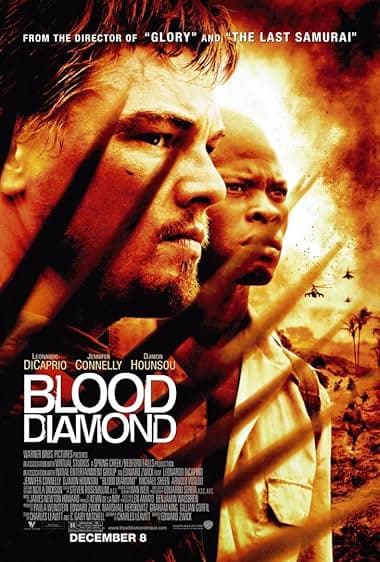
Blood Diamond
A mercenary, a fisherman and a pink diamond — and a film that still asks who pays for our jewellery.
Read the retrospective
→
2003
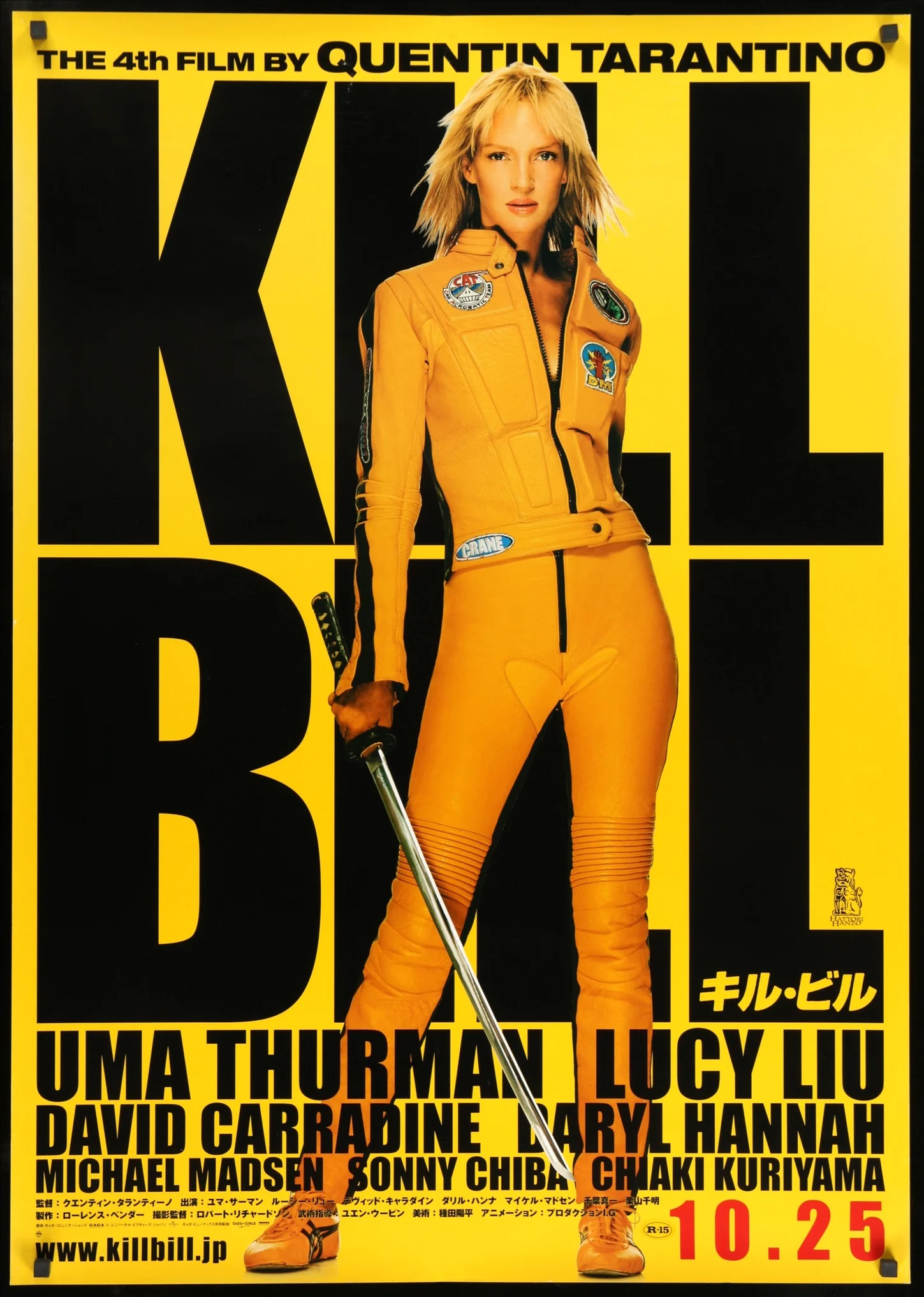
Kill Bill: Volume 1
A yellow jumpsuit, a long list of enemies and one woman who refuses to be finished.
Read the retrospective
→