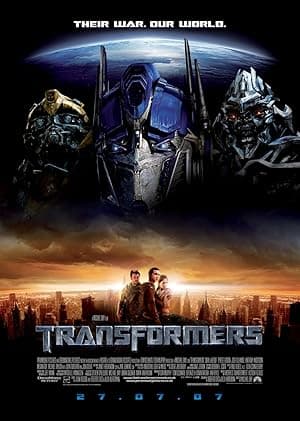
Transformers
A coming-of-age wrapped in chrome: Sam, a yellow car and the thing everyone wants.
Feature presentation
Transformers isn’t just a parade of gigantic robots smashing cities; it’s a bewildered teenager shoved into the centre of a very noisy moral traffic jam. Follow Sam Witwicky as a used car reveals itself to be more than transport, and the hunt for a mysterious object turns the world into a battleground.
THE MOVIE
Sam Witwicky is still the reason this movie works
At the heart of Transformers is a very 00s proposition: an awkward kid whose life is upended by a piece of consumer hardware that turns out to be extraordinary. Sam Witwicky buys a used car and, surprise, it isn’t a car — it’s Bumblebee, an Autobot scout with more personality than Sam’s dating life.
That relationship gives the film its centre. Around Sam orbit two bigger engines: the Autobots and Decepticons hunting the AllSpark — a mysterious object that can bring machines to life — and a secretive organisation with more answers than the public is allowed to have. Suddenly a teenage coming-of-age gets tangled with an alien MacGuffin and government secrecy.
All of which Michael Bay stages at full tilt. This is a long, loud summer picture — a 144-minute tentpole — but Sam’s accidental heroism is what stops it from being just spectacle for spectacle’s sake.
THE SETUP
The idea that sets Transformers in motion
The engine that drives everything is straightforward: the AllSpark exists and both sides of the robot family want it. What makes the hunt specific to this film is that Sam is carrying the literal map — coordinates encoded in his great-grandfather’s glasses — and that coincidence pushes a normal kid into an extraordinary chase.
From there the film arranges its action like a theme-park itinerary. It isn’t built around intricate subplots so much as a sequence of set-piece confrontations: military engagements, urban chases and an extraction convoy that keep the pace tumbling forward.
Those choices help the story work as a summer blockbuster. The AllSpark gives characters a single, urgent objective and Sam’s accidental ownership of the clue keeps the human story woven through the spectacle.
THE CHARACTER
Why Sam Witwicky matters
Sam matters because he’s the human hinge the whole film turns on. He isn’t a secret agent or an obvious hero — he’s an awkward, comic-minded everyman who keeps tripping into responsibility.
That awkwardness is useful. Against a backdrop of alien robots and military secrecy, Sam gives the audience a place to stand: someone whose mistakes, jokes and small moral choices make the stakes feel personal rather than abstract.
And crucially, Sam isn’t incidental to the plot. The coordinates hidden in his ancestor’s glasses literally put him at the centre of the hunt for the AllSpark, which is why the Autobots and Decepticons keep returning to him.
THE PERFORMANCE
Why Shia LaBeouf's performance matters
Contemporary responses singled out LaBeouf’s presence as the glue for the human storyline. He gives the film a likeable, energetic centre that makes Sam’s confusion and sudden responsibility feel believable.
That works for a movie that otherwise relishes machinery and mayhem: if the audience has to care about a kid being in danger or making choices, they need someone who can carry sympathy through the chaos. The record from when the film first arrived was that LaBeouf supplied that carry-through.
UNDER THE SURFACE
Transformers has more on its mind than the plot suggests
Underneath the explosions sit a handful of clear ideas. First: coming-of-age. Sam is a young man suddenly handed adult-scale responsibility during a global crisis, and the movie traces how he navigates that shift.
Second: human–technology attachment. The film foregrounds emotional and cultural ties to machines — cars, gadgets — and makes those attachments a real part of the story rather than mere props.
Third: there’s a tension between military secrecy and public safety. Sector 7’s hoarding of alien tech raises the question of who should control dangerous knowledge when the public is at risk.
Finally, spectacle and consumer culture are threaded through the whole enterprise: this is a big-brand movie about branded machines, and that business-as-entertainment attitude is part of its personality.
THE FILMMAKING
How Transformers was put together
On the technical side, Transformers was shot as a large-format, big-budget studio production. The scale is evident in the way scenes are staged: multiple camera systems and significant location and studio work give the film its broad, cinematic feel.
That production approach matters because it lets the movie shift quickly between intimate human moments and widescreen set pieces without feeling stitched together. The human moments stay connected to the spectacle because both were planned on the same production scale.
PRACTICAL EFFECTS
The effects work that gives Transformers its physical personality
Alongside the digital work, the production relied on real-world pyrotechnics and coordinated stunts. Large physical explosions and staged military sequences give several action beats a tangible punch.
The filmmakers also worked with real military hardware and secured cooperation for certain aerial and equipment sequences. Those physical elements stop some scenes feeling entirely virtual and help ground the robots in a recognisably military world.
PURE 00s
Transformers could not belong to any other decade
This film arrived as a very 2000s tentpole: a toy-and-animation property retooled into a live-action franchise launch, designed to be as much about tie-ins and merchandising as it was about the story on screen.
Visually it also represents mid-2000s CGI confidence. The movie’s effects exemplified a period when studios were investing heavily in photoreal character animation for live-action films, and that ambition is a big part of why Transformers felt like a next-step spectacle at the time.
Finally, its release into the summer blockbuster window — the film opened in 2007 around Independence Day — positioned it as a major non-sequel money picture, built to play big in cinemas and play big in the market that surrounds them.
THE LEGACY
Why Transformers still matters
Transformers matter because they launched a multi-film live-action franchise that kept returning to Sam Witwicky’s story and later explored the universe in other ways, including a spin-off prequel.
The film’s visual-effects work also received industry recognition, earning an Academy Award nomination in Best Visual Effects and several Visual Effects Society awards — a reminder that the pictures were pushing technical boundaries for the period.
And commercially it was a big success worldwide, one that revitalised large-scale merchandising tie-ins for the brand and proved there was appetite for an expensive, toy-driven blockbuster.
THE VERDICT
Does Transformers still hold up?
Yes — if what you want is a summer blockbuster built around a simple, effective human hook. At its core the film gives us Sam Witwicky: an awkward, comic-minded everyman who accidentally carries the key (his ancestor’s glasses) that points everyone to the AllSpark. That human through-line keeps the spectacle from being aimless.
The movie’s action is what it promises: set-piece after set-piece — military engagements, chases and large confrontations — staged on a big production scale and supported by a mix of practical pyrotechnics and heavy visual-effects work handled by ILM. If you enjoy a film that chooses spectacle and leans into it, Transformers delivers.
And it still matters beyond the screen. It launched a franchise, it was recognised for its effects work, and it turned a toy property into an ongoing cinematic proposition. But if you’re after subtlety, this isn’t the place; it’s a long, confident picture that prefers movement to meditation.
Bottom line: watch it for Sam and the way the film makes human stakes sit inside enormous machines. The robots are the headline. Sam is the reason anyone reads the story.
Share this movie
Keep watching
More movies from the 00s

2002
The Pianist
A quiet life unmade by war — and a pianist who refuses to stop listening.
Read the retrospective
→
2006
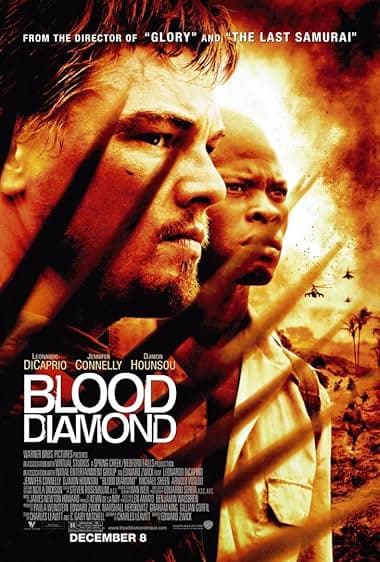
Blood Diamond
A mercenary, a fisherman and a pink diamond — and a film that still asks who pays for our jewellery.
Read the retrospective
→
2003
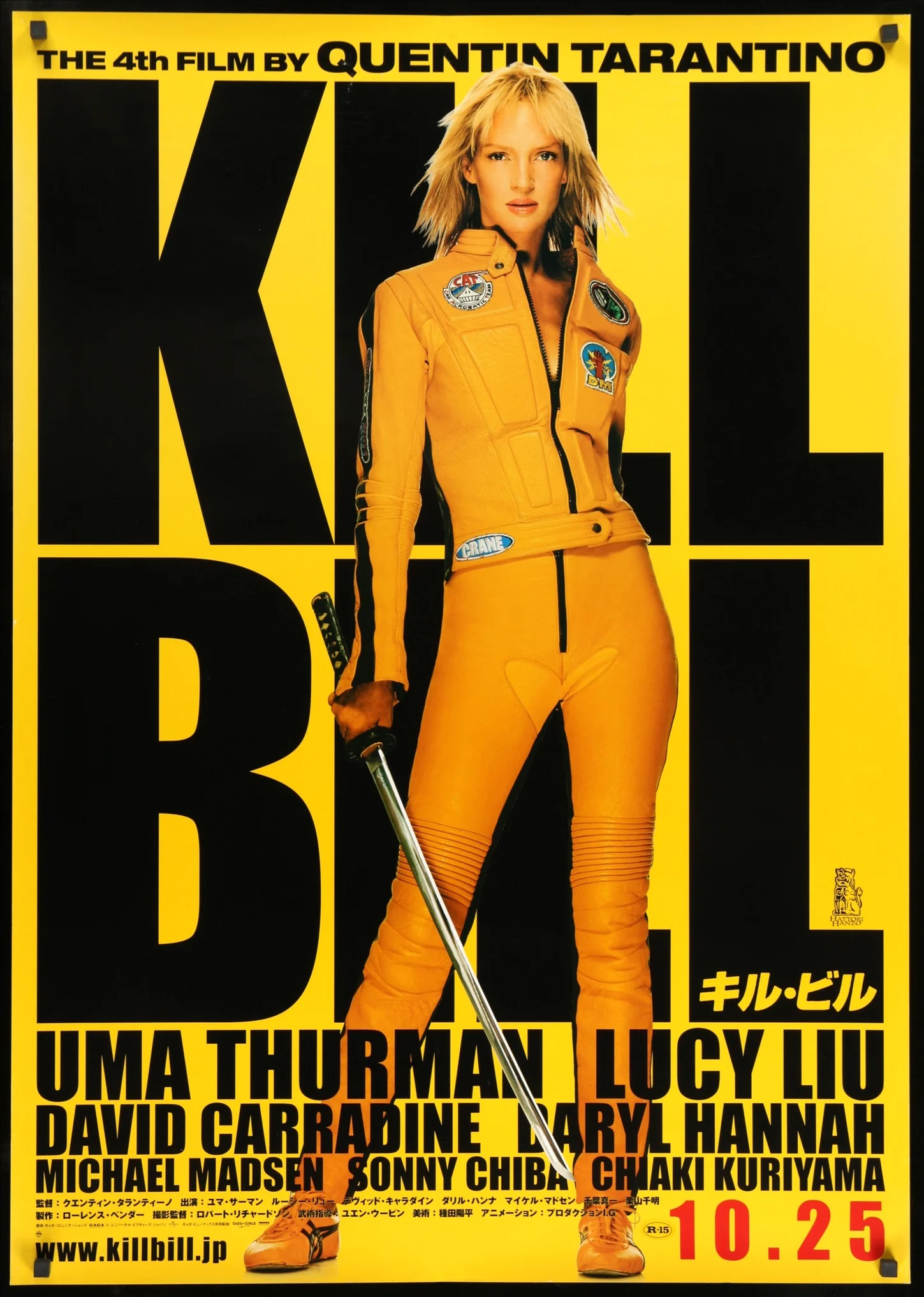
Kill Bill: Volume 1
A yellow jumpsuit, a long list of enemies and one woman who refuses to be finished.
Read the retrospective
→