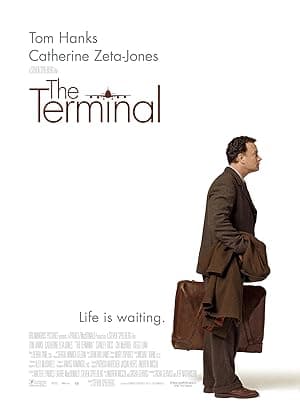
The Terminal
A man with no country, an airport full of rules — and a very small, stubborn quest for one last autograph.
Feature presentation
Viktor Navorski turns up at a New York airport and, because his homeland has suddenly ceased to exist for the purposes of paperwork, promptly becomes impossible to move. Steven Spielberg made a spacious, melancholic tragicomedy out of that hold‑up: a story that trades explosions for queues, and political exile for a strangely cosy community in transit. It still asks a simple question: what happens to someone who belongs nowhere yet insists on doing one decent thing?
THE MOVIE
Viktor Navorski is still the reason this movie works
You remember the image before the politics: a man arrives with a suitcase and a purpose, and by morning his passage has been cancelled by events he cannot control. That sudden legal invisibility is the tiny catastrophe that runs through The Terminal and keeps everything humanly urgent.
Spielberg steers the film away from melodrama by giving Viktor a clear, domestic reason to be in New York — he’s there for one last autograph to finish his late father’s collection — so his exile feels like a purposeful stop rather than an aimless exile.
It helps that the set‑up makes rules the antagonist. When passport control refuses both entry and return, the terminal becomes a stage for compassion, frustration and the odd, small kindness that replaces the usual cinematic cliff‑hanger.
THE SETUP
The idea that sets The Terminal in motion
At its simplest: Viktor Navorski is stranded in transit because a coup in his country invalidates his documents. He exists in a legal grey zone where airport rules matter more than anything else.
That bureaucratic limbo is the engine of the film. Viktor cannot lawfully step into the United States, yet neither can he be sent home, so every scene is a negotiation with the terminal’s shifting jurisdictional boundaries.
The screenplay turns airport routine into plot mechanics. Gates, transit lounges and official procedures become obstacles — and occasionally tools — for Viktor as he scraps together a life between departures and arrivals.
It’s not an action film. Most of the drama is quieter: finding shelter, doing informal work, trading favours, making friends with staff and nailing down a small, restrained romantic thread that never turns the whole thing into screwball comedy.
UNDER THE SURFACE
The Terminal has more on its mind than the plot suggests
On the surface it’s a gentle tragicomedy about a man stuck in an airport. Underneath, the film keeps returning to statelessness and the odd moral weight of bureaucracy: what does it do to a person when no country will claim them?
It’s also about how institutions contain their own communities. The terminal isn’t just rules and glass; it’s janitors, baggage handlers and service workers whose daily lives intersect with Viktor’s in ways that are both practical and humane.
Language and migration hang over the conversations. Viktor’s outsider status exposes how communication, or the lack of it, shapes the way people are treated inside official systems.
And at its heart is a small human quest — filial duty, an autograph — that reframes his presence as purpose rather than mere survival. That choice turns bureaucratic limbo into something almost noble.
THE FILMMAKING
How The Terminal was put together
There’s a practical ambition behind the movie’s quietness: the production built a three‑storey, full‑scale terminal inside a hangar so the story could inhabit a single believable world without a dozen rushes between locations.
Because active airports wouldn’t permit a long shoot, that decision kept the environment consistent and allowed the film to stage small, character‑focused moments amid fully dressed retail units and functioning set pieces.
That controlled, continuous space helps the film sustain its tone. The terminal becomes a place you can move through in a single thought, which suits a story more interested in daily routines than blockbuster crescendos.
In short: the filmmaking choice to recreate the terminal gives the movie the freedom to linger on humane details without worrying that the logistics will collapse the premise.
PRACTICAL EFFECTS
The effects work that gives The Terminal its physical personality
The terminal interior was not a few cosmetic flats; it was a purpose‑built, earthquake‑rated structure inside a vast aircraft hangar. That gives the movie a solidity you notice even when nothing dramatic is happening.
Many of the stores and food units were dressed as real businesses and some were fitted with working equipment, which lets actors interact naturally instead of miming in front of blank façades.
For exterior vistas the production mixed physical backings with digital matte work, and some sequences required matched shooting between the Palmdale set and Montréal–Mirabel runway shots to keep the geography believable.
All of this added up to a tactile world where small gestures — buying a coffee, sneaking into an unused gate — feel credible because the camera trusts the set to support them.
PURE 00s
The Terminal could not belong to any other decade
Released in 2004, The Terminal sits squarely inside early‑2000s filmmaking where big directors were still making humane, talkative films about ordinary people confronting messy institutions.
The film’s production choices were shaped by the era’s realities: heightened airport security after September 11 made shooting long stretches in an active terminal impossible, nudging the team towards that huge constructed set.
That context matters because the movie is quietly negotiating anxieties about travel, borders and control — concerns that felt immediately topical in the early 00s and which the film channels without ever becoming polemical.
Viewed in its moment, it reads as part of Spielberg’s early‑2000s string of character‑driven stories that preferred human detail over spectacle.
WATCHING IT NOW
What has aged — and what hasn't
One element that still holds up is the production design: reporters and home‑media coverage repeatedly single out the Palmdale terminal as an impressive, early‑2000s practical achievement.
The film’s focus on friendship and community within institutions also feels comparatively fresh. The smaller, human exchanges — workers lending help, a makeshift family forming — continue to read as humane rather than quaint.
The premise’s inspiration from a real man living in an airport keeps the story anchored to an odd, true‑life idea, which helps the comedy and the pathos sit together without either undercutting the other.
Seen now, the movie trades the era’s anxieties for something quieter: a portrait of people trying to be decent inside systems that often make that difficult.
THE LEGACY
Why The Terminal still matters
Part of the film’s afterlife is its loose association with a famously odd true story: the real‑life case of a man who lived in an airport for years gave the project a curious, headline‑friendly seed.
In production terms, the Palmdale terminal and the film’s large‑scale art direction get mentioned again and again in discussions about practical set work from the era — a concrete example of early‑2000s ambition on a contained project.
Its distribution followed the standard path for the time: a theatrical release in 2004 followed by home‑video windows and later reissues on newer formats.
So its memory is double‑sided: both a neat human tale worth revisiting and a watchable example of how much effort a studio would put into creating a single believable environment.
THE VERDICT
Does The Terminal still hold up?
Yes — but with a small rider. The movie works best when you let it be what it is: a character piece powered by bureaucratic friction rather than a plot of escalating thrills.
If you enjoy watching people carve a life out of rules, the film’s day‑to‑day survival beats and the community that grows around Viktor repay a repeat viewing. His private mission — finishing his late father’s jazz‑autograph collection — gives the whole thing a humane spine that stops it from drifting into mere whimsy.
Tom Hanks at the centre and Spielberg at the helm make for a steady watch; the big, practical terminal set keeps the film tangible in a way that many smaller, location‑shy productions can’t match.
So should you watch it now? If you like films where authority and compassion rub up against each other, where quiet stubbornness wins small victories, The Terminal still has something to give. It’s less a time capsule and more a tidy parable about what people will do for one another when rules forget to account for decency.
Share this movie
Keep watching
More movies from the 00s

2002
The Pianist
A quiet life unmade by war — and a pianist who refuses to stop listening.
Read the retrospective
→
2006
Blood Diamond
A mercenary, a fisherman and a pink diamond — and a film that still asks who pays for our jewellery.
Read the retrospective
→
2003
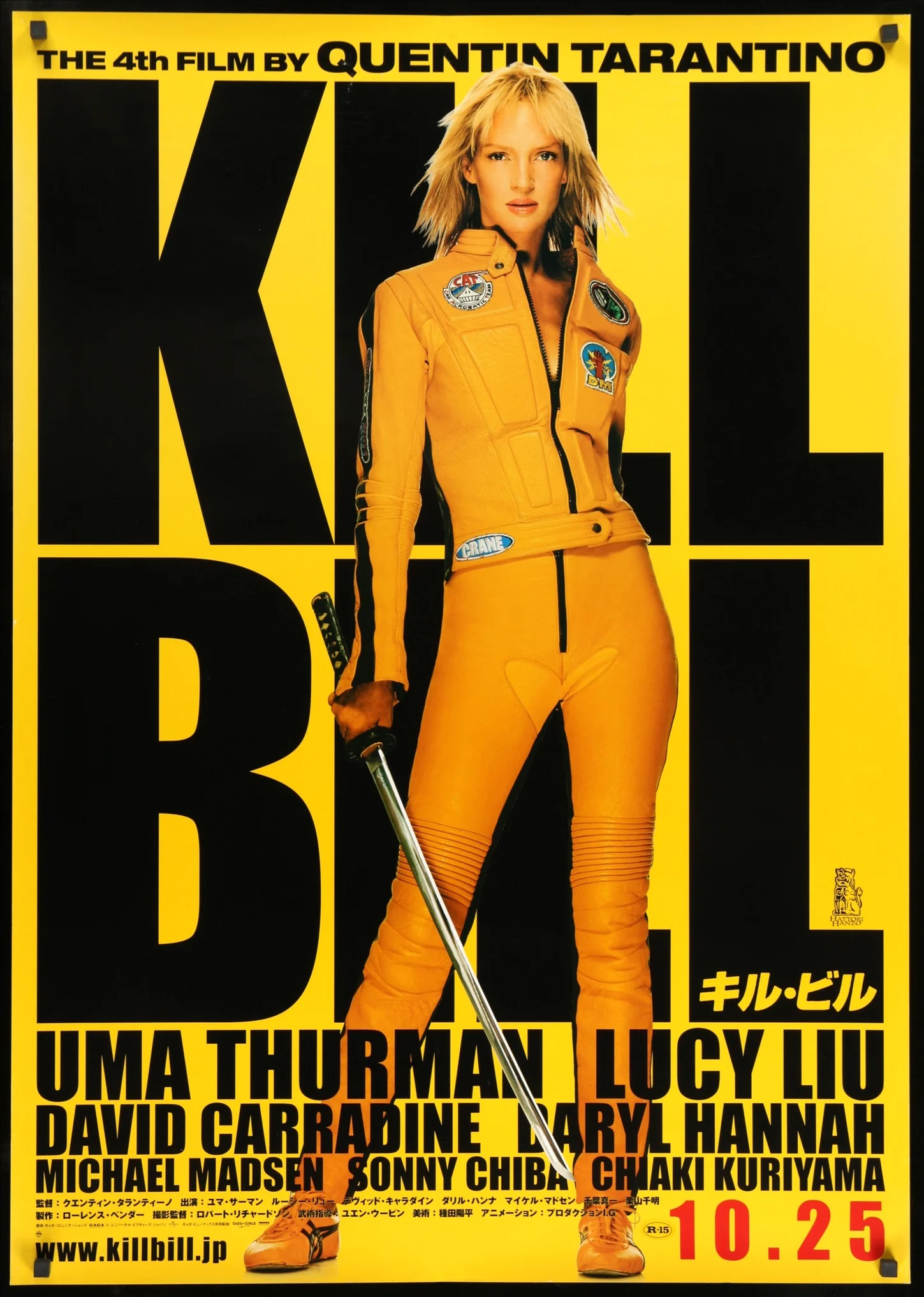
Kill Bill: Volume 1
A yellow jumpsuit, a long list of enemies and one woman who refuses to be finished.
Read the retrospective
→