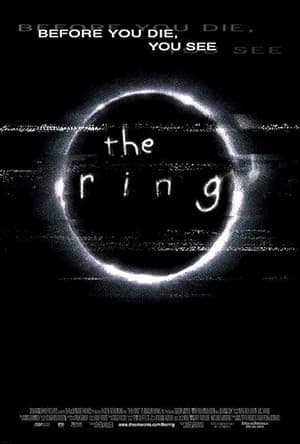
The Ring
A cursed videotape, seven days on the clock—and a mother who refuses to let the clock win.
Feature presentation
Remember that phone call? The one that turns scepticism into panic and a routine into a race against time. The Ring centres that panic on Rachel Keller, a single mother whose hunt for answers turns every domestic corner into a place that can’t be trusted.
THE MOVIE
Rachel Keller is still the reason this movie works
The image most people remember from The Ring isn’t a jump scare so much as a ticking promise: watch the tape and you have seven days. That compact, terrible bargain is the engine the whole movie runs on.
What hooks you is not just the video but who it hooks. Naomi Watts’s Rachel Keller is a single mother and an investigative newspaper reporter who goes from sceptic to someone doing anything to save her son after she watches the tape and receives that ominous phone call.
Directed by Gore Verbinski, The Ring straps a domestic desperation to a supernatural clock, and it’s Rachel’s refusal to treat the threat as someone else’s problem that gives the film its teeth.
THE SETUP
The idea that sets The Ring in motion
At its simplest the film sells a single, horrifying rule: a short, disturbing videotape curses anyone who watches it to die seven days later. That rule keeps the plot lean and the tension taut.
The inciting incident is straightforward and effective. After several teenagers die seven days following a viewing, Rachel watches the tape herself and gets the call — the moment scepticism collapses into urgent, practical fear.
From there the story becomes a race. Rachel’s central conflict is beating that seven-day deadline by tracing the tape’s origin and finding a way to stop the curse before it reaches her son, Aidan.
The movie even treats time as a visible mechanic: the seven-day countdown is shown on screen repeatedly, a neat bit of filmmaking that turns a supernatural threat into a measured deadline you can watch with a stopwatch.
THE CHARACTER
Why Rachel Keller matters
Rachel isn’t an academic or an occultist. She’s a working investigative reporter and a mother — which is to say the film gives us someone with both the curiosity to dig and the real-world stakes to keep digging when answers look dangerous.
That combination matters. The plot’s momentum comes from decisions a parent would make: following every lead, questioning every comfortable explanation, turning private panic into practical action.
Her role also ties into the film’s wider cast: older figures like Richard Morgan are there to connect dots in the backstory she’s unraveling, but Rachel is the one who carries the work from desk to doorstep.
Put simply: The Ring’s horror asks us to imagine a menace that can reach into family rooms, and Rachel is the adult who refuses to let it take her child without a fight.
THE PERFORMANCE
Why Naomi Watts's performance matters
Contemporary conversations about The Ring reliably pointed to Naomi Watts as the film’s emotional anchor. Reviews singled her out as the centre that keeps the story believable when the premise demands we accept something outlandish.
That matters because the concept — a cursed tape and a seven-day clock — needs a human ledger to tally the consequences. Watts’s presence gives the movie its practical urgency: the investigation is personal, not merely procedural.
So while the plot supplies the terror, the performance supplies the consequences you care about. Without an adult figure willing to make the story domestic and fraught, the whole thing risks becoming clever but cold.
UNDER THE SURFACE
The Ring has more on its mind than the plot suggests
The movie is not merely about a spooky tape; it’s about what happens when private trauma starts to leak into ordinary life. Buried trauma bubbles up through small domestic details and the story treats it as a contagious thing.
There’s also a running idea of technology-as-malice. A videotape — an ordinary object in many households at the time — becomes a delivery system for horror, which makes the modern home feel suddenly unsafe.
And at the heart of it sits maternal protection. Rachel’s choices read less as investigative cool-headedness and more as pragmatic acts a parent will perform to keep a child alive.
Finally, the countdown mechanic turns destiny into something measurable. The seven-day clock means characters keep time with fate, and that pressure reframes every decision as urgent.
THE FILMMAKING
How The Ring was put together
Bojan Bazelli is credited as the director of photography, and the production leans on a distinct, moody look: desaturated blue/green tones and an overcast, rain-lashed sense of domestic unease underpin the film’s atmosphere.
That look isn’t incidental. The production design and lighting choices — backed by credited design and costume personnel — sculpt ordinary interiors into spaces that feel damp and vulnerable.
On top of that, the editing and shot choices serve the story’s countdown logic: the film treats time visibly, using its cinematography and design to make the ordinary feel payable at a steep price.
Put another way: The Ring builds its dread by making everyday places look like thresholds rather than safe havens, and the credited visual team are the ones who pay that idea off.
PRACTICAL EFFECTS
The effects work that gives The Ring its physical personality
The credits don’t hide the fact that practical and makeup effects were part of the film’s fabric: Rick Baker is listed among special-makeup effects personnel, which anchors the film’s more physical, body-reveal moments in traditional effects craft.
At the same time the production named Charles Gibson as visual-effects supervisor, so the movie’s uncanny moments are a blend of physical make-up artistry and supervised visual work rather than a single trick.
That combination keeps certain horrors tactile. When the film needs something to feel physically present, the credits show it had people tasked with making the unsettling feel touchable.
PURE 00s
The Ring could not belong to any other decade
The Ring sits squarely in the early-2000s moment when American studios were adapting Japanese horror hits for U.S. audiences. It’s one of the high-profile examples of that wave, relocating and reworking Ringu for a different setting.
Its October 2002 studio release also placed it inside a mainstream resurgence of atmospheric supernatural horror — films that aimed for creep and mood rather than outright gore.
So the movie feels of its time in subject and strategy: an overseas story recalibrated for American domestic life and released at a moment when audiences were ready to be unnerved by things that could sit in a living room.
THE LEGACY
Why The Ring still matters
The Ring’s legacy is twofold: it spawned an American sequel and it became part of the larger Ring/Ringu property that exists across markets, which keeps the story available beyond its initial release.
It’s also a touchstone in conversations about successful American remakes of Japanese horror — and it has kept a presence through home-video and reissue campaigns, including later Blu-ray and 4K releases that keep the film in circulation.
That continuing availability helps. A movie that’s easy to find is a movie people can reassess, argue over, or introduce to new audiences, and The Ring’s place in those remake conversations is what gives it a steady afterlife.
THE VERDICT
Does The Ring still hold up?
Yes — for the reasons it was made. The Ring’s central bargain (watch a tape, die in seven days) remains a brilliantly economical horror engine, and the on-screen countdown keeps the stakes painfully immediate.
But more important is what the film does with that engine: it hands the problem to a mother who will not accept distance. Rachel Keller’s race against time to save herself and Aidan turns a ghost story into a domestic thriller with an emotional charge.
The film’s production choices — its moody look, tangible effects credits, and the way it makes technology feel like a delivery system for trauma — still combine into a coherent, unnerving experience.
So if you’re wondering whether to watch it: this is a film that still rewards the audience who cares about who is being threatened. It’s not just a spooky tape; it’s a small, effective machine built to make you worry about children and the places we think are safe.
Share this movie
Keep watching
More movies from the 00s
2002
The Pianist
A quiet life unmade by war — and a pianist who refuses to stop listening.
Read the retrospective
→
2006
Blood Diamond
A mercenary, a fisherman and a pink diamond — and a film that still asks who pays for our jewellery.
Read the retrospective
→
2003
Kill Bill: Volume 1
A yellow jumpsuit, a long list of enemies and one woman who refuses to be finished.
Read the retrospective
→