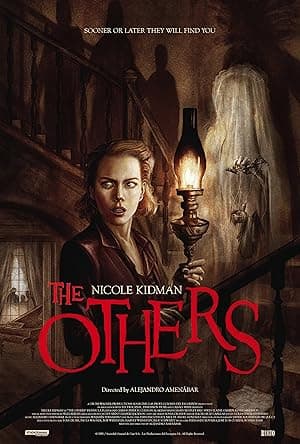
The Others
A governess, a dark house and a mother who will do anything — The Others still centres on one stubborn, watchful woman.
Feature presentation
Talk about The Others and the conversation always circles back to Grace Stewart. Alejandro Amenábar’s English‑language gothic horror keeps you in a near‑darkness long enough to notice the little things: rules, rituals, and a mother whose need to control is as important as any poltergeist.
THE MOVIE
Grace Stewart is still the reason this movie works
The Others is a film you remember not because it throws spectacle at you, but because it sets up a single stubborn world and asks you to live in it. Set in 1945 on Jersey, Grace Stewart and her two children never turn on the curtains: the kids are painfully sensitive to light, and the house is run like a fortress against daylight.
When new servants arrive, the manor begins to act up. Small, escalating disruptions — the sort of details that peel away a family’s certainties — are what escalate Grace’s suspicion that the house is haunted.
That suspicion matters because Grace herself matters. Nicole Kidman’s Grace is written and staged as an imperious, fiercely protective mother whose strict control of the household becomes the engine of the drama. Amenábar directs with a steady hand; the film’s compact 104‑minute runtime keeps the pressure taut.
THE SETUP
The idea that sets The Others in motion
The film’s premise is straightforward and strict: Grace and her children live in a remote manor in 1945, keeping the house in near‑darkness because of the children’s extreme photosensitivity. That constraint is gameplay for the story — rules breed tension.
Amenábar chose to frame the tale as a classical gothic haunted‑house mystery rather than a parade of effects. You get rising unease through ambiguous, often domestic incidents rather than big setpieces.
That approach makes the film feel more claustrophobic; there’s nowhere to escape the rules and no easy explanation offered up front. It’s a set of small discoveries, each one nudging the family — and the audience — toward a bigger truth.
THE CHARACTER
Why Grace Stewart matters
Grace is not a neutral protagonist you drift along with; she’s an organising principle. The film positions her as a woman who governs the household with iron rules because the children’s very lives, or so she believes, depend on it.
That fierce protectiveness reads as devotion and as control at the same time. The tension of the film largely comes from watching those two things—care and command—rub against each other in a house that refuses to behave.
Because the story keeps the family cut off and in shadow, Grace’s decisions carry more weight than they would in a noisier, more populated world. Her rules aren’t quirks: they are survival tactics made into doctrine.
All of which is to say: this isn’t a haunted‑house movie where the house is the only personality. Grace is a character who fills the frame with intention; everything that happens bounces off her decisions.
THE PERFORMANCE
Why Nicole Kidman's performance matters
Contemporary reviewers repeatedly pointed to Kidman’s controlled, restrained turn as a central pillar of the film. That’s careful language: it doesn’t demand fireworks, it says the role needed a particular kind of tension and Kidman supplied it.
The restraint matters because of the story’s strategy. When you’ve built a film from small, ambiguous incidents, the lead has to carry composure and conviction; otherwise the atmosphere collapses into melodrama.
Put simply: the film depends on someone who can make every soft‑spoken order and tiny denial feel consequential. Contemporary criticism singled Kidman out for doing that, which is why her presence is inseparable from the movie’s tone.
That critical emphasis on the central performance also helped make the cinematography and sound design feel purposeful rather than decorative; they’re there to amplify the choices happening on screen.
UNDER THE SURFACE
The Others has more on its mind than the plot suggests
At its heart The Others is a study of how grief and denial can remodel a household. The film keeps pulling its characters back toward belief systems—rules, rituals, faith—that help them avoid a harder truth.
Maternal protection and control are not just character detail; they’re thematic pressure. Grace’s caregiving slides into command because the family’s isolation and the stakes of the children’s condition turn every choice into a life‑or‑death calculus.
Isolation itself is a thematic engine. Living cut off from the outside world changes how people make sense of events; voices echo differently, and doubt gets harder to shake.
All of this sits alongside questions of faith and guilt and the film’s interest in perception versus reality. The Others keeps asking whether what the family sees is real, or whether their fear and grief are bending what they perceive.
THE FILMMAKING
How The Others was put together
A lot of the film’s power is in the space around performances. Contemporary criticism singled out the cinematography and sound design alongside Nicole Kidman’s central turn — the camera and audio choices are repeatedly mentioned as co‑conspirators in the mood.
Amenábar wrote, directed and composed for the film, which helps explain its tight, consistent identity: a single creative voice shaping story, tone and music so the movie speaks with one, steady register.
Because the storytelling favours small, creeping disturbances over big shocks, production choices were clearly aimed at sustaining atmosphere: everything is calibrated to hold tension rather than release it in spectacle.
PRACTICAL EFFECTS
The effects work that gives The Others its physical personality
The scares in The Others come more from production‑design, lighting and sound than from showy digital tricks. The movie repeatedly relies on physical set elements and atmospheric design to make the house feel inhabited and uncanny.
Specialist local effects houses handled the optical and visual work credited in production notes, but those contributions were integrated into a production that prioritised mood and tangible set pieces over overt digital spectacle.
That balance is why the house reads as physically present in every scene: the effects are there to support the world rather than call attention to themselves.
In short: The Others is a film that uses practical setcraft and discreet optical work to keep its uncanny moments believable and properly in the service of story.
PURE 00s
The Others could not belong to any other decade
Amenábar’s first English‑language film arrived at the start of the 2000s when mainstream audiences were open to literary and psychological ghost stories. That timing let The Others sit alongside late‑’90s and early‑’00s pictures that favoured ambiguity and mood.
The movie was repeatedly compared to classical governess and haunted‑house works in contemporary criticism, which helped audiences read it as part of a long tradition rather than a throwback.
Its 2001 release and the choice to tell a gothic story in a restrained, literary vein make it feel very much of that moment: a polished international film that trusted slow accumulation of dread over jumpy shock tactics.
Screening in competition at festivals and reaching mainstream release in August 2001 also framed it as a film that could cross the festival/art and commercial divide in a way that mattered at the time.
WATCHING IT NOW
What has aged — and what hasn't
If you return to The Others now, the things critics pointed to back then still do the heavy lifting: atmosphere, cinematography and mood. Later retrospectives and home‑video restorations — including a high‑quality 4K edition — underline how those elements keep the film watchable.
The film’s success at Spain’s Goya Awards and its multiple nominations at the time remain a reminder that it was both a critical and a production achievement when it came out.
Structurally, the deliberate withholding of information and the film’s commitment to small discoveries tend to reward repeat viewing; the reveal at the end sits on a scaffold the movie has carefully erected rather than on a cheap twist.
That said, its pleasures are specific: if you prefer loud scares or explicit explanations, The Others won’t satisfy in the same way. But its atmospheric strengths remain intact.
THE LEGACY
Why The Others still matters
The Others left its mark by doing what it set out to do: it found a broad audience for a tightly controlled gothic piece. The film was a major international commercial success and its haul at the Goya Awards — including Best Film and Best Director — confirmed its stature in Spain.
It also sustained attention in genre and academic circles, earning awards and nominations internationally and continuing to be discussed and released in notable home‑video editions, which keeps it circulating in the critical conversation.
More recently, rights for a reimagining have been reported as changing hands and projects discussed in the industry, which is another sign that the story and its central ideas remain of interest to creators.
All of which means The Others is remembered as a film that proved a carefully made, atmosphere‑driven horror could reach wide audiences and keep a critical afterlife.
THE VERDICT
Does The Others still hold up?
Yes — if what you want is a haunted‑house picture that trusts atmosphere, character and a slow burn. The film’s structure withholds information and builds through small discoveries toward a major revelation, and that architecture still rewards attention.
Nicole Kidman’s Grace is the engine: an imperious, fiercely protective mother whose need for control drives the interpersonal tension. Contemporary criticism singled out Kidman’s restrained central performance as essential to that effect, and the film’s quieter, more deliberate tone depends on it.
The story’s concerns — maternal protection stretched to extremes, grief and denial, and the psychological dangers of isolation — remain compelling and, crucially, coherently handled within Amenábar’s gothic frame.
If you approach The Others expecting atmosphere over answers, it remains a smartly made and watchable example of early‑00s gothic horror. It’s a house that still keeps you close to its rules — and that’s exactly where the movie wants you.
Share this movie
Keep watching
More movies from the 00s

2002
The Pianist
A quiet life unmade by war — and a pianist who refuses to stop listening.
Read the retrospective
→
2006
Blood Diamond
A mercenary, a fisherman and a pink diamond — and a film that still asks who pays for our jewellery.
Read the retrospective
→
2003
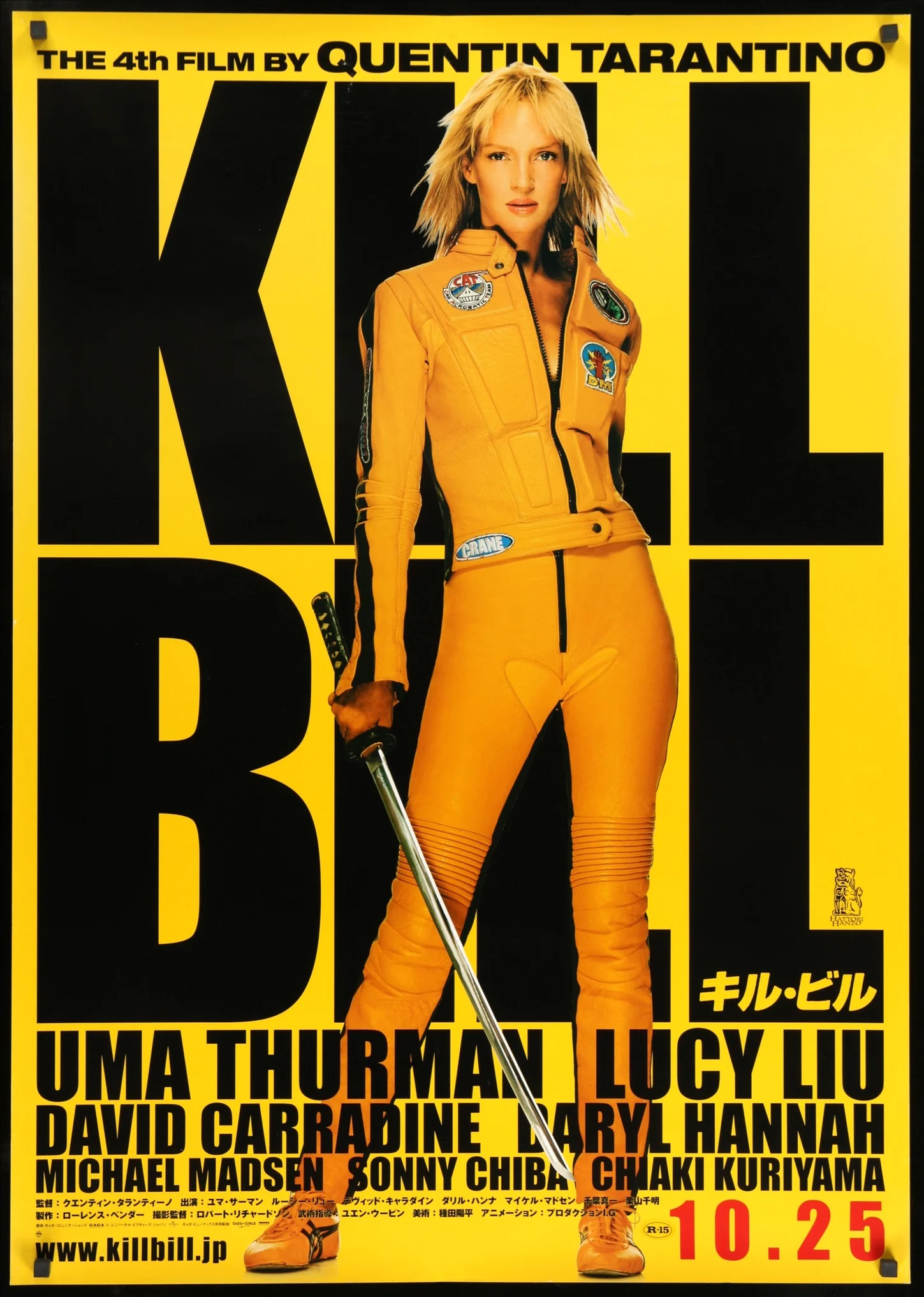
Kill Bill: Volume 1
A yellow jumpsuit, a long list of enemies and one woman who refuses to be finished.
Read the retrospective
→