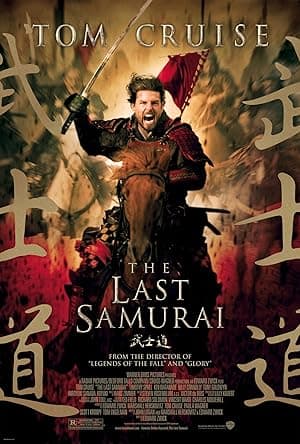
The Last Samurai
A hard-drinking American soldier walks into a samurai village and, somehow, the whole movie hinges on him learning how to stand again.
Feature presentation
Edward Zwick's The Last Samurai still feels like a film you'd stumble back into on a long evening: big, serious, and stubborn about its themes. At the centre is Captain Nathan Algren — a broken veteran who is hired to teach modern warfare, captured by samurai and slowly remade by their world. That stubbornness is both the movie's strength and its rub.
THE MOVIE
Captain Nathan Algren is still the reason this movie works
What people remember about The Last Samurai is not the battle choreography or the costumes alone; it's the fact the story is centred on a single, stubbornly watchable transformation. Captain Nathan Algren begins as an American veteran hired to instruct Japan's new Imperial Army in Western methods, and he's hauled into the samurai world — literally captured, then slowly drawn into a different life.
The capture-and-integration setup gives the film a clear engine: Algren's captivity and gradual cultural immersion are the device through which the story pulls him apart and puts him back together. That structure makes his choices easy to follow, and it gives the picture room to lay out arguments about modernization and what is lost when a society rushes to change.
Edward Zwick directs it the way a director would tackle an old-fashioned epic: deliberate, serious, and determined to weigh honor against progress. Released in 2003 and running briskly over two-and-a-half hours, the film keeps returning its focus to Algren because, honestly, the rest of it hangs off him.
THE SETUP
The idea that sets The Last Samurai in motion
At its simplest, the film stages a clash: a Japan hurtling towards Western-style modernization faces a samurai order trying to protect its code and customs. That friction is the obvious battlefield, and the picture consistently returns to it.
The story mechanics are straightforward and neat. We follow Algren via journal-based voice-over, we watch him trained into samurai discipline, and the screenplay makes a point of contrasting long-range, rifle-and-cannon tactics with intimate, close-quarters swordsmanship.
Because the plot uses an outsider — a soldier whose skill set and scars belong to another world — Zwick can show both sides. We see the imperial army through Algren's military eye and the samurai world through the same man's attempt to belong.
It's a structure critics have flagged before: an outsider joins a community, is remade by it, and finds redemption. The film wears that template openly, and it uses it to carry its questions about what rapid Westernisation costs a society.
THE CHARACTER
Why Captain Nathan Algren matters
Algren matters because he is the hinge between two worlds. He's an American veteran hired to train Japan's Imperial Army in Western warfare who then becomes part of the samurai community after his capture. The film deliberately writes his arc as a shift in loyalties and identity, so everything that follows is measured against his adaptation.
That shift is made narratively clearer by the supporting cast. Figures such as Simon Graham and Colonel Bagley exist to show how the outside world views the conflict: modernisation, empire and commerce. They provide the angles that make Algren's choice feel consequential rather than merely personal.
Taka — the sister of Katsumoto and the widow of a samurai Algren killed — is the human bridge. Her presence turns Algren's immersion from an anthropological exercise into a real emotional negotiation; she is the reason his stay in the village becomes something other than imprisonment.
Tom Cruise plays him, and the production made that decision part of the film's shape: the protagonist is a recognisable Hollywood lead, but the story keeps pulling him into foreign customs and ragged loyalties so that he gradually stops being an outsider ornament and becomes someone living inside those traditions.
THE PERFORMANCE
Why Tom Cruise's performance matters
There is a measurable note of industry approval attached to Cruise's turn: he earned a Golden Globe nomination for Best Actor. That nomination is useful shorthand — it tells you the performance was noticed within awards-season conversation.
Beyond the nomination, the film leaned on Cruise as the box that could hold the story's drama: a veteran haunted by past violence whose moral direction is unsettled and then reset. The casting choice helps the narrative land because the movie repeatedly needs us to follow a single man's ethical reorientation.
So the takeaway: the Golden Globe nod confirms Cruise's role mattered to how the film was read at the time, and the movie builds most of its stakes around that single central presence.
UNDER THE SURFACE
The Last Samurai has more on its mind than the plot suggests
On the surface it's a war-period epic, but the film is quietly occupied with a few repeat thoughts: modernization versus tradition, and how a society decides what to keep when it opens itself to foreign systems. That argument is not abstract — the story stages it in villages, council rooms and battle formations so you feel the trade-offs.
Another running idea is Bushido and what honour looks like when everything else is changing. The samurai code is presented as an organising ethic that offers meaning to characters who have lost the old certainties of rank and purpose.
There is also a straight redemption story: a man who has been hollowed by violent service finds a path back through immersion in another people's way of life. The film treats that transformation as personal and tangible, not just symbolic.
Finally, it is fair to acknowledge the critical frame the movie sits in: questions about the 'white savior' pattern are part of the conversation. The Last Samurai uses an outsider's redemption to tell much of its story, and that structure has attracted scrutiny alongside praise.
THE FILMMAKING
How The Last Samurai was put together
Production choices are plainly on display: Lilly Kilvert oversaw production design and the team built historically informed sets, including a recreated Ginza street for the urban Tokyo scenes. Those constructed environments give the movie its sense of period scale.
The film's editing deliberately cross-cuts village life with the processes of modernising military operations. That editorial rhythm keeps the theme of change visible — two societies shown side by side so you never forget there's momentum pushing them in different directions.
John Toll is credited as director of photography and Ngila Dickson led costumes, while the editing credits include Steven Rosenblum and Victor Dubois. The behind-the-scenes roster reads like a departmentally serious production: design, camera and cutting all lined up to serve a classical epic.
All of which means the movie feels assembled with an old-school studio investment in craft: sets, costumes and dedicated departments, rather than a hurried on-location rough-and-ready.
PRACTICAL EFFECTS
The effects work that gives The Last Samurai its physical personality
A lot of the film's physical weight comes from tangible craftsmanship: the costume department produced an extensive armour and period clothing build — more than 250 individual sets of armour and wardrobe were created for the production.
That attention to costume sits alongside real physical training. Principal cast members undertook extended swordsmanship and combat work; Tom Cruise trained for months and performed many of his own stunt sequences, and Ken Watanabe also took on substantial physical preparation.
The movie also relied on scale through people rather than pixels. Hundreds of on-screen extras from New Zealand and Japan populate villages and battlefield scenes, giving crowd moments a physical reality rather than depending only on digital replication.
Put together, those choices make the world feel materially present: armour that catches light, bodies that move with a shared discipline, and crowds that behave like a lived community.
PURE 00s
The Last Samurai could not belong to any other decade
This is very much a 2000s Hollywood historical epic: released in 2003, it comes from a moment when studios were willing to fund large-scale period pieces with established stars and visible production values.
That context helps explain some choices the film makes — the outsider-into-community scaffold and the big moral questions feel like a mainstream attempt to marry spectacle with serious ideas, a familiar 00s combination.
Critics at the time reached for older templates to describe the picture; comparisons to films such as Dances With Wolves were common because the outsider-joins-indigenous-community shape is so obvious. The Last Samurai wears that lineage openly.
So the decade matters because the film belongs to a phase of Hollywood that mixed awards-season seriousness with mass-appeal design: big sets, obvious themes and a central performance intended to carry the whole enterprise.
THE LEGACY
Why The Last Samurai still matters
Part of the film's afterlife is its awards footprint: it received multiple Academy Award nominations, including a Best Supporting Actor nod for Ken Watanabe, and it picked up Golden Globe attention as well. That awards noise kept it in conversation beyond the opening weekend.
The movie also turned into a frequent reference point in academic and cultural debates about how Hollywood represents non-Western histories — especially discussions about the 'white savior' pattern. That critical frame means the film still turns up in classroom and essay contexts.
Finally, the picture mattered for personnel as well: Ken Watanabe's international profile rose significantly afterward, which opened doors for him in subsequent Hollywood work.
So its memory sits in three registers: craft and awards, a continuing critical conversation about representation, and the real-world careers the film helped shape.
THE VERDICT
Does The Last Samurai still hold up?
Yes — with a clear rider. If you watch it for a big, character-centred epic about a man remade by another people's code, it does the job. The film's engine is literal and simple: Algren is hired to train the Imperial Army, is captured by samurai and then chooses to remain and learn from them. That narrative clarity keeps the stakes intelligible across its long running time.
What anchors the movie is that Algren's captivity and slow cultural integration are not throwaway beats; they're the mechanism for his moral change. The screenplay leans on journal voice-over, training sequences and the contrast between modern rifle-and-cannon warfare and close-quarters samurai combat to make that change feel earned within the story's own terms.
You should also factor in the film's grounded context: it draws on the Meiji Restoration and the Satsuma Rebellion, and its samurai leader is modelled on a historical figure, which gives the larger conflict a recognisable historical scaffolding rather than pure fantasy.
Finally, the production choices — the central casting of Tom Cruise as Algren, the serious period work in design and costume, and the awards attention (including Ken Watanabe's Best Supporting Actor nomination) — mean it's a fully formed Hollywood epic. If those are the qualities you want, it remains worth watching; if you expect a modern, self-critical retelling that avoids the 'outsider savior' shape entirely, you'll find reasons to quarrel.
Share this movie
Keep watching
More movies from the 00s

2002
The Pianist
A quiet life unmade by war — and a pianist who refuses to stop listening.
Read the retrospective
→
2006
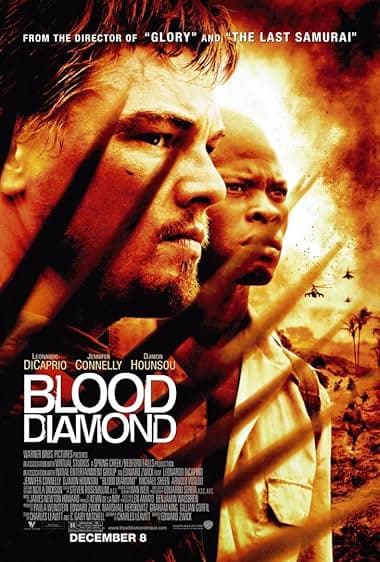
Blood Diamond
A mercenary, a fisherman and a pink diamond — and a film that still asks who pays for our jewellery.
Read the retrospective
→
2003
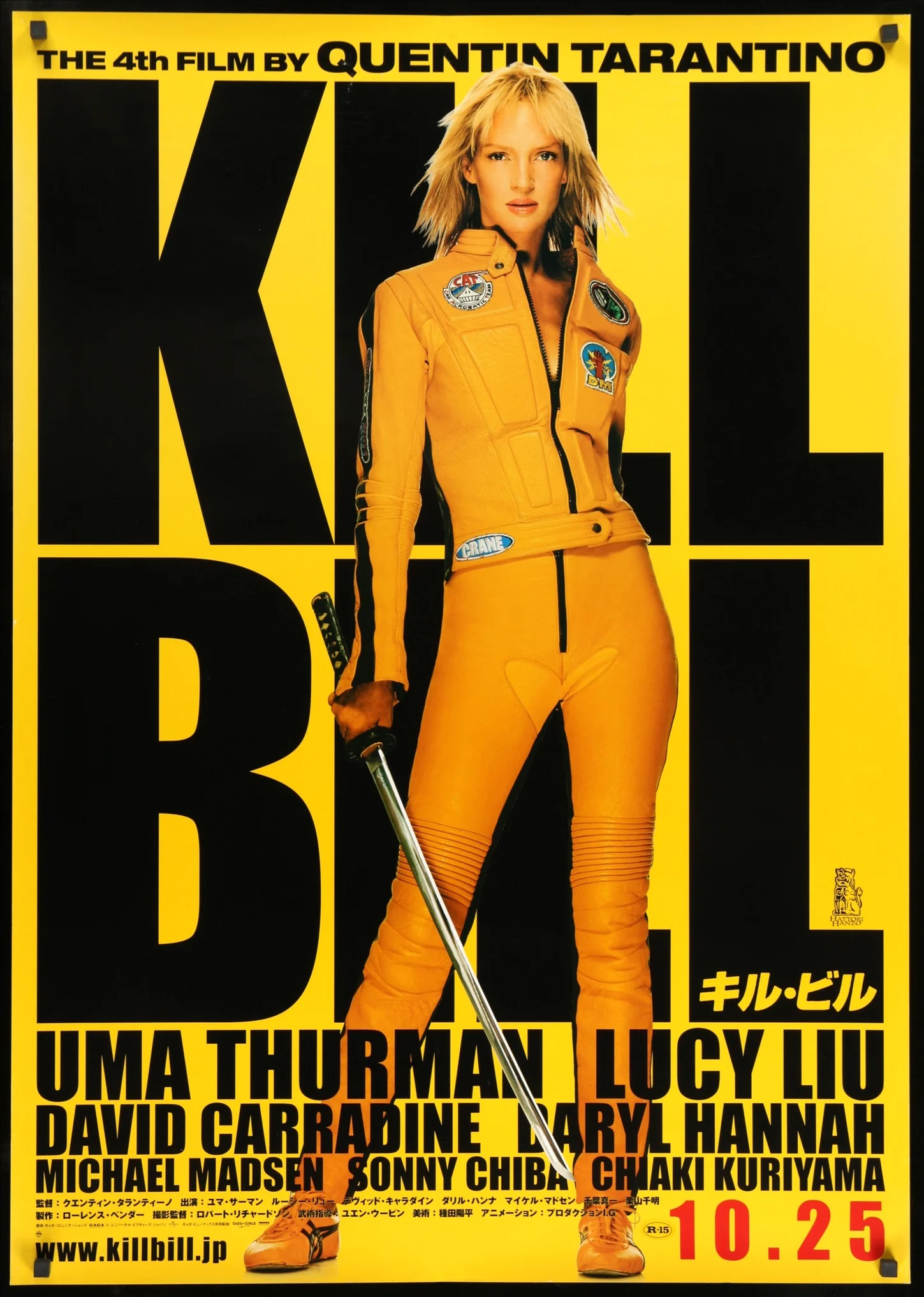
Kill Bill: Volume 1
A yellow jumpsuit, a long list of enemies and one woman who refuses to be finished.
Read the retrospective
→