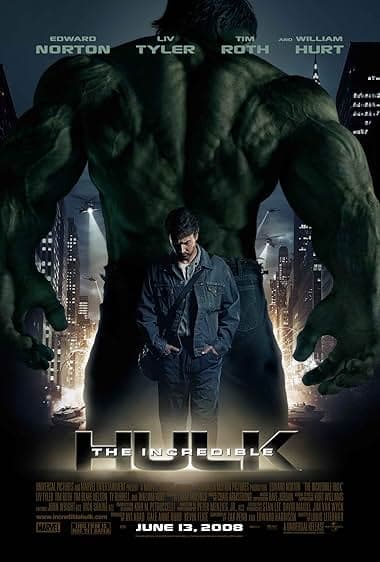
The Incredible Hulk
A fugitive, a scientist and a very angry green man — and a film that remembers why the Hulk is a tragedy as much as a smash.
Feature presentation
The Incredible Hulk isn't just another CGI blockbuster; it's a film that keeps its attention trained on the man trying not to become the monster. Louis Leterrier's 2008 take drops the origin into the opening titles and spends its runtime on Bruce Banner's exile, the military's appetite for a super-soldier and what happens when ambition goes wrong.
THE MOVIE
Bruce Banner / the Hulk is still the reason this movie works
The film gets one thing right from the start: you don't need twenty minutes of origin to know who the story is about. The origin is handled in a tight montage and then we find Banner five years on, living as a fugitive and trying to keep himself from exploding — literally — by keeping his heart rate down.
That fugitive life is not romantic. Banner's exile — first in a bottling plant in Rio — is practical and grim: it's about control. The movie keeps returning to the same question: how do you live when the thing inside you is both a defence and a threat?
All of this sits inside a big‑screen action frame. Louis Leterrier directs a Hulk that wants to move fast and hit hard, but the heart of the picture remains Banner’s battle with himself, played here by Edward Norton and supported by a compact cast that the movie trusts to stand up under the weight of these themes.
UNDER THE SURFACE
The Incredible Hulk has more on its mind than the plot suggests
Under the punch-ups and the chases the film is quietly political: it treats scientific research as something that can be turned into a weapon. The military's interest in gamma research is not abstract; it's a programme with practical ambition.
That ambition produces collateral damage. Emil Blonsky’s arc — the pursuit of power at personal cost — gives the film a darker counterpoint to Banner's attempts at retreat.
Isolation is another repeated note. Banner’s exile isn’t glamorous escape; it’s a day-to-day regimen to stop the Hulk. The movie repeatedly shows the loneliness of containment, which makes the emotional beats land harder when relationships re-enter his life.
Everything ties back to control: over the self, over scientific discovery, and over what happens when people try to bend nature to military ends. Those themes give the action some moral teeth.
THE FILMMAKING
How The Incredible Hulk was put together
Louis Leterrier brings an action-first sensibility to the Hulk material. If you know his previous work, it's clear this is a director who prefers forward momentum and physical stunt work.
That approach shapes the film's personality: set pieces are conceived with kinetic drive rather than lingering melodrama, and the direction favours propulsive staging.
At the same time, the filmmaking choices leave room for quieter moments. The action and the introspective beats coexist, which is why the film often feels like a genre picture trying to carry a more personal story on broad shoulders.
Put simply: Leterrier's background gives the movie its forward momentum, while the script keeps steering it back to Banner's struggle.
PRACTICAL EFFECTS
The effects work that gives The Incredible Hulk its physical personality
The green giants you see on screen are the product of a patchwork of visual-effects teams rather than a single in-house approach. Multiple vendors handled digital character work and compositing, which gives the film a mixed technical texture.
One of those vendors, Image Engine, invested a long time on a minute piece of business: an effects shot of Banner’s gamma‑tainted blood making its way through factory floors into a bottle. That level of micro-detail shows an appetite for marrying big spectacle with small, practical storytelling beats.
The production relied on motion-capture and sophisticated facial-capture techniques combined with extensive CG animation, instead of fitting an actor into a creature suit. That method shapes how the Hulk and Abomination move and register on camera.
The practical and digital elements together create a creature presence that the filmmakers use to anchor the human drama rather than merely pile on confrontation after confrontation.
PURE 00s
The Incredible Hulk could not belong to any other decade
This is emphatically a 2008 movie — not just because of its release date, but because of where it sits in Marvel's project. It arrived a month after Iron Man and functions as the studio’s second entry in what would become Phase One.
That placement matters. Marvel had only recently regained the rights to the character and was figuring out how to make films for itself while navigating distribution arrangements. The Hulk therefore reads as part of Marvel learning how to build a connected slate.
Those growing pains even showed up behind the scenes: editorial disputes over running time and the final cut were widely reported at the time, and they point to a studio still finding its production voice.
The movie wears that transitional moment on its sleeve: it’s a studio picture built with clear franchise intentions, but one that also still carries the scrappy marks of a production discovering its own rules.
THE LEGACY
Why The Incredible Hulk still matters
In Marvel's origin story for the MCU, this film counts for something concrete: it's officially the studio's second Phase One instalment and it includes a late-scene appearance that tied the title into the developing shared universe.
The movie also occupies a footnote in casting history: Edward Norton left the role afterwards and the character was recast for subsequent MCU films, a change often mentioned in accounts of the franchise's early years.
Beyond recasting, the film is frequently brought up in discussions of Marvel's early integrated planning — a reminder that the MCU's interconnected shape was being sketched out even then.
And narratively, characters such as Betty Ross, Emil Blonsky and Thaddeus Ross give the film a roster that continued to matter in later franchise conversations, which helps explain why the movie crops up in those histories.
THE VERDICT
Does The Incredible Hulk still hold up?
Yes — and no. If you come for a character‑centred take on a familiar monster, the film still works. It opens by compressing origin material into the credits and then spends its time on Banner's life as a fugitive trying to cure or suppress the transformations; that hard focus on containment gives the picture a clear dramatic spine.
If you want a simple CGI parade without consequence, this is not the Hulk for you. The military hunt — sparked when Banner's contamination leaves a trace the army can follow — and the creation of the Abomination through an experimental serum make the stakes concrete. Those elements turn a personal story into a public conflict with moral weight.
The cast helps hold that balance. Norton was described by contemporary critics as delivering a sound portrayal of a man who desperately doesn't want to become the monster, while Betty Ross figures as the personal-and-professional bridge between Banner and the military forces pursuing him. Meanwhile, Samuel Sterns' storyline plants a late hook that links the film to the wider universe.
So should you watch it today? If you care about the Hulk as character — a study in exile, self-control and the cost of weaponised science — it's worth the time. It isn't flawless, but it remembers what the Hulk always stood for: not just a big green rampage, but a frightened man trying, against all odds, to stay himself.
Share this movie
Keep watching
More movies from the 00s

2002
The Pianist
A quiet life unmade by war — and a pianist who refuses to stop listening.
Read the retrospective
→
2006
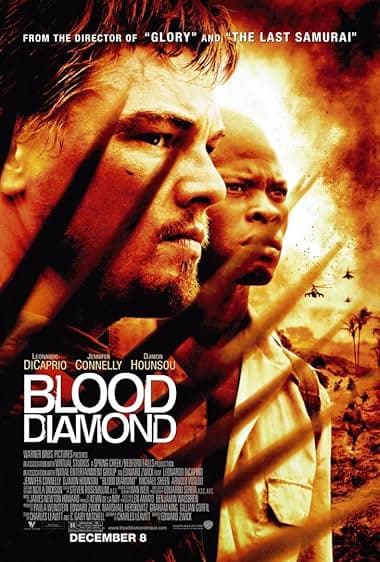
Blood Diamond
A mercenary, a fisherman and a pink diamond — and a film that still asks who pays for our jewellery.
Read the retrospective
→
2003
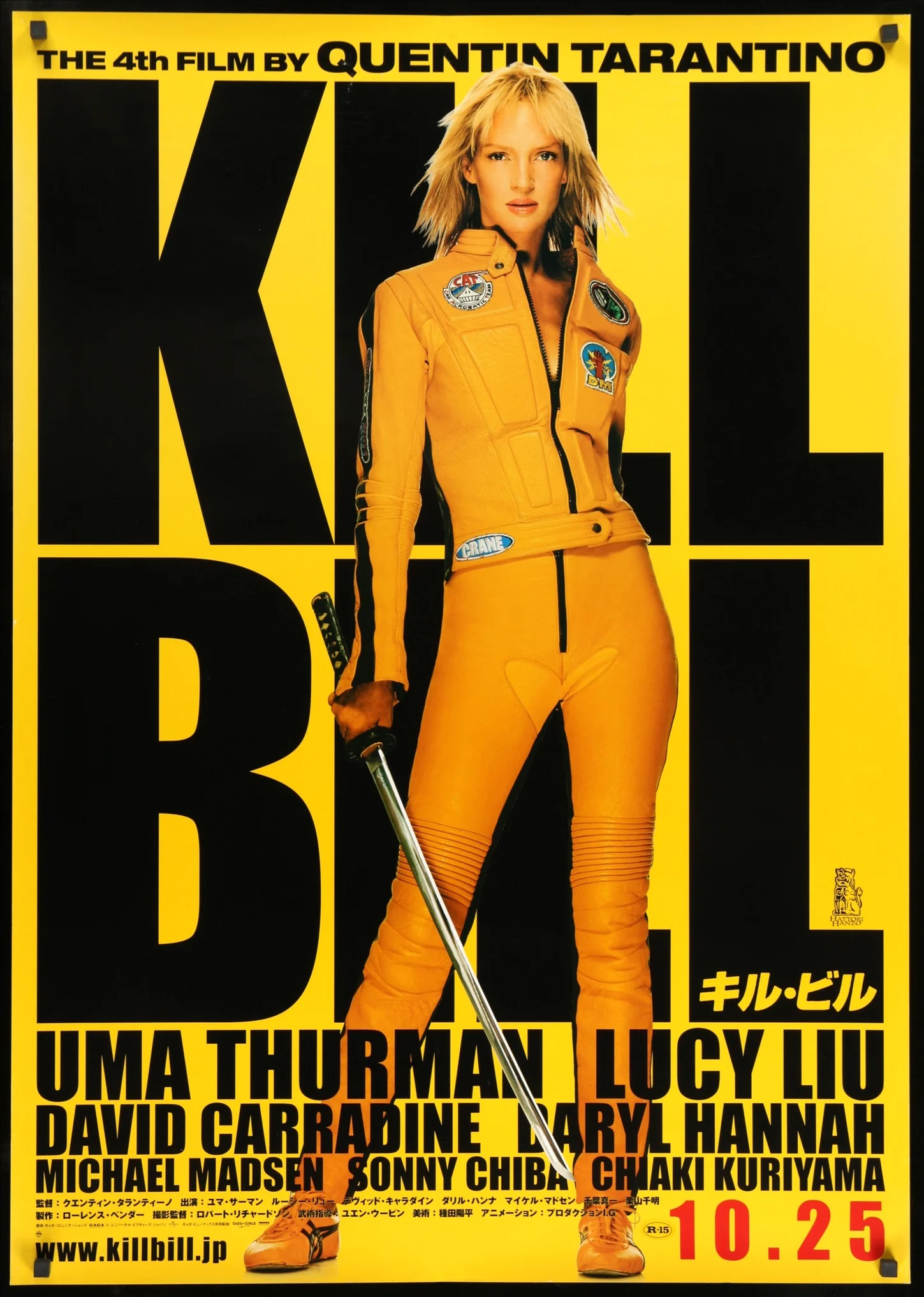
Kill Bill: Volume 1
A yellow jumpsuit, a long list of enemies and one woman who refuses to be finished.
Read the retrospective
→