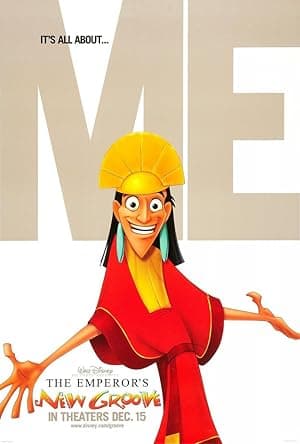
The Emperor's New Groove
An entitled emperor, a patient villager and a llama-shaped lesson in humility — still hilarious and oddly wise.
Feature presentation
If you remember one thing about The Emperor's New Groove it’s probably Kuzco — smug, sharp, and eventually covered in fur. Mark Dindal’s compact, joke-packed Disney oddity trades big musical gestures for rapid-fire comedy and a surprisingly warm tale about learning to stop being insufferable.
THE MOVIE
Emperor Kuzco (Kuzco / Kuzco the llama) is still the reason this movie works
The Emperor's New Groove makes a bold promise in its first few minutes: you will spend most of the film laughing at someone who richly deserves it, and then find yourself oddly rooting for them. That someone is Emperor Kuzco — an arrogant ruler who, after being turned into a llama, is forced out of his palace and into an unwanted partnership with a humble villager.
That transformation is the movie’s simple engine. It’s not a slow-burning morality play; it’s an inciting comic catastrophe that pushes Kuzco into a situation where he has to reckon with the consequences of his behaviour. The result is a lean, 78-minute comedy that keeps the pace brisk and the jokes coming.
Mark Dindal directed the finished film, and the cast is keyed to that tone: David Spade as Kuzco, John Goodman as the steady Pacha, Eartha Kitt and Patrick Warburton filling out the supporting oddities. Friendship and personal growth ride the laughs here — and they’re the reason the film refuses to be merely mean-spirited.
THE SETUP
The idea that sets The Emperor's New Groove in motion
At its heart the film rests on a single, tidy idea: an entitled ruler is physically dislodged from power and must rely on an ordinary person to get back. That premise keeps the story focused — there’s nowhere for Kuzco to hide except learning how to be less of a prat.
The central conflict isn’t a complicated political plot. It’s personal: Kuzco’s journey is about moving from self-centred entitlement to actually noticing other people and forming a friendship with Pacha. That shift is what the movie is built to dramatise.
To carry that change the film chooses pace over plot. It runs through brisk, gag-driven sequences and breaks the fourth wall now and then, preferring comedy and momentum to elaborate subplots or slow melodrama.
All of which makes the film feel like a road-back story — a journey that’s mostly about character change, and the jokes exist to lubricate that movement rather than distract from it.
THE CHARACTER
Why Emperor Kuzco (Kuzco / Kuzco the llama) matters
Kuzco matters because the film makes him impossible to ignore. David Spade plays him as the kind of ruler who treats people like stage dressing, so when the rug — or palace floor — is pulled from under him, the contrast is delicious.
He’s not simply a joke machine; the script layers his entitlement against the steady decency of Pacha. That contrast is what lets the movie shift from straight comedy into something a touch warmer. Pacha’s patient, family-first character is the foil Kuzco needs to see the consequences of his behaviour.
The supporting cast exist largely to puncture Kuzco’s bubble. Whether it’s village residents or palace oddballs, those rapid comic beats underline how disconnected he was from everyday life before the transformation.
Put simply: Kuzco’s arc — from insufferable to, if not saintly, then at least less unbearable — gives the film a tangible backbone. Without him, the jokes would be funny; with him, they matter.
THE PERFORMANCE
Why Eartha Kitt's performance matters
Eartha Kitt’s vocal work as Yzma received formal recognition — she won an Annie Award for the role. That’s not an ornament; it’s a signal that the performance stood out among animation peers.
Yzma is the kind of cartoon villain who exists partly to be funny and partly to be theatrical, and Kitt’s award indicates the industry noticed how effectively the voice matched that ambition.
In a film that trades sketches and quick beats, a distinctive vocal performance gives the antagonistic side of the comedy something to lean on.
So whether you think of Yzma as menace, chaos or pure comic fuel, Kitt’s Annie Award is evidence that her contribution mattered to the finished film.
UNDER THE SURFACE
The Emperor's New Groove has more on its mind than the plot suggests
Beneath the jokes the movie is quietly about friendship and personal growth. The laughs allow the film to show Kuzco learning to be responsible for the fallout of his decisions — and, crucially, to start caring about someone else.
There’s an anti-entitlement current running through the whole thing. The punchlines often come from Kuzco’s refusal to see other people as anything but props, and the emotional payoff comes when that blindness is corrected.
Because the film wears its comedy so openly it can afford a straightforward moral: grow up a bit. It doesn’t sermonise; it nudges, then rewards the nudging with genuine human connection.
And it wears its buddy-comedy dynamics proudly — the mismatched central relationship drives both the jokes and the redemption, so the two ideas feel braided rather than tacked on.
THE FILMMAKING
How The Emperor's New Groove was put together
The film we got is the result of a notable change in direction during production: Mark Dindal ended up steering a retooled, more comedic version of the project, and the screenplay credit went to David Reynolds with story contributions from Chris Williams and Dindal himself.
That behind-the-scenes reshaping helps explain why the finished picture feels so sharply focused on jokes and character beats rather than sprawling musical set pieces.
Put another way, the film’s identity is partly shaped by that editorial decision to pivot: it became a compact comedy rather than a large-scale musical epic.
Knowing the credits this way makes the movie feel purposeful; the pieces on screen — cast choices, brisk running time and gag-first storytelling — are coherent with the production’s final aim.
PURE 00s
The Emperor's New Groove could not belong to any other decade
Released at the end of 2000, the film arrived during a moment when Disney animation was deliberately branching away from the big hand-drawn musicals of the 1990s toward a wider range of tones and formats.
That shift helps explain why a project that began as a more musical-heavy idea was reworked into a lean comedy: the studio environment was broadly open to experiments that looked and sounded different from the ’90s model.
The movie’s compact running time and gag-forward sensibility feel like an expression of that transition — a studio trying new rhythms and comic textures.
And the fact that the film later generated a direct-to-video sequel and a TV series shows it found a life beyond the theatrical release, fitting the era’s appetite for cross-media continuations.
WATCHING IT NOW
What has aged — and what hasn't
Seen today as a family film, The Emperor's New Groove still reads as a quick, joke-heavy entertainment rather than a slow character study. Its family-oriented shape means it was built to be accessible across ages.
The core idea — that friendship and growth can come from the most ridiculous of predicaments — remains tidy and usable. That simplicity helps the story feel immediate rather than dated.
Because the film leaned into character comedy rather than contemporary trends of the moment, many of its beats survive better than you might expect for a film from 2000.
It also left room for continued life: the characters proved adaptable enough to carry a direct-to-video sequel and a TV series, which is a practical sign that the personalities translated beyond one short theatrical run.
THE LEGACY
Why The Emperor's New Groove still matters
Part of the film’s afterlife is musical: a Sting-penned song from the project received an Academy Award nomination, so the soundtrack carries a tangible piece of recognition beyond the film’s jokes.
The characters proved durable enough to be reused in other formats, with a direct-to-video sequel and a television series continuing their stories for new audiences.
There’s another curious legacy detail: material from the project’s earlier incarnation — the songs written for the Kingdom of the Sun version — survives on the commercially released soundtrack even though much of that music wasn’t used in the finished movie.
Taken together, those threads show a picture of a film that kept on moving: acknowledged by awards, extended into other media, and carrying traces of an earlier, very different creative life.
THE VERDICT
Does The Emperor's New Groove still hold up?
Short answer: yes. The film’s premise — an arrogant emperor turned into a llama who must rely on a humble villager to get home — still makes for a satisfying comic engine and a straightforward route to character change.
The movie’s comedy-forward construction, with brisk gag-driven sequences and direct-address beats, means it rarely outstays its welcome; at 78 minutes it delivers its ideas efficiently and without fat.
Because the central conflict is about Kuzco learning to acknowledge other people and form a real friendship with Pacha, the emotional payoff feels earned rather than tacked on. The finished film also leans into its buddy-comedy shape rather than trying to be a full-blown musical, which sharpens its identity.
So if you want a short, witty family-friendly animation where the jokes serve a simple but genuine story about growing up a bit, this one still lands. Kuzco’s downfall is comic; his recovery is what keeps you watching.
Share this movie
Keep watching
More movies from the 00s
2002
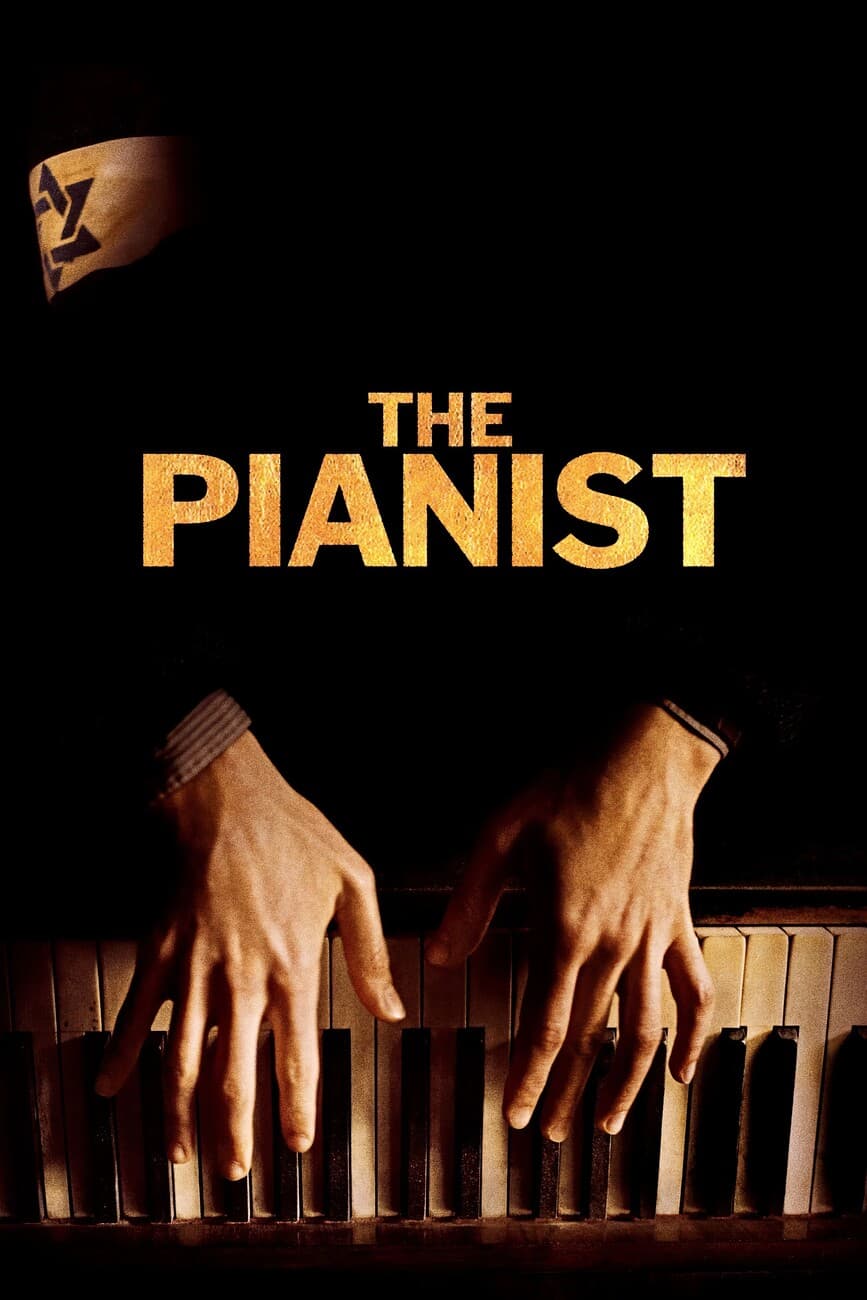
The Pianist
A quiet life unmade by war — and a pianist who refuses to stop listening.
Read the retrospective
→
2006
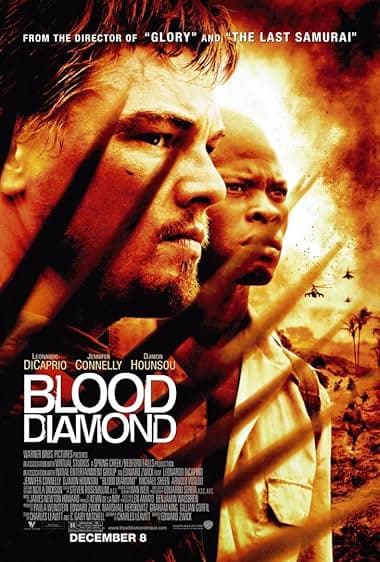
Blood Diamond
A mercenary, a fisherman and a pink diamond — and a film that still asks who pays for our jewellery.
Read the retrospective
→
2003
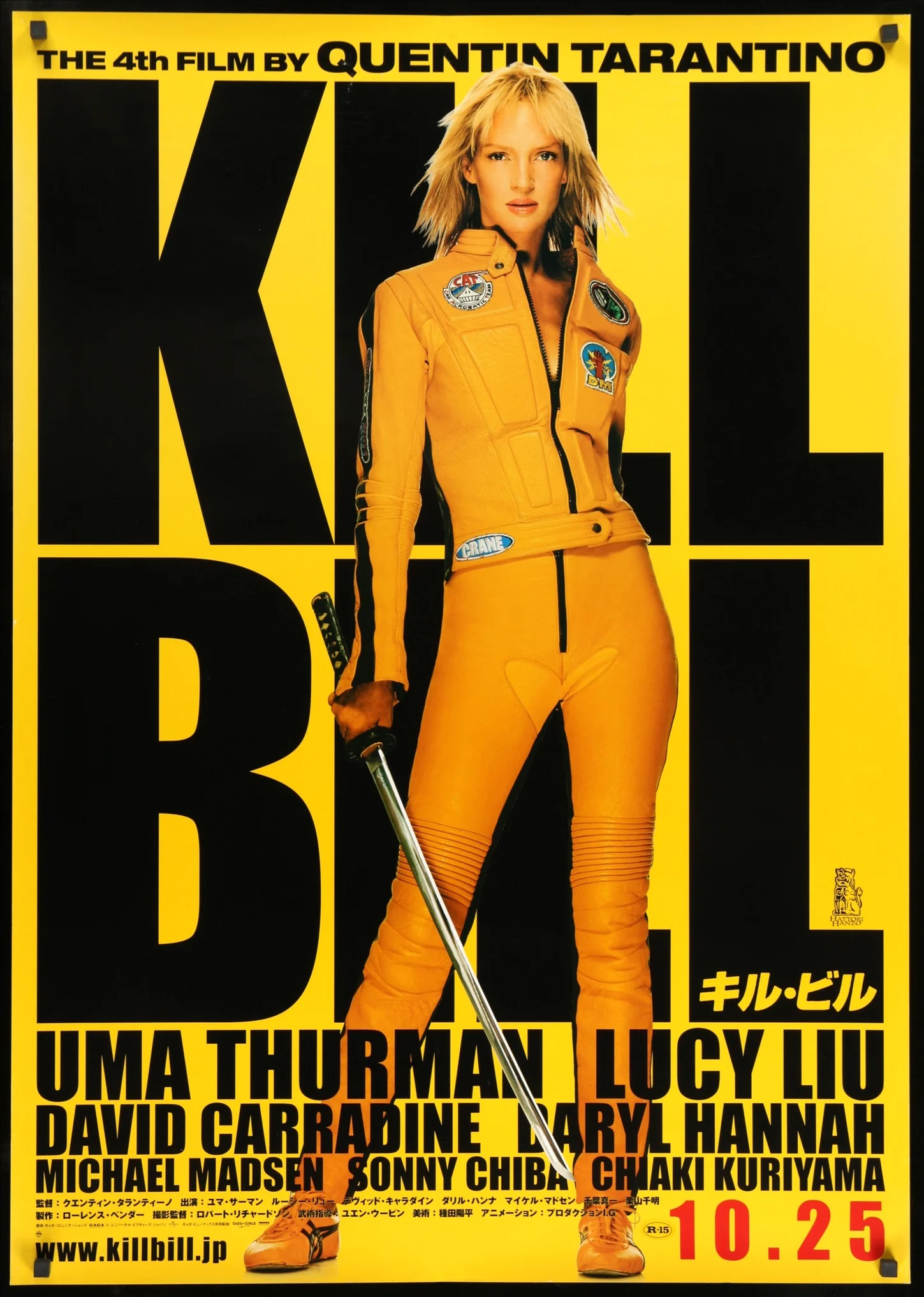
Kill Bill: Volume 1
A yellow jumpsuit, a long list of enemies and one woman who refuses to be finished.
Read the retrospective
→