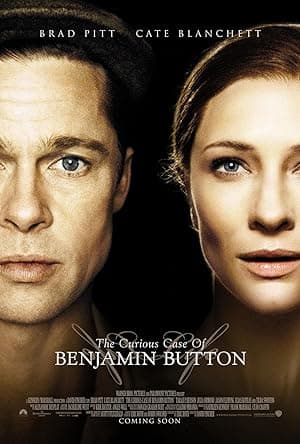
The Curious Case of Benjamin Button
A strange love story about a man who grows younger — and what that odd hook says about time, loss and timing.
Feature presentation
Talk about ambition: David Fincher took a 1922 Fitzgerald oddity, made it a ten‑decade sweep, and trusted a romance to carry the weight. The Curious Case of Benjamin Button still asks bold, simple questions about how we fit into time — and whether love can ever be on time.
THE MOVIE
Benjamin Button is still the reason this movie works
There’s an image in this film that lodges itself: a man who starts life with the look of an old man and then grows younger as the years pass. It’s such a neat, unsettling premise that everything else — the decade hops, the hospital frame, the romance — folds around it.
Fincher turned that idea into a long, deliberate story that keeps returning to one thing: how someone with Benjamin’s unusual body negotiates belonging, intimacy and parental roles as the world ages normally. The film doesn’t so much chase incidents as it watches a life recalibrate, again and again.
That patient curiosity is cushioned by the movie’s structure — Daisy’s daughter in a hospital room reading Benjamin’s story — which lets the film be a remembered life as much as a lived one. In short: the conceit is the engine, and the storytelling is mostly about listening to where it takes you.
THE SETUP
The idea that sets The Curious Case of Benjamin Button in motion
The film expands Fitzgerald’s short story into a full-length life by leaning on its single oddity: Benjamin is born looking elderly, and then — peculiarly — ages in reverse. It’s a premise that’s inherently about how bodies tell stories we don’t expect.
Rather than turning the concept into a gamified mystery, the film treats it as a lens for relationships. Benjamin’s condition keeps reshuffling his place at family tables, workplaces and in love. Those shifts are where the drama lives, not in contrived set-pieces.
Structurally it’s a framed memory: an older generation reads Benjamin’s life in a hospital, and the movie proceeds as a long retrospective that moves through the twentieth century. That retrospective shape gives the film permission to be episodic — montages and time jumps do much of the heavy lifting.
So the setup works because the reverse‑aging conceit isn’t a party trick. It’s a steady pressure on ordinary social roles that lets the film explore loss, mismatched timing and the weird cruelty of calendars.
UNDER THE SURFACE
The Curious Case of Benjamin Button has more on its mind than the plot suggests
At face value it’s a romance wrapped in a fantasy trick. Under the skin it’s mostly interested in time: how we lose people, how timing makes or breaks love, and how the body can betray the calendar the rest of us live by.
Benjamin’s physical difference produces alienation in plain ways — it complicates whether he is treated as child, adult or elder — and that otherness is the film’s quieter source of drama. It’s harder to argue with estrangement when your body keeps changing the argument.
The framed narration and retrospective form make the movie feel like a family story passed down. That focus on memory reminds you that the film isn’t just charting events; it’s curating what’s worth remembering.
So, beneath the spectacle, the film is asking straightforward human questions about timing, identity and what we decide to hand on as a life worth telling.
THE FILMMAKING
How The Curious Case of Benjamin Button was put together
This is a Fincher picture in the sense that it favours meticulous, patient construction over fireworks. He treats the story as a long-form object: period detail and mood are carefully assembled so the decades feel coherent rather than scattershot.
Claudio Miranda is credited as director of photography; the film’s visual strategy leans on composed period interiors and colour choices that help slide us from era to era without shouting the transitions.
Editors Kirk Baxter and Angus Wall shape the film’s episodic rhythm. The movie relies on montage and measured cuts to carry the story forward through years — that editing is what turns a collection of life episodes into a single, readable life.
Put together, the directing, cinematography and editing make the film feel like a crafted memory rather than a chain of highlights: it’s deliberate about pace because it wants you to inhabit time, not just skim it.
PRACTICAL EFFECTS
The effects work that gives The Curious Case of Benjamin Button its physical personality
The film’s look for Benjamin depends on a mixture of old-fashioned makeups and a lot of digital compositing. Traditional prosthetics and cosmetics provided tangible age cues, but the production didn’t stop there.
To sell the reverse‑aging across decades, the team used extensive digital head/body compositing: many shots replace or alter Brad Pitt’s head, often blending his facial performance onto different bodies.
Digital Domain led a notable digital approach that combined performance-capture and a searchable ‘shape library’ process to map Pitt’s expressions onto younger or older bodies while keeping the performance intact.
It was a collaborative patchwork: several VFX houses and practical-effects shops worked together to balance hands-on makeup with the then-evolving digital tools that could preserve facial nuance across altered bodies.
PURE 00s
The Curious Case of Benjamin Button could not belong to any other decade
Released at the tail end of 2008, the film sits squarely in a late‑2000s moment when studios mixed prestige casting with heavy visual-effects ambition in the hope of awards attention.
That awards strategy paid off in notice: the movie led the 2009 Academy Award nominations with thirteen nods, which framed it as one of the year’s big studio prestige efforts.
Technically it also belongs to the 00s because of how it rode the decade’s rapid strides in digital facial work and de‑aging pipelines. The movie is a snapshot of an industry figuring out how to alter appearances on scale.
And it’s a Fincher picture from the period: meticulous, atmospheric and willing to let mood and production craft carry a long, episodic romance — a tone that marked several of his projects around then.
WATCHING IT NOW
What has aged — and what hasn't
When you press play today, two things are impossible to ignore: the presence of its lead actors in the storytelling, and the film’s obvious recognition during awards season. Pitt and Blanchett also act as narrators at points, which gives the movie a reflective tone that still reads as intentional.
The other obvious marker is the technical reception: the film’s visual-effects and makeup work were singled out by the Academy, with several wins in those categories. That external recognition tells you the craft side still holds up in important ways.
Put differently: if you’re watching to be drawn into a long, carefully made life story anchored by big names and a heavy technical investment, the film still delivers that experience.
If your tolerance for extended, episodic pacing is low, the 166‑minute length and the patient cadence may feel slow. But the things the film was celebrated for — its performances-in-service-of-story narration and its effects craft — are the same elements most likely to determine whether it still works for you.
THE LEGACY
Why The Curious Case of Benjamin Button still matters
A practical reason the film remains in conversation is awards history: it led the 2009 Oscars nominations with thirteen and picked up multiple wins in technical categories. That keeps it in the catalogue of late‑00s prestige pictures.
Technically, its digital facial‑performance work has been repeatedly mentioned in discussions about de‑aging and digital human workflows. The production’s approach to mapping facial performance onto different bodies turns up in histories of 2000s VFX as a notable case study.
The film’s high profile during awards season also fed industry conversations about the costs and labour behind big VFX projects. Its VFX profile became part of a broader debate about how studios commission and pay for complex effects work.
So its legacy is twofold: as a studio awards bid that showcased ambitious craft, and as a film whose technical choices entered the practical vocabulary of later VFX conversations.
THE VERDICT
Does The Curious Case of Benjamin Button still hold up?
Yes — with a caveat. If you admire carefully executed, character-led epics that use a speculative hook to pry open ordinary human dilemmas, this film still delivers. The reverse‑aging conceit remains an effective tool for asking how timing and bodies shape belonging and love.
The film’s frame — Daisy’s daughter reading Benjamin’s life in a hospital — keeps the whole thing tethered to memory. That retrospective posture, combined with the episodic structure and measured pacing, is why the movie rewards patience rather than speed.
Technically and industrially, it’s a 2000s picture through and through: a prestige awards bid using cutting-edge visual techniques of the time. The effects and makeup were recognised at the Oscars, and the production’s VFX methods feature in technical discussions that followed.
So watch it if you want a long, thoughtfully assembled fairy tale about time and timing, anchored by its central figure and a romance that keeps asking whether love can ever arrive at the right age. It’s not everyone’s evening, but it remains a singular one.
Share this movie
Keep watching
More movies from the 00s
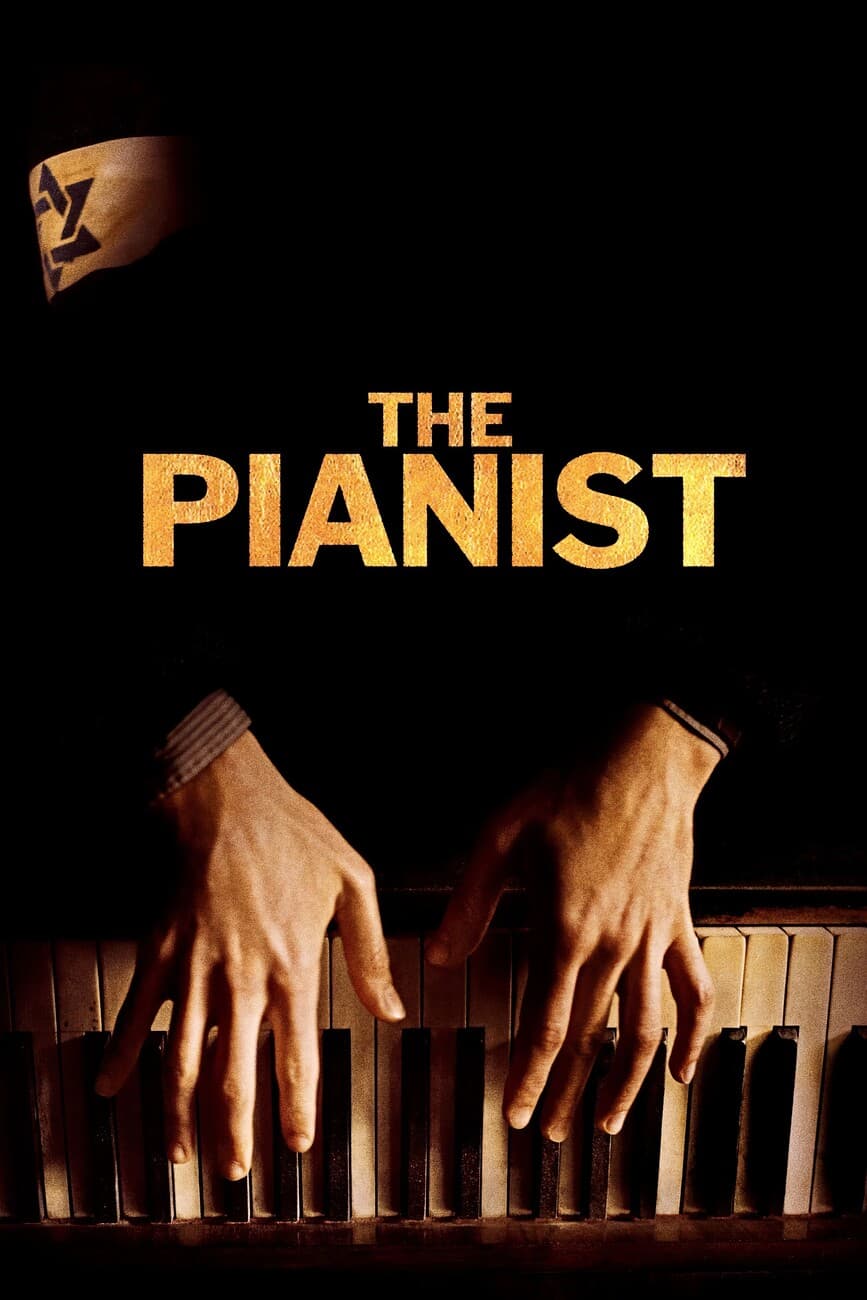
2002
The Pianist
A quiet life unmade by war — and a pianist who refuses to stop listening.
Read the retrospective
→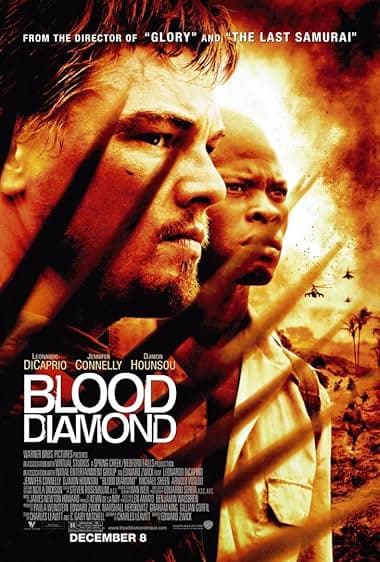
2006
Blood Diamond
A mercenary, a fisherman and a pink diamond — and a film that still asks who pays for our jewellery.
Read the retrospective
→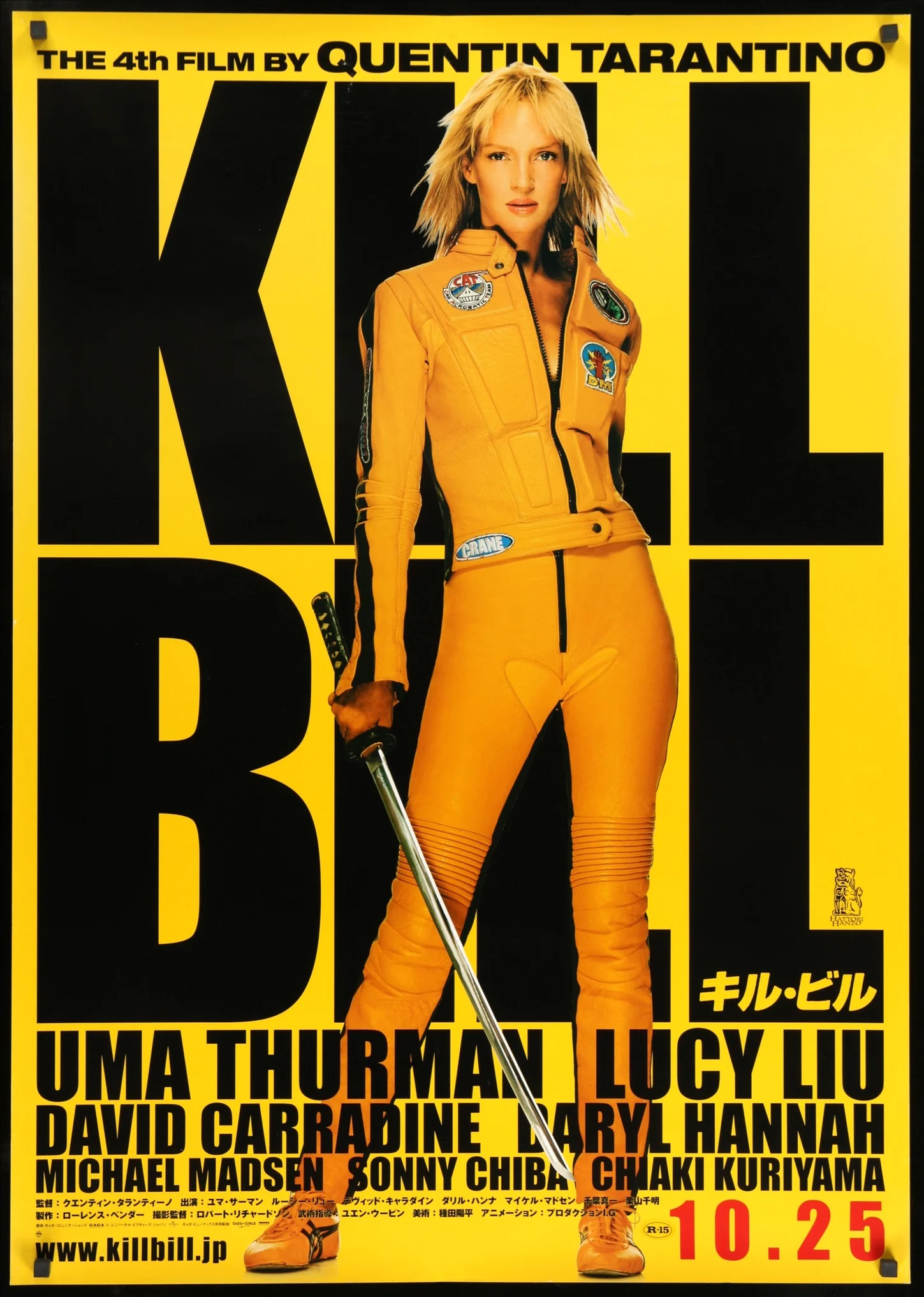
2003
Kill Bill: Volume 1
A yellow jumpsuit, a long list of enemies and one woman who refuses to be finished.
Read the retrospective
→