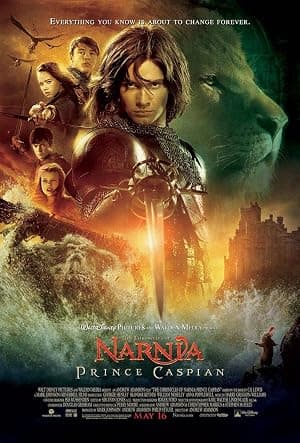
The Chronicles of Narnia: Prince Caspian
A sequel that asks its young kings to grow up — and still wants you to believe.
Feature presentation
If the first Narnia movie parked you at the wardrobe and grinned, Prince Caspian is the trip back where the wardrobe is suddenly full of awkward responsibility. Andrew Adamson’s follow-up drops the Pevensies into a Narnia that’s been taken over and asks what happens when children who were once monarchs must argue with a grown-up world. It’s a bulky, sometimes clumsy film — and it’s still worth revisiting for the way it makes its characters carry the story.
THE MOVIE
Peter Pevensie is still the reason this movie works
The simple stage direction that gets Prince Caspian moving is still satisfyingly odd: four children step through the wardrobe and find themselves in a Narnia that has become someone else’s country. They are there to help a young claimant — Prince Caspian — attempt to restore the world his ancestors lost, and that return forces the Pevensies into the brittle business of grown-up politics and battlefield choices.
Adamson’s screenplay refuses the book’s quieter, frame-story approach and stitches the Pevensies’ return into Caspian’s struggle from the start. That decision makes the film feel immediate: we’re not hearing campfire stories about heroes, we’re watching familiar children collide with a changed land and a prince who was raised in a different culture but longs to restore the old Narnia.
And at the heart of that collision is Peter. William Moseley’s Peter arrives as a once-king dealing with wounded pride and the weight of leadership expectations — the exact kind of trouble that makes the movie tick. It’s a film about growing up, yes, but it’s also a film about what happens when leadership doesn’t fit comfortably anymore.
THE SETUP
The idea that sets The Chronicles of Narnia: Prince Caspian in motion
The film rearranges Lewis’s episodic book so that the Pevensies are present through Caspian’s story rather than absent for long stretches. That structural choice keeps the familiar faces centre stage and lets the sequel feel like a direct continuation rather than a distant tale.
The main dramatic push is a clear, old-fashioned clash: the Telmarines, who hold political power, have displaced the ‘Old Narnians’ — the talking beasts and mythical folk who remember the older order and want it back. That friction between a human ruling class and the dispossessed magical inhabitants is where the movie finds its stakes.
To keep things cinematically lively the filmmakers added a large-scale castle-raid / Beruna bridge assault that isn’t in the novel. It’s an explicit effort to turn episodic adventures into a single, driving action arc suited to a summer tentpole.
So the setup is this: familiar rulers return, a reluctant heir wants to restore an older world, and a film designed for spectacle knits those elements together into one continuous cinematic push.
THE CHARACTER
Why Peter Pevensie matters
Peter is the lever that moves the sequel. He’s no longer a boy who happens to wear a crown; he’s a former king carrying expectations that frustrate his judgment and make him brittle around Caspian. That friction gives the film a persistent little spark — can two different ideas of leadership find common ground?
Because the story insists the Pevensies are back, Peter’s struggles aren’t abstract. They matter to the people around him and to the fate of Narnia. The film uses his pride and uncertainty as an engine: he must either adapt or be left behind by the changing world he once ruled.
It’s an old-school family-film move to anchor spectacle in a character problem rather than spectacle alone, and Peter’s wounded confidence is the sort of human snag that keeps the movie interesting between battles and effects.
UNDER THE SURFACE
The Chronicles of Narnia: Prince Caspian has more on its mind than the plot suggests
On paper it’s a fantasy adventure about a dispossessed prince and a kingdom in need of restoration. Under the armour, though, the film keeps returning to the business of growing up: the Pevensies are older, their childhood authority is under question, and they have to learn how to be responsible without being children pretending to be adults.
Belief and perception thread through the story as quietly as the swordplay. Characters’ ability to see Aslan or to accept the old stories matters — Lucy’s faith, in particular, functions as the film’s compass. When belief falters, Narnia falters with it.
There’s also a real sense of loss and war in the background. This isn’t a pastoral fairy story; it’s a place scarred by conquest, where reclaiming the past will require fighting for it. Restoration here feels political and painful, not merely nostalgic.
So yes: it’s a big-budget family film, but its heart sits with awkward transitions — from child to ruler, from myth to memory, from peace to a very particular kind of battle.
THE FILMMAKING
How The Chronicles of Narnia: Prince Caspian was put together
Andrew Adamson returns as the director, and his films have always sat between family storytelling and big-plateau spectacle. For Prince Caspian, the production named Karl Walter Lindenlaub as director of photography and Roger Ford as production designer — credits that point to a film built with clear technical craft in mind.
Those names signal a classical production approach: the movie’s visual and design leadership are front of mind, even when the script reaches for larger battle beats. Credit lists like this matter because they show where the filmmakers chose to invest creative responsibility.
Given the screenplay’s push toward a singular action arc and the castle-raid addition, the credited cinematography and production design roles help explain how the film tries to balance character beats with widescreen spectacle.
PRACTICAL EFFECTS
The effects work that gives The Chronicles of Narnia: Prince Caspian its physical personality
This is very much a hybrid effects picture. Major vendors such as Weta Digital, MPC and Framestore CFC handled the heavy digital lifting, while Weta Workshop supplied miniatures and props to anchor some sequences physically.
Practical creature makeup and prosthetics were part of the on-set toolkit too, with KNB EFX Group credited for that work. The mix of makeup, miniatures and CGI makes the world feel less like pure digital paint and more like a crafted object you can almost touch.
In post-production the team integrated miniature photography with digital compositing to build the larger battle scenes and creature moments. That combination is exactly the kind of 2000s production method that aimed to get the scale right without surrendering all texture to pixels.
PURE 00s
The Chronicles of Narnia: Prince Caspian could not belong to any other decade
Prince Caspian landed in 2008 at a moment when big, effects-driven fantasy franchises were the industry’s favourite safe bet. It sits comfortably among its contemporaries as a summer tentpole that promised spectacle and serial storytelling.
The production’s globe-trotting footprint — principal photography beginning in 2007 with locations in New Zealand and Central Europe and post-production largely in the UK — reflects the era’s appetite for expansive, international filmmaking logistics.
It was made and presented as a mainstream studio project: Walt Disney Pictures and Walden Media produced it, and its wide-American opening was timed for the summer marketplace.
Even the choice of composer and soundtrack release patterns fit the time: the film’s score was crafted for that broad, cinematic family audience in mind and arrived alongside the movie in May 2008.
WATCHING IT NOW
What has aged — and what hasn't
Seen today as a family film, Prince Caspian still functions as a children’s adventure that deliberately hands heavier themes to its young protagonists. Its family-film identity keeps it accessible: it’s designed to be watched with teenagers and younger viewers rather than as a hard-edged epic for adults.
The sequel aspect also helps it age tidily. Because the movie continues the Pevensies’ story directly, it earns emotional shorthand — you don’t need to rebuild affection for these characters from scratch, which makes revisiting the film easy for returning viewers.
Put simply: it hasn’t outgrown its audience. If you approach it as a piece of franchise storytelling for families, rather than as a standalone adult epic, it holds together.
THE LEGACY
Why The Chronicles of Narnia: Prince Caspian still matters
Technically the film left a mark: it earned industry attention for its visual effects and production craft, gathering nominations in specialty circles and winning a BMI award for its score. That’s a tidy way of saying technicians and craftspeople recognised the work involved.
It was also the last Narnia film made in partnership with Walt Disney, a distribution change that quietly marks a turning point in the series’ production history.
Finally, the production’s use of large VFX teams alongside Weta Workshop miniatures is often referenced when people talk about 2000s fantasy effects pipelines — it stands as an example of the decade’s hybrid approach to making large-scale magical worlds look real.
THE VERDICT
Does The Chronicles of Narnia: Prince Caspian still hold up?
Yes — with a caveat. Watch it as a sequel that prefers character friction to tidy answers, not as a flawless fantasy epic. The movie’s decision to bring the Pevensies back and interweave their return with Caspian’s resistance to Telmarine rule gives it a readable through-line: familiar faces coping with a lost world makes the stakes feel personal rather than mythic.
The added castle-raid and the bolstered action are precisely the kind of cinematic choices that make the film feel of its moment, and they help when the story leans into battle and spectacle. But the better reason to return is the human stuff: Peter’s bruised pride and his difficulty working with Caspian, Lucy’s steadfast belief, and the basic tug between the Telmarines’ order and the Old Narnians’ desire for reclamation.
There are performances and specific moments reviewers picked out — for example, contemporaries singled out Trumpkin’s expressive nonverbal work under heavy makeup and praised the voiced Reepicheep — but what ultimately keeps the film together is the coming-of-age engine at its core and its insistence that restoring a people is also a moral and political act.
If you loved the first movie, or if you enjoy family-centred fantasy that won’t apologise for mixing emotional awkwardness with spectacle, give it a watch. Peter may not be the king he once was, but that’s exactly the point: the film earns its drama by making its rulers uncomfortable enough to change.
Share this movie
Keep watching
More movies from the 00s
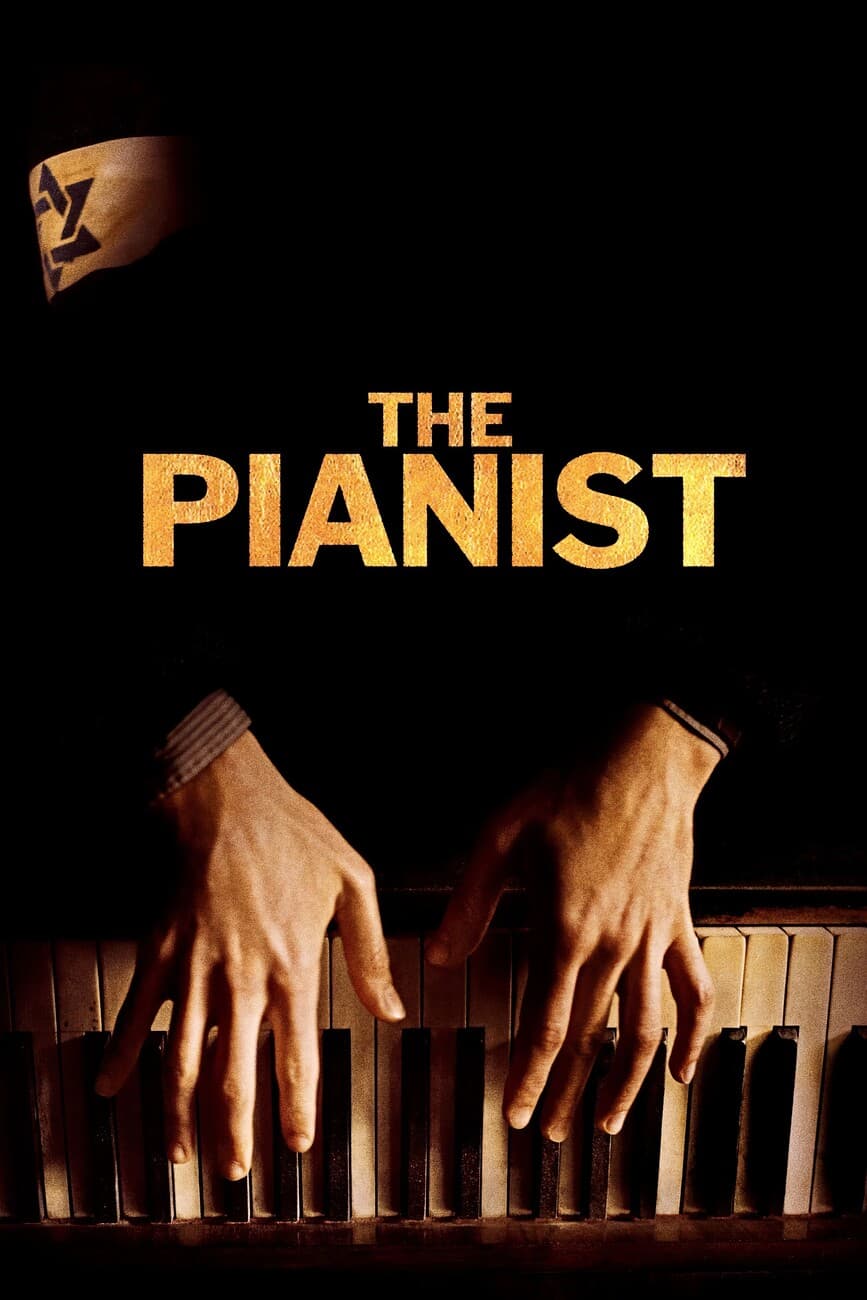
2002
The Pianist
A quiet life unmade by war — and a pianist who refuses to stop listening.
Read the retrospective
→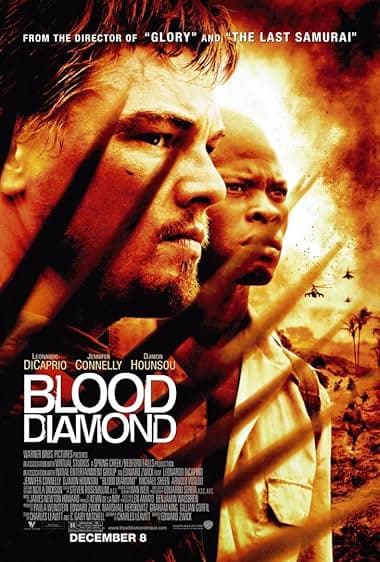
2006
Blood Diamond
A mercenary, a fisherman and a pink diamond — and a film that still asks who pays for our jewellery.
Read the retrospective
→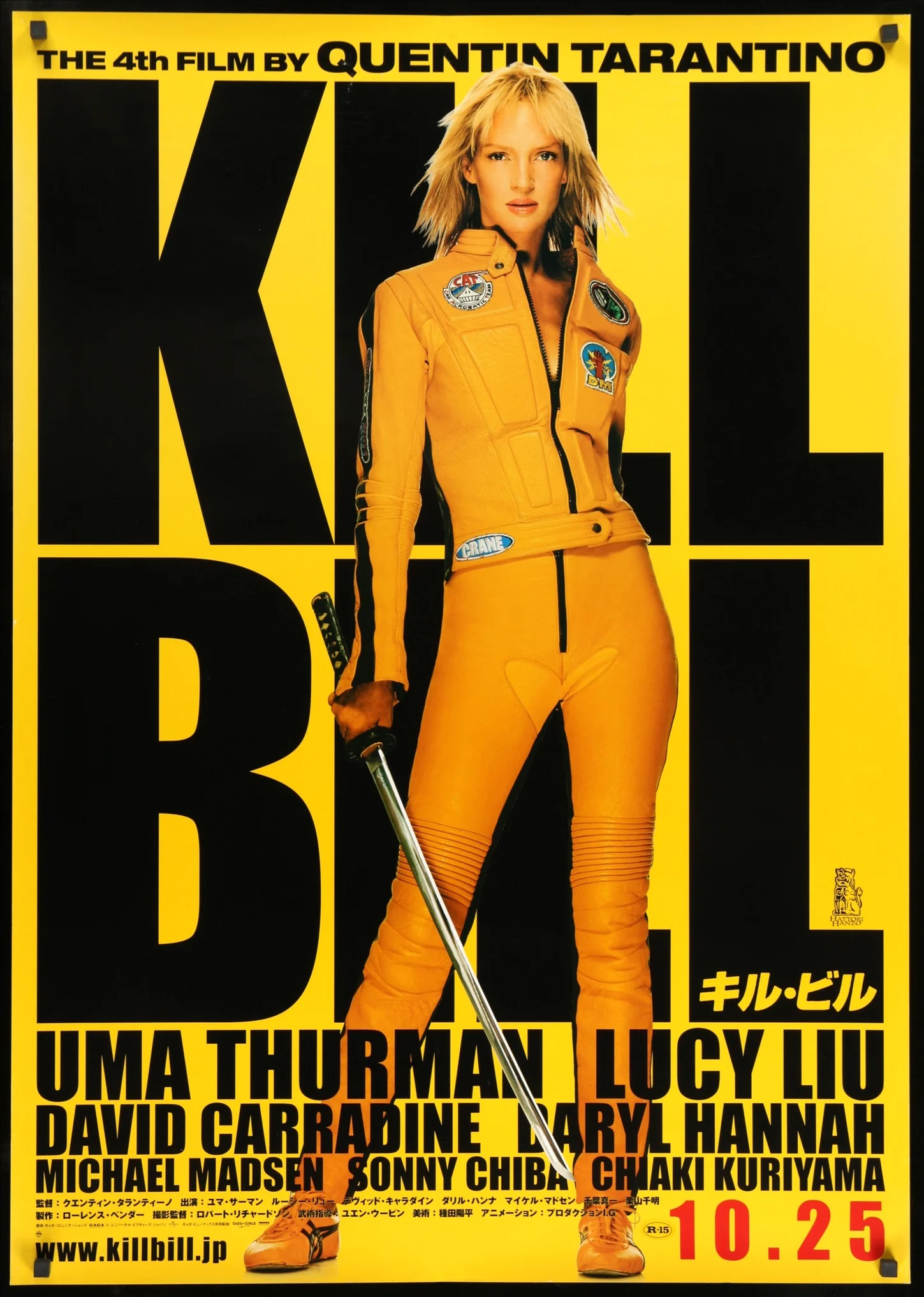
2003
Kill Bill: Volume 1
A yellow jumpsuit, a long list of enemies and one woman who refuses to be finished.
Read the retrospective
→