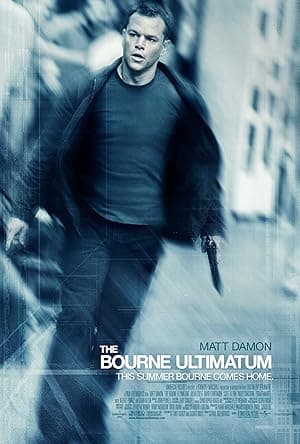
The Bourne Ultimatum
One man, too many passports and the clarity of a man who’s only asking who he was.
Feature presentation
The Bourne Ultimatum still lands like a punch to the ribs: precise, breathless and oddly intimate for a film that vaults between cities. Paul Greengrass finishes the trilogy by keeping the focus where it should be — on Jason Bourne’s hunt for his past, and the consequences that follow when an intelligence state meets someone who remembers only parts of himself.
THE MOVIE
Jason Bourne is still the reason this movie works
Think of The Bourne Ultimatum and your head automatically fills with running: through train stations, cafés, streets and airports. That globe-trotting chase energy — Moscow to New York via Paris, London, Madrid and Tangier — is the film’s engine, but it’s not spectacle for its own sake.
What keeps it honest is what the running is for. The movie literally continues Bourne’s search for who he was before Treadstone and why he was turned into an assassin, and every pursuit or break-in feels driven by that question rather than by a checklist of thrills.
Paul Greengrass directs the whole thing with a clear single-mission mentality: keep the plot moving, keep Bourne moving, and make the audience spend 115 minutes inside a man trying to remember who he once was.
THE SETUP
The idea that sets The Bourne Ultimatum in motion
The film picks up immediately after the previous instalment and keeps a clear, forward momentum: Bourne is on the run and the chase sequences that move him between cities are the plot, not just the garnish.
That chase-spine is tied to something concrete: investigative journalism. The reporter Simon Ross becomes the plot’s public lever, a character who helps expose the CIA’s Blackbriar programme and throws agency operations into the light.
From there the mechanics are straightforward and efficient — hand-to-hand fights in close quarters, urban foot-and-car chases, covert surveillance tech and the theft or exposure of classified files. Everything the movie does is aimed at unrolling the secret files and the people who built the programme.
Because Ultimatum is a direct continuation of Bourne’s story from the earlier films, it spends less time setting up villains and more time closing the loop on who created Bourne and why.
THE CHARACTER
Why Jason Bourne matters
At its simplest, this is a man on a very particular mission: find his past. Jason Bourne wants to know who he was before Treadstone and why he was remade into a weapon. That quest gives the film a moral spine that single-minded action often lacks.
Because the movie assumes you remember how we got here, it can keep returning to that question — not as a neat mystery to be solved and forgotten, but as something that defines how Bourne moves, fights and chooses allies.
That refusal to treat him as just an exceptional operative is what makes him stick in the mind. He’s not a superman with a score to settle; he’s someone measuring his own history against the damage those programmes did.
And, yes, Matt Damon plays him — Bourne’s identity anchors the trilogy and Ultimatum is written and staged around that need to finish the search.
THE PERFORMANCE
Why Matt Damon's performance matters
Contemporary coverage singled out Matt Damon’s measured, physical approach as central to the film’s effectiveness. There’s a restraint to how the role is played: it undercuts the temptation to make Bourne merely a reactionary engine of violence.
That restraint matters because the movie itself is kinetic; without a relatively composed centre the motion would feel empty. Damon gives the film someone steady to orbit — a man whose violence is always in service of a very human problem.
Put simply: the performance supplies the necessary humanity so the plot’s chase-and-revelation machinery has meaning.
UNDER THE SURFACE
The Bourne Ultimatum has more on its mind than the plot suggests
Under the engine of chases and fights sits a fairly thoughtful set of concerns. At its core the film is about identity and memory — Bourne’s search for his personal history pushes every sequence into ethical territory.
That quest runs headlong into surveillance and institutional power. The movie foregrounds modern surveillance techniques and database tracking as tools the agency uses to pin people down; they’re not abstract threats but practical instruments used against real lives.
There’s also the old argument between secrecy and accountability. The plot stages a collision between public exposure — via investigative reporting — and clandestine agency operations, asking whether any institution should be able to act without public scrutiny.
Those ideas are woven into the action rather than tacked on as afterthoughts: the thrills exist so the themes can play out in motion.
THE FILMMAKING
How The Bourne Ultimatum was put together
Paul Greengrass brings a documentary-leaning, hand-held ‘run-and-gun’ style to almost everything here. That approach gives the action an edge of immediacy — you feel the cramped confusion of fights and the hurry of escapes.
Those choices are not just stylistic flourishes; they’re functional. The kinetic camera and rapid cutting let the film collapse geography and time so Bourne’s pursuit never loses momentum.
On the credits side, cinematography was handled by Oliver Wood and the editing was by Christopher Rouse — the film’s craft in cutting and sound was recognised in the awards season, too.
In short: the filmmaking keeps the film taut and forward-moving and it’s built around prioritising motion and clarity over ornate framing.
PRACTICAL EFFECTS
The effects work that gives The Bourne Ultimatum its physical personality
Ultimatum relies heavily on on-location stunts and practical fight choreography; the film’s physicality comes from real movement rather than manufactured set-pieces.
Visual-effects work exists, but largely in a supporting role — removing wires, extending sets and tidying composites so the practical stunts read cleanly on camera.
That blend keeps the action feeling lived-in: the digital work is there to augment and correct, not to replace the film’s visible physical effort.
PURE 00s
The Bourne Ultimatum could not belong to any other decade
The movie wears its moment on its sleeve: its focus on ubiquitous electronic surveillance and database tracking echoes the anxieties of the post-9/11 2000s, when questions about intelligence gathering and secrecy were everywhere.
That same decade also saw action cinema move toward quicker cutting and a grittier, documentary-inflected aesthetic — Ultimatum sits squarely in that shift and helped define what modern, grounded spy-thrillers could look like.
Released in 2007, the film completed a trilogy that had begun with a different tone and then sharpened into something leaner and more urgent by its final chapter.
THE LEGACY
Why The Bourne Ultimatum still matters
There’s a tidy piece of documentary evidence to start: the film won three Academy Awards at the 2008 ceremony for editing, sound mixing and sound editing. Those wins underline how much of its power comes from craft rather than spectacle alone.
As the concluding chapter of the original Damon–led trilogy, Ultimatum also helped cement Paul Greengrass’s mainstream status — it proved that a documentary-leaning style could carry a major studio action picture.
Beyond trophies and profiles, the film’s approach to editing, sound design and action staging is frequently discussed when people talk about how action-thriller filmmaking shifted in the late 00s and into the next decade.
THE VERDICT
Does The Bourne Ultimatum still hold up?
Yes. If you care about a thriller that ties its physical momentum to an honest emotional problem — the search for identity and the exposure of secret programmes — Ultimatum still delivers. The opening’s globe-trotting chases are there to advance Bourne’s investigation, not to disguise a lack of ideas.
The film’s mechanics — close-quarters combat, urban chases, surveillance tradecraft, and the theft and exposure of classified Blackbriar files — all serve that central pursuit. A crucial sequence where Bourne gets access to Blackbriar documents and confronts a former Treadstone psychiatrist pays off the trilogy’s central questions in a concrete way.
It helps that the story has allies who matter: Nicky Parsons passes information to Bourne and briefly assists his investigation, while a CIA deputy director, Noah Vosen, uses agency surveillance resources and Blackbriar assets to chase him. Those relationships keep the stakes personal and procedural at once.
And finally, Matt Damon’s measured, physical screen presence — noted in contemporary reviews — gives the whole thing a steady human core amid Greengrass’s kinetic direction. If you want clear, purposeful action grounded in a character trying to reclaim himself, The Bourne Ultimatum is still worth the watch.
Share this movie
Keep watching
More movies from the 00s

2002
The Pianist
A quiet life unmade by war — and a pianist who refuses to stop listening.
Read the retrospective
→
2006
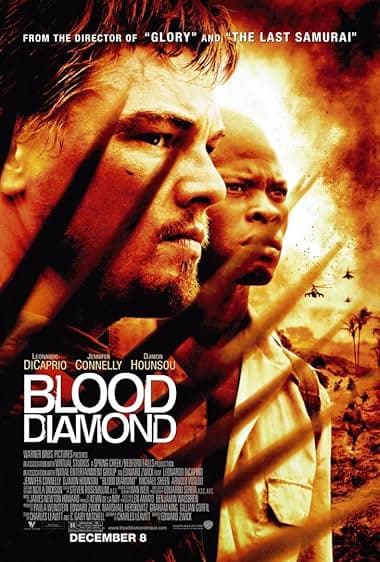
Blood Diamond
A mercenary, a fisherman and a pink diamond — and a film that still asks who pays for our jewellery.
Read the retrospective
→
2003
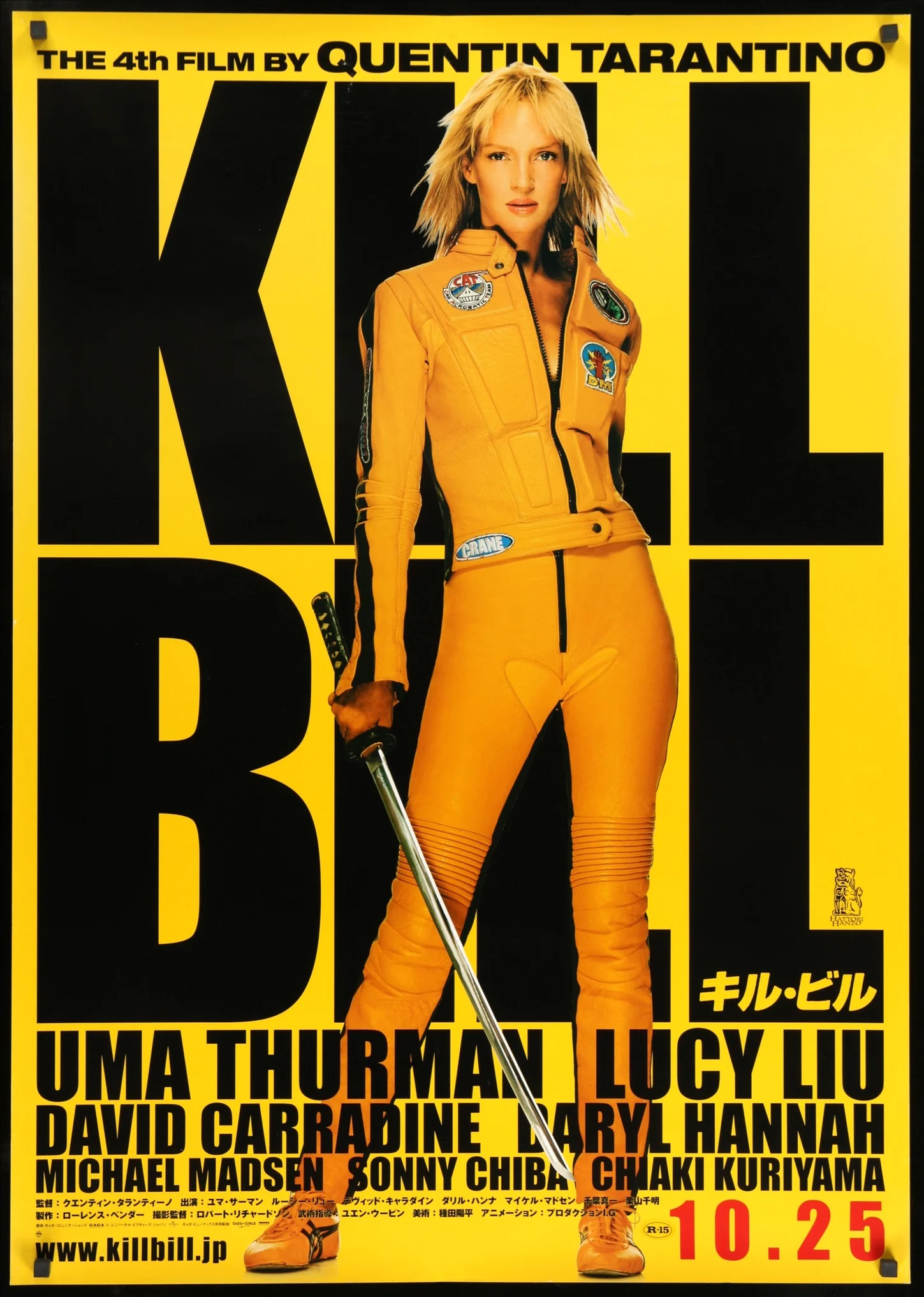
Kill Bill: Volume 1
A yellow jumpsuit, a long list of enemies and one woman who refuses to be finished.
Read the retrospective
→