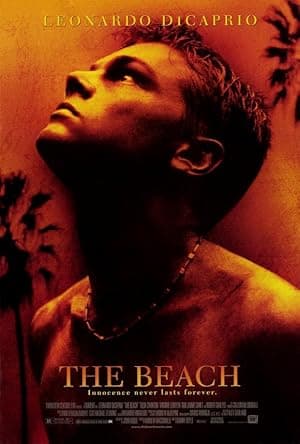
The Beach
A sun-drenched promise that unravels into something darker — and all because of a map and a restless young man.
Feature presentation
Remember the bit where a map feels like an invitation to become someone else? That’s The Beach in a nutshell. Danny Boyle’s feverish adventure follows Richard, a young traveller so hungry for authenticity he’ll follow a scrap of paper to the edge of civilisation — and quietly turn paradise into a test.
THE MOVIE
Richard is still the reason this movie works
At the centre of The Beach is a very simple engine: a map, handed to Richard, that points to an island the rest of the world doesn’t know about. That single object doesn’t just start the plot — it tells you everything you need to know about who Richard is and why he’s travelling in the first place.
Richard is presented as restless and image-conscious, the kind of traveller for whom authenticity is both a goal and an accessory. When he and two French companions follow Daffy’s map to the secret community, the surface story — exotic escape, found paradise — immediately slides into something more brittle: the clash between an ideal and the people trying to live it.
Danny Boyle directs those collisions with an appetite for extremes. The Beach arrives at the very start of 2000, and it wears its adventure-drama-thriller romance mix on its sleeve. Mostly, though, people still talk about it because the film makes one person’s search for meaning feel like a contagion that reshapes an entire community.
THE SETUP
The idea that sets The Beach in motion
The film’s premise is neat and theatrical: a young traveller gets hold of a map to a secret island and ends up inside a hidden community that claims to be untouched. It’s the classic found-map quest, tidy enough to explain in a sentence and capacious enough to hold trouble.
That community runs on its own rules. There’s leadership, boundaries and an ideal — which is handy until people bring jealousy, desire and practical problems into the mix. Those human frictions are the engine: the island’s utopian dream keeps bumping into very ordinary human impulses.
Key story mechanics are straightforward: the map, the commune, a leader figure and the slow escalation of tensions that test whether the group can keep its promises to one another. The setup works because it makes the social experiment feel inevitable; a little stress and the experiment reveals its seams.
It’s an island-breakdown story in a long tradition. Critics drew comparisons to other films about small groups unravelling in isolation, and for good reason — The Beach trades in the same gnawing question: what happens when people try to build a perfect place and bring all their messy selves with them?
THE CHARACTER
Why Richard matters
Richard isn’t a heroic explorer. He’s the kind of traveller who is both searching and performing that search — image matters to him, and that tension is the film’s most interesting thread. His restlessness is what moves the story forward, because without that itch he’d never take Daffy’s map seriously.
That map relationship matters. Daffy’s eccentricity and the way he hands Richard access to the island make Richard less an accidental guest and more an apprentice of temptation. The map is a gift and a promise; Richard treats it as a chance to become someone he thinks is more authentic than the life he’d left behind.
When Françoise and Étienne arrive as a couple, they stir things up in two ways: they offer companionship and they complicate Richard’s desire for belonging. The love-triangle element isn’t just romantic drama; it’s an accelerant for the community’s frictions and for Richard’s choices.
What makes Richard memorable is that he’s the engine of the audience’s curiosity. You watch him because he wants more than a holiday — and because his search reshapes everyone around him. The island’s fate, in many ways, follows from his particular kind of discontent.
UNDER THE SURFACE
The Beach has more on its mind than the plot suggests
On the surface it’s an adventure about finding paradise. Under the surface it’s a meditation on the familiar friction: utopia versus human nature. The film asks — without preaching — whether any group of people can keep an ideal intact when envy, sex and scarcity arrive.
It’s also about the search for authenticity. Richard’s trip is pitched as a rejection of the packaged, tourist version of experience. But the film shows how the pursuit of ‘real’ life can become its own performance, and how that hunger can erode the very things it claims to cherish.
Communal responsibility is another persistent note. The island isn’t a playground; it requires work, rules and mutual trust. When people start to put individual wants above shared duties, the social contract frays fast — and that moral test supplies most of the drama.
Finally, the film sits awkwardly beside questions of tourism and environmental impact. The very idea of a hidden paradise depends on keeping it hidden, and production realities and the story’s real-world afterlife complicate the romanticism of discovery.
THE FILMMAKING
How The Beach was put together
The Beach’s look is a large part of its identity. Darius Khondji served as cinematographer, and contemporary critics frequently singled out the photography and visual style as one of the film’s strengths. There’s a clarity to that praise: the movie sells its paradise convincingly, at least for a while.
Danny Boyle’s fingerprints are also obvious. He brought members of the same team that had worked with him before, and the comparisons to his earlier work in the press made the film feel like a deliberate, identifiable follow-up rather than a stylistic detour.
That collaboration — director and cinematographer working in tandem — is where the film’s confidence comes from. Even when the story becomes darker, the filmmaking keeps you invested: the world feels constructed and believable, which matters when you’re asked to accept a whole secret community on an island.
In short, the movie’s craft helps carry some of the narrative risk. The visuals do heavy lifting: they make the idea of paradise persuasive enough that the social cracks that appear feel meaningful rather than arbitrary.
PURE 00s
The Beach could not belong to any other decade
The Beach arrived in February 2000 at a moment when Leonardo DiCaprio was the most talked-about young star following Titanic. That context shaped how people watched the film: it was talked about as a risk in a post-Titanic career, which made the movie feel like a public moment as well as a piece of entertainment.
The timing mattered because the film’s themes — searching for a new kind of life, rejecting mainstream choices — echoed cultural talk about authenticity at the turn of the millennium. The movie’s personality is partly a conversation with that particular moment.
There’s also a distinct 00s footnote in the film’s production: shooting on a protected Thai national-park beach generated environmental controversy and legal attention around the time of production. That real-world fallout sits uneasily with the movie’s paradise fantasy.
Put together, the casting and the production headlines make The Beach feel like a 2000s artefact: very of its moment in terms of who was in it and the headlines it made, and still readable today because the story taps into concerns that weren’t limited to a single year.
THE LEGACY
Why The Beach still matters
One clear legacy is tangible: the film drew significant public attention to Ko Phi Phi Le, and reporting at the time linked production and subsequent tourism to environmental damage at Maya Bay. That long-term impact — restoration and management discussions — keeps the movie in conversations beyond mere nostalgia.
The Beach also remains a reference point in reassessments of both Leonardo DiCaprio’s early career choices and Danny Boyle’s filmography. Critics and retrospectives return to the film because it sits at an intersection of celebrity, aesthetics and a story that invited wide debate.
That combination — a vivid visual identity, a headline-making production and a lead actor in career transition — means the film continues to attract attention when people examine the era or the creators’ bodies of work.
So The Beach matters not only for what’s on-screen but for the way the off-screen story and later discussion keep nudging it back into cultural conversations.
THE VERDICT
Does The Beach still hold up?
Yes — with qualifications. The Beach remains worth watching because its central ingredients still land: the map that starts everything, Richard’s hunger for something ‘real’ and the escalating social pressures that test an ideal. Those elements give the film a clear engine that doesn’t need novelty to be compelling.
It helps that the film keeps important outcomes private while keeping the focus on the social dynamics that cause the community to fracture. You’re watching people make decisions that reveal character and consequences, and that kind of drama carries across decades.
If you come for scenery alone, the movie delivers; if you come for a tidy moral lesson, you won’t find one. The film asks uncomfortable questions about responsibility and authenticity without offering clean answers — and that ambiguity is why the story still sparks discussion.
So should you watch it today? Watch it for the set-up — the map, Richard’s restlessness, the commune’s rules — and for the way those things are allowed to complicate each other. The Beach still works as a cautionary slice of turn-of-the-millennium cinema: attractive, troubling and uneasy about what paradise actually costs.
Share this movie
Keep watching
More movies from the 00s

2002
The Pianist
A quiet life unmade by war — and a pianist who refuses to stop listening.
Read the retrospective
→
2006
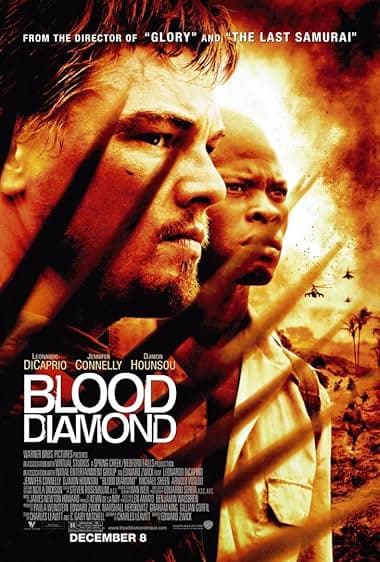
Blood Diamond
A mercenary, a fisherman and a pink diamond — and a film that still asks who pays for our jewellery.
Read the retrospective
→
2003
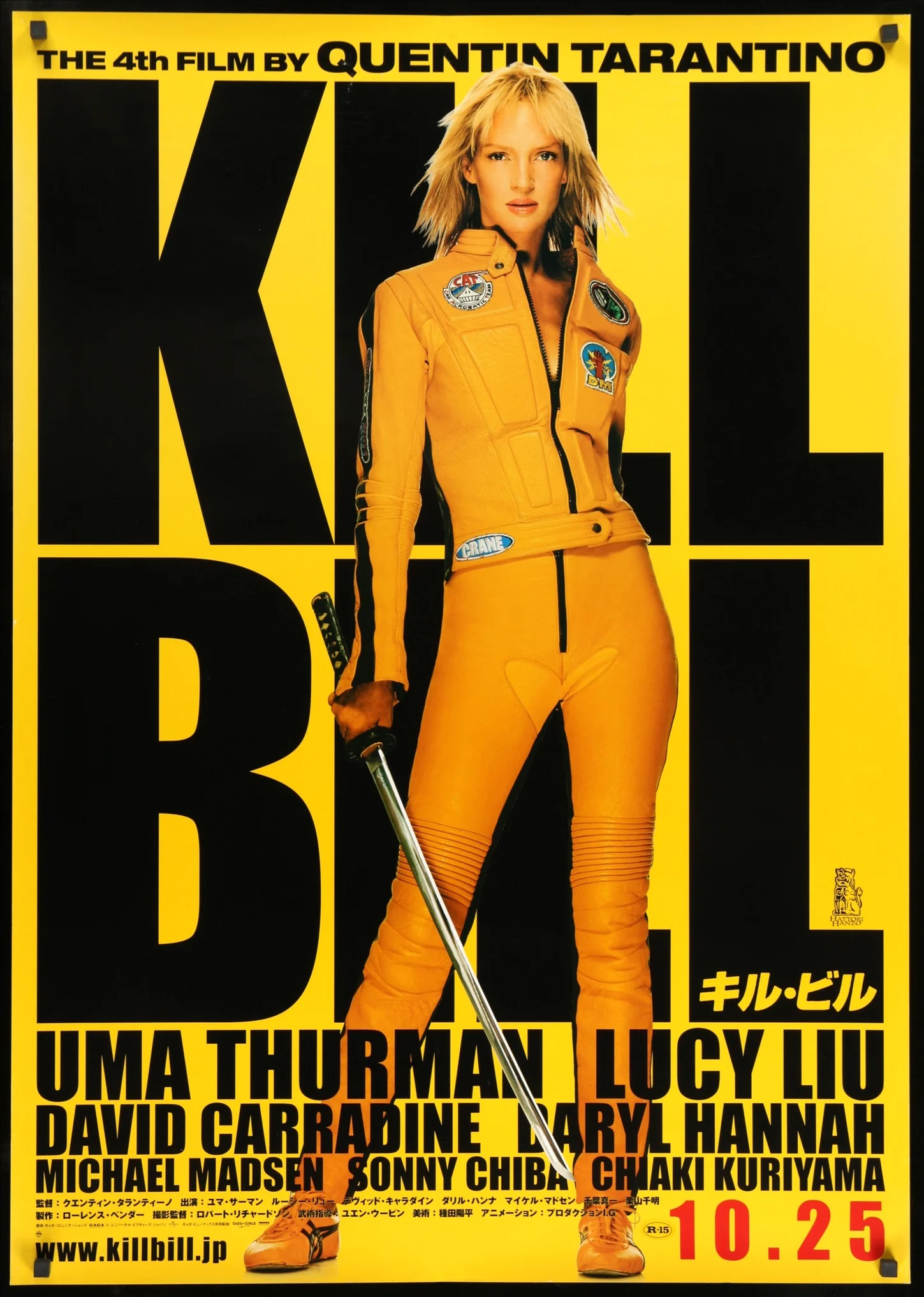
Kill Bill: Volume 1
A yellow jumpsuit, a long list of enemies and one woman who refuses to be finished.
Read the retrospective
→