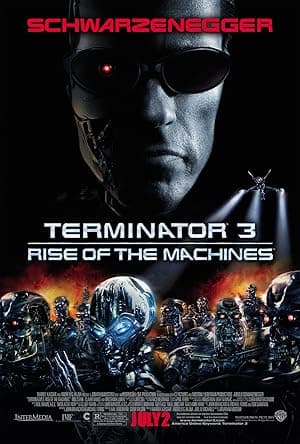
Terminator 3: Rise of the Machines
A reprogrammed protector, an upgraded hunter and a question the franchise keeps asking: can we outrun the future?
Feature presentation
There’s a simple reason people still boot up Terminator 3: Rise of the Machines — the film hands Arnold Schwarzenegger a job that fits him like a glove: a T‑850 sent to protect where another machine has come to kill. Jonathan Mostow’s sequel leans into that clash and the wider question it keeps throwing at us: are we steering our machines, or are they steering us?
THE MOVIE
T-850 / the Terminator is still the reason this movie works
Put bluntly: Terminator 3 works because it gives the Terminator a new job. After T2, the world has shifted and the future’s latest chess move is a T‑X sent back to wipe out the resistance’s leadership before it even forms. Against that, the resistance sends back a reprogrammed T‑850 to shepherd two people who still don’t want to be led.
That protector-versus-infiltrator set-up frames everything. The T‑850’s presence turns what could have been a straightforward chase into a question about duty, constraint and who gets to decide the fate of the world — while Mostow’s direction keeps its eye on the action that carries those questions forward.
It’s also a film that knows its place: a 2003 sequel that follows directly on the consequences of Terminator 2, trading some of the earlier films’ interior drama for a propulsive, modern thriller energy. The T‑850 anchors that mix — familiar, functional, and oddly central to the film’s case that Judgment Day might be less avoidable than anyone hoped.
THE SETUP
The idea that sets Terminator 3: Rise of the Machines in motion
The movie’s engine is a tidy time-travel swap: Skynet sends a superior killing machine back to eliminate future resistance lieutenants, and the resistance answers by sending back a protector. That simple exchange gives us a cat-and-mouse that plays out in the present-day timeline.
Because both missions originate from the future, the story keeps folding future consequences into present action; every scrape has a tomorrow attached to it. That gives a brisk inevitability to even the loudest set pieces — they aren’t just fights, they’re foreshadowing.
The T‑X raises the bar by doing more than mimic human form. Its ability to command other machines turns fights that would have been mano‑a‑mano into broader threats: one adversary suddenly controls an army, which forces the film into larger, noisier stakes.
All of that sits on a direct continuation from Terminator 2: the film assumes the audience knows what Judgment Day means for these characters and uses that history to push events forward rather than re-explain them.
THE CHARACTER
Why T-850 / the Terminator matters
T‑850 is a blunt instrument with a specific brief: protect. That single instruction reshapes the Terminator identity from relentless hunter into reluctant guardian, and the film lives off the tension between programmed purpose and the messy business of humans who don’t want to be saved in the way they’re offered.
That change in mission is the movie’s clearest way of folding character into plot. The T‑850 isn’t an exploration of machine interiority so much as a tool that reveals how human the human players still are — particularly a John Connor who’s been living off‑the‑grid to avoid exactly this kind of duty.
The arrival of the T‑X matters precisely because it escalates everything the T‑850 represents. Where the T‑X is an arms‑length evolution — multifunctional and able to weaponise other machines — the T‑850 is a familiar, physical counterpoint, a protector that operates under constraints rather than unlimited escalation.
And narratively, that contrast is useful. The T‑850’s continued presence links this film to its predecessors while allowing the story to ask: can a machine with a new job change an old fate, or does it only reshuffle the pieces on a board already set?
UNDER THE SURFACE
Terminator 3: Rise of the Machines has more on its mind than the plot suggests
At its heart the film keeps circling one old franchise question: inevitability versus free will. The characters act as if choices might delay the future; the film repeatedly stages those attempts and leaves the viewer wondering how much agency is realistic when the machine of history is already rolling.
That doubt is joined by a quieter, modern worry: human responsibility for technology. T3 frames Skynet’s retaliation and the creation of increasingly lethal machines as a human-made problem, forcing the story to ask who is responsible when our inventions turn on us.
Closely tied to both ideas is the human–machine boundary. T3 plays with that edge by putting a protector Terminator at the centre of human survival — a device that protects us but remains categorically other. The proximity only sharpens the question of what separates us from the systems we build.
And under all this sits the motif of reluctant leadership. John Connor’s nomadic, avoidant life speaks to a person who’d rather duck responsibility than be the figurehead of survival — which in turn makes the protective mission of the T‑850 feel both necessary and, at times, intrusive.
THE FILMMAKING
How Terminator 3: Rise of the Machines was put together
One of the clearer production fingerprints on T3 is the editing approach. Neil Travis and Nicolas de Toth helped shape a brisk, action-driven pace that keeps sequences moving and makes the film feel like a steady, handheld sprint rather than a series of isolated stunts.
That rhythm matters because the movie trades some of the first two films’ quieter, character-forward beats for momentum. The editing stitches chase sequences and confrontations tightly, so the film rarely lets the audience settle — it wants you on the run with the characters.
A brisk cutting style also helps when the story needs to compress time-travel consequences into present action; quick intercuts are an efficient way to carry the burden of future stakes without pausing for exposition.
In short: the way the film is put together favours forward motion. That’s a practical choice that suits the film’s themes — inevitability and the pressure of events catching up — as much as it suits the summer‑movie brief.
PRACTICAL EFFECTS
The effects work that gives Terminator 3: Rise of the Machines its physical personality
T3’s production mixed hands‑on creature and prosthetic work with digital effects. Stan Winston Studio contributed the physical Terminator elements while ILM supplied the complementary digital work.
That combination is important: practical prosthetics give the Terminator materiality you can cut to and build a scene around, while CGI is used where the story demands machine transformations or large‑scale spectacle.
The film leans on practical stunt sequences and physical props for many of its action beats, using CGI to extend, augment or dramatise the T‑X’s more fantastical capabilities and the big set pieces.
Put together, the mixed approach keeps T3 feeling like a physical film at times — you can still sense the on-set, tangible objects in many confrontations — even when the story needs the reach of digital effects.
PURE 00s
Terminator 3: Rise of the Machines could not belong to any other decade
T3 is a product of early‑2000s studio thinking: a tentpole sequel that returns to a much-loved franchise and leans heavier on digital effects and marquee spectacle than the originals did. That positioning is part of its DNA.
The film’s release strategy and production reflect the period’s appetite for reviving legacy IP with new creative teams: a well‑known title, a new director, and an aim to recapture audiences with a contemporary action sensibility.
Behind the scenes, the mix of Stan Winston’s practical artistry and ILM’s digital work is emblematic of the era’s transition — studios were willing to combine old and new techniques to get the spectacle they wanted.
Commercially the movie also belongs to the 00s: it was one of the year’s top earners, which underlines how studios were treating established franchises as dependable summer anchors during that period.
WATCHING IT NOW
What has aged — and what hasn't
One thing that tends to help T3 today is its pace. Contemporary and later comments pointed out that the movie’s focus on action and speed keeps it watchable; it doesn’t linger on exposition, so it zips along on its thrill beats.
That same briskness can be a weakness for viewers who came for the deeper character work of the first two films — T3 shifts emphasis away from interior drama toward plot propulsion, and not everyone accepts that trade-off.
There are also casting realities that change how the movie reads now. John Connor’s role was recast for this instalment, and Sarah Connor is not active in the present-day timeline; those choices alter the emotional map the franchise had previously set out.
Seen today, it’s a film that works best if you go in expecting action-forward entertainment with a continuous franchise throughline rather than a direct emotional sequel to the previous character study.
THE LEGACY
Why Terminator 3: Rise of the Machines still matters
T3’s chief legacy is straightforward: it kept the franchise alive on the big screen and led into later sequels. As the third theatrical instalment, it prevented the series from becoming dormant and paved the way for further entries.
Beyond that, the film mattered in practical, business terms: its production and release played a part in the franchise negotiations and rights conversations that shaped how future sequels and reboots were made.
So while it may not be the franchise’s most philosophically ambitious entry, T3 mattered for continuity — it showed studios there was still commercial life, and it kept the story world circulating in public conversation.
That kind of legacy isn’t glamorous, but it’s decisive: the movie kept the machines moving.
THE VERDICT
Does Terminator 3: Rise of the Machines still hold up?
Short answer: yes — with the right expectations. If you want a tight, action-first sequel that reuses a familiar axis (a protector Terminator versus an upgraded infiltrator) and keeps the plot moving, T3 still delivers that particular pleasure.
It asks the same franchise questions — can we change what’s coming, who answers for technology, where the line between us and our machines lies — and it stages those questions inside a propulsive thriller rather than a long character study. That decision will decide whether it works for you.
The T‑850’s presence is the film’s anchor: a reprogrammed protector that both advances the stakes and gives the story a recognisable focus. Paired with the T‑X’s escalation and a central John Connor who’s been trying to avoid leadership, the film gives you conflict that’s both personal and structural.
So watch it for the motion and the machine logic. It’s not T2’s intimate reckoning, but it’s an effective, efficient continuation — a movie that proves sometimes the franchise’s engine just needed another turn of the key.
Share this movie
Keep watching
More movies from the 00s

2002
The Pianist
A quiet life unmade by war — and a pianist who refuses to stop listening.
Read the retrospective
→
2006
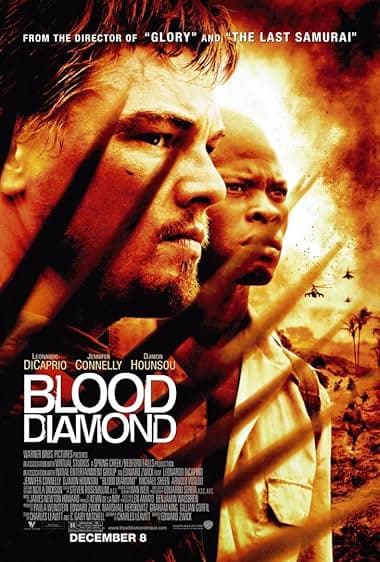
Blood Diamond
A mercenary, a fisherman and a pink diamond — and a film that still asks who pays for our jewellery.
Read the retrospective
→
2003
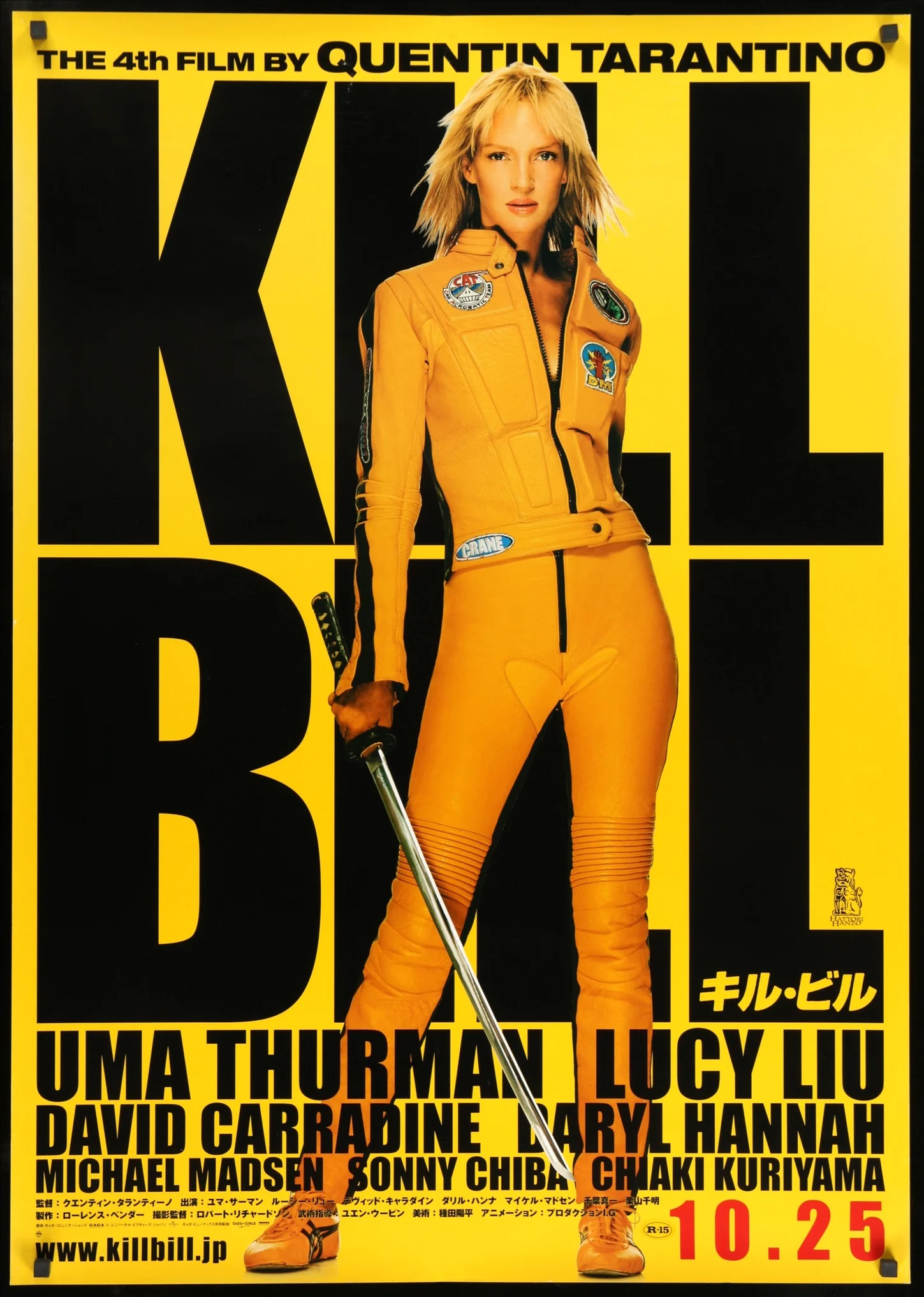
Kill Bill: Volume 1
A yellow jumpsuit, a long list of enemies and one woman who refuses to be finished.
Read the retrospective
→