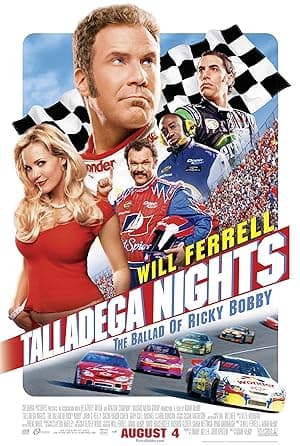
Talladega Nights: The Ballad of Ricky Bobby
Win first, ask questions later — and then fall spectacularly off the podium.
Feature presentation
Talladega Nights: The Ballad of Ricky Bobby is the sort of comedy that sticks in your head because it insists on being loud, specific and stubbornly silly. At its centre is a single idea — a man so devoted to coming first that everything else becomes collateral — and Adam McKay builds a whole absurd world around that stubbornness.
THE MOVIE
Ricky Bobby is still the reason this movie works
What keeps Talladega Nights: The Ballad of Ricky Bobby alive in conversation isn't a single gag or a one-liner. It's a character who will do anything to be first — and who, crucially, is allowed to be both ridiculous and oddly earnest about it. Will Ferrell's Ricky Bobby is written and staged as a man whose identity is tangled up in sponsorships, applause and the simple arithmetic of winning.
That win-at-all-costs personality is also what makes the film's satire land. Adam McKay's comedy singles out the commercial underside of professional sport — the endorsements, the publicity stunts, the way personalities are packaged — and then asks us to laugh at how very serious everyone treats that packaging. The story is kicked into motion when Ricky is publicly bested on the track by Jean Girard, a foreign challenger whose arrival upends the whole performance.
So yes: it's loud and broad. But it has shape. McKay and Ferrell build a comic machine around one compulsive idea — celebrity as currency — and then test it in race sequences, publicity events and a gallery of supporting characters who keep tugging at Ricky's priorities.
THE SETUP
The idea that sets Talladega Nights: The Ballad of Ricky Bobby in motion
At its simplest, the movie is a comedy about a champion who loses more than a race. Ricky Bobby is established as a top stock-car driver whose whole life orbits victory — fans, sponsors, a do-or-die approach to the checkered flag — and that single-mindedness is what the story feeds on.
The inciting moment is plain and effective: the arrival of Jean Girard, an imported Formula One driver, who publicly beats Ricky on the track. That defeat isn't just a slap to his record; it fractures the image Ricky has built around being number one and sets the main plot in motion.
From there, the conflict is straightforward and watchable: Ricky has to find his way back — to confidence, career and family status — while the sport around him recalibrates because of a rival who refuses to play by the old rules.
Structurally the film keeps things bright and episodic. It leans on race sequences, sponsor-driven sight gags and recurring catchphrases to root the satire in the realities of professional racing while giving McKay room for broad set pieces.
THE CHARACTER
Why Ricky Bobby matters
Ricky Bobby matters because he's not merely a collection of jokes; he's a racket of wants. The film gives him a single compass — being first — and then examines how far someone will go to keep that compass pointing north. It's a funny, specific motor that keeps the whole movie running.
His obsession isn't abstract: it's commercial and cultural. The rewards of celebrity and corporate sponsorship are the visible currency by which Ricky measures himself, and that pressure shapes every decision he makes on and off the track.
The movie also makes the right choice by surrounding him with characters who keep him in place emotionally. Cal Naughton Jr., the dependable teammate and friend, plays the steady second seat: a loyal presence who shows us what Ricky sacrifices for his ego.
Around them, the supporting figures — family, sponsors, crew — act less like archetypes and more like forces that pull on Ricky's priorities. They test him, and in doing so underline what the film is really interested in: how identity is constructed when it’s paid for and performed.
THE PERFORMANCE
Why Will Ferrell's performance matters
Contemporary reaction singled out the chemistry at the film's heart. Reviews praised the way Ferrell and John C. Reilly played off one another, which matters because their relationship keeps the film anchored whenever the jokes go completely off the rails.
That contrast — a showy, ego-driven lead with a quietly loyal sidekick — is a classic comic engine, and critics at the time noticed how it gave the satire an emotional floor to land on.
There was also attention on the film's antagonist: reviewers highlighted Sacha Baron Cohen's committed, antagonistic turn as the rival who rattles Ricky, which is important because it creates the external pressure the plot needs.
Put simply: contemporary coverage made the chemistry and the antagonism part of why the film's loudness felt purposeful rather than just scattershot.
UNDER THE SURFACE
Talladega Nights: The Ballad of Ricky Bobby has more on its mind than the plot suggests
On the surface it's a sports comedy full of crashes and catchphrases. Underneath, it keeps circling a handful of ideas: the commercialization of sport, how masculinity gets performed under pressure, and what celebrity does to private life.
The movie's satire of sponsorship and publicity isn't incidental. Those commercial forces are the film's environment — they shape the jokes and the choices characters make — so the comedy often reads as a commentary on how sport is packaged for consumption.
Identity and masculinity are neatly folded into that: Ricky's sense of self depends on external markers of success, so the film frequently asks what happens when those markers disappear.
But the film also favourites one humane thread: friendship and loyalty. Cal's steadiness and the partnership between the drivers keep bringing the story back to a human place, reminding us that the stakes are as much personal as they are public.
THE FILMMAKING
How Talladega Nights: The Ballad of Ricky Bobby was put together
Talladega Nights comes from the Ferrell–McKay playbook: the screenplay was a collaboration between Adam McKay and Will Ferrell, and McKay directed with an eye for big, improv-friendly set pieces.
That approach required a reliable technical team to keep things legible amid the chaos. The cinematography was handled by Oliver Wood and Brent White took care of the editing — practical choices that let the film move briskly between stand-up beats, family scenes and on-track action.
The net result is a comedy that trades on conversational energy and staged sequences. The filmmaking choices keep the pace moving and give the broad humour a crisp frame to live in.
In short: it's a heavily collaborative pop-comedy, staged so the performers can play within clear, efficient setups.
PRACTICAL EFFECTS
The effects work that gives Talladega Nights: The Ballad of Ricky Bobby its physical personality
The film doesn't pretend racing is a toy. Real racing vendors were brought in to handle cars, haulers and the on-track logistics, which gave the movie a grounded physical base for its comic stunts.
Those teams created custom car wrappings and managed stunt coordination, so the cars felt like real participants rather than props imitating speed.
Critics at the time noted that the staged stunt-driving, combined with how the camera captured it, gave many race sequences a near-documentary immediacy — an effect that helps sell the satire because it sits beside genuinely convincing track work.
That blend of professional racing know-how and cinematic staging is why the action scenes often read as both thrilling and deliberately comic.
PURE 00s
Talladega Nights: The Ballad of Ricky Bobby could not belong to any other decade
This is very much a mid-2000s comedy: part of the wave of McKay–Ferrell collaborations released while Apatow-linked productions were gaining profile. That era liked big, personality-led films that let ensemble casts improvise inside tidy premises.
Talladega Nights sits comfortably in that moment because it uses broad satire, recurring gags and an ensemble to carry the humour — methods that were prominent across that strain of comedy.
The film also leaned on authentic racing culture to sell its world: it features cameo appearances by NASCAR drivers and real broadcast personnel from the 2005 season, which grounds the otherwise cartoonish elements.
Put together, those features make it a timepiece of a particular comic approach — not a nostalgia trip for costumes or tunes, but a product of how mainstream comedy was being made in 2006.
WATCHING IT NOW
What has aged — and what hasn't
The film's core emotional motor still holds up because it's anchored in friendship. The loyalty between Ricky and Cal gives the comedy a human tether: even when jokes veer into the absurd, the relationship keeps things from feeling empty.
That reliance on a dependable comedic duo also explains why the movie still feels familiar to viewers who enjoy Ferrell–McKay comedies: the same improvisational ensemble DNA shows up in later projects from the team.
Where the film ages less comfortably is in its surface broadness. The shouting, the schtick and some of the more outrageous bits are a product of the era's comic appetite — which some modern viewers will find delightful and others will find grating.
But if you care about a movie that pairs big gags with a recognisable human bond, Talladega Nights largely still does the job.
THE LEGACY
Why Talladega Nights: The Ballad of Ricky Bobby still matters
At release the film opened at number one at the U.S. box office — a reminder that this brand of loud, star-driven comedy had a wide audience at the time.
Beyond numbers, the movie left cultural traces: catchphrases and visual nods have turned up in fan homages, even at the track itself, and the film has been revisited through anniversary oral histories and reissued home-video packages.
Those afterlives speak to a movie that plugged into both fandom and the spectacle of sport: it was built to be referenced, replayed and dressed up for fun.
So its memory survives not just because people enjoyed it, but because the film provided easy shorthand for a certain kind of comedy — and audiences have kept using that shorthand.
THE VERDICT
Does Talladega Nights: The Ballad of Ricky Bobby still hold up?
Yes — with a caveat. If you respond to character-driven chaos and don't need every joke to be subtle, the film still lands. Its central idea is tidy: a champion whose identity is wrapped up in victory and sponsorship, and the story that follows when that identity is threatened.
The movie works most of the time because it arranges its comedy around clear set pieces — race sequences, family confrontations and publicity stunts — and lets the performers run inside those frames. That structure makes room for the chemistry between Ricky and his loyal teammate, and for the rival who provokes the crisis.
If you find broad satire tiring, some of the film will feel dated; it's loud, occasionally abrasive and always on the nose. But if you enjoy its particular brand of absurdity, the racing gags, sponsor jokes and catchphrases still have punch, and the friendship at the core gives it a surprising heart.
So should you watch it now? If you're in the mood for a noisy, specific comedy about fame, masculinity and loyalty — one that prefers a big laugh to a quiet thought — Talladega Nights still delivers. It's a race film that remembers why people come to the stands: for spectacle, for inside jokes, and for the friends who sit beside you while you cheer.
Share this movie
Keep watching
More movies from the 00s
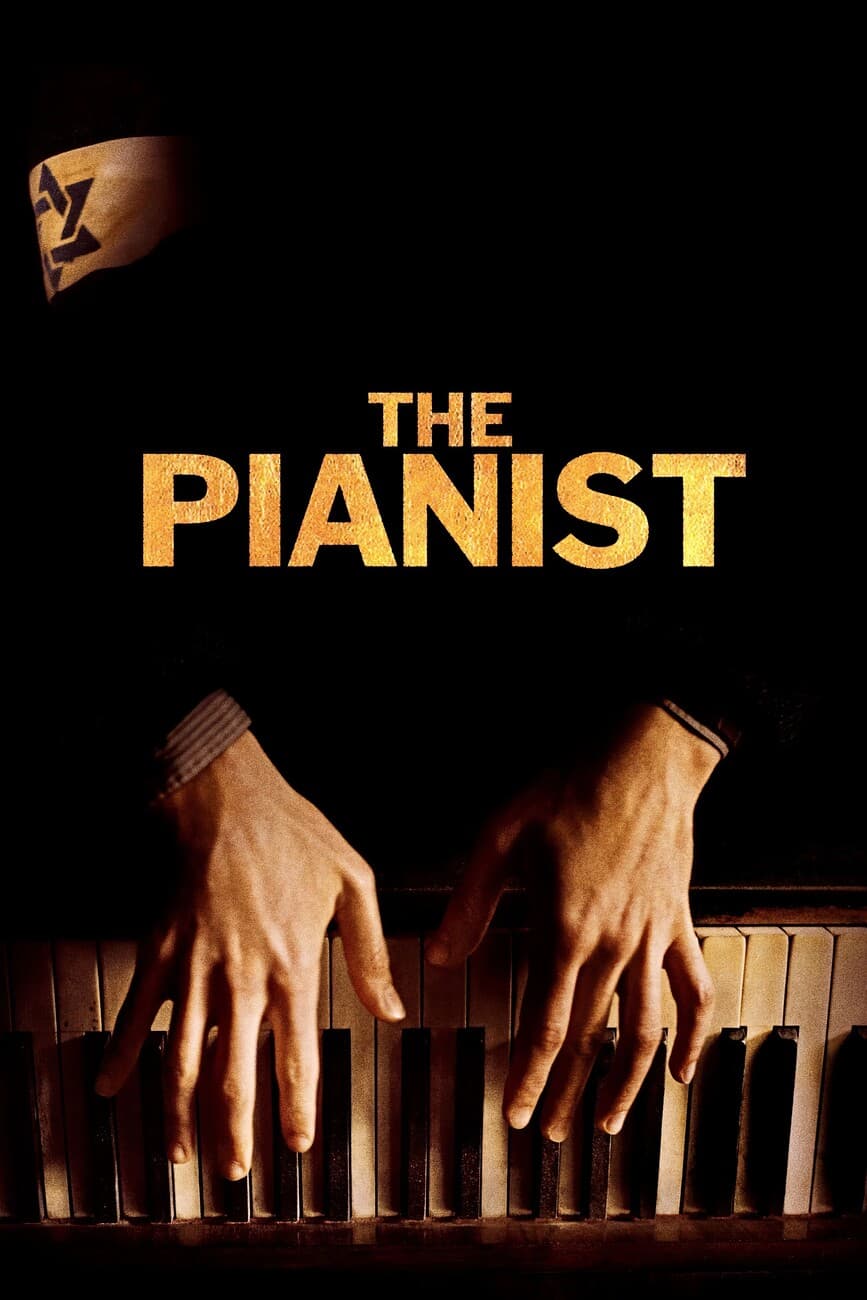
2002
The Pianist
A quiet life unmade by war — and a pianist who refuses to stop listening.
Read the retrospective
→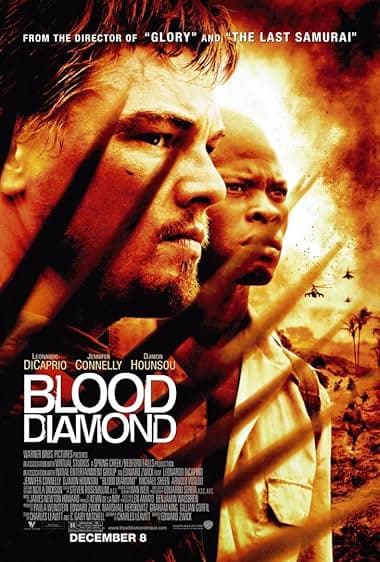
2006
Blood Diamond
A mercenary, a fisherman and a pink diamond — and a film that still asks who pays for our jewellery.
Read the retrospective
→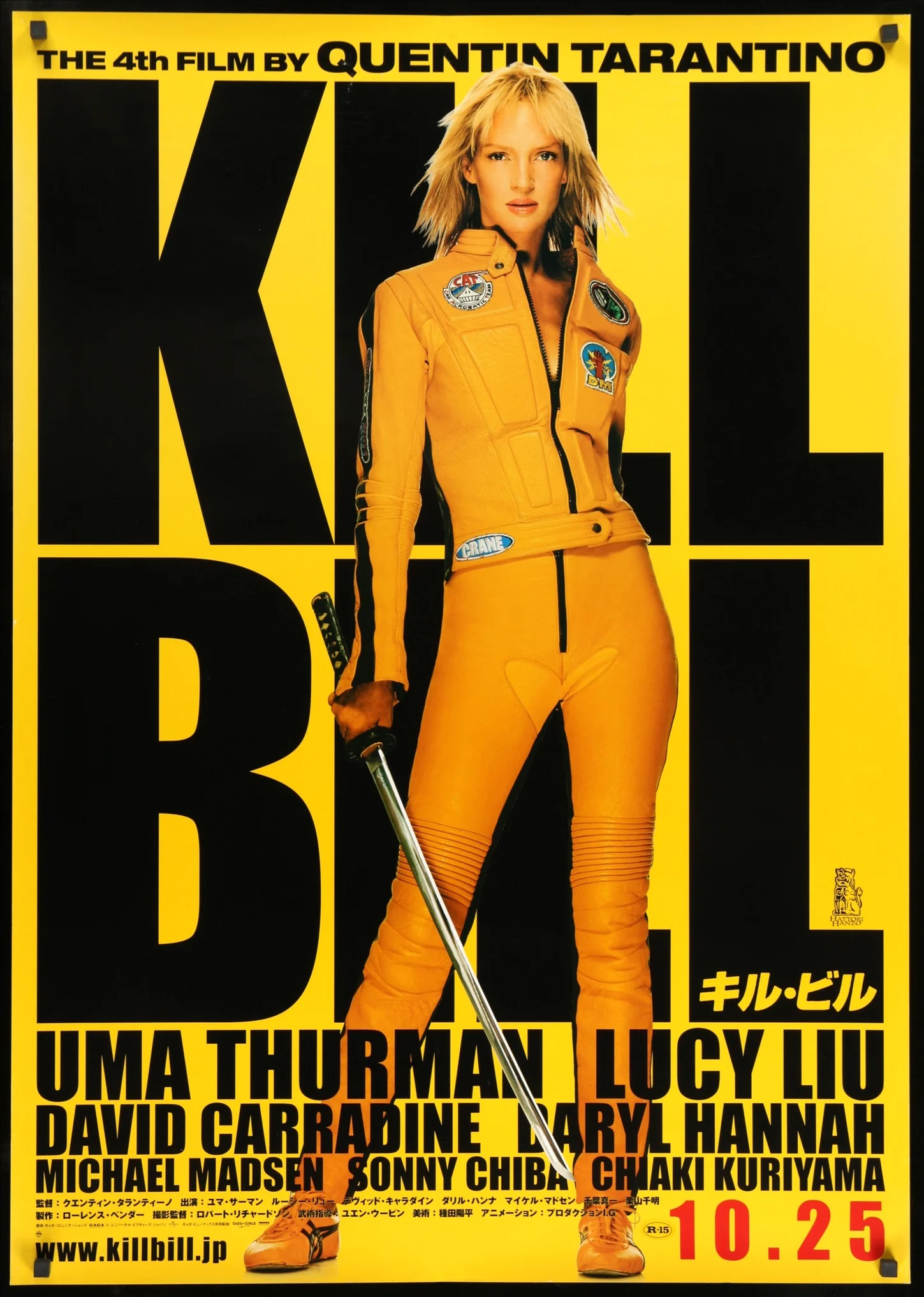
2003
Kill Bill: Volume 1
A yellow jumpsuit, a long list of enemies and one woman who refuses to be finished.
Read the retrospective
→