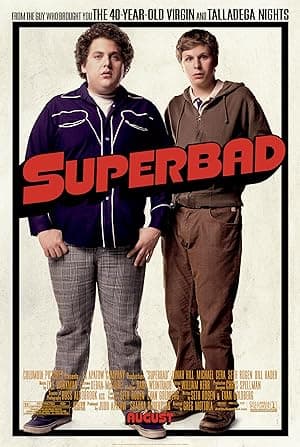
Feature presentation
Superbad is a raunchy coming-of-age comedy that trades punchlines for panic: two seniors trying to secure booze, status and, crucially, a future without losing each other. Its plot hinges on one ridiculous piece of paper — the McLovin fake ID — and a chain of events that pushes the boys into adult spaces they’re hilariously unprepared for. It’s rowdy, often crude and quietly about friendship fraying at the edges.
THE MOVIE
Seth is still the reason this movie works
Seth barks the movie into life. He isn’t just chasing girls and booze; he’s panicking about the night after graduation — the quiet moment when friendship either survives or unravels. That fear, more than any single gag, is what gives the film its pulse.
On the surface Superbad is a simple, gleefully crude comedy: two high-school seniors trying to get alcohol for a house party so they can impress and sleep with the girls they like. But the central engine under those plans is friendship and separation anxiety — the idea that leaving school might mean leaving your best mate.
Then there’s Fogell and his fake ID — the McLovin joke — which spins off into a different, equally absurd thread when Fogell is paired with two incompetent young police officers. Greg Mottola directs the whole thing with a clear aim: let the comedy race, but keep that nervous adult edge just under the surface.
THE SETUP
The idea that sets Superbad in motion
At its most basic the film is a straightforward plan: two soon-to-be ex-schoolmates need booze for a party so they can woo two girls. The plan is simple; the chaos that follows is not.
What complicates their scheme is Fogell’s fake ID — the celebrated McLovin gag — which sends him off down a wildly different route and gives the film a second, very silly storyline. The pair’s success depends on that single piece of paper, and on Fogell surviving his detour.
Those intersecting threads let the film alternate between boyish capers and encounters with the adult world. Set-pieces escalate the comedy by putting the teens in spaces they don’t understand: a party of burned-out adults, a police encounter. Their naiveté becomes the comedy’s fuel.
All of which matters because the surface jokes are merely the delivery system for the movie’s real pressure: the two leads are not just chasing hookups; they’re trying to keep a friendship intact as adulthood arrives.
THE CHARACTER
Why Seth matters
Seth is the film’s thermostat. When his temperature spikes — whether with bravado, anger or panic — the whole movie feels it. Jonah Hill plays him, but more important than the casting is what Seth wants: sexual experience, social proof and reassurance that Evan will stay his mate.
He’s not simply a loudmouth chasing sex for its own sake. His desperation is wrapped up with a dread of separation: if he doesn’t get validation at the party, what else will he have when the school gates close?
That anxiety is what makes Seth memorable. He’s a chaotic, self-sabotaging character whose loudness covers a deep vulnerability. The jokes around him often land because they’re protecting that fragility, not obscuring it.
And the presence of two young police officers — unpredictable adult foils — repeatedly pulls Seth and the others into grown-up trouble. Those encounters force the boys into humiliation and reckoning, which feeds the movie’s mix of gross-out moments and genuine stakes.
THE PERFORMANCE
Why Jonah Hill's performance matters
A big chunk of Superbad’s engine is the way the two leads play off one another. Critics at the time pointed to the chemistry and comic timing between Jonah Hill and Michael Cera as a core reason the film’s jokes and softer moments both land.
That chemistry matters because the script keeps returning the story to their relationship. Scenes that might otherwise be only gag-based become emotionally resonant because you buy the give-and-take between the pair.
Put simply: when Seth and Evan stumble, argue or make up, the film feels like two mates trying to stay connected rather than a sketch show stitched together. That connective tissue comes from the interaction between the leads — the thing critics singled out.
So while the movie delights in outrageous situations, the laughs have weight because the audience is invested in the central friendship.
UNDER THE SURFACE
Superbad has more on its mind than the plot suggests
Beneath the bawdy jokes there are recognisable anxieties: the panic that your friendships will fray at adulthood’s edges, the awkward, noisy attempts to prove sexual and social worth. Friendship and separation anxiety are the movie’s quiet backbone.
Adolescent sexual anxiety — and the bodily comedy that comes with it — is front and centre. The film weaponises embarrassment and physical awkwardness to show how teenagers try, and often fail, to perform adult cool.
It’s also a male coming-of-age story, but not a neat moral tale. The boys don’t metamorphose into wiser adults so much as stumble toward a better understanding of each other and themselves.
Finally, peer identity and performance are threaded through every scene: the characters constantly act in order to be seen a certain way, and the film delights in puncturing those performances to reveal what’s actually at stake.
PURE 00s
Superbad could not belong to any other decade
Superbad sits squarely in the mid‑2000s wave of R‑rated comedies that mixed gross-out humour with sentimental, character-driven beats. That era’s fingerprints are on the film’s crude jokes and its willingness to pair them with genuine emotional notes.
Part of why the movie landed in 2007 was the appetite for raunchy, writer-led comedies that used adolescence as a testing ground for both shock and sincerity. Superbad fit that taste perfectly — a vulgar gag followed by a quiet, human moment.
Judd Apatow’s production presence and the creative linkages to his circle helped position Superbad within that broader trend: these films made room for long jokes, improvisational energy and an eventual tug at the heartstrings.
Released in 2007, the film felt of its moment because it balanced the decade’s comedy impulses with a clear interest in making adolescence feel lived-in rather than purely performative.
WATCHING IT NOW
What has aged — and what hasn't
Much of Superbad’s core still sits comfortably: it’s a teen comedy at heart and that clear focus helps. The story’s insistence on friendship and separation still feels recognisable to anyone who’s left school and found their circle rearranged.
The film’s material also has a lived quality because the screenplay grew from the writers’ teenage notebooks and sketches. That origin gives the jokes and anxieties an authenticity that can survive repeat viewings.
Where comparisons matter is stylistic. Contemporary critics linked Superbad to anarchic teen‑party films of earlier eras, and that lineage is visible in how it stages escalating set-pieces that land somewhere between chaos and catharsis.
So while some surface elements may register differently today, the movie’s emotional anchors — the fear of losing a friend, the humiliation of adolescent performance — remain effective.
THE LEGACY
Why Superbad still matters
One simple reason the film hasn’t slipped into the archives is that it launched careers. Several young cast members emerged into the mainstream after Superbad, and the movie is often described as a star-making moment for its younger performers.
Beyond casting, the screenplay has enjoyed post-release recognition from industry lists and writers’ retrospectives that celebrate its sharp comic structure and voice. That kind of professional acknowledgement keeps it in circulation among people who study comedy writing.
And it wasn’t just critics who noticed: commercially, the film opened strongly and proved that R‑rated, writer-driven comedies could be commercially viable in the late 2000s. That commercial success helped sustain the wave of similar films afterward.
Taken together — careers launched, script recognition and a clear box-office showing — Superbad’s standing is the sum of several concrete things rather than a single oversized reputation.
THE VERDICT
Does Superbad still hold up?
Yes — but with a small, honest rider. If you watch Superbad purely for headline raunch, you’ll get what you expect: gross-out jokes, a fake ID gone wrong, and chaotic set-pieces that push teens into adult situations. That surface still works.
What gives the film staying power is the way those jokes are threaded through a clearer emotional problem: Seth and Evan are trying to survive the possibility of being separated by grown-up choices. The movie is as much about not losing a friend as it is about getting laid.
Critics’ emphasis on the leads’ chemistry is no accident; the script deliberately anchors scenes in the named, specific obsessions of Seth and Evan, and that focus lets the sentimental resolutions land without feeling tacked on. The McLovin thread and the bumbling officers add comic variety, but the heart remains the pair’s relationship.
So watch it now if you want laughter with a nervous, tender core. Superbad still makes the case that adolescent panic — messy, loud and sometimes vile — can be funny and, crucially, humane.
Share this movie
Keep watching
More movies from the 00s

2002
The Pianist
A quiet life unmade by war — and a pianist who refuses to stop listening.
Read the retrospective
→
2006
Blood Diamond
A mercenary, a fisherman and a pink diamond — and a film that still asks who pays for our jewellery.
Read the retrospective
→
2003
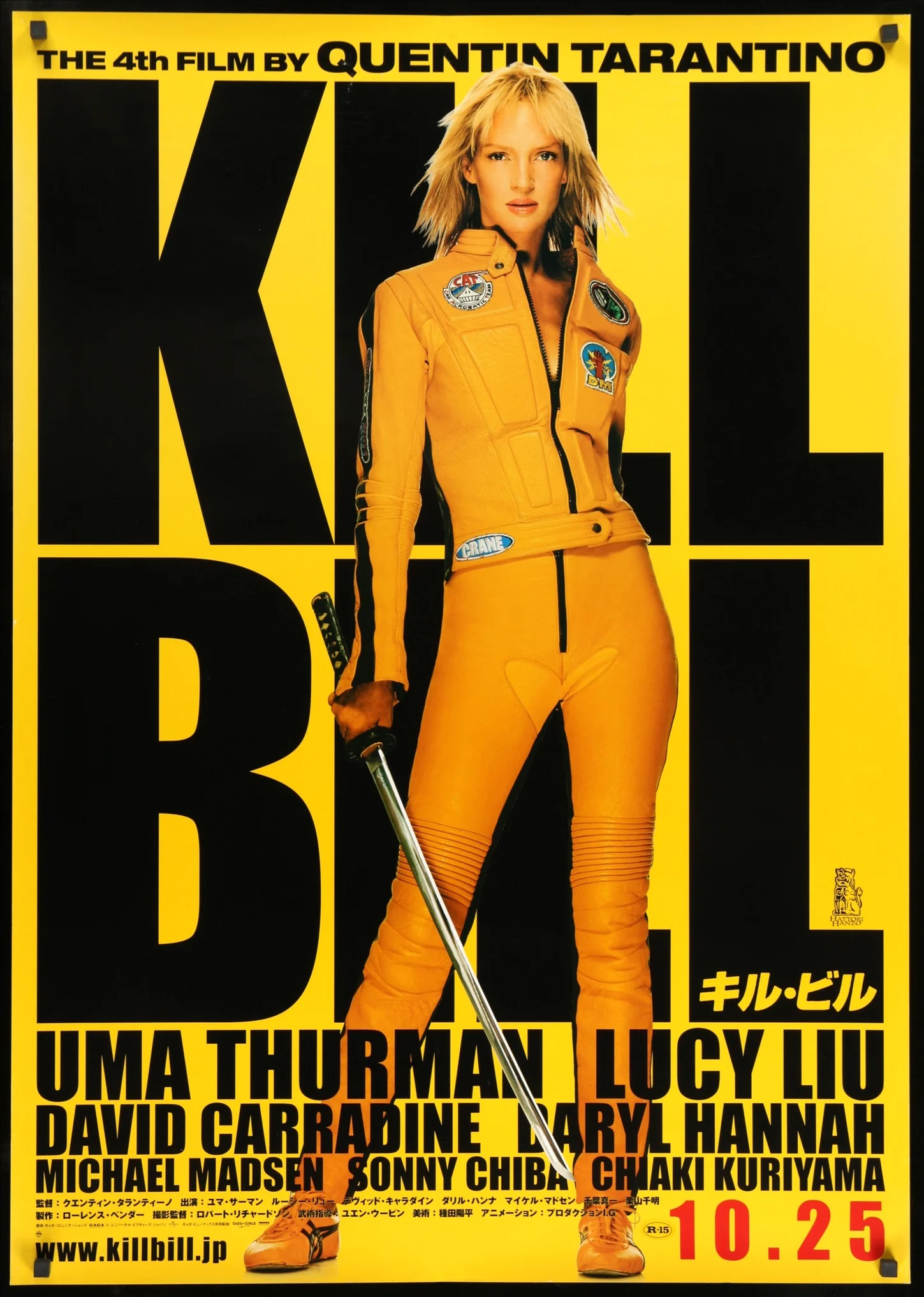
Kill Bill: Volume 1
A yellow jumpsuit, a long list of enemies and one woman who refuses to be finished.
Read the retrospective
→