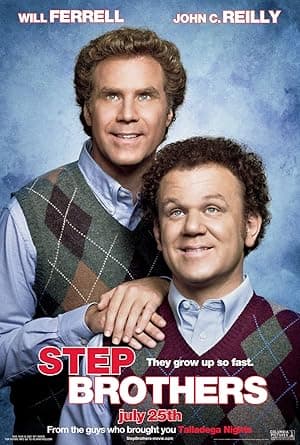
Step Brothers
Man-children in matching beds: a comedy about not growing up, and why that still makes us laugh.
Feature presentation
Remember the bunk bed? The drum kit standoff? Step Brothers is the sort of film that gets into your head and refuses to move out. Adam McKay's 2008 comedy pairs two middle‑aged slackers under one roof and watches the chaos unfold — mostly because neither of them has quite figured out adulthood.
THE MOVIE
Brennan Huff is still the reason this movie works
Step Brothers plants a simple, very rude seed: pair two fully grown men who behave like teenagers and then close the door. The film’s premise hinges on Brennan Huff and Dale Doback being forced to live together when their single parents marry, and that cramped intimacy is where everything funny — and sometimes uncomfortable — starts.
Brennan is set up as intermittently employed and stubbornly immature; that stubbornness bounces off Dale and creates the chemistry the film needs. It’s a buddy comedy in which the pairing itself is the joke and the engine: put the two of them together and see how loud the house gets.
Adam McKay directs with an obvious taste for escalating set pieces and riffing energy. In 98 brisk minutes he lets those recurring beats — a bunk‑bed fantasy, sleepwalking, a war over a drum kit — say what the film means about grown men who won’t grow up.
THE SETUP
The idea that sets Step Brothers in motion
At its bluntest, Step Brothers asks: what happens when two middle‑aged men who’ve avoided responsibility are suddenly family? The inciting incident is the marriage of Brennan’s mother and Dale’s father, which forces them into shared domestic space — and at least to start with, a shared bedroom.
From that cramped premise the film spins a handful of tidy story mechanics. Brennan and Dale respond to life’s expectations in predictable, immature ways: they invent a mock company called Prestige Worldwide, they produce a deliberately juvenile song and video, and they dream up a big public showpiece — the Catalina Wine Mixer — as proof they can be taken seriously.
Those set pieces do more than pad the running time. They exist to show how the characters try, and largely fail, to meet adult standards on their own terms. The comedy comes from their earnestness — and from how spectacularly their plans can collapse.
Underpinning the laughs is a social squeeze: their parents expected married life to bring calm and conformity, but Brennan and Dale’s behaviour threatens that neat domestic plan and forces everyone to confront just how grown up the new family actually is.
THE CHARACTER
Why Brennan Huff matters
Brennan is the film’s loud punctuation mark. Will Ferrell plays a man who, on paper, should have moved on years ago: he’s intermittently employed, easily humiliated by a more successful sibling and oddly proud of his refusal to become ordinary.
That insecurity — highlighted by a successful younger brother who behaves like a smaller, kinder nemesis — helps explain why Brennan clings to juvenile gestures. He isn’t contentment; he’s a reaction to being made to feel lesser.
Where Brennan becomes interesting is not in isolation but in pairing. The friendship that grows between him and Dale becomes the emotional motor: their alliance fuels the chaos, but it also becomes the thing that lets them try to meet the world on their own terms.
So Brennan matters because he’s both the source of many of the jokes and the reason the film bothers to care about them. The film’s madness wouldn’t have stakes without someone who feels genuinely daunted by adulthood.
UNDER THE SURFACE
Step Brothers has more on its mind than the plot suggests
On the surface it’s a series of escalating gags about two immatures flummoxing their parents. Beneath that there are a few clear ideas: arrested development, male friendship and how families handle awkward grown‑ups.
The film treats male friendship as both a problem and a solution. Brennan and Dale’s bond amplifies their worst impulses — imagine two kids egging each other on — but it’s also the only thing that nudges them toward taking any responsibility, however clumsy.
Stepfamily dynamics matter, too: the parents’ attempt to combine households forces a confrontation between expectation and reality. The comedy trades on the gap between how adults expect a family to behave and what these men actually bring to the dinner table.
Finally, there’s satire of adulthood: the movie ridicules certain adult rituals by offering juvenile alternatives. The mock projects and overblown stunts are a way of mocking the idea that being an adult automatically equals being respectable.
PURE 00s
Step Brothers could not belong to any other decade
Step Brothers arrived in 2008 at the tail end of a studio‑comedy moment that prized big personalities and improv‑fuelled set pieces. It sits very comfortably alongside other films from the Will Ferrell–Adam McKay era.
That period’s comedies mixed loose, cast‑driven jokes with a skeletal plot to hold them together; Step Brothers follows that blueprint, using structured sequences as places for the cast to riff and for ideas about adulthood to land.
Being part of that mid‑to‑late 00s wave is not merely a date stamp. The movie’s appetite for escalating, character‑led chaos and invented business gags — Prestige Worldwide, Boats ’N Hoes — feels very much of that studio cycle.
So you can read the film as both a product and a highlight of its moment: a comedy shaped by a collaborative team and a commercial approach that dominated the decade.
WATCHING IT NOW
What has aged — and what hasn't
Part of why Step Brothers keeps getting talked about is that its core ideas are simple and resilient: two grown men refusing to grow up, and the ways a household copes with that. Those themes — male friendship and stepfamily friction — remain easy to recognise today.
Some sequences, like the sleepwalking beats, the bunk‑bed fantasy and the drum‑kit standoff, still land because they’re clear, repeated jokes that the film commits to. They function as comic punctuation and also as shorthand for the characters’ refusal to act like adults.
Retrospective writing has framed the film as emblematic of late‑2000s comedy, and that reputation helps it stay in circulation. When people look back at that era’s laughs, Step Brothers often comes up as a neat example of the approach.
Put simply: the film’s set pieces and its friendship‑at‑the-heart keep it watchable. Whether every joke ages equally well is another question, but the structural bones that carry the laughs are still intact.
THE LEGACY
Why Step Brothers still matters
Certain bits of the movie have slipped into everyday reference: the fictional Catalina Wine Mixer and other set pieces live beyond the film as recurring cultural callbacks and themed events.
More broadly, Step Brothers matters because it’s often mentioned when people talk about the Ferrell–McKay body of work and that mid‑2000s studio comedy cycle. It’s part of how that era is remembered and discussed.
That doesn’t mean the film is everyone’s favourite, but those recurring references — both silly and oddly affectionate — keep it present in conversation.
In short, its afterlife is less about a single achievement and more about a handful of repeatable images and moments that people like to borrow.
THE VERDICT
Does Step Brothers still hold up?
Yes — with a caveat. If you respond to the film’s central idea — two middle‑aged men shoved into a shared home and refusing to behave like adults — you’ll find enough committed gags and a clear comic engine to justify a watch.
The movie’s politics are simple: arrested development is the problem, and the protagonists’ clownish attempts to prove themselves — Prestige Worldwide, Boats ’N Hoes, the Catalina Wine Mixer — are both the joke and their strategy for being taken seriously.
The recurring set pieces (sleepwalking, the bunk‑bed fantasy, the drum‑kit clash) do the heavy lifting, dramatizing the characters’ refusal to shoulder ordinary responsibilities while giving the film reliable laugh markers.
So if you want something that still delivers the late‑00s flavour of improvisatory, character‑led comedy and a deliberately daft take on adulthood, Step Brothers is worth the 98 minutes. It’s unapologetically juvenile, and for better or worse, that’s the point.
Share this movie
Keep watching
More movies from the 00s

2002
The Pianist
A quiet life unmade by war — and a pianist who refuses to stop listening.
Read the retrospective
→
2006
Blood Diamond
A mercenary, a fisherman and a pink diamond — and a film that still asks who pays for our jewellery.
Read the retrospective
→
2003
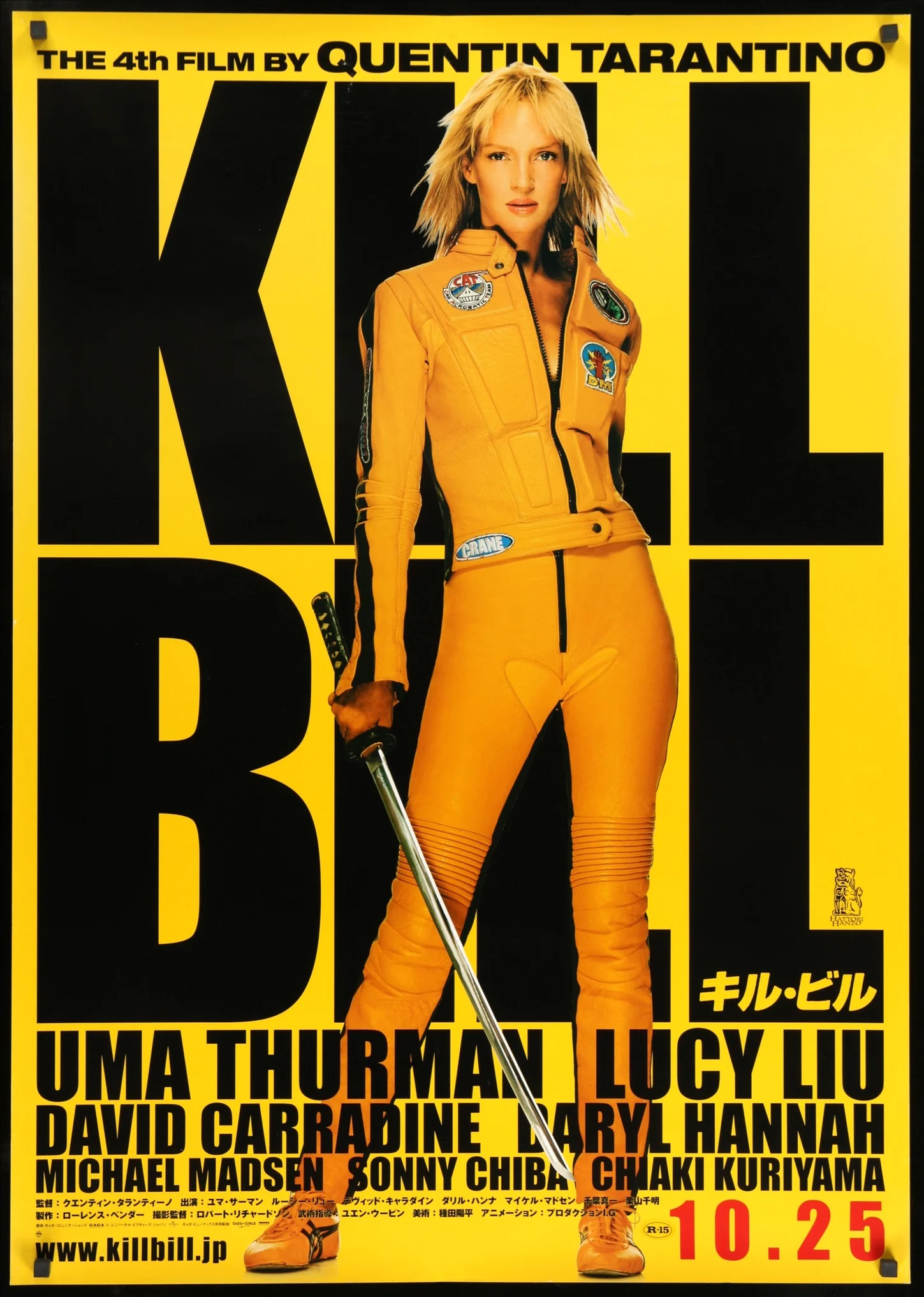
Kill Bill: Volume 1
A yellow jumpsuit, a long list of enemies and one woman who refuses to be finished.
Read the retrospective
→