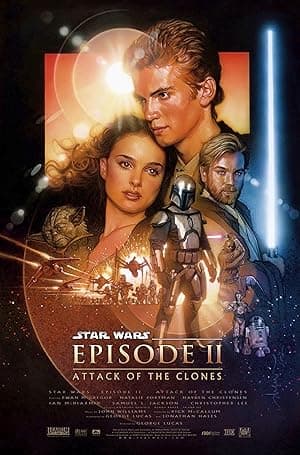
Star Wars: Episode II – Attack of the Clones
Obi‑Wan keeps digging while the Republic builds its army — and one young man falls apart.
Feature presentation
There are two engines in Star Wars: Episode II – Attack of the Clones: a proper detective story about a mystery that leads Obi‑Wan into the shadowy business of clone production, and a private, combustible romance between Anakin and Padmé that runs on fear. George Lucas stages both at scale — political manoeuvring, secret assignations, a growing army — and the collision of those two impulses is what still makes the film worth talking about.
THE MOVIE
Obi-Wan Kenobi is still the reason this movie works
Attack of the Clones often gets remembered for its digital bravura and its awkward love scenes, but at its heart the film contains a very old‑fashioned hook: an assassination attempt that needs solving. That attempt on Senator Padmé Amidala is the neat bit of machinery that sets two very different threads in motion — an investigation and a protection detail — and those threads keep the picture moving.
Obi‑Wan’s role matters because he turns the prequel into something part mystery, part road movie. His investigation drags the audience into an erased world where a Republic army is being made to order: the discovery of the Kaminoian clone programme reframes the stakes from political gossip to something much darker.
Across this the personal story presses in. Anakin is no steady guardian; he’s powerful and volatile, impatient with Jedi rules and terrified of losing people he loves. That mix — a detective plot on one side, a fear‑driven private storyline on the other — is why the movie still rewards a second look.
THE SETUP
The idea that sets Attack of the Clones in motion
The film opens with a tidy engine: an attempt on Padmé’s life. It’s a simple, effective inciting incident — enough to assign Jedi, generate suspicion, and give Obi‑Wan a job to do.
From there the plot splits. One line is procedural: Obi‑Wan traces forensic evidence, follows a trail to Kamino and uncovers the existence of a clone army built from a single genetic template. It’s the sort of discovery that turns political unease into a concrete military reality.
The other line is private. Anakin is tasked with protecting Padmé and, in the process, a secret romance grows. That relationship is tethered to his fears: his impatience with Jedi restraint and his dread of losing the people he cares about shape his choices in ways that matter later.
Those two approaches — intercut investigations and personal stakes, with Senate manoeuvres in the background — give the movie its structure. It isn’t a neat thriller or a tidy romance; it’s both, and the film’s success comes down to how well those two gears mesh.
THE CHARACTER
Why Obi‑Wan Kenobi matters
Obi‑Wan functions as the film’s straight‑arrow: the investigator who follows clues instead of gossip. That role gives the audience someone reliable to watch amid the film’s shifting political fog.
He’s the moral counterweight to Anakin’s impatience. While the younger Jedi is driven by private fear, Obi‑Wan’s loyalty to the Order and to procedure turns his scenes into miniature detective stories — he reads evidence, asks questions, and forces the plot to pay attention to facts.
That investigative thread matters because it anchors the conspiracy in something tangible. Discovering Kamino and the clone army isn’t just a plot twist; it’s the moment when vague political danger becomes a visible, manufactured force.
Put simply: without Obi‑Wan’s curiosity and steadiness, the movie’s political puzzle would feel thin. He’s the character who makes the larger story legible.
THE PERFORMANCE
Why Hayden Christensen's performance matters
Hayden Christensen arrived in a lead role and the coverage at the time noticed. His screen debut as Anakin became part of the conversation about the film from day one.
That conversation wasn’t a uniform cheer: contemporary critical coverage frequently discussed his debut and the reception was mixed in major outlets. In other words, how viewers responded to Anakin’s portrayal shaped immediate reactions to the picture.
Why does that matter now? Because Anakin’s emotional arc — a young man smouldering with fear and possessiveness — is central to the film’s themes. If audiences don’t buy the central figure’s instability, much of the movie’s tension is harder to feel.
So Christensen’s debut isn’t trivia. It’s integral: the performance’s reception affected how the romance and the character’s slide toward darker choices read to viewers on first watch and on re‑watches.
UNDER THE SURFACE
Attack of the Clones has more on its mind than the plot suggests
On the surface the movie is a sci‑fi adventure with political skulduggery and starship set‑pieces. Underneath, it’s keeping score on institutions and impulses.
One big worry is how democracy erodes. The film shows a Republic that can be nudged toward emergency powers and militarisation — a manufactured crisis prompting a wholesale building of an army. That’s not background wallpaper; it’s the political engine of the story.
Alongside that runs a private story about forbidden love that leans toward possessiveness. Anakin’s terror of loss and the secrecy of his romance with Padmé feed into how he makes decisions, and those choices link personal fear to larger consequences.
Finally, the movie stages mentor and pupil tensions — betrayals and divided loyalties — and suggests that personal fear is a route to radicalisation. The political and the personal mirror each other: a collapsing public process and a young man pushed toward extremes.
THE FILMMAKING
How Attack of the Clones was put together
One thing the film is undeniably about is process. Principal photography began at Fox Studios Australia and the whole production leaned into digital workflows rather than traditional photochemical ones.
The shoot used the then‑new Sony/Panavision CineAlta 24p cameras and extensive digital previsualization, which meant a lot of scenes were planned virtually before being realised on set. That approach gives the film its particular production logic: many sequences were conceived in software as much as on soundstages.
Bluescreen integration was a daily reality; the filmmaking taste here favours compositing and virtual environments. Whether that sits with you is a matter of personal preference, but it’s key to the film’s identity.
In short: Attack of the Clones is a product of early‑00s digital cinema — a kind of laboratory for virtual production techniques that look very much of their moment.
PRACTICAL EFFECTS
The effects work that gives Attack of the Clones its physical personality
Where the original trilogy relied on puppets and physical suits, this film decisively moves some of that weight into the computer. Yoda, previously a puppet, is here replaced with a fully computer‑generated version who takes part in an animated lightsaber duel.
Large crowd elements were also primarily digital. The Grand Army of the Republic and several alien extras were created through digital animation and motion techniques rather than physical suits, which allowed the filmmakers to stage enormous, precisely choreographed armies.
Those choices change how the movie feels physically. Battles and crowd scenes can be vast in scale, but that scale is created in the VFX suite rather than on a miniature stage.
Put another way: the film’s personality is partly the result of a conscious move into CGI territory — an attempt to make the galaxy bigger by building it inside computers.
PURE 00s
Attack of the Clones could not belong to any other decade
This is an early‑00s film in the most literal sense: it arrived in 2002 during the first serious wave of high‑definition digital cinematography for big studio pictures.
Its production reflects a moment when studios were shifting pipelines — digital acquisition, virtual previsualisation and heavy VFX integration were becoming mainstream tools rather than experimental curiosities.
Because principal photography began around 2000 and the production embraced digital workflows, the film wears the decade’s technical ambitions on its sleeve: it’s earnest about digital possibility in a way that later films would refine.
If you’re trying to place the movie in time, look less at clothes and more at how it was made. The technical choices are the clearest signature of its era.
WATCHING IT NOW
What has aged — and what hasn't
Technically, the film’s place in the shift to digital production has only grown more visible. Retrospectives and studio features tend to highlight Episode II for the advances it represents in virtual production and CGI character work.
That digital ambition is one reason the film still feels interesting: ILM were doing things with fully CG characters and large digital armies that pushed the medium forward at the time.
But some of the film’s emotional work hasn’t dated as gracefully. Many critics and viewers continue to find the central romance and the dialogue uneven or dated, and those scenes can make the picture feel clumsy in places.
At the same time, the thematic throughline — personal fear as a path to radicalisation — remains resonant. When the movie connects Anakin’s private panic to larger consequences, it lands with real force.
THE LEGACY
Why Attack of the Clones still matters
One reason the film remains part of the conversation is technical: it was among the early major features shot with 24p digital acquisition, and that fact keeps it in discussions about cinema’s digital turn.
Industrial Light & Magic’s work here received industry recognition: the film’s visual effects were nominated for an Academy Award, which underlines how the industry regarded the VFX achievements.
Lucasfilm itself has looked back on Episode II as a milestone in virtual and digital production; anniversary features and studio histories point to its role in advancing techniques at ILM and within Lucasfilm.
So even when individual scenes divide viewers, the movie matters to the story of how mainstream cinema moved into a new technical era.
THE VERDICT
Does Attack of the Clones still hold up?
Yes — but with important caveats. If you come for scale, political machinery and a surprisingly neat detective thread, the film still delivers. The assassination attempt that kicks everything off sends Obi‑Wan on a trail to Kamino and the discovery of a clone army, and those beats turn a murky Senate plot into something palpably dangerous.
If you come for the private drama, results are mixed. The secret romance between Anakin and Padmé and the way his fear steers him are essential to the trilogy’s arc, but contemporary critics singled out the dialogue and several central romantic scenes as problematic even at the time. That tension between story ambition and tonal clumsiness is still the picture’s most noticeable fault line.
Where the film definitely holds up is in scale and technical experimentation — the intercut investigations, the forensic‑style clues and the Senate manoeuvres that open the path to militarisation all still read as big, consequential storytelling choices.
So watch it if you’re curious about the middle step of Anakin’s fall and the beginning of the Clone Wars, or if you want to see an early major dive into digital filmmaking. Just be prepared: the movie works best when you lean into its investigation and its politics, and are willing to forgive the romance when it stumbles.
Share this movie
Keep watching
More movies from the 00s

2002
The Pianist
A quiet life unmade by war — and a pianist who refuses to stop listening.
Read the retrospective
→
2006
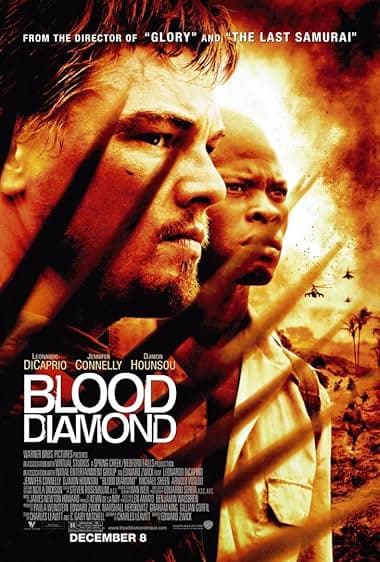
Blood Diamond
A mercenary, a fisherman and a pink diamond — and a film that still asks who pays for our jewellery.
Read the retrospective
→
2003
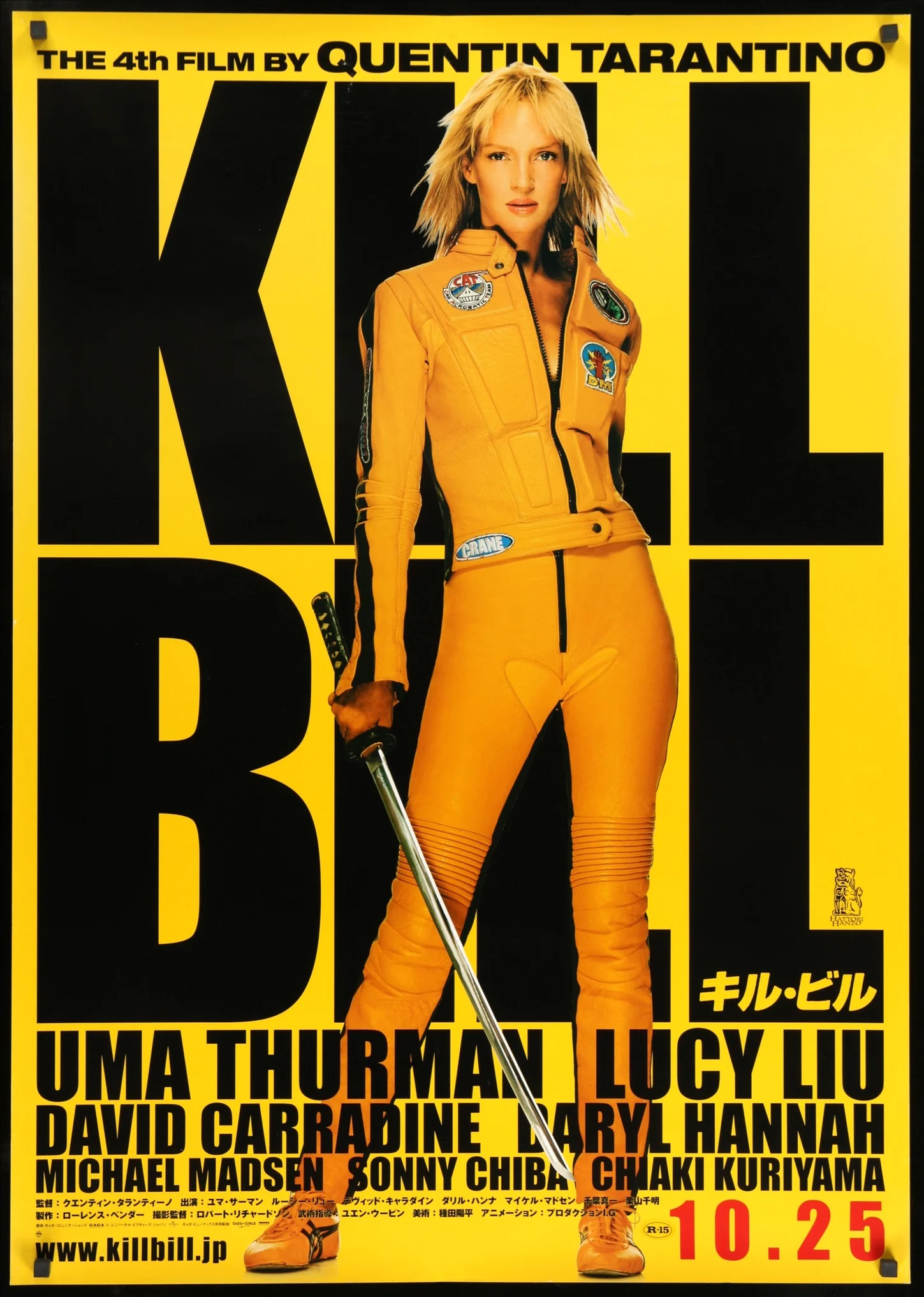
Kill Bill: Volume 1
A yellow jumpsuit, a long list of enemies and one woman who refuses to be finished.
Read the retrospective
→