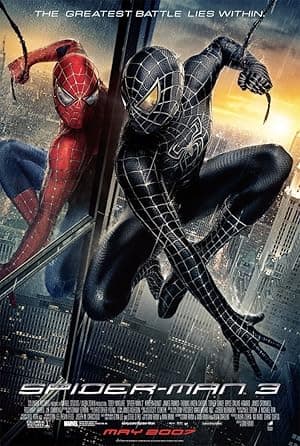
Spider-Man 3
Guilt, a black suit and three villains — Spider-Man 3 is messy, weird and still worth arguing about.
Feature presentation
If you remember one image from Spider-Man 3 it’s probably the black suit: Peter Parker wearing someone else’s swagger and paying for it. Sam Raimi piles on complications here — a symbiote that corrupts, three antagonists who pull on Peter’s loyalties, and a hero trying not to explode under the weight of his own guilt. Watch it as a finished blockbuster or a period curiosity; either way, Peter Parker remains the reason to care.
THE MOVIE
Peter Parker / Spider-Man is still the reason this movie works
Talk about Spider-Man 3 and most conversations pivot back to one thing: the black alien symbiote. It’s not just a costume change; when it bonds with Peter’s suit it boosts his powers and, crucially, amplifies his arrogance and appetite for revenge.
Raimi doesn’t stop there. The movie throws Sandman, Venom and the New Goblin into Peter’s orbit, and each of those enemies tugs at a different part of his life — the man who might have killed Uncle Ben, a former friend obsessed with legacy, and a tabloid-driven rival. That intersection makes the stakes personal in a way superhero set-pieces sometimes forget.
Underneath the effects and the running time, the film keeps returning to Peter’s choices: his love for Mary Jane, his obligation as Spider-Man, and the growing temptation to settle scores. Put Tobey Maguire at the centre of that mess, and you have a film that still gives you someone to watch — even when the movie itself wants to watch you back.
THE SETUP
The idea that sets Spider-Man 3 in motion
At the film’s narrative heart is a revelation: Flint Marko — the man who becomes Sandman — is tied to the death of Peter’s Uncle Ben. That turn gives a very old Spider-Man question a fresh edge: what do you do when the person you’re hunting is also someone with human regret?
Running alongside that is Harry Osborn’s arc. He takes up a Green Goblin legacy and directs his anger at Peter, convinced the young man is to blame for Norman Osborn’s fate. Legacy pressure and personal blame make Harry’s conflict more than another masks-and-explosions subplot.
And then there’s the third thread: Venom arrives out of a rivalry that’s as much about tabloid culture and ego as it is about punching. Raimi piles these strands together so the external threats reflect Peter’s private chaos.
It’s not subtle storytelling, but the setup works because the antagonists aren’t abstract obstacles — they’re mirrors for Peter’s guilt, pride and loyalties, which keeps the film driven by character even when it’s busy being a summer blockbuster.
THE CHARACTER
Why Peter Parker / Spider-Man matters
Tobey Maguire plays Peter Parker / Spider-Man and he anchors a film that occasionally threatens to be overwhelmed by its own complications. The reason Peter matters here is that the movie keeps circling his inner life: the tug between love, duty and a very human hunger for revenge.
When the story links Sandman to Uncle Ben’s death, Peter’s choices stop being theoretical. That revelation forces him to decide whether justice for the man he lost requires retribution, and those choices define the film’s moral push and pull.
Peter also has to juggle relationships. Mary Jane and Gwen act not as mere romantic ornaments but as pressures pulling on different sides of his life; add Harry into that mix and you get the old friends-versus-legacy problem threaded through every confrontation.
All of this makes Spider-Man 3 less about the spectacle and more about watching a decent person wobble under bad impulses. It’s the wobble that keeps the movie watchable, even when the rest of the picture gets cluttered.
THE PERFORMANCE
Why Thomas Haden Church's performance matters
Contemporary reviews and interviews singled out Thomas Haden Church’s portrayal of Flint Marko for making Sandman a figure you could pity rather than simply fear. That sympathetic angle changes the tenor of several scenes.
The film deliberately leans on those moments of regret — not to absolve Marko, but to complicate Peter’s anger. If the villain looks human, vengeance feels less like a clean solution and more like something morally ambiguous.
That choice matters because it reframes part of the movie as a debate about forgiveness. Sandman isn’t just an obstacle to be defeated; he’s a person whose back story forces a reconsideration of what justice should look like.
So, while Sandman supplies spectacular effects, he also supplies emotional friction — the sort of friction that makes Peter’s decisions feel consequential.
UNDER THE SURFACE
Spider-Man 3 has more on its mind than the plot suggests
At first glance Spider-Man 3 looks like a superhero juggling act. Look a little closer and you find a movie obsessed with guilt and responsibility — the obligations that come from loss, from the promise to protect, and from the weight of being someone who can act when others cannot.
That ties directly into revenge and forgiveness. The Sandman revelation propels Peter toward vengeance; the film keeps asking whether retribution actually heals anything, or just spreads hurt further.
The black suit storyline turns identity and corruption into a physical problem. When the symbiote amplifies arrogance and vengefulness, the movie dramatizes how power can distort a person’s sense of self — and how easily pride can do the same.
There’s also a nod to celebrity and media: parts of the conflict arrive through public attention and tabloid-style rivalry, which colours some of the characters’ motives and shows how reputation can become its own battlefield.
THE FILMMAKING
How Spider-Man 3 was put together
On the nuts-and-bolts side, Spider-Man 3 bears the imprint of a major studio production with specific production-design credits and the usual behind-the-scenes infrastructure. J. Michael Riva and Neil Spisak are named on production design, and Columbia Pictures produced while Sony distributed.
That pedigree matters because it’s the framework Raimi works inside: a director known for his oddball instincts navigating a very large canvas. The result is the kind of mainstream spectacle that still tries to make room for character beats.
You can see the trade-off in the film’s ambition. Some sequences are clearly engineered to serve blockbuster expectations; others slow down to let relationships and moral dilemmas breathe.
Taken together, those choices make Spider-Man 3 feel like the last turn of a director-driven trilogy trying to satisfy both a personal storytelling impulse and a studio-sized appetite for spectacle.
PRACTICAL EFFECTS
The effects work that gives Spider-Man 3 its physical personality
A lot of the film’s physical personality comes from the VFX pipeline. Sony Pictures Imageworks led the visual-effects work and developed new processes to bring both Sandman and Venom to life — blending live-action photography with procedural CGI to get believable sand behaviour and alien movement.
The production relied on digital doubles and layered compositing so faces could be preserved even when bodies or whole environments were replaced or augmented in VFX shots. That approach kept performers visually present while giving effects artists the freedom to reshape forms.
Those technical choices allow emotional moments to sit alongside spectacle: you’re watching a character’s face while their body is being partially rebuilt by software, which keeps the audience connected to motive even in effects-heavy scenes.
In short, the film’s physical effects are less about trickery and more about keeping people visible inside the digital work — which is central to making the drama land.
PURE 00s
Spider-Man 3 could not belong to any other decade
Released in May 2007, Spider-Man 3 arrived during the 2000s expansion of big-budget superhero tentpoles and was marketed as a major summer blockbuster. It’s a product of a period when studios were still learning how to push comic-book franchises into event cinema.
It’s also the closing chapter of a specific director-led trilogy: the film follows storylines begun in Spider-Man 2 and completes Sam Raimi’s early-2000s take on the character. That continuity gives it a familial feel — the end of a run rather than a fresh reboot.
Principal photography took place in 2006 with location shoots including Manhattan, which helped anchor the film’s scale in recognisable New York streets even as it reached for spectacle.
Put simply: Spider-Man 3 sits comfortably in the 00s because it balances franchise ambition with a director’s personal stamp — the exact mixture that defined superhero cinema of that decade.
THE LEGACY
Why Spider-Man 3 still matters
In the years after release the studio explored a Venom-centred spin-off related to this film’s portrayal of the character, although that specific project didn’t materialise; Sony later went on to release a different standalone Venom feature in 2018.
At release critical reception was mixed, and the movie’s cultural afterlife has been complex — a mixture of serious reappraisal, online memes and recurring references. That messiness is part of why people still return to the film: it’s interesting to argue about.
Part of the movie’s staying power comes from its insistence on messy moral questions: revenge, forgiveness and identity stick with you more than a single set-piece ever could.
So Spider-Man 3 remains a useful conversation piece — not because it’s an untouchable masterpiece, but because it tried a lot of things at once, some of which still provoke debate.
THE VERDICT
Does Spider-Man 3 still hold up?
Yes — with an asterisk. If you want to watch Peter Parker wrestle with power, pride and the temptation of revenge, Spider-Man 3 delivers. The black symbiote arc gives the film a tangible sense of corruption, and the Sandman revelation forces real moral choices rather than tidy plot resolutions.
The film is busy. It packs Sandman, Venom and the New Goblin into a 139-minute runtime and asks Peter to respond to personal, public and legacy-driven threats all at once. That ambition is impressive, but it means the film occasionally feels crowded and uneven.
If you’re after straightforward superhero thrills you’ll find them; if you want character questions about forgiveness, responsibility and media-driven rivalry, those run through the film too. Raimi’s direction and the central focus on Peter keep the movie honest even when it’s flailing.
So should you bother? Absolutely — if only to see a franchise trying to settle scores and clean up emotional loose ends. Spider-Man 3 is flawed, noisy and occasionally silly, but it’s never boring. Like that black suit, it looks a bit wrong and a bit fascinating at the same time.
Share this movie
Keep watching
More movies from the 00s

2002
The Pianist
A quiet life unmade by war — and a pianist who refuses to stop listening.
Read the retrospective
→
2006
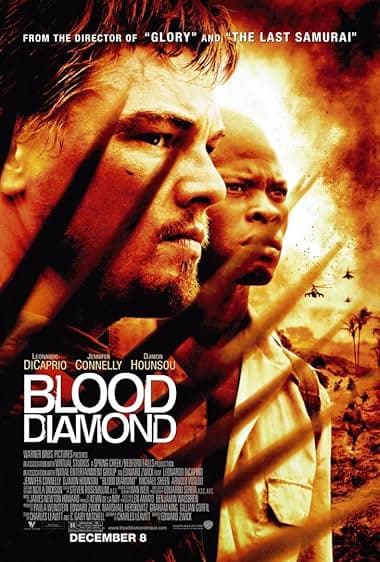
Blood Diamond
A mercenary, a fisherman and a pink diamond — and a film that still asks who pays for our jewellery.
Read the retrospective
→
2003
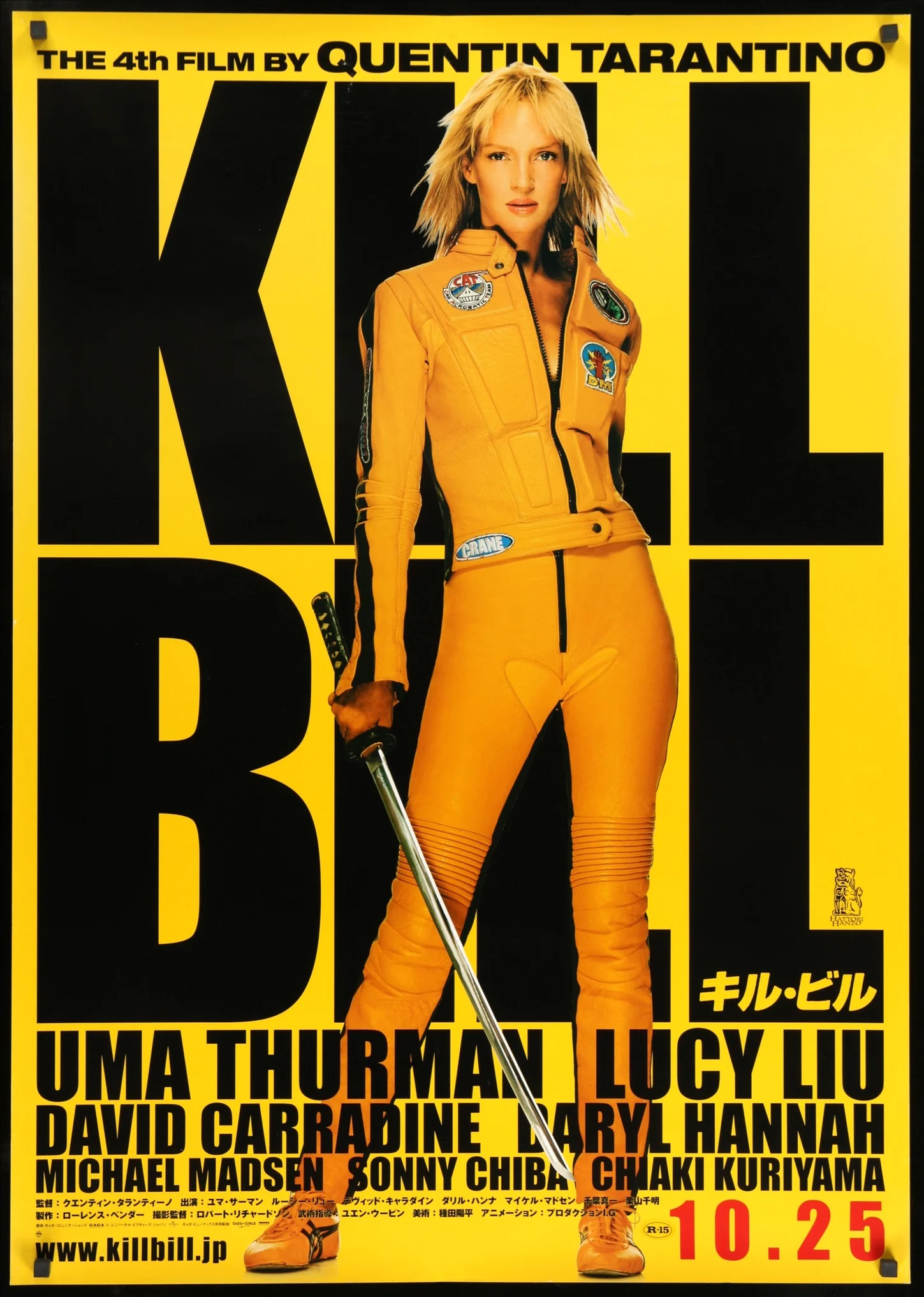
Kill Bill: Volume 1
A yellow jumpsuit, a long list of enemies and one woman who refuses to be finished.
Read the retrospective
→