
Slumdog Millionaire
A love story dressed as a quiz show — and Jamal Malik is the only player who really matters.
Feature presentation
Slumdog Millionaire puts a man on a quiz-show stage and spends two hours unspooling the life that could possibly have taught him the answers. It’s a film about luck and design, about a boy’s survival in Mumbai and a stubborn, rather classical pursuit of the one person he won’t stop looking for. Thirty minutes in, you know whether you’re watching a rousing crowd-pleaser, a morality tale, or both.
THE MOVIE
Jamal Malik (adult) is still the reason this movie works
Slumdog Millionaire arrives as a neat puzzle: a man on a quiz show is accused of cheating, and the film spends its runtime answering the accusation by tumbling back through his life. That framing — game show in the present, police interrogation as the other present, and flashbacks filling in the rest — gives the film a propulsive, question-and-answer heartbeat.
What keeps the mechanism from feeling like a neat trick is Jamal himself. The movie presents him as someone whose knowledge comes from lived experience rather than schooling; he’s observant and resilient in ways the plot depends on, and everything the film shows is there to explain how he can plausibly sit in the hot seat.
Directed by Danny Boyle and played in adulthood by Dev Patel, the film stitches romance, crime and coming-of-age into that central conceit — fate, luck and the idea of a life answering questions with a single purpose: finding Latika.
THE SETUP
The idea that sets Slumdog Millionaire in motion
At its simplest, the film is built around one conceit: Jamal Malik is on an Indian version of Who Wants to Be a Millionaire?, he reaches the final question, and he is arrested on suspicion of cheating. That present-moment pressure is the frame.
Each quiz question then becomes a key: a flashback shows some episode from Jamal’s childhood or adolescence that explains how he knows the answer. The flashbacks aren’t decorative — they’re the film’s storytelling currency.
Because the film keeps returning to the interrogation and the show, the audience is always moving between explanation and consequence. It’s a tidy dramatic trick that also gives the story a clear structural momentum.
And that momentum is what lets themes — fate, poverty, and reunion — arrive without the movie feeling like it’s lecturing.
THE CHARACTER
Why Jamal Malik (adult) matters
Jamal is the film’s lodestone. Put simply: everything the story needs to accomplish funnels through him. He’s not a blank romantic ideal or a two-dimensional noble hero — the movie gives him history, and that history is what explains his choices.
His arc is sharpened by family: Salim, his brother, is a foil whose slide toward criminality forces Jamal into ethical decisions that matter to the plot and to his own character. The sibling split is not background; it’s what makes Jamal’s quiet loyalty feel real.
Because Jamal is the one on the hot seat, the film’s questions (literal and metaphorical) are always personal. He’s memorable because the plot rests on his particular way of surviving and remembering.
THE PERFORMANCE
Why Dev Patel's performance matters
Dev Patel’s feature debut arrived with a lot of attention, and contemporary critics flagged his turn as a likeable central presence who holds the film together emotionally.
That critical response mattered because Slumdog depends on the audience wanting Jamal to be both lucid and human; the film’s stakes only register if you can imagine him as someone shaped by his past rather than a plot device.
So while this is a story about fate and spectacle, the practical necessity was casting someone who could carry the movie’s emotional load — and contemporary reviews singled out Patel in that role.
UNDER THE SURFACE
Slumdog Millionaire has more on its mind than the plot suggests
On one hand the film is a pretty classical romance: a man trying to find and be reunited with the woman he loves. Latika is Jamal’s reason to keep going; she is the emotional lodestar that makes the quiz-show conceit feel like more than spectacle.
But the movie keeps nudging bigger questions. It repeatedly asks whether Jamal’s rise is luck, destiny, or simply the accumulated consequence of lived experience — and it leaves that question slightly open, which is the point.
It also doesn’t shy away from how social position shapes possibility. Child street life, exploitation and the chance to move between social worlds are threaded through the flashbacks; the game show’s polished bright lights sit beside rougher, on-location scenes to underline that contrast.
Finally, there’s the media angle: the quiz show and the interrogation turn a private life into public spectacle, so the film doubles as a remark on how stories about poverty and success are packaged and consumed.
THE FILMMAKING
How Slumdog Millionaire was put together
The film’s look and pace come from a series of practical choices. Much of the location work was shot in Mumbai using compact digital camera systems, a tactic that let the filmmakers work handheld in crowded spaces and keep scenes feeling immediate.
That hybrid approach — digital mini-camera footage mixed with select 35mm material and a bespoke post-production finish — is a technical footnote that shapes the film’s jump-cut energy and texture.
Chris Dickens’s non-linear editing stitches the three timeframes together so the quiz-show questions feel like plot pivots rather than interruptions.
Those choices also fed into the film’s awards conversation: its cinematography and editing were singled out during the 2008–09 awards season, reflecting how the production methods helped define the final film.
PURE 00s
Slumdog Millionaire could not belong to any other decade
Slumdog landed in 2008 at a moment when indie and specialty films were using festival buzz as a springboard to awards-season profiles — Telluride and Toronto played exactly that role for this film, with the festival circuit helping move it from curious to celebrated.
Technically, it’s also of its time: the movie was an early prestige feature to favour compact digital cinema cameras for location work, a clear marker of the 2000s shift toward digital cinematography on larger projects.
Its financing and distribution — UK production with specialist distributors and a late U.S. arrangement handled by Fox Searchlight — reflect how cross-border indie projects were packaged and released during the decade.
All of this makes Slumdog feel like a product of the late 2000s: festival pedigree, digital workflow and international production practices converging on a mainstream awards push.
THE LEGACY
Why Slumdog Millionaire still matters
Part of the film’s afterlife is concrete: it won multiple major awards in the 2008–09 season (including eight Academy Awards), and A. R. Rahman’s score and song received international recognition and awards.
It also put its young leads on the global map — Dev Patel and Freida Pinto’s visibility rose significantly as a result — and that launch mattered to how the film was talked about afterwards.
On a technical level, the film’s use of lightweight digital cameras and its cinematography have been noted in histories of the era as part of the wider adoption of such tools on location-heavy features.
So its legacy is mixed between artistic recognition, the careers it helped start, and the way it’s frequently referenced when people talk about late-2000s festival-to-awards pathways.
THE VERDICT
Does Slumdog Millionaire still hold up?
Yes — but with notes. If you come for the structural neatness, the film still works: the interrogation and game-show framing give a clean engine, and the flashbacks answer questions in a way that remains satisfying rather than merely convenient.
It also endures because the personal stakes are clear. Jamal’s quest to reunite with Latika anchors the showmanship, and the moral tension created by Salim’s different path keeps the emotional picture from flattening into a fairy tale.
Technically and stylistically it’s of its moment — the hybrid digital workflow and handheld Mumbai location work are very 2008 — but those choices still serve the story rather than distract from it.
If you want a film that balances crowd-pleasing momentum with a recognisable moral core — fate, social contrast, and a love that won’t quit — Slumdog Millionaire still makes a persuasive case.
Share this movie
Keep watching
More movies from the 00s

2002
The Pianist
A quiet life unmade by war — and a pianist who refuses to stop listening.
Read the retrospective
→
2006
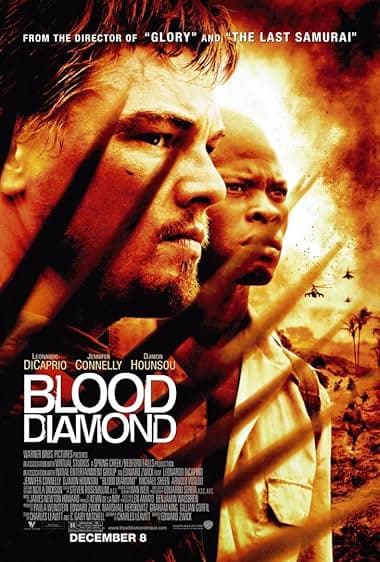
Blood Diamond
A mercenary, a fisherman and a pink diamond — and a film that still asks who pays for our jewellery.
Read the retrospective
→
2003
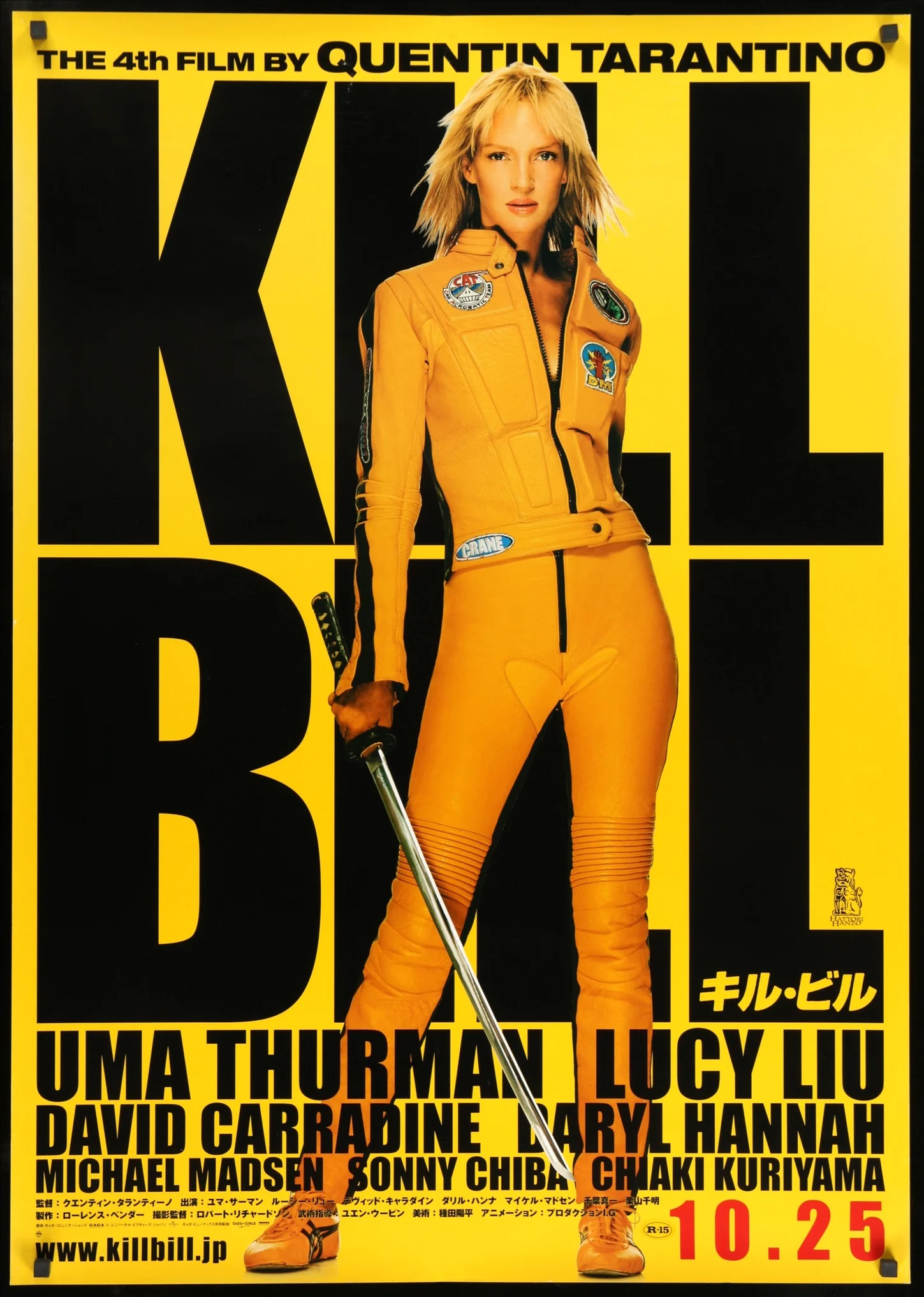
Kill Bill: Volume 1
A yellow jumpsuit, a long list of enemies and one woman who refuses to be finished.
Read the retrospective
→