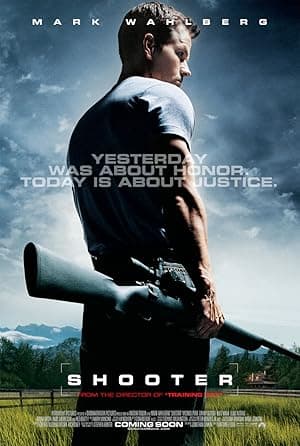
Shooter
A lone sniper, a messy cover-up and enough paranoia to fill an election year — Shooter still bangs.
Feature presentation
Shooter is the kind of mid‑2000s thriller that likes its heroes tidy and its institutions messy. Directed by Antoine Fuqua and anchored by Mark Wahlberg as Gunnery Sergeant Bob Lee Swagger, it pairs long‑range tradecraft with a conspiracy that grows teeth. Watch it for the set pieces; stay for the way the story trusts the audience to side with one stubborn, isolated man against a crooked system.
THE MOVIE
Gunnery Sergeant Bob Lee Swagger is still the reason this movie works
Shooter is built around a very simple operating choice: give the movie to a taciturn, highly skilled ex‑Marine and let everything complicated happen around him. Mark Wahlberg plays Gunnery Sergeant Bob Lee Swagger, the kind of protagonist whose military past and professional instincts make him suspicious of official stories from the off.
That suspicion is set up early. An initial mission that goes wrong leaves Swagger stranded and teaches him not to trust military or government explanations — which is handy, because the rest of the film asks him to disbelieve pretty much everyone in a suit. Antoine Fuqua directs it with his usual appetite for muscular genre storytelling, keeping the focus tightly on Swagger’s perspective.
Adapted from Stephen Hunter’s Point of Impact, Shooter mixes action, mystery and political thriller beats across a 124‑minute runtime. It works best when it remembers why we’re watching: for the specialist brain at its centre and the way that central character forces the audience to pick a side in a story about cover‑ups and personal justice.
THE SETUP
The idea that sets Shooter in motion
At its core, Shooter leans on a simple premise: a former Marine scout sniper is pulled in to help stop a presidential assassination and then finds himself framed. That flip — from hired protector to fugitive — is the engine that keeps the story moving without needing a thousand moving parts.
The plot foregrounds Swagger’s specialist skill set. Long‑range marksmanship and ballistic detail are not window dressing here; they’re the language the film uses to prove who did what. Tricks like paper‑patching to confuse ballistic fingerprints and a remote‑firing device become plot currency rather than obscure tradecraft asides.
There’s also a classic buddy‑cop tilt, of sorts. An FBI agent who starts by believing the official line gradually shifts into an investigator who sees the anomalies and begins to help Swagger. That collaboration lets the film open up from a lone wolf tale into something more investigative — which is handy, because the conspiracy it chases is deliberately large and messy.
The screenplay updates Stephen Hunter’s original novel to a contemporary post‑Vietnam setting, which keeps the stakes feeling immediate for a 2007 audience and lets the story use modern forensics and politics as part of its machinery.
THE CHARACTER
Why Gunnery Sergeant Bob Lee Swagger matters
Bob Lee Swagger matters because the movie trusts him to carry the questions it can't ask out loud. He's a former Marine scout sniper whose professional habits — accuracy, patience, suspicion — shape how the audience experiences the story.
That suspicion isn't abstract. The film shows an early mission gone wrong that leaves him stranded, literally and figuratively, and that experience explains why he lives apart from normal life and why he reads official explanations with a sceptical eye.
The cast around him is arranged to reflect his isolation and gradual reintegration: a government operative who first recruits him becomes someone to distrust, and a spotter’s partner provides a practical anchor and a measure of human contact. Those relationships keep Swagger from being an inert action figure; they give him reasons to act other than pure revenge.
Finally, the production leans into authenticity: a former Marine scout sniper trained the lead and helped bring real techniques into the film’s depiction of sniping. That grounding matters because the plot asks the audience to accept technical details as central to the mystery.
THE PERFORMANCE
Why Mark Wahlberg's performance matters
Contemporary reviewers repeatedly circled back to one persistent note: Wahlberg’s lean, stoic presence is the film’s anchor. The movie frequently favours restraint over speech, and that screen persona gives the action a moral gravity it might otherwise lack.
That matters because Shooter is less interested in speeches than in precision. When the central figure communicates mostly by what he chooses to do — by setting up a shot, by keeping watch — the audience is left reading choices rather than lines. Wahlberg’s presence lets those choices carry weight.
Put simply: the film needs a central figure you believe could survive by skill and instinct alone, and the contemporary response suggested Wahlberg supplied that necessary, steady centre.
That doesn’t make the movie beyond criticism, but it does explain why many viewers stayed with it even when the screenplay took liberties with plausibility.
UNDER THE SURFACE
Shooter has more on its mind than the plot suggests
On the surface Shooter is a man‑on‑the‑run action thriller. Underneath, it’s arguing with institutions. The film makes suspicion of official narratives into a sustained emotion, not just a plot obstacle.
That suspicion feeds into a second idea: individual vigilantism. Swagger’s isolated skill set pushes the story towards a version of justice that happens off the books. The movie asks whether a professional wronged by its own system can reasonably take matters into his own hands.
Conspiracy and cover‑up are the connective tissue. The framing device that turns protector into accused isn’t just a twist; it’s the movie’s way of saying that official channels are either compromised or too slow, which in turn justifies the hero’s guerrilla methods.
Add revenge and personal justice into the mix and you have a film that wears its politics lightly but consistently: when institutions fail, the individual — trained, stubborn, and a little morally blunt — becomes the only plausible agent of consequence.
PRACTICAL EFFECTS
The effects work that gives Shooter its physical personality
Shooter foregrounds technical realism in ways that matter to the plot. A former U.S. Marine scout sniper served as the military‑technical advisor and trained the lead actor in real sniper techniques: ghillie suit use, scope adjustment, wind reading and extreme‑distance shooting all appear as genuine skills rather than made‑up shorthand.
The production also used a variety of real‑world sniper rifles in scenes — examples cited include the M40A3, a CheyTac Intervention‑type rifle and the Barrett M82 — and the screenplay makes ballistic techniques, like paper‑patching to throw off forensic identification, an active part of the mystery.
Stunts and location work contribute to a tactile feeling: chase and mountain sequences used real rivers, quays and glaciers for set pieces rather than staging everything on soundstages. That physicality helps sell the idea that Swagger isn’t operating in a fantasy — he’s doing hard, specialist things that someone trained could actually pull off.
Put another way: when the film asks you to follow technical solutions to a problem, it mostly gives you authentic detail to latch on to.
PURE 00s
Shooter could not belong to any other decade
Shooter is firmly a product of the mid‑2000s in tone and preoccupations. Released in 2007, it sits alongside a wave of thrillers that folded post‑9/11 anxieties and concerns about military engagements into conspiracy plots.
Updating Stephen Hunter’s novel to a contemporary setting was a deliberate choice: it let the film use modern forensics, media and political fears as part of its machinery rather than relying on older historical context.
Antoine Fuqua’s direction places the picture in a lineage of muscular, urban‑tinged thrillers, but the movie’s appetite for governmental skulduggery and private solutions marks it as very much of its time — when paranoia and distrust of institutions felt like immediate cultural currency.
So while Shooter wears action trappings, its thematic mood maps neatly onto the anxieties many audiences brought into cinemas in the mid‑00s.
THE LEGACY
Why Shooter still matters
Shooter left a tangible afterlife. Beyond whatever theatrical conversation it had, the film spawned a later USA Network television adaptation developed from the movie and the Bob Lee Swagger novels, which shows the story had legs for serial storytelling.
Home‑video audiences also kept the picture alive: it achieved significant DVD sales in 2007, topping U.S. DVD charts upon release and registering strong revenue in that market. That sort of post‑theatrical performance helps explain why the property continued to circulate.
More recently, the distributor has kept the title available: Paramount issued a 4K remaster/Ultra HD Blu‑ray release in 2022, indicating an ongoing commercial interest in keeping the film in circulation for new viewers and collectors.
Taken together, these points show Shooter has sustained a practical cultural presence — not necessarily as a touchstone of high art, but as a commercially viable, conversation‑friendly thriller with an identifiable central character.
THE VERDICT
Does Shooter still hold up?
Yes — with qualifications. Shooter is the kind of film that delivers exactly what it promises: a lean, specialist thriller about a framed sniper trying to expose a cover‑up. If that summary appeals, the film still moves well and keeps you invested in Swagger’s practical problem‑solving.
Mark Wahlberg’s take on Gunnery Sergeant Bob Lee Swagger and the movie’s attention to authentic tradecraft give the film a backbone. The screenplay asks you to accept some large conspiratorial leaps, but the collaboration between Swagger and an increasingly sceptical FBI agent provides a credible throughline for the audience to follow.
That said, contemporary criticism’s mixed response was not misplaced: reviewers praised the set pieces and lead presence while faulting parts of the screenplay and plausibility. If you come for suspense and technical detail and can tolerate a few plot conveniences, Shooter rewards you; if you demand airtight plausibility, it will frustrate.
So should you watch it now? If you like your thrillers with a single stubborn centre, some hands‑on ballistics, and a mood of institutional mistrust, Shooter still earns a recommendation. It’s not perfect — but its central argument is simple and still persuasive: when the system tries to sell you an obvious lie, watch the person best trained to see through it.
Share this movie
Keep watching
More movies from the 00s

2002
The Pianist
A quiet life unmade by war — and a pianist who refuses to stop listening.
Read the retrospective
→
2006
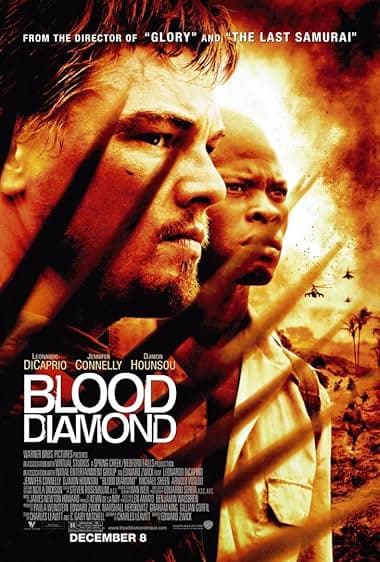
Blood Diamond
A mercenary, a fisherman and a pink diamond — and a film that still asks who pays for our jewellery.
Read the retrospective
→
2003
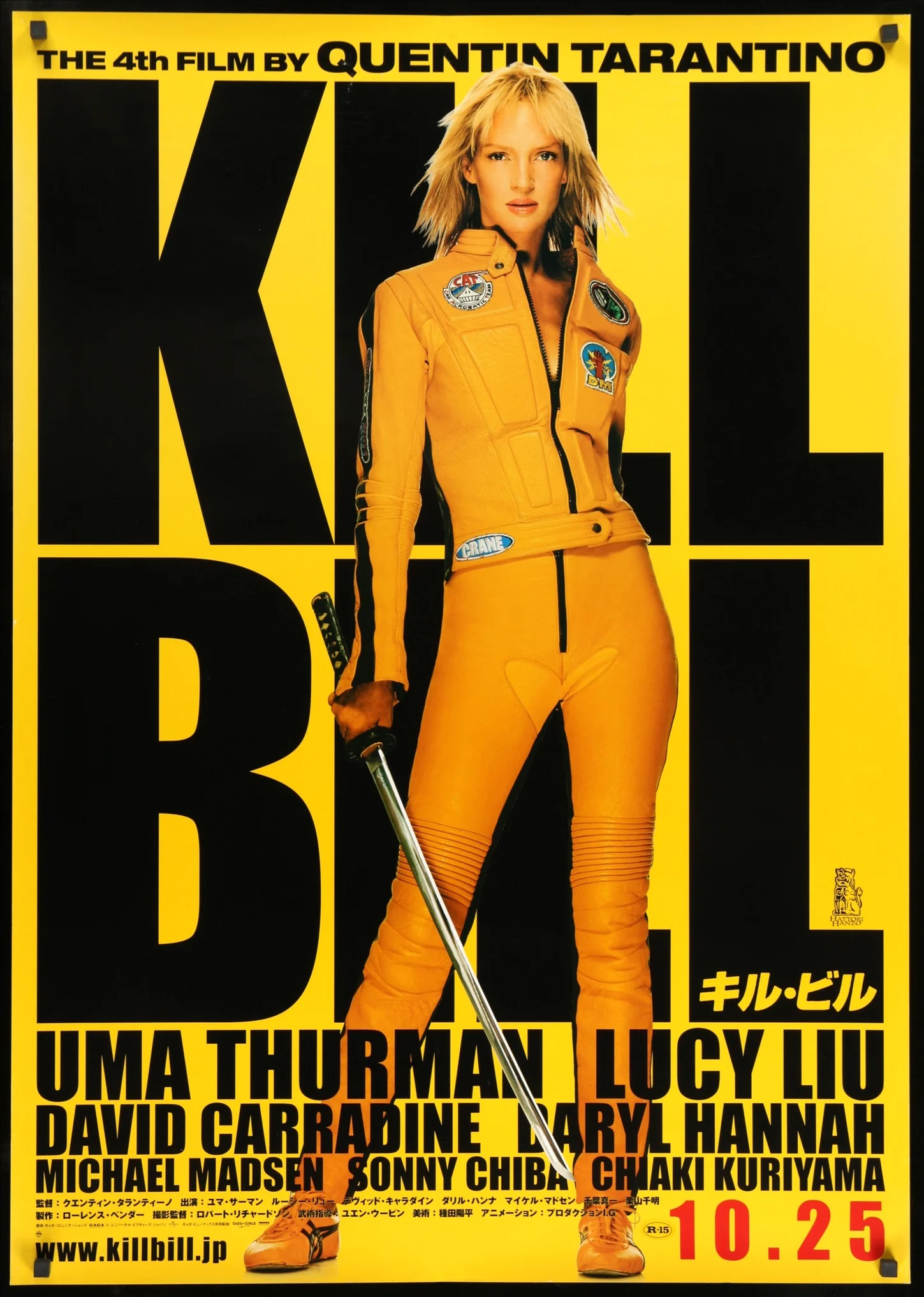
Kill Bill: Volume 1
A yellow jumpsuit, a long list of enemies and one woman who refuses to be finished.
Read the retrospective
→