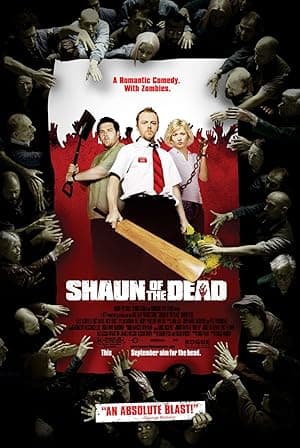
Feature presentation
Shaun of the Dead still feels like the film you bring out when you want to prove you can laugh and flinch at the same time. Edgar Wright and Simon Pegg built a movie that treats the apocalypse as an awkward relationship intervention — and it’s Shaun’s inability to grow up that keeps the whole thing interesting. If you’re deciding whether to rewatch it, the question isn’t whether the zombies bite; it’s whether Shaun finally bites back.
THE MOVIE
Shaun is still the reason this movie works
Shaun of the Dead opens on a very particular kind of life: pub, work, video games, repeat. That comfortable rut is the film’s engine — once the world starts falling apart, Shaun is the man the story is asking to stop treading water.
The early warnings arrive and are shrugged off; the apocalypse only becomes real after Shaun and Ed stumble on two zombies in their garden. That moment is less about gore than recognition — the film forces its lead to look up from his routine and face something he can’t ignore.
What keeps the movie ticking is the central problem it sets for Shaun: he’s a twenty-something who has to grow up. The comedy-horror set pieces are brilliant, but the stakes are emotional as much as physical — his girlfriend’s frustration and the people he’s responsible for turn the zombie plot into a test of adulthood.
THE SETUP
The idea that sets Shaun of the Dead in motion
At heart the premise is straightforward: an aimless electronics-shop worker’s dull routine is shattered by a spreading zombie outbreak in suburban London. The film keeps its logistics simple so the characters — and their arguments — take centre stage.
Shaun’s troubles at home and with Liz sit cheek-by-jowl with the survival problem. That contrast is the film’s clever trick: relationship dramas and the practical work of staying alive feed each other, rather than one crowding the other out.
From improvised rescue attempts to the group’s decision to hole up in the local pub, Shaun of the Dead leans on small, believable choices. The Winchester becomes the focus not because it’s dramatic in itself, but because it’s the place these people already know and argue in.
It’s a story built on tight reversals: ordinary couple fights are interrupted by horror beats, and those interruptions are the engine of both the laughs and the pressure Shaun needs to change.
THE CHARACTER
Why Shaun matters
Shaun isn’t memorable because he’s heroic from the off. He’s memorable because he’s recognisably stuck: late twenties, comfortable with excuses, excellent at routine and terrible at change. That is the canvas the film paints on.
Everything Shaun does — or fails to do — has consequences. His girlfriend’s mounting frustration and the responsibilities towards family and friends are the personal problems that the zombie outbreak brutally clarifies.
Ed’s loyalty and slovenly habits are more than comic ballast; they make Shaun’s indecision feel personal and immediate, because Ed is both a problem and the person Shaun keeps circling back to protect.
The supporting players — Shaun’s mother and stepfather, Liz’s friends — aren’t window dressing. They create the interpersonal friction that forces Shaun into choices he’d otherwise put off.
THE PERFORMANCE
Why Simon Pegg's performance matters
Contemporary responses singled out the chemistry between Simon Pegg and Nick Frost as a big part of why the film hits its marks. That’s not just about two people being funny together; it’s about how their back-and-forth makes the movie’s emotional beats believable.
Pegg’s Shaun needs to be someone you recognise as both infuriating and pitiable. The film’s reliance on sitcom-style relationship beats depends on that balance — if Shaun were a cipher, the intimate moments wouldn’t land.
Crucially, the humour and the horror rest on trust: the script keeps returning the audience to Shaun’s personal failures, and that only works if the lead convinces you he can change.
So while the gore grabs headlines, the reviews were right to point at Pegg and Frost’s dynamic as central. The film’s life depends on their chemistry holding up across both comedy and threat.
UNDER THE SURFACE
Shaun of the Dead has more on its mind than the plot suggests
On the surface it’s a zom-com with clever kills and pub fights; under the skin it’s a quarter-life story. The apocalypse is used as a narrative speed-cleaner: it strips away excuses and forces Shaun to answer whether he’s ready to be the sort of person other people rely on.
Friendship threads through every decision. Shaun and Ed repeatedly try — clumsily, loyally — to protect each other, and those attempts make their bond feel like the movie’s emotional spine rather than a tossed-off gag.
There’s also a deliberate mismatch in play: very ordinary suburban concerns get set against genre theatrics. That friction — domestic arguments interrupted by a zombie — keeps the film nimble and gives its humour a sharper edge than pure parody would.
Finally, the film wears its love for the genre on its sleeve. It’s as much homage and pastiche as it is a comedy, which lets it play both to fans of zombie cinema and to people who just want a brutally funny relationship movie.
PRACTICAL EFFECTS
The effects work that gives Shaun of the Dead its physical personality
Shaun of the Dead’s physical nastiness owes a lot to on-set prosthetics and special-effects makeup supplied by specialist teams. The film leans on that tactile, hands-on work to make the zombies feel like they’re in the same world as the arguing couples.
Those practical makeups are not presented in isolation. Digital vendors were used for compositing and clean-up, layering computer work onto the practical performances and stunts already captured on set.
The result is a hybrid approach: the gore reads as bodily and immediate because it starts with prosthetics, while the digital work helps the chaos read as cinematic without undoing the physical effects.
When the film needs to sell both a laugh and a punch — say, a pub brawl turning undead — the mixture of prosthetic craft and digital polish keeps the rhythm intact and the action readable.
PURE 00s
Shaun of the Dead could not belong to any other decade
Shaun landed in 2004 at a moment when zombie cinema was having a mainstream moment again — it sits beside that year’s Dawn of the Dead remake and the decade’s earlier 28 Days Later in a broadly revived appetite for the undead.
It’s also a product of an early-2000s British production model: modest-to-moderate budgets, local creative teams and international distribution arrangements that let a small, character-led film reach a wider audience.
That timing matters. The movie could do clever references to genre and still be grounded in the small-scale British comedy tradition that was finding new air in the 2000s.
So yes, it’s of its moment: part homage, part local comedy, and part of a wider trend that allowed British filmmakers to play with genre while staying true to domestic relationships and places.
WATCHING IT NOW
What has aged — and what hasn't
The film’s sense of place and its ties to early-2000s British youth culture now read as period detail; for modern viewers that rootedness is part of the charm rather than a distraction.
Crucially, the friendship and loyalty at the core still work. The repeated decisions Shaun and Ed make to look out for one another keep the story grounded, so the emotional through-line survives the passage of time.
Contemporary critics who praised Pegg and Frost’s chemistry were pointing to something durable: the film balances sitcom-style relationship beats with horror moments, and that balance remains the movie’s strongest asset.
What feels slightly of its era is the cultural setting; what survives perfectly is the emotional logic. The film’s structural choices — ordinary life interrupted, choices forced by violence — haven’t dated in any meaningful way.
THE LEGACY
Why Shaun of the Dead still matters
Shaun of the Dead is commonly cited as the opening chapter of the Cornetto trilogy, which gives it a durable place in early-2000s British cinema conversation.
One scene in particular — the pub fight set to Queen’s 'Don't Stop Me Now' — became shorthand for the film: it’s a neat example of how the movie blends a jukebox-pop energy with a physical set piece, and the sequence reintroduced the song to a younger audience at the time.
More broadly, the film announced the Wright–Pegg partnership on a bigger stage: it established their collaboration as a commercially and critically notable export for British comedy and shows up repeatedly in lists and retrospectives of the decade.
Put simply: it matters because it made a case for a certain kind of British genre comedy — funny, affectionate, and willing to get messy — and it did so in a way that left a clear creative trail.
THE VERDICT
Does Shaun of the Dead still hold up?
Yes. Shaun of the Dead still works because its brain is in the right place: the zombie outbreak is the plot’s engine, but the movie’s heartbeat is Shaun having to stop making excuses and start taking responsibility. The film keeps the stakes personal even as it delivers genre thrills.
The script’s habit of interrupting ordinary relationship beats with horror set-pieces is no gimmick; it’s how the movie forces growth. The decisions Shaun makes about Liz, his mum, his stepfather and his friends matter because they’re plausible choices under pressure, not just set-up for jokes.
Equally important is the central relationship between Shaun and Ed. Ed’s messy loyalty complicates survival plans, but it’s also why Shaun’s attempts at change feel earned. The balance between affection and irritation is what gives the comedy its emotional pay-off.
So, if you’re wondering whether to watch it now: watch it. It’s 99 minutes of smartly mixed tones that still rewards both a laugh and a wince — and it asks a reasonable question for anyone aged their twenties or thirties: when the lights go out, who are you going to be?
Share this movie
Keep watching
More movies from the 00s
2002
The Pianist
A quiet life unmade by war — and a pianist who refuses to stop listening.
Read the retrospective
→
2006
Blood Diamond
A mercenary, a fisherman and a pink diamond — and a film that still asks who pays for our jewellery.
Read the retrospective
→
2003
Kill Bill: Volume 1
A yellow jumpsuit, a long list of enemies and one woman who refuses to be finished.
Read the retrospective
→