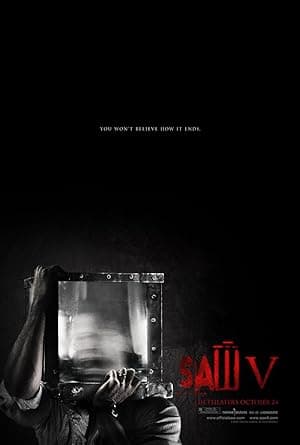
Feature presentation
Saw V is the franchise at its procedural most: a cat-and-mouse between an FBI probe and a cop trying to hide a terrible secret. David Hackl’s debut leans on the same grim premise the series has been cashing in on — timed ‘games’, videotaped instructions and a man called John Kramer whose presence still shapes every choice.
THE MOVIE
John Kramer / Jigsaw is still the reason this movie works
What keeps people coming back to Saw V is less a single scene than an attitude: the franchise’s appetite for elaborate moral tests married to a detective story where the detective’s questions and the accomplice’s lies feed one another. Here, Agent Peter Strahm’s investigation runs in parallel with Mark Hoffman’s attempts to hide the truth about his role in Jigsaw’s plans.
The film also throws you one of those communal contraptions the series does well — five strangers locked into interlinked mechanical traps who must wrestle with choices, keys and each other. It’s a neat piece of franchise mechanics: tense, selfish, and engineered to force people into decisions that tell you who they are.
And at the top of the machine sits John Kramer. Tobin Bell’s Jigsaw may have less screen time than in earlier entries, but the idea of Kramer — the puppet master, teacher and judgement-maker — is the personality that haunts Saw V throughout David Hackl’s 92-minute feature.
THE SETUP
The idea that sets Saw V in motion
Saw V picks up the franchise thread very practically: an FBI agent is following leads while a police officer who’s been complicit tries to keep his dirty secret under wraps. That split — procedural sleuthing versus bureaucratic cover-up — gives the movie its basic forward motion without needing flamboyant reinvention.
Structurally the film is a neat two-hander. Strahm’s investigation provides the timeline and pressure; Hoffman’s manoeuvres provide the consequences and the personal stakes. The tension comes from watching the two tracks bend toward each other.
The familiar Saw toolkit is on display: videotaped instructions, countdowns and mechanical devices that force characters into physical and moral tests. It’s comfort food for franchise regulars and the core mechanic that still generates suspense in short order.
Where Saw V does try to deepen the formula is with flashbacks that place Hoffman into Jigsaw’s history — not to rewrite the rules, but to explain how one of Jigsaw’s pupils could plausibly take up the methods while also being desperate enough to hide them.
THE CHARACTER
Why John Kramer / Jigsaw matters
Even when he isn’t centre-stage, Jigsaw remains the franchise’s moral lightning rod. The tests, the philosophy and the sense of judgement all radiate from the idea of John Kramer — which means his presence can be dramatically lighter while still feeling essential.
Tobin Bell is credited as Jigsaw, and Saw V uses the character more as a structural force than as an on-screen protagonist. The movie trusts Kramer to be the gravity that pulls other characters into the kinds of choices the franchise loves to stage.
That approach comes with a trade-off. Contemporary criticism noted that Bell’s reduced screen time left some viewers missing the directing voice of the series; the figure who used to be the visible architect of the puzzles is often felt rather than seen.
Still, the role matters because the film hangs a lot of emotional and narrative weight on Kramer’s mythology — the idea of someone whose methods can be inherited, adapted or abused gives the whole story a sharply personal edge.
THE PERFORMANCE
Why Tobin Bell's performance matters
There’s not much to analyse about screen technique here beyond an observation critics made at the time: Bell appears less frequently than in earlier films, and that scarcity affected how people responded to the instalment.
Put bluntly, some reviewers argued that the intermittent presence of Jigsaw weakened Saw V. When the franchise relied on his moral weight to make the traps land emotionally, fewer scenes from him made the film feel a touch adrift.
That criticism doesn’t erase what Bell brings to the character — it simply reframes it. His role in Saw V is quieter, more myth than man, and the film asks viewers to accept Jigsaw’s authority even when it’s mostly heard off-screen.
So the performance matters because it changes how the audience experiences the rest of the film: as a direct Jigsaw exercise or as the story of what happens when someone else tries to inherit the lesson plan.
UNDER THE SURFACE
Saw V has more on its mind than the plot suggests
At surface level Saw V is about traps and investigations. Underneath it’s staking out a much grubbier argument: what happens to an idea when someone else takes it over. The succession of methods — Hoffman trying to inherit Kramer’s procedures — turns the franchise into an argument about legacy.
That succession is tangled up with deception. The film frames an obvious tension between the outward investigation and the inward compromise of those meant to uphold the law. That cover-up dynamic gives the procedural beats a moral stink that keeps you watching.
And the tests themselves are still where the movie’s thematic muscle lives: mechanical devices that force people into physical choices are also moral prompts. The traps ask not just who will survive, but who we think deserves to.
Taken together, these ideas make Saw V less a simple exercise in shock and more a study of how judgement can be institutionalised — and then manipulated by someone willing to lie to protect their place in the scheme.
PURE 00s
Saw V could not belong to any other decade
Saw V is very much a product of its era: it arrived as part of an established yearly model — the fifth straight annual Saw release — when Twisted Pictures and Lionsgate had made a Halloween-season franchise instalment into a reliable fixture.
That release pattern shaped expectations. By 2008 viewers had come to the series wanting quick, efficient horror doses: a compact runtime, the franchise’s signature traps and the promise of a continuing puzzle to chew on between entries.
The film’s writers were part of that late-00s Saw engine too. Patrick Melton and Marcus Dunstan, who scripted the previous film, were regular contributors, which helped the series maintain a consistent voice through its run.
Even the peripheral details underline the era: Hackl’s feature debut directing a veteran franchise entry, a soundtrack release timed with the theatrical launch, and an October 2008 arrival that kept Saw V in a very specific commercial slot for horror films of the time.
THE LEGACY
Why Saw V still matters
Saw V’s legacy is straightforward and practical: it continued the franchise’s annual release strategy and passed the narrative baton along to the next film. It’s part of the continuity that made Saw a steady presence in late-00s horror.
Commercially the film also played the now-familiar two-step: a theatrical launch followed by expanded home-video offerings, including an unrated director’s cut. That pattern is part of how the series kept fans engaged between cinema visits.
Narratively, Saw V matters because it cements Hoffman’s role in the mythology and makes succession — who inherits Jigsaw’s methods — an explicit part of the franchise story.
So the movie’s importance is less about redefining genre and more about being the connective tissue that kept the Saw machine running from year to year.
THE VERDICT
Does Saw V still hold up?
Short answer: yes — if you’re watching for franchise mechanics and the slow, grubby politics of legacy. Saw V knows what it is: a tight 92-minute instalment that pairs an FBI investigation with the messy business of an inside cop trying to protect a secret.
The film’s central set pieces — particularly the group-trap that strands five people who must choose and bargain for survival — still deliver the stomach-turning logic the series is built on. If that format appeals, Saw V gives you exactly what you expect.
Where it falters is in the film’s dependence on series mythology without always putting the series’ most potent figure front and centre. Tobin Bell’s Jigsaw is here, but contemporary reviewers noted his reduced screen time and argued that the film loses some of its emotional anchor as a result. Hoffman’s attempt to inherit Kramer’s methods does interesting narrative work, but it’s a different flavour of tension from seeing Kramer orchestrate things directly.
In short: watch it for the mechanics, the succession drama and the procedural push-and-pull between Strahm and Hoffman. Don’t watch it expecting a reinvention. Saw V is a solid chapter for fans and a functional piece of franchise storytelling — not a classic, but not an embarrassment either.
Share this movie
Keep watching
More movies from the 00s

2002
The Pianist
A quiet life unmade by war — and a pianist who refuses to stop listening.
Read the retrospective
→
2006
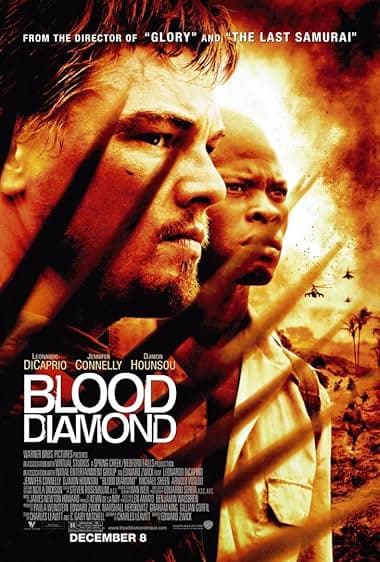
Blood Diamond
A mercenary, a fisherman and a pink diamond — and a film that still asks who pays for our jewellery.
Read the retrospective
→
2003
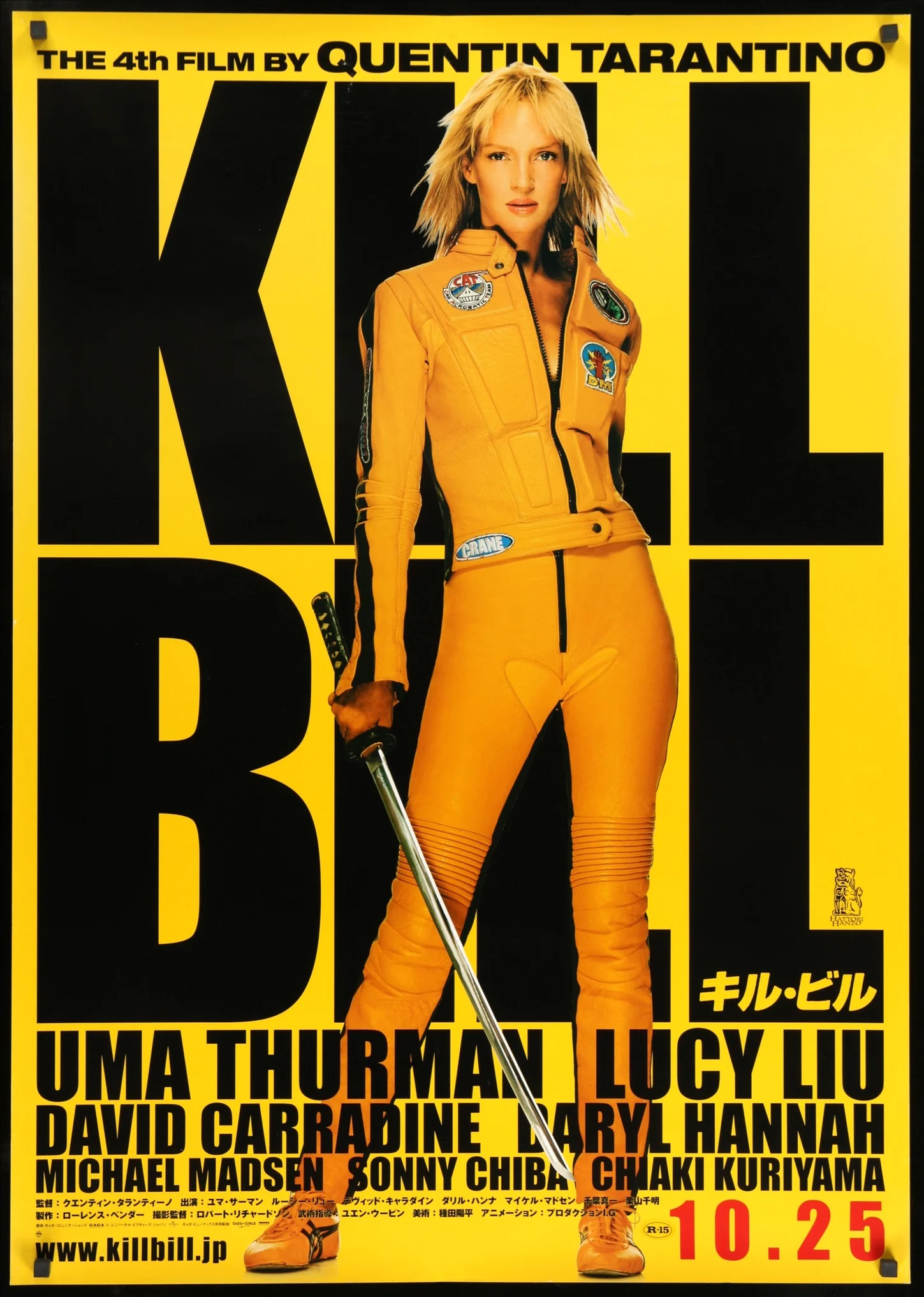
Kill Bill: Volume 1
A yellow jumpsuit, a long list of enemies and one woman who refuses to be finished.
Read the retrospective
→