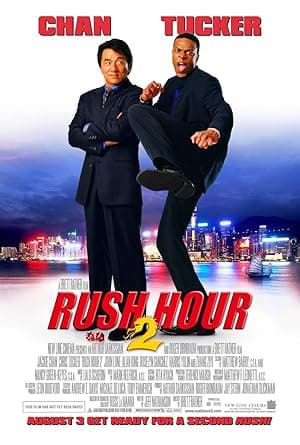
Rush Hour 2
Jackie Chan’s calm in the storm: loyalty, laughs and the odd very civilized punch.
Feature presentation
Rush Hour 2 lands where the first left off: two mismatched cops, one trip to Hong Kong and the same business of turning culture clash into comic currency. It’s a fast, 90-minute blend of martial-arts set pieces and loud, improvised comedy that wears its franchise pedigree proudly — and Brett Ratner directs the chaos with the blunt efficiency the film needs.
THE MOVIE
Chief Inspector Lee is still the reason this movie works
Rush Hour 2 asks a simple question and keeps circling it: what happens when a disciplined Hong Kong inspector and a shouty LAPD detective take their odd-couple routine abroad? The film opens with Carter and Lee ostensibly on holiday in Hong Kong and quickly folds them into an investigation that ties a bombing and the murder of U.S. customs agents to a high-quality counterfeiting ring.
What makes the set-up click — enough for the whole movie to hinge on it — is the pairing itself. Chief Inspector Lee is the physically skilled, disciplined counterpoint to Detective James Carter’s improvisational bluster, and that contrast fuels both the laughs and the forward motion of the plot.
Brett Ratner keeps the thing tight: 90 minutes of buddy-cop beats, martial-arts action and jurisdictional miscommunication that leans into the mismatch between cultures as much as it does into the chase sequences and set pieces.
THE SETUP
The idea that sets Rush Hour 2 in motion
You don’t need a complicated premise here. The central mechanics are a riff on a formula: buddy-cop comedy beats threaded through set-piece action that jumps between Hong Kong and the United States — the investigation carries them from one jurisdiction to another, and the film enjoys that travel.
The immediate plot engine is professional: a bombing and the murder of customs agents point to a sophisticated counterfeiting operation and a Triad connection. That gives the movie something to chase beyond the jokes.
The emotional stakes are added on top. The antagonist isn’t just a man with plans — Ricky Tan has a tie to Lee’s past, which pulls loyalty and family into what otherwise could be a straightforward caper.
All of that — the comedy, the fights, the divided loyalties and the globe-trotting — keeps the sequel feeling like a continuation of the partnership established in the first film while giving it sharper personal edges.
THE CHARACTER
Why Chief Inspector Lee matters
Jackie Chan’s character, Chief Inspector Lee, is the axis around which the movie spins. He’s the disciplined, physically capable foil to Carter’s chaos — and that discipline becomes the film’s steadying instrument when plot complications get noisy.
Because Lee isn’t just a repository of moves; the story gives him a personal stake. Ricky Tan’s links to Lee’s past turn the pursuit into something that matters beyond the next stunt or punchline, bringing loyalty and family ties into the buddy formula.
That private dimension matters because it balances the film’s set-piece tendency: having a grounded reason to pursue the villain keeps the action from feeling like spectacle for spectacle’s sake.
Behind the fights there’s also a practical reason Lee carries the film’s weight: Jackie Chan and members of his stunt team had direct input into the choreography, which means the physical sequences read as deliberate expressions of the character rather than anonymous action.
THE PERFORMANCE
Why Chris Tucker's performance matters
Detective James Carter’s role in the movie is straightforward: he’s noise, improvisation and constant motion, the comic counterweight to Lee’s restraint.
That approach divided critics at the time. Roger Ebert’s contemporary review singled out Tucker’s extended rants as a problem, suggesting that his style sometimes tipped the film’s humour out of balance.
It’s a useful reminder when watching now: Tucker’s energy is deliberately broad, and the film pairs that broadness with Lee’s quiet control so the duo stays readable even when one of them goes off on a loud, rambling riff.
Whether you find that funny will depend on your tolerance for sustained comic excess; the film itself is built to absorb it, but contemporary coverage did note the contrast as a point of friction.
UNDER THE SURFACE
Rush Hour 2 has more on its mind than the plot suggests
On the surface it’s a crime caper full of chases and punches, but the movie’s recurring ideas are simple and effective: cross-cultural partnership, miscommunication and the business of two very different cops figuring out how to work together.
Those miscommunications supply a lot of the comedy, but they also underline a genuine curiosity about how two legal systems and two cultures might collide and cooperate when faced with organised crime.
The other recurring note is loyalty — personal ties and family history aren’t just background, they are the reason Lee is invested, which lifts the film from being a string of set pieces to something with an emotional stake.
Finally, the hybrid of comedy and martial-arts action is not decorative: it’s the film’s operating mode. The laughs exist alongside carefully staged fights, so the movie keeps swapping between tone and momentum rather than committing to either in isolation.
THE FILMMAKING
How Rush Hour 2 was put together
This is a film that wears its crew credits where you can see them: the production team includes a director of photography and an editor who shape how the action reads, while a credited production designer and a composer help set the film’s overall rhythm.
Those names point to a conventional Hollywood assembly-line approach — skilled technicians who keep the movie moving cleanly from gag to set piece.
What that means on screen is a production that emphasises clarity: fights and comic beats are staged so the audience always knows who’s doing what and why, which is what a hybrid comedy-action picture most needs.
And the music credit in the credits list is another reminder that this is a full studio package — technical choices geared to entertaining a broad, international audience rather than pursuing arty experiments.
PRACTICAL EFFECTS
The effects work that gives Rush Hour 2 its physical personality
A big reason the film feels physically immediate is the involvement of Jackie Chan and his stunt team in choreographing the action. Their presence means sequences are grounded in performer-driven movement rather than being entirely invented in post.
The movie includes extended, physically staged set pieces — an atrium or scaffolding fight and boat/vehicle sequences — that rely on coordinated stunt choreography to sell danger and momentum.
That practical, coordinated stunt work helps the film read as a series of physical problems to be solved, which suits a martial-arts-influenced buddy picture: the solution is often a cleverly executed move rather than a visual effect.
So while the film is a studio picture, its action has that hands-on, Hong Kong-style stamp because of the practitioners who shaped the fights.
PURE 00s
Rush Hour 2 could not belong to any other decade
Released in 2001, Rush Hour 2 sits in an early-2000s moment when studios treated franchising as a simple formula: pair an established international action star with an American comedian and let the contrast sell tickets.
The film is the second entry in its series, which was at the time a model of straightforward franchise thinking — take familiar characters, up the scale, repeat the pairing.
It’s also typical of the period’s appetite for cross-market casting: combining Hollywood comedy with international martial-arts presence was a commercial shorthand for widening appeal.
Finally, the film’s August release and tight runtime point to studio confidence in a compact, crowd-pleasing package designed to travel across markets without overstaying its welcome.
WATCHING IT NOW
What has aged — and what hasn't
Some elements remain straightforwardly watchable: the loyalty and family ties that motivate Lee still give the movie a reason to care about the villain beyond the next fight.
The central relationship — the same principal characters returning for another round — is also part of why the sequel still plays: it arrives with built-in shorthand, so the film can spend time on stunts and jokes without needing fresh origin scenes.
What may feel more dated is how the comedy balances the two leads; contemporary critics picked up on that unevenness, so modern viewers sensitive to tone might notice it quicker than audiences who simply want action and banter.
But if you’re watching for physical choreography and the pairing itself, the core ingredients that define the movie’s appeal — partnership, loyalty, and punchy set pieces — are still present.
THE LEGACY
Why Rush Hour 2 still matters
As the middle chapter of the series, Rush Hour 2 helped cement the film pair as a recurring studio property — a reliable package that studios could return to with the same leads and a similar formula.
Its casting choices also speak to a then-current approach: bringing an international martial-arts star into a mainstream Hollywood comedy continued a trend of cross-market casting, and the presence of Zhang Ziyi is one example of that bridge between Hollywood and international martial-arts cinema.
So the film’s afterlife is practical rather than mythical: it’s remembered as the part of a franchise that doubled down on what worked — the chemistry, the stunts, and the international reach.
That’s not a small thing. There’s value in a studio picture that understands how to pair its components effectively and keep an audience entertained across borders.
THE VERDICT
Does Rush Hour 2 still hold up?
Yes — with a caveat. For anyone who comes for Jackie Chan’s physical instincts and the film’s Hong Kong-flavoured fight choreography, Rush Hour 2 still delivers: the buddy-cop framework exists to showcase those set pieces as much as to generate jokes.
But the movie’s tone depends on an uneasy livewire: Detective James Carter can dominate scenes with extended comic rants, a tendency contemporary critics flagged as tipping the balance at times.
If you want a tidy crime puzzle, this isn’t the film for you — the plot is a vehicle to carry the duo from location to location, and the villain’s ties to Lee’s past mainly serve to raise the emotional stakes rather than complicate the mystery.
In short: watch it for Lee — for the discipline, the fights and the loyalty that grounds the story — and expect Tucker’s louder turns to be part of the package. It’s a compact, early-2000s studio sequel that knows its strengths and refuses to apologise for them.
Share this movie
Keep watching
More movies from the 00s
2002
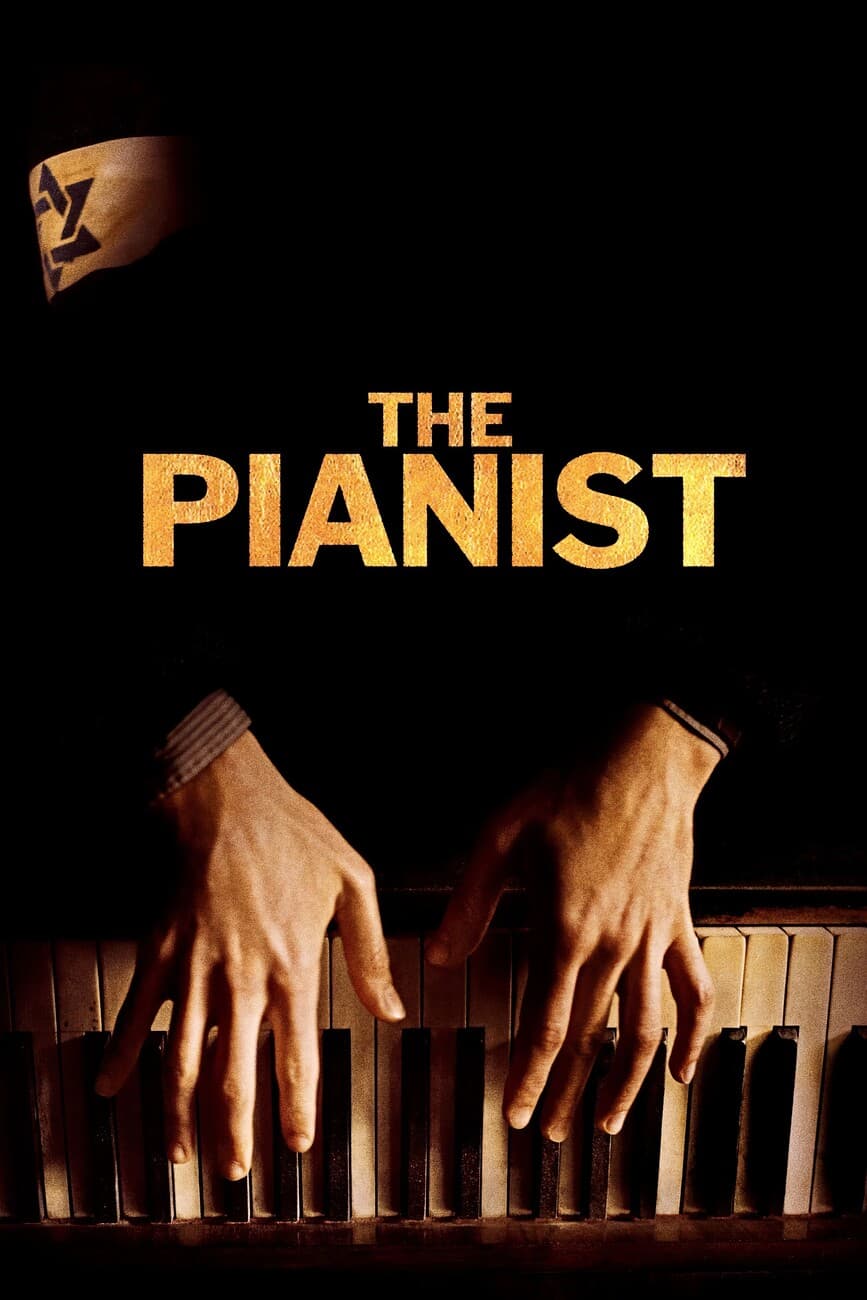
The Pianist
A quiet life unmade by war — and a pianist who refuses to stop listening.
Read the retrospective
→
2006
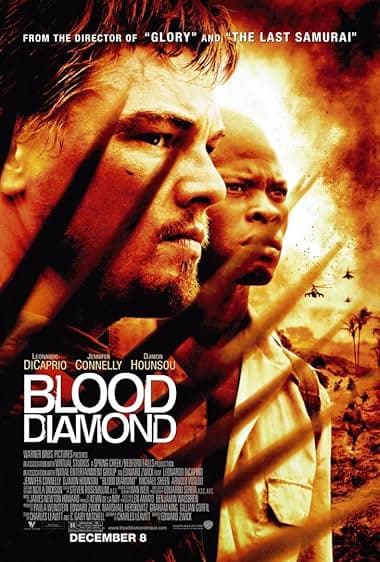
Blood Diamond
A mercenary, a fisherman and a pink diamond — and a film that still asks who pays for our jewellery.
Read the retrospective
→
2003
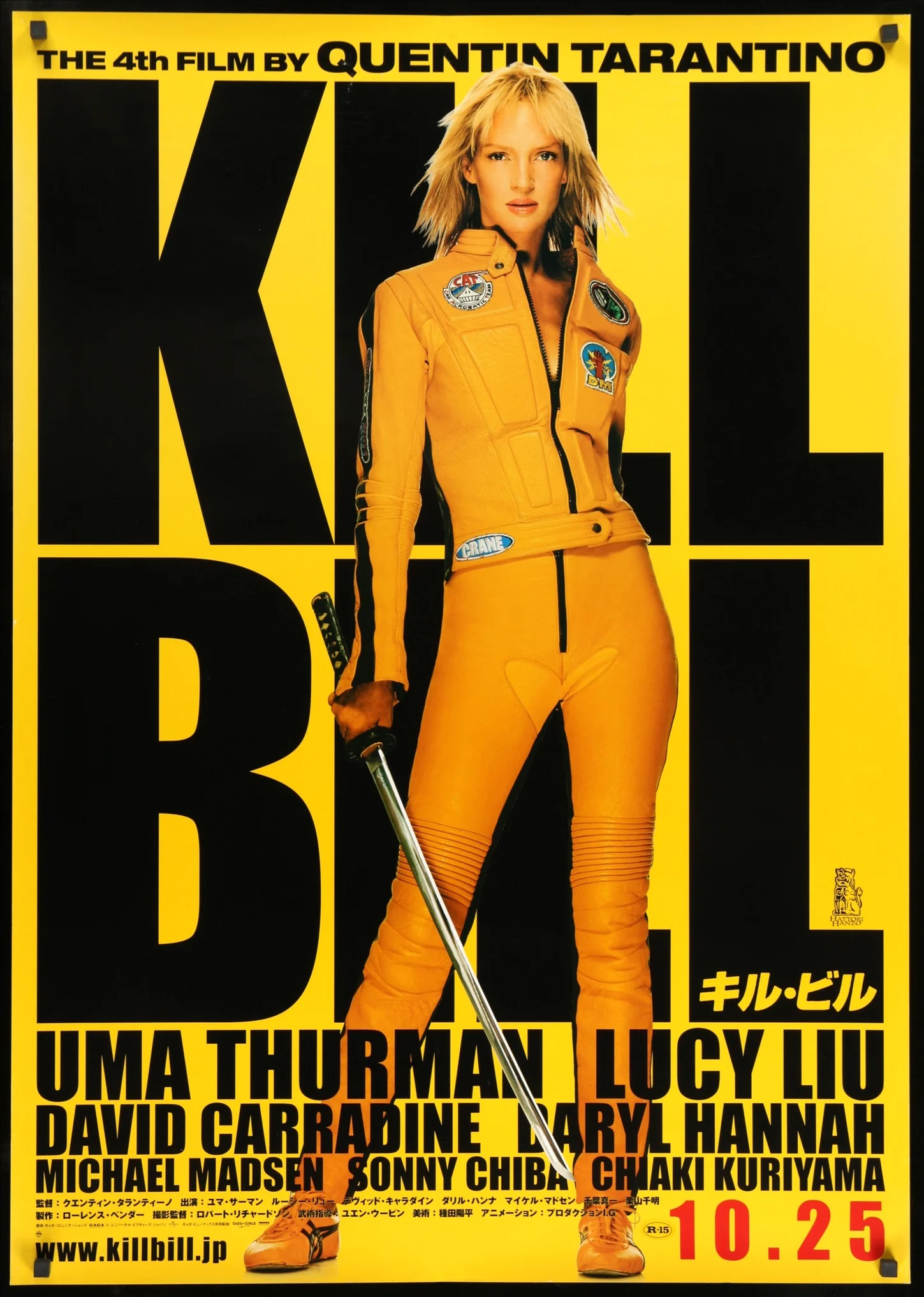
Kill Bill: Volume 1
A yellow jumpsuit, a long list of enemies and one woman who refuses to be finished.
Read the retrospective
→