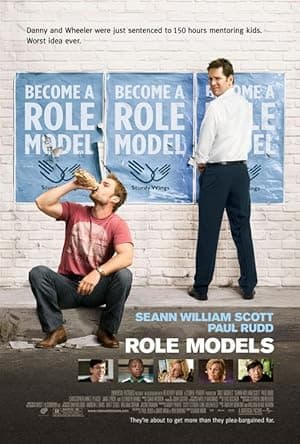
Role Models
A messy, affectionate bromance about grown-ups who have to learn how to be useful to children — and to one another.
Feature presentation
Role Models is the sort of late-00s comedy that can still make you laugh and feel slightly guilty in the same sentence. Directed by David Wain and anchored around Paul Rudd’s moody salesman, it pairs crude set-pieces with a surprisingly patient look at responsibility and how adults cope when they’re forced to grow up.
THE MOVIE
Danny is still the reason this movie works
You don’t get to the emotional payoff of Role Models by accident. It’s the way the film starts from a very specific mess — two energy-drink salesmen trashing their company truck and being sentenced by a judge to community service instead of jail — and then refuses to let its characters off the hook for that mess.
Paul Rudd’s Danny arrives already tired: disaffected at work, drifting in his relationship and scornful of the whole mentoring programme he’s been thrown into. That cynicism becomes the film’s engine; it’s the thing that has to be dismantled before the jokes matter.
David Wain directs with a taste for broad comedy and an eye for the awkward human exchanges underneath it. The result is a film that can tumble into slapstick and still come back around to the quieter business of adults learning to be responsible.
THE SETUP
The idea that sets Role Models in motion
The film’s hook is straightforward: after wrecking their employer’s promotional vehicle, Danny and his colleague Wheeler are spared short jail terms only if they perform substantial community service. Easy enough to explain. Harder to pull off dramatically.
Their sentence lands them in Sturdy Wings, a Big Brothers–style mentoring programme where the movie’s real complications live: two very different kids who refuse to be neat narrative props. One is an introverted teen obsessed with live-action role-play; the other is a smaller, foul-mouthed handful.
The LAIRE community — Augie’s live-action role-play world — becomes the movie’s centrepiece. Its 'battle royale' set-piece is not just a comic set-up but the test the protagonists have to pass if they’re going to mean anything to the youngsters they’re supposed to guide.
That single idea — adults forced into caregiver roles and held to a standard they did not choose — is what lets the comedy and the heart collide without one cancelling the other.
THE CHARACTER
Why Danny matters
Danny isn’t simply the straight man to Wheeler’s antics; he’s the crumpled centre. The film gives him a clear state of mind at the start — a salesman who has lost interest in his own job and who carries that weariness into his personal life — and then tasks him with caring for someone else.
As written and placed in the story, Danny’s detachment makes his relationship with Augie the movie’s emotional fulcrum. The teenager’s obsession with live-action role-play isolates him, and Danny is the one the film chooses to make responsible for bridging that gap.
That setup allows the film to be about more than one-liners: Danny has to confront what responsibility actually looks like rather than what he jokes it should be. That shift — from contempt to commitment, however messy — is where the movie’s friend-to-father-ish arc finds traction.
The cast and writers around the character give him shape, but it’s the script’s willingness to let Danny be stubbornly human that makes his journey worth following.
THE PERFORMANCE
Why Christopher Mintz-Plasse's performance matters
Christopher Mintz-Plasse’s Augie registered with reviewers at the time as a standout presence, and that matters for a film that mines laughter from awkwardness as often as it does from spectacle.
Augie’s obsessive LAIRE behaviour could have been a one-note joke, but the attention his performance received in contemporary notices signals that his scenes were doing more than filling space — they helped ground the film’s weirder set-pieces in something recognisably human.
Because the film relies on the outsiders it pairs with Danny and Wheeler, a convincing, memorable Augie is essential to making the mentoring plot feel earned rather than merely convenient.
Mintz-Plasse’s Augie is, in other words, the kid who forces the adults to do the interesting work.
UNDER THE SURFACE
Role Models has more on its mind than the plot suggests
On the surface Role Models is a late-00s buddy comedy full of gross-out gags and slapstick. Underneath it, though, the movie keeps returning to a few steady ideas: what happens when adults are thrust into mentorship roles they didn’t choose, and whether that pressure can make anyone better.
Friendship — the bromance between the two leads — is not just about getting laughs. It’s about how male friendships can be a space for growth, or an excuse to avoid it. The film toys with both possibilities before choosing one.
There’s also a clear interest in outsider identity and acceptance. Augie’s LAIRE group is not a punchline so much as a community that highlights how belonging works for people who don’t fit into regular school life.
Finally, the movie quietly subverts the uplift or 'be yourself' template: it doesn’t sugarcoat the difficulty of fitting in, and it insists that 'being yourself' is sometimes a process, not a slogan.
THE FILMMAKING
How Role Models was put together
Role Models wears its collaborators visibly: David Wain’s direction sits on top of a crew that includes a credited cinematographer, editor and production designer, all of whom help the film find a rhythm between broader set-pieces and quieter beats.
Those production credits underline that the film was assembled to support both comic staging and the more intimate scenes between adults and kids, allowing loud sequences to land without drowning the movie’s smaller emotional moments.
PURE 00s
Role Models could not belong to any other decade
Released in 2008, Role Models arrives at the tail end of a wave of raunchy, male-centred comedies that mixed adolescent humour with actual attempts at emotional grounding. That timing matters: the film both benefits from and plays with the era’s appetite for bromance-heavy stories.
It also feels like a product of a repertory group — the writers and performers around Paul Rudd and David Wain gave these films a recognisable tone: rowdy, affectionate and willing to be a bit rough around the edges.
Seen today, the film reads like one of those late-00s statements that wanted to be funny first and sentimental second, and that balance is very much of its moment.
THE LEGACY
Why Role Models still matters
The movie did well where it counted: it opened high in the box-office charts and went on to be a reliable commercial success for its budget, which helped cement its place among late-00s comedies.
Critically it landed positively on release, and contemporary notices often pointed to the cast as a big reason why — the ensemble gave the film both comic momentum and the ability to swing toward sincerity without it feeling like a betrayal.
Those two facts — box-office success and generally favourable reviews, tied to an ensemble that critics enjoyed — explain why Role Models still turns up in conversations about 2000s comedies: it struck the era’s balance of joke-heavy filmmaking and unexpected heart.
THE VERDICT
Does Role Models still hold up?
Yes — but with a couple of caveats. If you watch it for the set-pieces you’ll get what you expect: gross-out beats, slapstick and the odd uncomfortable gag. If you watch it for the through-line, you’ll see something steadier: the film’s core conflict is the tug-of-war between the characters’ initial selfishness and the real demands of mentoring kids whose worlds are not their own.
Those demands play out in a few crucial mechanics — the pair’s court-ordered community service, the Sturdy Wings programme and the LAIRE 'battle royale' that functions as the protagonists’ trial by fire — and the movie mostly earns them. It asks its leads to grow, and it stages a test to prove whether they have.
Christopher Mintz-Plasse’s Augie remains a memorable part of the mix, and Paul Rudd’s Danny is the emotional lodestar who keeps the film from drifting into purely mean-spirited territory. Seann William Scott’s Wheeler provides the necessary foil: carefree until responsibility forces him to change.
So should you watch it? If you’re in the mood for a comedy that still knows how to be rough around the edges but cares enough about its characters to let them change, Role Models still does the job. It’s messy, occasionally crude, and roughly affectionate — much like the adults it’s asking us to look at.
Share this movie
Keep watching
More movies from the 00s

2002
The Pianist
A quiet life unmade by war — and a pianist who refuses to stop listening.
Read the retrospective
→
2006
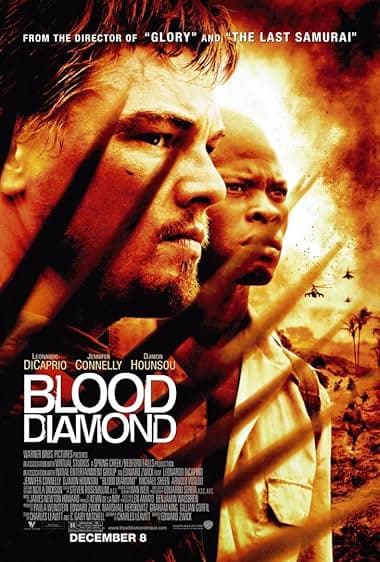
Blood Diamond
A mercenary, a fisherman and a pink diamond — and a film that still asks who pays for our jewellery.
Read the retrospective
→
2003
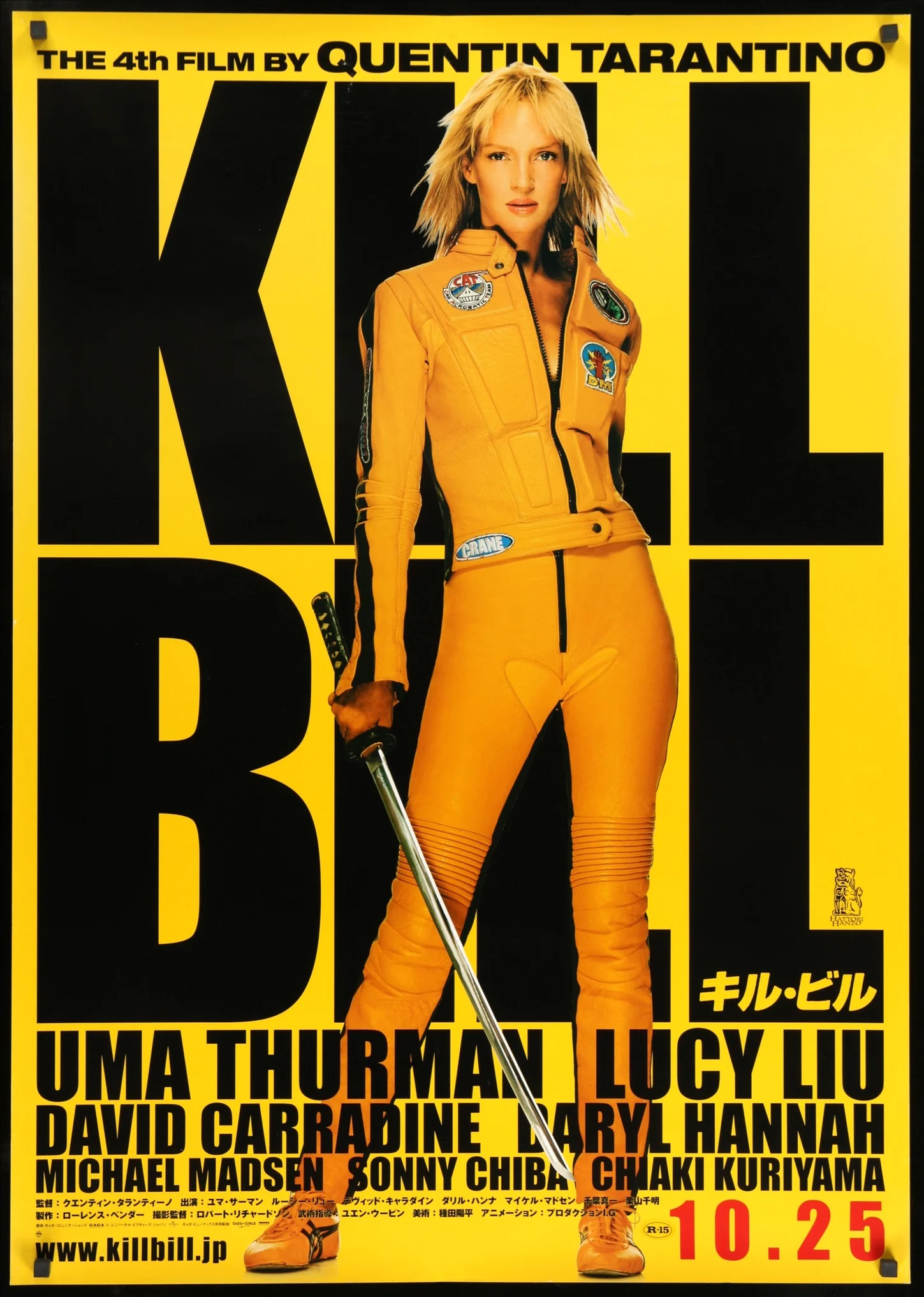
Kill Bill: Volume 1
A yellow jumpsuit, a long list of enemies and one woman who refuses to be finished.
Read the retrospective
→