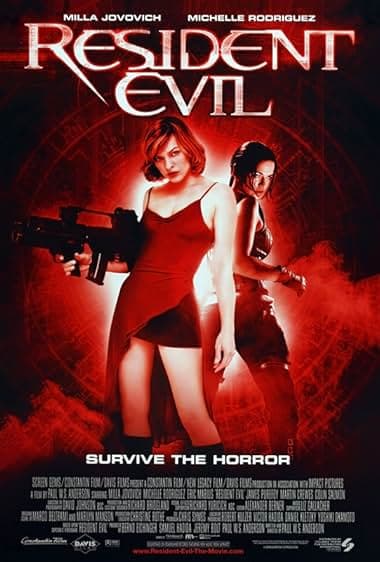
Resident Evil
Amnesia, corporate nastiness and one very determined woman — Resident Evil still bites.
Feature presentation
Resident Evil isn't polite about its intentions. It drops an amnesiac named Alice into Umbrella Corporation's buried research facility, rings every alarm, then lets a squad of commandos and a lot of bad chemistry do the rest. Paul W. S. Anderson's 2002 gamble — a loose, game-inspired action-horror — still feels like a movie that knows what it is: a tight, teeth-and-gun genre ride centred on a woman trying to remember who she is while everything around her is falling apart.
THE MOVIE
Alice / Alicia Marcus is still the reason this movie works
You know the set-up before you know the name: an underground lab in lockdown, sirens that look like a drill, and a squad sent down to see what went wrong. Resident Evil begins by putting people into a box and then shaking the box — fast and unapologetic.
At the middle of that chaos is Alice: an amnesiac woman whose lost memory and unusual physiology are not background decoration but the thing the whole film keeps returning to. What starts as a 'who am I?' question becomes a practical problem — survival, containment, and the ethics of what the Umbrella Corporation was doing inside the Hive.
Paul W. S. Anderson wrote and directed the film in 2002, and he made a deliberate choice: rather than adapt a single game beat for beat, he invented a film-first protagonist and used the game's world as scaffolding. For better or worse, that choice is why people still open this one up — because it puts that new central figure, Alice, at the very heart of the mess.
THE SETUP
The idea that sets Resident Evil in motion
Resident Evil gives you a tidy engine and then runs it hard: an amnesiac woman and a special-forces squad descend into Umbrella's underground research facility to find out what triggered a mass-casualty alarm. It's a premise built for tension — closed spaces, a small group, and secrets lurking behind lab doors.
The immediate opposition is practical and varied: infected personnel who used to be people, the station's automated security, and the slowly revealed experiments tucked away in the Hive. That mixture — biological threat plus machine measures — keeps the stakes moving between horror and cold, clinical science fiction.
Instead of trying to be a faithful, scene-for-scene copy of a single game, the film invents Alice as a cinematic protagonist and positions itself as a prequel/side story to the Resident Evil videogame world. That gives the film room to set its own tone while still using familiar franchise ingredients.
Underpinning the action are the story mechanics you expect from a survival horror: a limited group trying to stay alive in confined environments, the drip-feed of explanation about Umbrella's research, and a single antagonistic system — the Hive's Red Queen supercomputer — that ties the panic to corporate control.
THE CHARACTER
Why Alice / Alicia Marcus matters
Alice is the practical reason the film keeps you watching. She's not a retrofitted videogame avatar; she was created for the screen, which instantly marks the movie as something different from a literal game adaptation.
Her amnesia does more than provide mystery. It makes every discovery feel personal: the audience learns the Hive at the same time she does, and that shared confusion is the engine that keeps the plot moving.
Crucially for the film and for what came after, Alice doesn't just belong to this single story. Her introduction in 2002 set up a through-line: she returns as a recurring lead, which meant the filmmakers had created a character who could carry sequels and a continuing live-action franchise.
THE PERFORMANCE
Why Milla Jovovich's performance matters
It's fair to say the film sells itself on having a convincing physical centre. Contemporary coverage picked out Milla Jovovich's screen presence and physicality as a major selling point, and in a movie that relies on movement, stances and reactions to danger, that matters.
Because Alice is an amnesiac with unusual physiology, the role asks for more than exposition — it needs a figure who can hold a scene while the plot rewires the world around her. The contemporary response made that clear: Jovovich's presence was a headline reason people bought into the film's premise.
Put simply: the movie's machinery — scares, creatures, containment problems — needs an engine. Contemporary notes suggest that Jovovich supplied it in the way she inhabited the role.
UNDER THE SURFACE
Resident Evil has more on its mind than the plot suggests
On the surface it's an action-horror: locked doors, monsters, and people trying not to die. Underneath, the film is quietly interested in corporate malfeasance and the ethics of biotechnology — Umbrella's secrecy and the decisions that led to the Hive shutdown are central to why anyone is in danger in the first place.
Alice's amnesia and altered physiology pull the movie towards questions of identity and memory loss. Her situation isn't just a dramatic hook; it raises the unsettling idea that bodies can be changed and selves lost when science runs unchecked.
Containment versus survival is another recurring battleground. The Hive is designed to isolate problems, but those same containment systems become hazards when things go wrong. The tension between locking something away and doing whatever it takes to live is woven through the action.
Finally, the film sits squarely in the 'female action protagonist' lane. By building a franchise around a newly invented central woman, the story uses that presence to navigate its ethical and literal firefights — she is both a subject of experimentation and the person doing the experimenting with her own survival.
THE FILMMAKING
How Resident Evil was put together
A lot of the film's personality comes from the way it was constructed: sets were built in German studios and then blended with visual-effects work from post-production houses. That combination gives the movie a tactile, studio-made feeling rather than a purely green-screen gloss.
Shooting in purpose-built environments allows the action to feel compact and physical. The fact the production relied on those constructed spaces is why the film reads as a contained, machine-like thriller as much as a horror film.
Paul W. S. Anderson wrote and directed the picture, and the production choices — studio sets plus postproduction VFX — are consistent with a project that wanted controlled danger and then to amplify it with digital work.
In short: Resident Evil is a film that deliberately mixes hands-on setcraft with digital finishing, and that mix defines a lot of its look and feel.
PRACTICAL EFFECTS
The effects work that gives Resident Evil its physical personality
Resident Evil relied on practical effects on set: makeup and creature prosthetics were part of the toolkit for bringing infected personnel and animals to life. That hands-on work gives many of the film's horror moments a physical gravity.
Those on-set techniques didn't stand alone. Visual-effects vendors contributed digital creature work and compositing in postproduction, so the finished film is a blend — practical prosthetics paired with digital touch-ups and extensions where the action demanded it.
Because the production combined practical special-effects teams with digital vendors, the movie keeps a sense of physicality even when it leans on postproduction to sell something bigger than the sets allowed.
The result is a hybrid: prosthetics and make-up provide the immediate shock, while digital compositing completes the picture where scale or motion required it.
PURE 00s
Resident Evil could not belong to any other decade
Released in 2002, Resident Evil arrived at the start of a brief wave when studios were trying to figure out how to turn video games into movies that might actually work. This film was a higher-profile attempt to translate the Resident Evil franchise for cinema audiences.
The choice to invent Alice rather than slavishly reproduce a specific game sequence is emblematic of 00s filmmaking pragmatism: keep the recognisable world but give the screenwriters room to create a self-contained, franchise-ready story.
Paul W. S. Anderson's dual role as writer-director also reflects the era's appetite for strong, singular visions on genre pictures; the film's March 2002 opening positioned it as a mainstream, internationally marketed genre picture.
That quick, studio-driven approach — game brand plus a new cinematic hero — is exactly the sort of idea that defined early-2000s franchising experiments.
WATCHING IT NOW
What has aged — and what hasn't
One concrete thing that hasn't faded is the film's role as a franchise-starter. The existence of a direct sequel two years later is a reminder that the 2002 picture did exactly what it set out to do: create a continuing film series.
Part of why that worked then, and still reads now, is Alice herself. The film introduced a lead who could be revisited; Milla Jovovich's centrality to the story meant future instalments had a through-line to follow.
That means the movie remains watchable as the opening chapter of a saga. Even if individual technical choices feel of their moment, the character scaffolding still holds up because the filmmakers built the story around a repeatable protagonist.
So, today, the film's legacy life is what helps certain elements age gracefully: a clear lead and a narrative designed to continue.
THE LEGACY
Why Resident Evil still matters
Resident Evil matters first because it launched a multi-film live-action franchise. That continuation turned a single game-adjacent movie into something that could be returned to again and again.
It also matters because it established Alice as the recurring cinematic lead across the series. Creating a film-original protagonist who could carry sequels was a deliberate and effective franchise move.
There was a commercial logic behind those decisions: the film's financial performance — which exceeded its production budget and grossed over $100 million worldwide — made sequels commercially viable and justified the continuation.
Taken together, the business success and the decision to centre a new on-screen figure are the clearest reasons the film has a long tail: it created both a hero and a mechanism to keep telling stories.
THE VERDICT
Does Resident Evil still hold up?
Yes — with a caveat. If you want a tight, 100-minute genre film that trades in zombie horror, biopunk paranoia and set-piece action inside a sealed facility, Resident Evil does precisely that. It gives you an amnesiac central figure, a special-forces squad, mutated personnel and automated security systems all working in close quarters, and it never pretends to be anything else.
The movie's central gamble — inventing Alice as a film-original protagonist rather than slavishly following a game — pays off in practical terms. That choice gives the film a repeatable lead and an emotional hook: she wakes up with lost memory and an altered body, and the story uses that as both plot and theme.
It helps that contemporary coverage singled out Milla Jovovich's screen presence and physicality; the film leans on her as the stabilising force amid technical threats and Umbrella's secrecy. Combined with the containment-versus-survival thrust and the bioethical questions at the film's core, that makes for a film that still entertains and provokes in short bursts.
So if your expectation is a polished adaptation of the games, this isn't it. But if you want a lean early-2000s action-horror that introduces a memorable central character and kicks off a long-running series, Resident Evil still holds teeth and enough bite to be worth the watch.
Share this movie
Keep watching
More movies from the 00s

2002
The Pianist
A quiet life unmade by war — and a pianist who refuses to stop listening.
Read the retrospective
→
2006
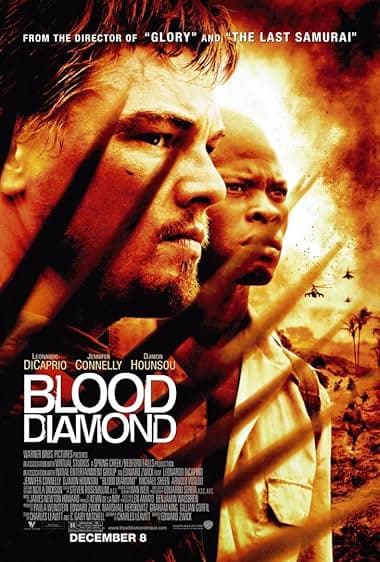
Blood Diamond
A mercenary, a fisherman and a pink diamond — and a film that still asks who pays for our jewellery.
Read the retrospective
→
2003
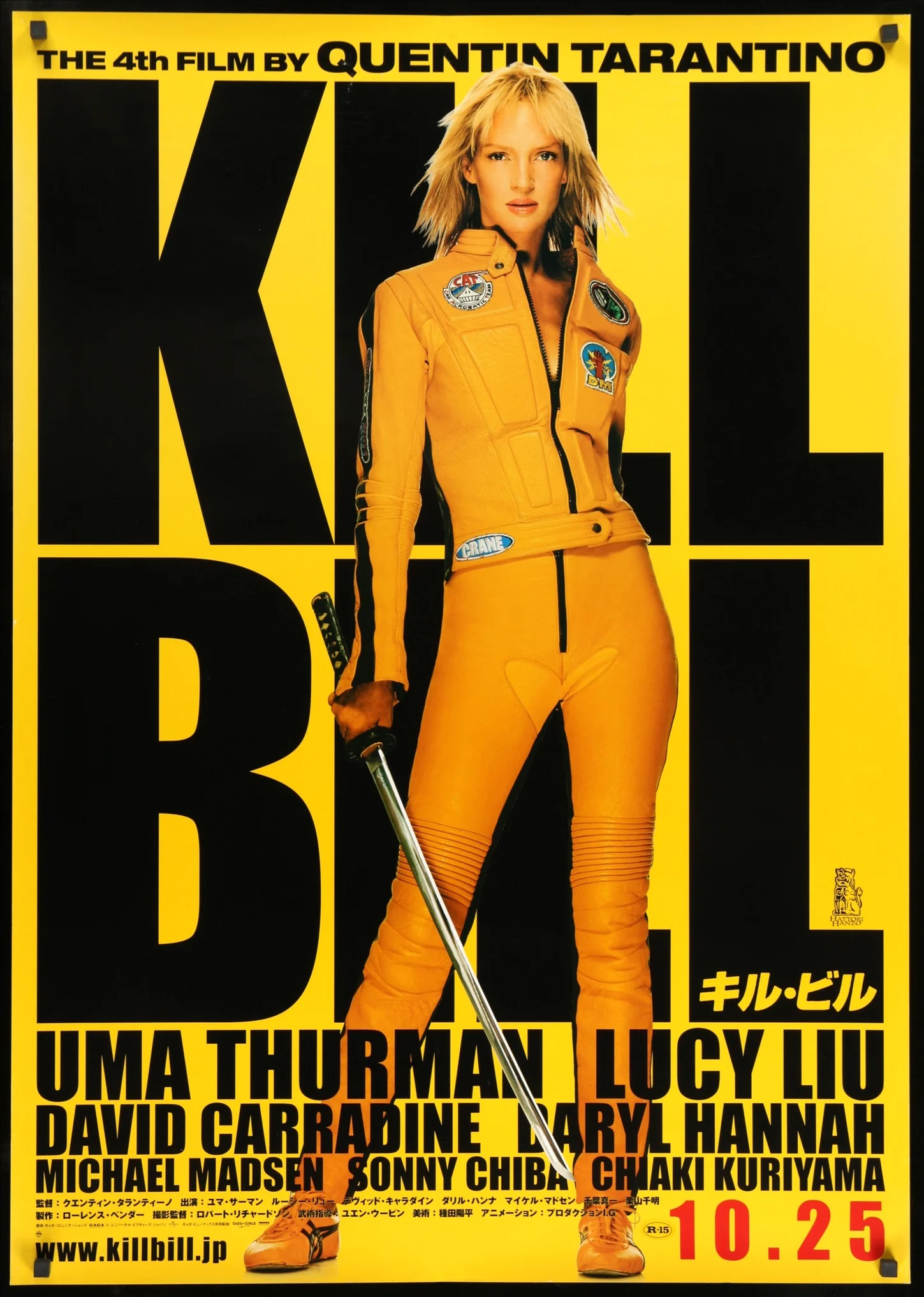
Kill Bill: Volume 1
A yellow jumpsuit, a long list of enemies and one woman who refuses to be finished.
Read the retrospective
→