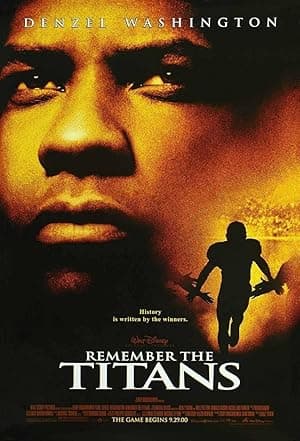
Remember the Titans
A hard-nosed coach, a town in turmoil and a football team taught to become something more than winners.
Feature presentation
Remember the Titans still lands because it places one very particular figure at the centre of everything: Coach Herman Boone. Boaz Yakin’s studio-sized drama uses a single football season to turn local politics and racial tension into something like a classroom for leadership. It’s earnest, big-hearted and built around a story fishhook that never lets go.
THE MOVIE
Coach Herman Boone is still the reason this movie works
What keeps Remember the Titans from being just another sports movie is the way it makes a head coach into the film’s fulcrum. The story begins when the school board consolidates students and appoints Herman Boone over the incumbent — an administrative decision that immediately turns the season into more than a chase for trophies.
That appointment creates friction: not just between coaches, but across a town that’s trying to reconcile old resentments. Boone, as the screenplay stages him, is uncompromising — a strict disciplinarian whose priorities are team discipline and insisting on racial equality on the field.
Boaz Yakin frames all of this within a single, tightly packed season. The result is a drama that uses football as its engine but is clearly about something else: how a community responds when leadership forces a confrontation with its own divisions.
THE SETUP
The idea that sets Remember the Titans in motion
At its most basic: a school board forces integration, Boone is hired to head the team, and a season becomes a battleground for more than sport. That administrative decision — who leads the team — is the inciting move that pushes every other conflict forward.
The screenplay balances two kinds of stakes. There are the football ones — wins, losses and the state championship run — and the off-field ones: town politics, family loyalties and deep-seated mistrust between black and white players and their communities.
What makes the setup work is its clarity. The film lays out a season-long arc where coaching choices, leadership squabbles, injuries and local pressure all dovetail into a single trajectory: a fractured group forced to become a team.
Because the frame is a real season, the film keeps coming back to that ticking clock of games and practice. The football calendar gives the drama momentum and a simple way to show progress: you can see the team get better in the same way you can mark weeks passing.
THE CHARACTER
Why Coach Herman Boone matters
Herman Boone is the movie’s most forceful presence because he’s written as a hard-line leader whose job is to impose order and equality at once. That combination — discipline allied to a social purpose — gives the story its dramatic spine.
He arrives already in conflict: his appointment over Bill Yoast is a professional slight that ripples into personal and communal tension. That rivalry, at first combustible, becomes the principal adult thread for resolving the town’s divisions.
Boone’s role in the story isn’t just to win games. He’s there to change behaviour and expectations — to make players from different backgrounds accept the same standards, on and off the field. That’s why scenes of practice and discipline feel less like sport training and more like civic education.
Because the screenplay is a dramatised account of a real 1971 season, Boone functions in the film as both a character and a symbol: the visible test of whether leadership can bend a fractured community toward reconciliation.
THE PERFORMANCE
Why Denzel Washington's performance matters
Contemporary reviews singled out Denzel Washington’s portrayal of Herman Boone as central to the film’s moral thrust. That’s a useful, concrete piece of evidence: the film asks viewers to take its ethical claims seriously, and critics of the time pointed to Washington’s role as the anchor for those claims.
Put simply, the movie’s argument about leadership and racial equality rides on Boone’s presence. If the audience is going to follow the film’s insistence that discipline and unity can change the town, they need to believe in the person who makes that case on screen.
The performance therefore operates as an organising principle rather than a decorative flourish; reviewers at the time treated it as the element that held the film’s earnest, studio-driven machinery together.
So when you rewatch it, the attraction isn’t celebrity for its own sake. The contemporary response suggests Washington’s portrayal was read as the movie’s moral and dramatic hinge.
UNDER THE SURFACE
Remember the Titans has more on its mind than the plot suggests
Under the rattling helmets and scoreboard tension, the film is chiefly about racial integration and reconciliation in a single American high-school community. The football season is the convenient shape for that exploration, but the subject is the social change the season forces into the open.
Leadership is the second idea threaded through the film. Boone’s arrival tests authority — and shows different models of leadership, most notably the friction and eventual respect between him and Yoast.
Team-building is both a literal and metaphorical project here. Practices, drills and the two-week training camp are depicted as exercises in forging new bonds; the on-field unity is presented as the outward sign of deeper social shifts.
There’s also an element of historical memory: the movie stages a chapter of a community’s past and, by dramatising it, asks viewers to remember how change felt in a specific place and time. It’s less an academic exploration than a popular, emotional retelling of a contested moment.
THE FILMMAKING
How Remember the Titans was put together
The film’s look and staged world were built by credited craftspeople: Philippe Rousselot is listed as director of photography and Deborah Evans led production design. Those names aren’t bells and whistles — they are the people responsible for the film’s visual and physical identity.
A credit like Rousselot’s signals that the filmmakers intended a certain degree of craft in how scenes were composed and photographed, rather than leaving the movie to rough-and-ready realism.
Similarly, production design under Deborah Evans’s leadership would be the department shaping locations and the material environment where the town and team live on screen — the classrooms, locker rooms and training encampments that the story needs to feel genuine.
Boaz Yakin’s direction, combined with those credited roles, frames the film as a studio drama aiming for clarity and emotional accessibility rather than experimental formalism.
PRACTICAL EFFECTS
The effects work that gives Remember the Titans its physical personality
The football action in Remember the Titans was staged on real locations — multiple high-school and college stadiums — and the production relied on practical crowd work and choreographed game staging.
That approach keeps the games tactile: the players, the stands and the choreography are physical, human things rather than digital assemblies.
Because the production emphasised staged, on-location action, the film foregrounds the collective energy of players and fans. The crowd is an active presence rather than a background effect.
In short, the physical staging makes the season feel lived-in: the football sequences are scenes of collective effort as much as plot mechanics.
PURE 00s
Remember the Titans could not belong to any other decade
Released in 2000 and made by a major studio with Jerry Bruckheimer attached, Remember the Titans sits neatly in the late‑1990s/early‑2000s trend of star-driven sports biopics. Hollywood at the time liked its social-issue stories delivered in an accessible, family-friendly package.
That production model explains the film’s tone: big, earnest and designed to reach a wide audience while still telling a story about racial integration.
Boaz Yakin’s screenplay and the studio backing combine to give the movie a mainstream shape — a clear narrative arc, a heat on key scenes like the training camp, and the kind of uplift familiar from mainstream sports dramas of that era.
Put another way: the film is very much a product of its moment because it uses the Hollywood machinery of the time to tell a local, historically grounded story.
THE LEGACY
Why Remember the Titans still matters
The film keeps cropping up in discussions of popular American sports movies because it packages racial reconciliation inside an easily readable sports narrative. It’s the kind of film people turn to when they want a cinematic example of teams overcoming division.
One concrete reason it endures in coverage is the Gettysburg training-camp sequence. Producers and the press singled out that stretch as a touchstone — a compact, dramatic moment where the film turns a season of football into a lesson in confronting history and difference.
Beyond any single scene, the movie’s continued presence in retrospectives and lists comes from how neatly it ties together its themes: leadership, team-building and community memory, all set against a season of games.
For viewers who remember the film from the first time around, or those seeing it for the first time, that combination of a clear social theme and a memorable dramatic set-piece keeps it relevant in conversations about sports dramas.
THE VERDICT
Does Remember the Titans still hold up?
Yes — and the answer is specific. If you watch Remember the Titans for a straightforward, studio‑polished drama about a season that forces a town to face itself, you’ll find it delivers. The story is tightly organised around that administrative decision to install Boone and the way the team’s season becomes the mechanism for change.
The film’s central machinery is reliable: a season-long arc, the two-week Gettysburg training camp as the crucible, and a narrative that balances on-field ambition with off-field social conflict. Those elements give the movie a satisfying dramatic shape.
Crucially, contemporary response singled out Denzel Washington’s portrayal as the performance that anchors the film’s moral thrust. The relationship between Boone and Bill Yoast — professional rivalry that settles into mutual respect — provides the adult hand that steers the film away from mere pep‑talk platitudes.
So if you’re after a clear, emotionally legible sports biopic about leadership, integration and team-building, Remember the Titans is still worth your time. It’s proof that a single season of football can be staged as a lesson in how a community decides what it values.
Share this movie
Keep watching
More movies from the 00s

2002
The Pianist
A quiet life unmade by war — and a pianist who refuses to stop listening.
Read the retrospective
→
2006
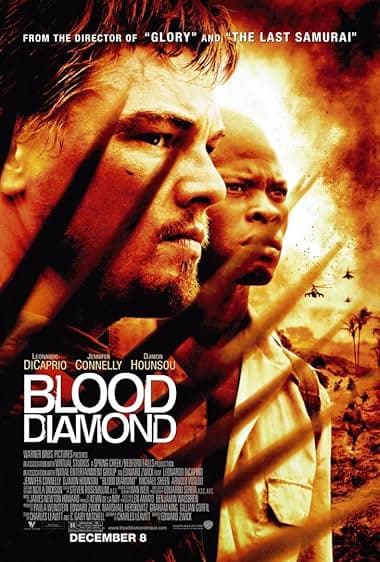
Blood Diamond
A mercenary, a fisherman and a pink diamond — and a film that still asks who pays for our jewellery.
Read the retrospective
→
2003
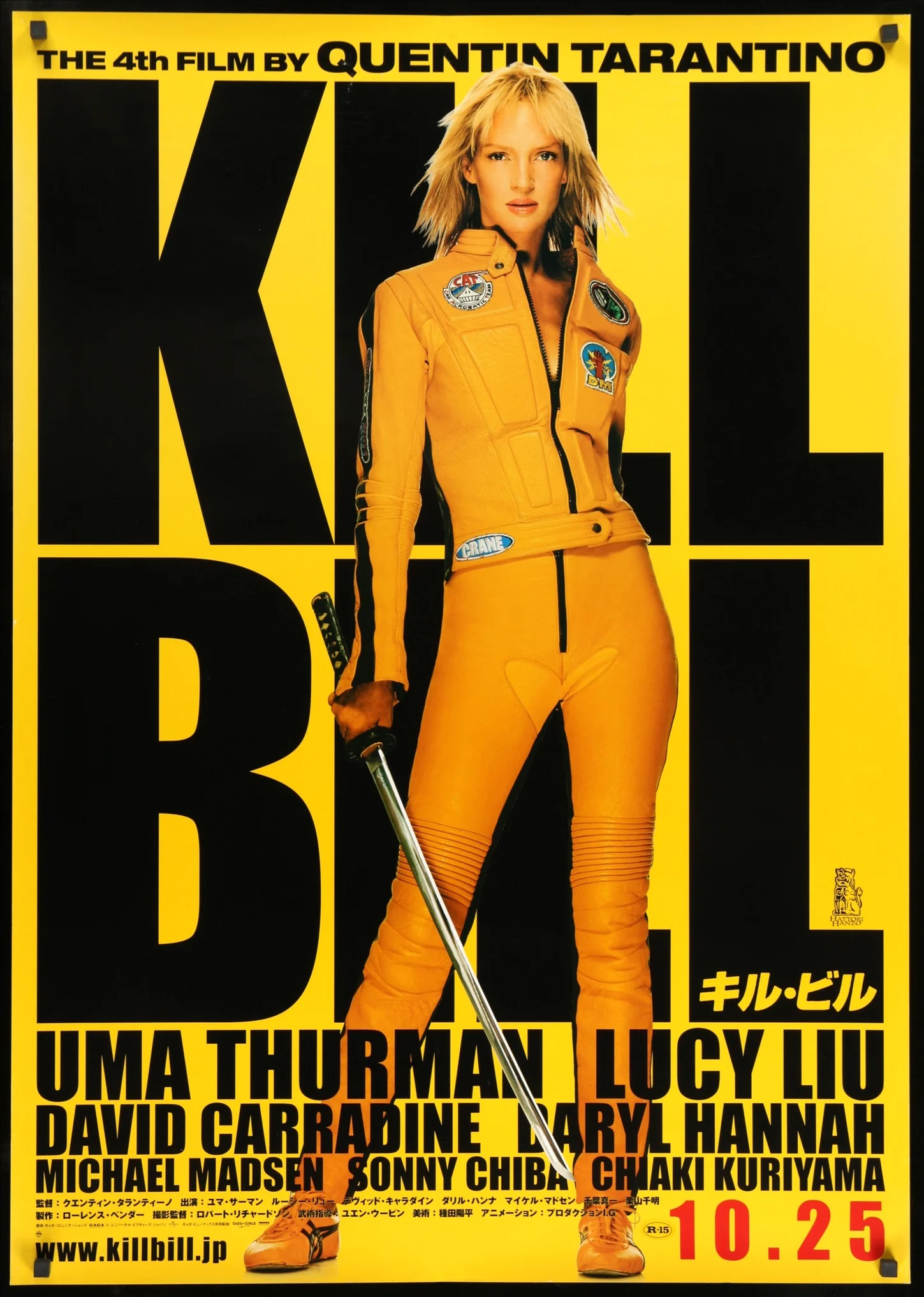
Kill Bill: Volume 1
A yellow jumpsuit, a long list of enemies and one woman who refuses to be finished.
Read the retrospective
→