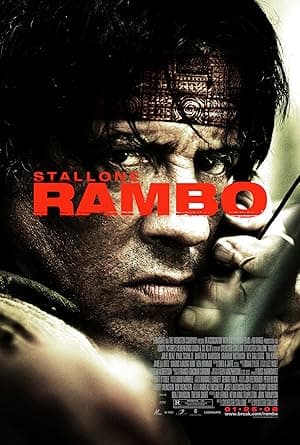
Rambo
One man, a jungle, and the debts of a lifetime — Rambo returns to do the rescuing no one else will.
Feature presentation
Rambo (2008) drops John Rambo back into the world as a reluctant ferryman on the Salween River, pulled from quiet exile when a band of American aid workers goes missing in Burma. It’s a compact, unshowy action picture built around a single brutal promise: get them out. What keeps the film interesting is that promise — and the man who can’t walk away from it.
THE MOVIE
John Rambo is still the reason this movie works
You do not come to Rambo (2008) for small talk. You come for a single, weathered figure who has chosen exile on the Thai side of the Salween River and who still, despite everything, knows how to move through the world as if danger is a language he can read.
That solitude is the film's hinge. When a group of American Christian aid workers ask him to escort them across the river into Burma and are promptly captured, Rambo's quiet life collapses into urgent action. The film's engine is the rescue — not showy thrills for their own sake — and that keeps the plot tight and focused.
Crucially, this Rambo is an older soldier haunted by what he has seen. He’s capable, yes, but not carefree; loyalty and moral outrage — the things that still tug him — are threaded to long-term trauma. Stallone wrote, directed and stars here, and the result is a short, muscular picture that wears its age as part of its problem, not as a cosmetic.
THE SETUP
The idea that sets Rambo in motion
The film opens with a tidy, practical proposition: escort aid workers into a dangerous region and get them to safety. Simple on the page; dangerous in reality.
Once the aid workers are taken, everything that follows is motivated by that single failure. The action scenes exist to serve the rescue — ambushes, booby-traps and a sweeping jungle assault are tools, not distractions.
That focus makes the movie feel efficient. The sequence of events pushes Rambo from isolation into leadership, forcing him to pull together a small team and think like a soldier again, because the captives' lives are at stake.
Tying the rescue to an actual humanitarian crisis — violence inside Burma — gives the mission stakes beyond blow-by-blow action. It’s not trophy hunting; it’s a response to a real, ugly emergency.
THE CHARACTER
Why John Rambo matters
John Rambo here is a man who has spent years trying to disappear into routine. He’s a Vietnam veteran who carries old wounds; his skills are intact, but his reasons for fighting are more complicated than pride or adventure.
What makes him memorable in this return is less a single grand gesture and more the way his life on the Salween River anchors the stakes. His relationships — local helpers and a boy called 'School Boy' — give him something to lose, and that’s what turns a rescue into a moral obligation.
This is a continuation of a long-running character rather than a reinvention. Stallone wrote and directed the picture and chose to bring Rambo back as someone who has changed, even if his methods have not.
So the film's question becomes: what does violence become in the hands of a man who knows its price? Rambo answers that question by making the character the centre of every decision the movie refuses to dodge.
UNDER THE SURFACE
Rambo has more on its mind than the plot suggests
On the surface Rambo is an action-thriller about a rescue. Underneath it is a film quietly occupied with how war stays with a person — the long echo of trauma and the questions of identity that follow a veteran home.
It’s also a picture about individual rescue and vigilantism. The movie repeatedly asks whether one man, no matter how skilled, should decide to mete out justice where institutions have failed.
Related to that is the grim accounting of violence. The film doesn’t pretend the kill count is consequence-free; it presents violence as costly, emotionally and practically, even when it’s framed as necessary.
Finally, the story sits inside a specific humanitarian crisis — an ethnic conflict in Burma — which refuses to let the rescue feel like a game. The political context gives weight to the mission and underlines the real-world mess that prompts Rambo to act.
PRACTICAL EFFECTS
The effects work that gives Rambo its physical personality
Rambo feels physical because a lot of its danger was built on the ground. The picture leans on real stunt teams and second-unit crews to stage large-scale jungle sequences and explosions.
Stunt coordinator Chad Stahelski and the second-unit teams organised wire-assisted stunts and set-piece fighting that keep the action tactile rather than purely digital.
A striking set piece in the jungle depends on an unexploded World War II–era bomb set in mud; the scene was achieved using practical pyrotechnics and carefully staged wire pulls to create the blast and its aftermath.
Those choices give the movie a blunt, immediate quality: when something goes off it feels like something actually went off, and that makes the danger more convincing on screen.
PURE 00s
Rambo could not belong to any other decade
This Rambo is a 2008 creature by intention. It arrives after a two-decade silence since the last theatrical instalment and is part of a late-2000s tendency to dust off old action franchises for a new run.
That timing matters. The film is less a reboot than a direct continuation of the John Rambo arc; it picks up a character with history and asks what an older action hero looks like now he’s got years behind him.
Sylvester Stallone's double duty as writer and director is part of that trend too — the late-2000s return of legacy filmmakers who wanted to steer their own characters back into the spotlight.
Released in 2008, Rambo sits alongside other franchise revivals of the era that traded nostalgia for a tougher, often grimmer return-to-form, rather than simply polishing old hits for comfort.
WATCHING IT NOW
What has aged — and what hasn't
Watching Rambo today, the lean plotting and the restrained central performance make it feel closer in spirit to the original First Blood than some of the louder sequels. That tone still works for a lot of viewers because it gives the violence a sharper purpose.
But the same restraint is a double-edged sword. For some, the film’s brutality feels hard to justify precisely because the story keeps the mechanics stripped-back: a tight mission that leaves little room for moral rumination beyond the action itself.
If you like a compact, mission-focused action film, the theatrical cut’s economy — a 93-minute runtime — is a virtue. If you prefer more breathing room to unpack motives, the extended Blu-ray edition restores deleted material that lengthens the experience.
Either way, the choice to keep the story concentrated means the movie still reads as purposeful rather than indulgent, even when that purpose makes the violence feel inevitable and uncomfortable.
THE LEGACY
Why Rambo still matters
Rambo survives as a title because it continues the John Rambo line rather than tacking the name onto an unrelated actioner. Fans of the series can trace a through-story that leads into later entries.
Stallone’s preferred sequencing exists in the home-video world: a director’s/extended cut was released on Blu-ray under the working title John Rambo, and that version represents the way he wanted the story to sit.
That home-video life has mattered for how the picture is remembered — some viewers now discover the extended cut first, and for Stallone it’s the version that better communicates the film's pacing and choices.
As a continuation and as a director-led return to a legacy franchise, Rambo still matters to anybody interested in how action heroes age on screen and how creators decide to carry them forward.
THE VERDICT
Does Rambo still hold up?
Yes — if you want a compact, mission-driven action film where every firefight, ambush and booby-trap exists to free real people. The plot is spare: a ferryman on the Salween River is drawn out of exile when aid workers are taken, and that moral obligation powers the film.
Rambo is at its best when it treats action as means rather than spectacle. The movie assembles a small team, uses guerrilla tactics and heavy weapons against a better-equipped infantry unit, and keeps the objective clear: bring the hostages home.
That focus makes the theatrical cut brisk and effective; if you find it too thinly sketched, the extended edition is worth a look because it restores material that deepens the tempo and context. Either way, Sarah’s capture functions as the moral spur that makes Rambo leave safety behind.
So should you watch it now? If you accept pragmatic violence as the instrument of rescue and you appreciate an older Rambo who’s both haunted and capable, the film still works. It’s not comfort viewing — it asks you to follow a man who knows the price of what he does and pays it anyway.
Share this movie
Keep watching
More movies from the 00s

2002
The Pianist
A quiet life unmade by war — and a pianist who refuses to stop listening.
Read the retrospective
→
2006
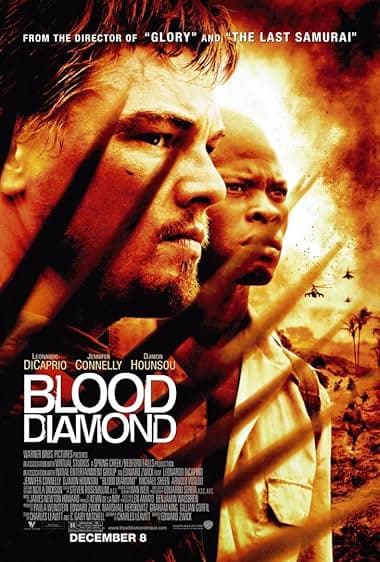
Blood Diamond
A mercenary, a fisherman and a pink diamond — and a film that still asks who pays for our jewellery.
Read the retrospective
→
2003
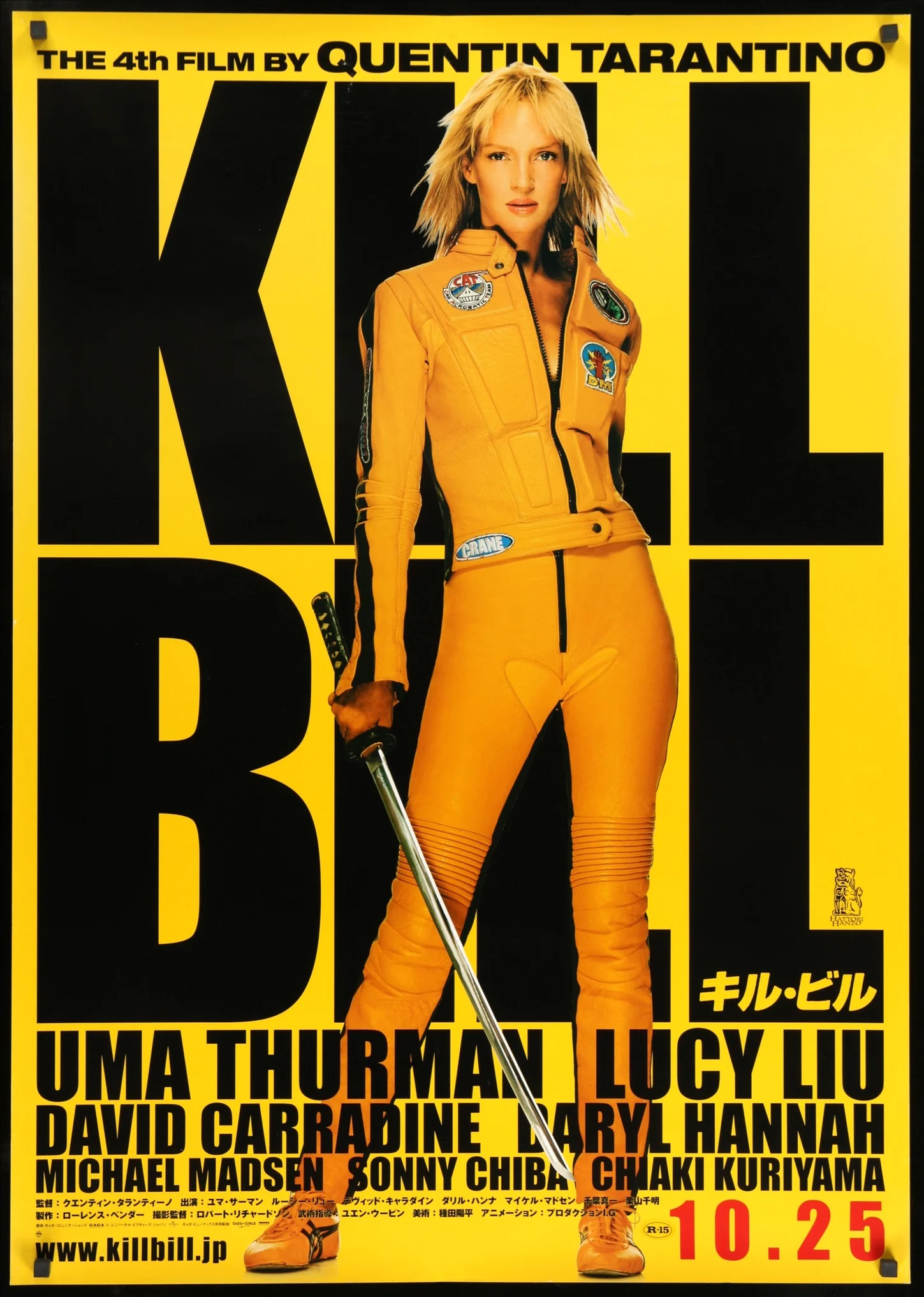
Kill Bill: Volume 1
A yellow jumpsuit, a long list of enemies and one woman who refuses to be finished.
Read the retrospective
→