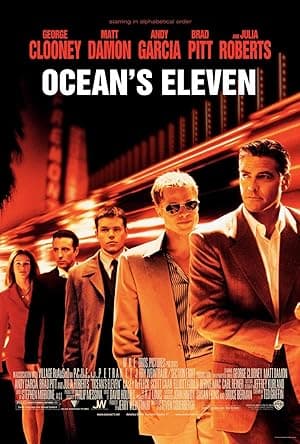
Feature presentation
There’s a particular pleasure to watching Ocean’s Eleven: a polished team of professionals putting a complicated plan through its paces while their boss grins in the background. Steven Soderbergh’s 2001 remake pairs a tight, single‑set heist — the combined vault that serves three Las Vegas casinos — with an ensemble who buy into the scheme for reasons that are both personal and pecuniary. If you’re tempted to revisit it, start with the man at the centre: Danny Ocean.
THE MOVIE
Danny Ocean is still the reason this movie works
If you boil Ocean's Eleven down to its smallest unit, what remains is a ringleader with a plan and a roster of specialists willing to follow him. Danny Ocean recruits a team to pull off one audacious act: rob the vault that serves three Las Vegas casinos in a single, tightly choreographed operation.
That personal stake — Danny’s desire to reconnect with Tess while the crew pursue the payday — keeps the caper from being pure puzzle porn. It gives the plot a human tug that runs alongside the technical mastery of the job, and it’s what turns a fancy theft into something that feels motivated and, crucially, watchable.
All of this arrives with Soderbergh’s glossy direction, a breezy 112‑minute running time and an ensemble of names who sell the idea that loyalty and professionalism can be as thrilling as any switchblade or disguise.
THE SETUP
The idea that sets Ocean's Eleven in motion
The film’s momentum is built on a familiar and very satisfying architecture: recruit the right people, map every technical problem, plan for the things that can go wrong, then pull the whole thing off. The movie introduces the team one by one, which lets the audience appreciate both the skill set and the banter that bind them.
Tension comes from the details: bypassing casino security, manipulating surveillance and staff, and timing actions across separate locations so the whole operation reads as a single, precise event. That chessboard of contingencies is where the film’s pleasure lives — you’re not just watching thieves, you’re watching a careful machine being wound up.
Because the target is not one casino but the vault servicing three major properties at once, the stakes feel enormous and the logistics deliciously complex. It’s a setup that rewards attention: the planning scenes and the execution are two halves of the same clever coin.
THE CHARACTER
Why Danny Ocean matters
Danny Ocean is the film’s organising principle. He’s the one who brings the crew together, imagines the architecture of the job and pushes the plan forward. Without that central figure, the plot would be an interesting exercise in mechanics; with him it becomes a story about why people will follow a risky idea.
His motive isn’t abstract greed. Danny’s personal aim — getting back with Tess — overlaps with the crew’s financial objective, which keeps the emotional stakes threaded through the logistics. That overlap gives the robbery a slightly different flavour: it’s about setting things right as much as it is about walking away with cash.
Put another way: Danny is the conceiver whose personality makes the camaraderie believable. He supplies confidence and direction, and the rest of the team are useful because they trust him to think through the impossible and keep them in step.
UNDER THE SURFACE
Ocean's Eleven has more on its mind than the plot suggests
On the surface it’s a heist movie, but underneath there’s a steady focus on camaraderie and loyalty. The crew acts less like a rag‑tag gang and more like a group of professionals who respect each other’s craft — that sense of mutual reliance is the emotional glue.
Revenge and retribution provide a second thread. Danny’s personal grievance — Tess’s relationship with the casinos’ owner — gives the caper a motive beyond money. The heist becomes a way to upset a rival and reclaim something personal, which keeps the audience invested in outcomes that aren’t just financial.
Deception and disguise are the caper’s tools: manipulating staff, bending surveillance and staging false realities are as important as the technical knowledge. And the whole package is pitched as a modern take on Rat Pack sensibilities — a nostalgic reinvention where swagger and wit are part of the job description.
THE FILMMAKING
How Ocean's Eleven was put together
A big part of the film’s identity is how carefully it stages the mechanics of the job. Production favoured controlled set environments and constructed casino interiors so that the camera could move in and out of the action without breaking the illusion.
That construction went hand in hand with a slick, high‑gloss visual style and brisk cross‑cutting during the planning and execution scenes. The editing emphasises timing and technical precision, which is exactly what you want in a caper: clarity about how the pieces fit together.
It’s also worth noting the production credits: Peter Andrews is listed for cinematography (an alias used by the director), with Stephen Mirrione editing and Philip Messina on production design. Those choices helped make the film feel both polished and efficient, visually supporting the idea of a professional team doing a professional job.
PRACTICAL EFFECTS
The effects work that gives Ocean's Eleven its physical personality
Much of the film’s physical life comes from the production’s commitment to tangible sets. Elaborate, full‑scale environments were built to stand in for casino interiors and the strong‑room used during the heist.
Those large practical sets allowed the filmmakers to simulate bustling casino floors with controlled extras, rather than relying entirely on shooting in real locations. That control pays off during the complex sequences, because the filmmakers can place cameras and actors exactly where the plan demands.
The result is a tactile sense of place: the world of the film feels arranged and functional, which mirrors the crew’s own obsession with order and timing.
PURE 00s
Ocean's Eleven could not belong to any other decade
Ocean’s Eleven arrived when Steven Soderbergh was moving confidently between indie cred and mainstream filmmaking. After projects like Traffic and Erin Brockovich, this was an explicit turn toward a star‑driven, big‑budget studio picture — a sign of the early 2000s appetite for elevated crowd-pleasers.
Part of the film’s 00s identity is how it retools mid‑century Rat Pack tropes for a modern audience. It doesn’t simply repeat the past; it repackages swagger, ensemble charisma and slick humour into a contemporary heist structure that could sustain sequels.
And the casting strategy is plainly of its moment: assembling an A‑list ensemble felt like an obvious studio bet in 2001, a way to sell a theatrical event by name recognition as much as premise. The result was a film that fit neatly into early‑millennium commercial thinking — crowd‑friendly, glossy and evidently built to continue.
THE LEGACY
Why Ocean's Eleven still matters
Part of the film’s longevity is practical: it kicked off a recognisable franchise and even produced at least one later spin‑off in the broader series. That continued life kept the 2001 film present in conversations beyond its initial release.
Beyond longevity, the movie is often remembered for how it packaged the heist sequence and ensemble approach. Those elements have been regularly pointed to in decade‑end and retrospective lists as an exemplar of mainstream caper filmmaking in the 2000s.
Finally, the film’s remake status matters: by updating the Rat Pack template, it made a mid‑century idea feel commercially viable again. For viewers who enjoy the polished mechanics of a caper and the comfort of a group that knows its trade, Ocean’s Eleven still reads as a persuasive demonstration of how to do that well.
THE VERDICT
Does Ocean's Eleven still hold up?
Yes — but with a qualification. If you want a tight, well‑oiled heist where recruitment, planning and execution all fit together like clockwork, Ocean’s Eleven still delivers. The movie’s structure — one‑by‑one introductions, technical planning, fallbacks and a neat execution — is intact and satisfying.
Danny Ocean’s personal motive (his attempt to reconnect with Tess, who is involved with the casino owner Terry Benedict) keeps the caper from feeling purely mechanical, while the crew’s need to outsmart surveillance, staff and security supplies the practical suspense. Rusty operates clearly as Danny’s right‑hand man, smoothing operations and keeping the team coordinated.
Soderbergh’s direction, the film’s lean 112‑minute runtime and the ensemble approach make it a comfortable, entertaining watch. Contemporary critics at the time singled out the interplay between the film’s leads and the reliable contributions of the supporting cast, which helped the movie land as more than a glossy gimmick.
If you enjoy a clever plan, a sense of professional loyalty among the players and the pleasure of seeing a complicated idea realised, this one is still worth your time.
Share this movie
Keep watching
More movies from the 00s

2002
The Pianist
A quiet life unmade by war — and a pianist who refuses to stop listening.
Read the retrospective
→
2006
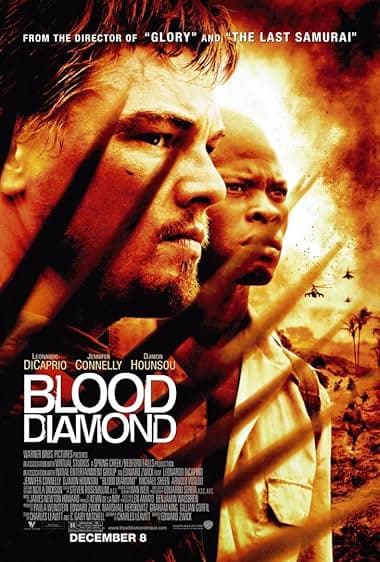
Blood Diamond
A mercenary, a fisherman and a pink diamond — and a film that still asks who pays for our jewellery.
Read the retrospective
→
2003
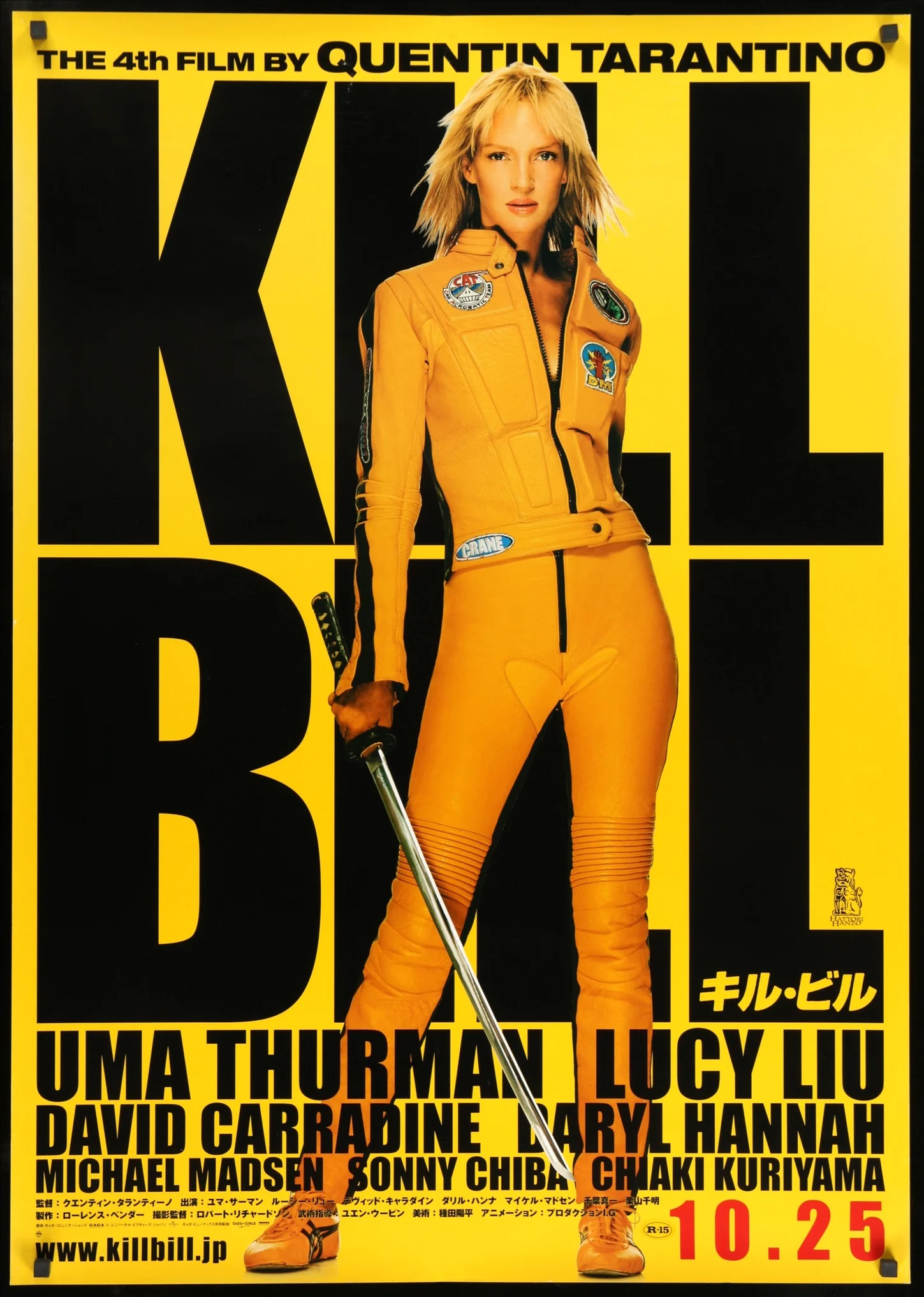
Kill Bill: Volume 1
A yellow jumpsuit, a long list of enemies and one woman who refuses to be finished.
Read the retrospective
→