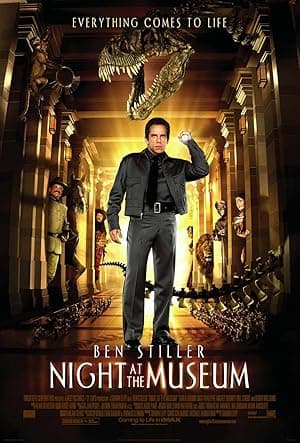
Feature presentation
Remember the sight of a tiny cowboy squaring off with a Roman soldier? That fizz of childlike astonishment is Night at the Museum’s calling card. Directed by Shawn Levy and released in 2006, it dresses a simple, family-friendly premise in spectacle and heart: Ben Stiller’s Larry Daley must learn responsibility when the museum literally wakes up after dark.
THE MOVIE
Larry Daley is still the reason this movie works
Night at the Museum begins with a very specific kind of promise: give us a man who’s lost his footing and a setting that’s about to misbehave. Larry Daley takes a night‑watch job at the Museum of Natural History, and the film’s central conceit — an Egyptian tablet that animates the exhibits — turns those quiet corridors into a school of chaos every night.
That setup does two neat things. First, it supplies set pieces for pure family spectacle: tiny heroes, giant skeletons, rooms that spring alive. Second, it makes the lead’s problem concrete. Larry isn’t just fixing a broken career; he’s accepting responsibility for the tablet and whatever it lets loose.
So when people still mention Night at the Museum, they aren’t only remembering the effects or the jokes. They’re remembering a movie where the fantasy exists to test one bloke’s willingness to grow — and where, crucially, that growth is about being a father as much as being a watchman.
THE SETUP
The idea that sets Night at the Museum in motion
At its core the film is an elegant party trick turned into a narrative engine: the museum’s exhibits come alive after dark because of an Egyptian tablet. That single piece of business explains the spectacle, the stakes, and the risk — the tablet can be stolen, moved or contested, so keeping it safe matters.
From there the film embraces a sequence‑of‑set‑pieces rhythm. Each night brings new chaos and a new miniature battle to solve, which is tidy storytelling for a family crowd: familiar rules, escalating payoffs, each set piece showing Larry negotiating a little more competence.
What makes the format work, though, is that it’s not pure gimmickry. The comic disorder always runs into Larry’s practical needs: he must succeed at the job and, more urgently, win back his son’s respect. The stakes for the father/son relationship sit under the spectacle and keep it grounded.
And tucked beneath the sparring of wax figures and dioramas is a gentler idea: the film enjoys history. The living exhibits aren’t just props — their animated curiosity nudges the audience to look at the past with a sort of affectionate wonder rather than boredom or reverence.
THE CHARACTER
Why Larry Daley matters
Ben Stiller’s Larry Daley isn’t a superhero. He’s a recognisably flawed bloke: recently divorced, banking on a job that feels precarious, and desperate to mean something to his kid. That ordinary vulnerability is what keeps the film honest.
The movie asks us to root for someone whose main job is stewardship. Larry’s story is less about cleverness and more about accepting responsibility — for the tablet, for the exhibits and for his relationship with his son. Those overlapping duties give even the sillier set pieces a purpose.
Importantly, Larry’s role fits the film’s family label. He’s the gateway for the audience: we see the wonder and how it complicates adult life through him, which keeps the film aimed at both kids and grown-ups who remember being a child once.
Finally, Larry’s arc was clearly designed to carry on. The character’s problems and the tablet’s mystery create enough room for sequels that continue his story, which is exactly what followed.
UNDER THE SURFACE
Night at the Museum has more on its mind than the plot suggests
Beneath the toy soldiers and rampaging T. rex, the film keeps returning to parenthood and reconciliation. Larry’s attempts to earn his son’s respect are not window dressing; they drive his choices and the movie’s emotional beats.
There’s also a clear strand about stewardship. The museum is a stand‑in for institutions that hold the past. Larry’s custodial role forces the story to ask: who looks after cultural objects, and what does it mean to take that duty seriously?
Finally, the film indulges a proper curiosity about history. It treats historical figures as personalities to be known, not as dusty tableaux, which turns the past into something playfully alive and approachable.
Put together, those three ideas — fatherhood, care, and curiosity — give the film a sturdier spine than the special effects alone would provide.
THE FILMMAKING
How Night at the Museum was put together
A lot of the movie’s charm comes from simply being tactile. Production designers and the art department built extensive museum sets and dioramas so actors could interact with the spaces as if they were real, physical places rather than green-screen backdrops.
Those full-scale environments let the comic business land more naturally. When actors have props and partial pieces to touch, the chaos of a small figure fighting a large one reads as something happening in the room, not just a trick on a monitor.
It’s a pragmatic approach that suits the film’s aim: to feel joyful and immediate rather than distant and clinical. The set work keeps the audience inside the museum’s rules.
And because the movie needed to sell scale — from tiny cowboys to towering skeletons — that production commitment mattered. It’s where the filmmakers quietly bought you into the joke.
PRACTICAL EFFECTS
The effects work that gives Night at the Museum its physical personality
Not everything in the film was CGI. A trained capuchin — credited as Crystal — played the monkey Dexter on set, with animal handlers and trainers present so scenes could be shot with a real animal rather than a fully digital substitute.
The production mixed practical pieces — props, partial animatronics and scaled sets — with digital effects so actors could genuinely react to physical elements during principal photography. That hybrid approach helps the comedy and sight gags feel lived‑in.
On the digital side, a visual‑effects supervisor coordinated work across several vendors to combine CGI characters and composited elements with the live photography. It was a mid‑2000s VFX setup: collaborative, complex and designed to make the practical and digital sit together smoothly.
All of that craftsmanship gives the movie a physical texture; you can tell work was done to keep the spectacle anchored to real performance and real space.
PURE 00s
Night at the Museum could not belong to any other decade
This is very much a mid‑2000s studio idea: a short illustrated book expanded into a franchise‑capable, effects‑heavy family comedy. The era loved taking small properties and turning them into big seasonal tentpoles, and this film fits that mould neatly.
Technically the production used a multi‑vendor visual‑effects pipeline typical of the period to handle the volume of creature work and compositing required. That workflow defines a lot of 00s spectacle — practical elements on set, then digital teams stitching the pieces together afterwards.
Its December 2006 holiday release also mattered. Positioned as family counter‑programming, the movie leaned into being safe, broadly appealing fun for that Christmas slot — exactly the sort of release strategy studios favoured then.
So the film reads like a product of its time by design: big, friendly, effects-driven and built to be passed down as family entertainment.
WATCHING IT NOW
What has aged — and what hasn't
If you put the film on today, a lot of the pleasure is still there: it’s fetching family fare with a conceit that still delights. Contemporary and later reviewers point out that the chemistry between the lead figures — the straight‑man role opposite more eccentric supporting characters — remains broadly appealing.
That said, the plotting and jokes can feel thin on a second pass. The sequence‑of‑set‑pieces format gives you a steady supply of laughs and sights, but it doesn’t always reward close scrutiny with deeper story heft.
Technically, the VFX and creature designs still serve their purpose as family spectacle, but the mid‑2000s mix of practical elements and now‑older CGI can read as of its time. It’s less distracting than it might have been a decade earlier, but discerning viewers will notice the era in the effects.
In short: the film’s heart and sense of wonder still play; the craftsmanship that sells the magic is respectable; the script is where some of the ageing shows.
THE LEGACY
Why Night at the Museum still matters
The clearest piece of legacy is straightforward: the film launched a multi‑film franchise with two theatrical sequels and later spin projects, which marks it as a commercially viable family property from the mid‑00s.
It also demonstrates a common studio manoeuvre of the era — adapting a small picture book into a large‑scale family spectacle built to travel. That strategy shaped how the movie was made and how it continued afterward.
Beyond that, the film often appears in conversations about mid‑2000s family entertainment and in discussions of Shawn Levy’s career as a director and producer. It’s a useful reference point for how studios married practical set work and digital effects to create broad family fare.
THE VERDICT
Does Night at the Museum still hold up?
Yes — with a small, fair caveat. If you’re after uncomplicated family entertainment that mixes wonder with a recognisably human concern, Night at the Museum still delivers. The premise — a watchman discovering animated exhibits and then learning he must accept responsibility for the tablet’s consequences — gives the film a clear throughline.
Larry’s need to succeed at the job and to win back his son’s respect keeps the spectacle honest. The sequence‑of‑set‑pieces approach supplies laughs and visual thrills, and the supporting web of retired guards and Roosevelt as a mentor gives Larry the guidance he needs to grow into the role of protector.
Critically, the picture relies on its lead as the straight‑man who reacts to the visual chaos; contemporary coverage noted that the film depends on that dynamic. For viewers who respond to a heartfelt, gag‑heavy family movie, that remains an effective combination.
So should you watch it? If you want warmth, a steady supply of inventive set pieces and a simple, father‑son emotional arc, it’s worth a watch. If you want a deeply layered script or cutting‑edge effects, the film will feel of its time. Either way, Larry Daley’s willingness to shoulder stewardship — and to learn how to be a father while doing it — is still the film’s most winning trick.
Share this movie
Keep watching
More movies from the 00s
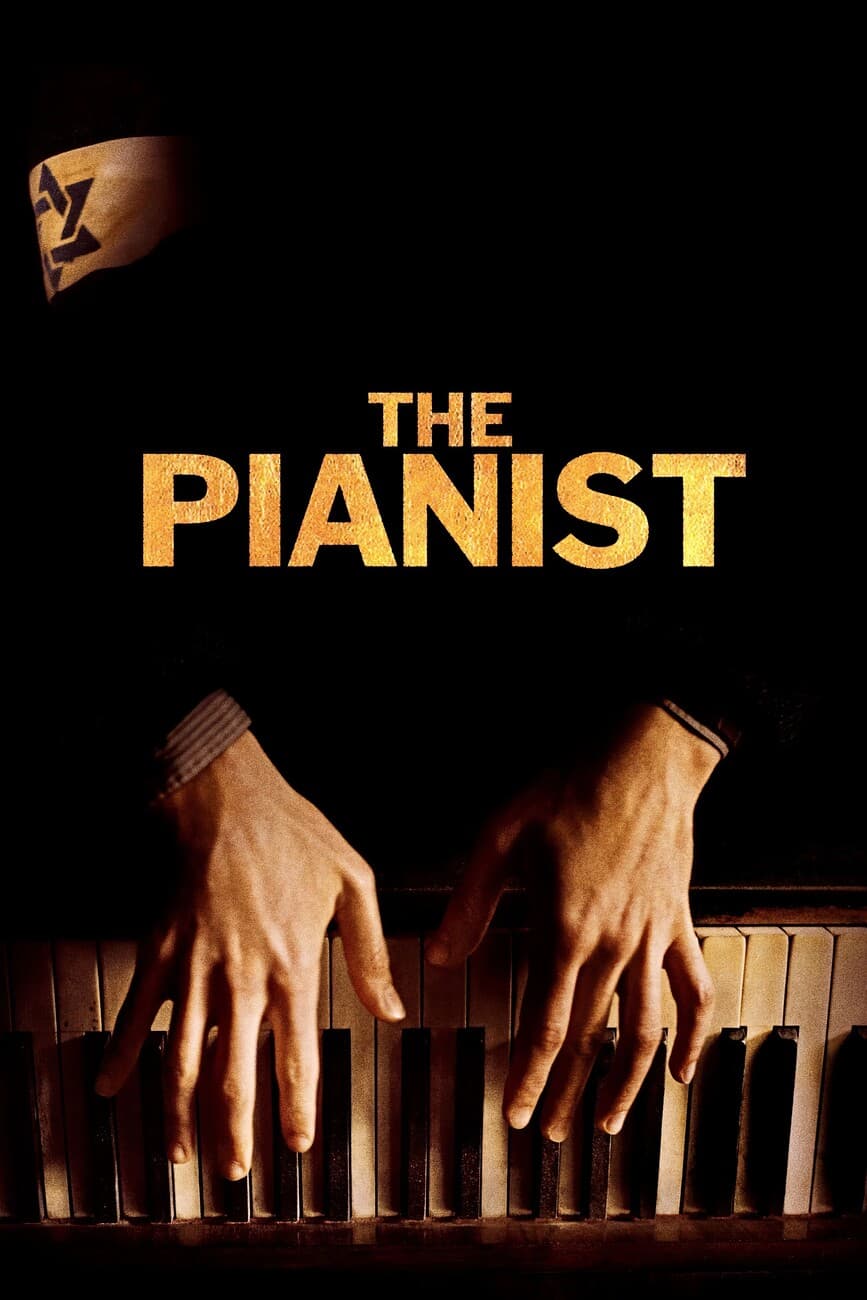
2002
The Pianist
A quiet life unmade by war — and a pianist who refuses to stop listening.
Read the retrospective
→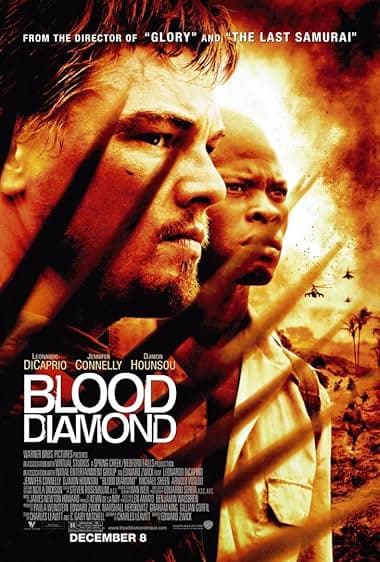
2006
Blood Diamond
A mercenary, a fisherman and a pink diamond — and a film that still asks who pays for our jewellery.
Read the retrospective
→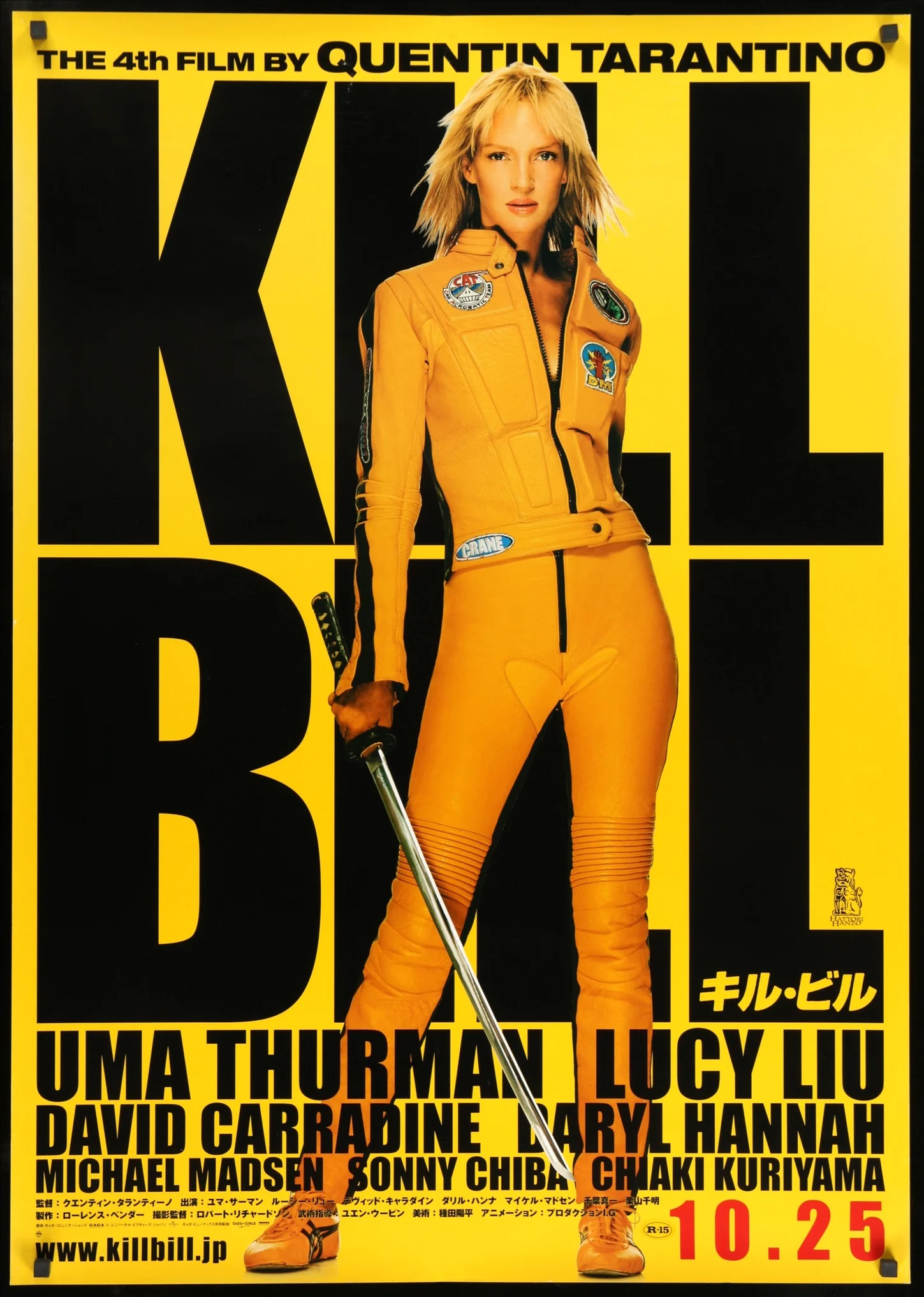
2003
Kill Bill: Volume 1
A yellow jumpsuit, a long list of enemies and one woman who refuses to be finished.
Read the retrospective
→