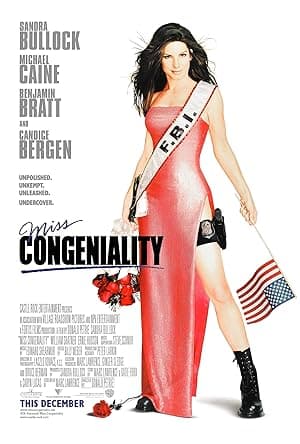
Miss Congeniality
A tomboy FBI agent, a crown, and a very reluctant makeover — Gracie Hart is why Miss Congeniality still sparks joy.
Feature presentation
Miss Congeniality is easiest to sell as a silly fish-out-of-water comedy: an FBI agent shoved into a beauty pageant to stop a bomb plot. But what keeps you watching is less the premise and more the lead — a blunt, stubborn outsider learning the rules of an altogether different world. It’s 2000, it’s loud, and Gracie Hart makes the whole thing worth revisiting.
THE MOVIE
Gracie Hart (also appears as Gracie Lou Freebush / Miss New Jersey) is still the reason this movie works
The hook is obvious: an FBI agent goes undercover as a contestant in the Miss United States pageant after a terrorist threatens the competition. It’s a premise built for laughs — and for the kind of culture-clash comedy that loves to watch someone completely out of their depth improvise their way through glitter and choreography.
What keeps the film from being a pure gag reel is who’s doing the improvising. Sandra Bullock’s character isn’t a wilting wallflower dropped into sequins; she’s Gracie Hart, a blunt, tomboyish agent who treats pageant rituals like a field assignment. The assumed identity — Gracie Lou Freebush, Miss New Jersey — is the movie’s device for putting that disposition under pressure.
Directed by Donald Petrie and running a brisk 109 minutes, Miss Congeniality spends most of its time balancing broad comedy, action beats and a surprisingly steady note about how identity can be a performance — sometimes chosen, sometimes forced. The film knows it’s a crowd-pleaser; it also makes a small, sensible argument about being someone else for a while and what you bring back when you return.
THE SETUP
The idea that sets Miss Congeniality in motion
At its simplest: a terrorist threat to a national pageant forces the FBI to send one of its own into a world she doesn’t understand. That inciting incident gives the film permission to mix procedural logistics with broad comedy.
The mechanics are what make the set-up tidy. Gracie assumes an undercover identity and the operation hinges on surveillance and regular check-ins with her partner. That constant tether to the FBI keeps the stakes real, even when the jokes get daft.
Crucially, her transformation is not solo. A disgraced pageant consultant is drafted in to turn a rough-around-the-edges agent into a credible contestant, and that makeover is presented as a technical assignment as much as a character beat.
The story splits its time between New York, where the FBI work happens, and San Antonio, the pageant’s home. That geographic contrast underlines the tonal one: cop drama versus showbiz spectacle — and Gracie has to navigate both.
THE CHARACTER
Why Gracie Hart (also appears as Gracie Lou Freebush / Miss New Jersey) matters
Gracie Hart is the engine. Sandra Bullock plays an FBI agent sent undercover into a pageant world she neither understands nor wants to belong to, and the friction that creates is the film’s entertainment currency.
She matters because the movie refuses to make her a cipher for pageant ridicule. The contrast between her workaday bluntness and the pageant’s ritualised femininity makes room for growth that feels earned: she isn’t suddenly ‘fixed’ by a sash, but she learns that some pageant rituals can be reclaimed as solidarity rather than submission.
That idea of sisterhood matters. The film leans into pageant sisterhood as an arena where Gracie finds allies instead of rivals, which gives her undercover turn real emotional pay-off beyond the case.
And behind the camera the film is a clear star vehicle: produced by Sandra Bullock and directed by Donald Petrie, it’s shaped around Gracie’s arc in a way that makes the character the film’s obvious anchor.
THE PERFORMANCE
Why Sandra Bullock's performance matters
Contemporary responses singled her out, and the film’s awards attention backed that up: Bullock earned a Golden Globe nomination for Best Actress in the comedy category.
That recognition matters because this picture rests on one person being able to sell two conflicting ideas at once: a capable federal agent and a woman learning a new social language. Reviews of the time tended to point to Bullock’s general screen presence and timing as what kept those shifts believable.
The whole film is constructed as a showcase, and the nomination is a neat piece of evidence that the construction worked for many viewers at the time.
Seen simply as a career move, the role is a reminder of how star-driven comedies of the period operated: give a performer a clear comic situation and the movie will follow their rhythm.
UNDER THE SURFACE
Miss Congeniality has more on its mind than the plot suggests
On paper the movie is a fish-out-of-water comedy: a law-enforcement outsider adapting to pageant culture. That surface setup allows the film to play with identity — how we perform ourselves when the script changes.
Transformation in the film isn’t just about hair and gowns. It’s about learning to deploy a performance strategically. Gracie’s makeover is presented as training as much as it is a personal experiment.
Performative femininity is treated with a surprising lightness; the pageant rituals are not simply mocked, they become tools Gracie can use. The film also leans on female solidarity — pageant contestants who could have been caricatures are given enough weight to become companions and moral touchstones.
Underneath the comedy there’s a steady tug of duty versus self: Gracie’s undercover work is about protecting people, but it forces her to reconsider what parts of herself are chosen and which are imposed.
THE FILMMAKING
How Miss Congeniality was put together
Miss Congeniality is, quite deliberately, put together like a mainstream studio comedy. The visuals and cutting have a straightforward job: keep the jokes moving and make the contrast between two worlds feel immediate.
The crew credits underline that approach. Cinematography is by László Kovács and Billy Weber handled the editing; the production design was led by Peter Larkin. Those names point to experienced craftsmen deployed to support a star vehicle rather than to draw attention to themselves.
That production design performs a useful trick: it separates the FBI’s practical, office-bound life from the pageant’s staged interiors. The movie uses those contrasting spaces to remind you what Gracie is juggling at any given moment.
Put simply, the filmmaking is unobtrusive on purpose: its job is to sell the gag and the emotional beats, and on that score the choices line up cleanly with the story’s needs.
PURE 00s
Miss Congeniality could not belong to any other decade
This is very much an early-2000s breed of comedy: star-led, high-concept and eager to mix rom-com warmth with action or procedural energy. It sits comfortably in that moment when studios backed clear, audience-friendly premises around a bankable star.
Released in 2000, the film is part of a short-lived trend of female-fronted fish-out-of-water pictures that married makeover beats to empowerment lines. The formula was simple and, for a time, dependable.
That decade fit the film because it trusted a single performer to carry tonal shifts — from investigation to glitter — without requiring the movie to rebrand itself as anything else.
The sequel that followed in 2005 is further evidence of the movie’s fit with the period: it’s exactly the sort of franchise-friendly continuation studios pursued around a recognisable lead and a tidy premise.
THE LEGACY
Why Miss Congeniality still matters
One practical measure of the film’s afterlife is that it returned for a direct sequel in 2005, which tells you the lead character had enough life — narratively and commercially — to justify continuing her story.
Awards attention also helped keep it in conversations: the film received Golden Globe nominations, including one for Sandra Bullock as Best Actress in a comedy and a nod for its original song.
Taken together those facts don’t turn it into a cultural earthquake, but they do explain why the film stays visible: it’s a neatly constructed star vehicle that got recognised and then got another chapter.
And, centrally, the story left a recognisable character behind — a cop who learns what it can mean to choose a different face for a while.
THE VERDICT
Does Miss Congeniality still hold up?
Yes — with a sensible qualification. If you want cutting-edge social commentary, this isn’t the place. If you want a spirited, well-constructed comedy that pairs a procedural threat with a fish-out-of-water makeover story, it still does the job very well.
The film’s blend of a real FBI threat and the absurdity of pageant life gives it two engines: the case provides momentum, the undercover identity and the makeover give it heart. Those mechanics — the assumed identity, the disgraced consultant who transforms Gracie, and the constant reporting back to her partner — keep both halves honest.
What keeps the movie watchable today is the clarity of its choices. Gracie Hart is introduced as a blunt, tomboyish agent whose discomfort with conventional femininity drives the humour; the film lets her grow without pretending she was fragile to begin with. Eric Matthews’ role as partner and romantic interest keeps the undercover operation from becoming an isolated joke, while Victor Melling’s presence pushes Gracie’s change into a proper story.
So should you watch it? If you enjoy smartly paced star vehicles, you’ll find Miss Congeniality entertaining and, crucially, warm. It’s a film that remembers to let its lead be funny and human at once — and that, for a movie about putting on a performance, is quietly satisfying.
Share this movie
Keep watching
More movies from the 00s

2002
The Pianist
A quiet life unmade by war — and a pianist who refuses to stop listening.
Read the retrospective
→
2006
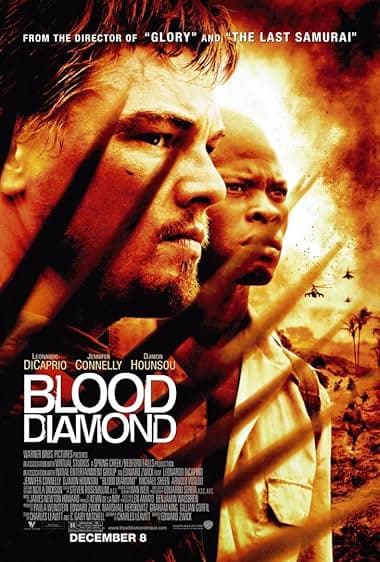
Blood Diamond
A mercenary, a fisherman and a pink diamond — and a film that still asks who pays for our jewellery.
Read the retrospective
→
2003
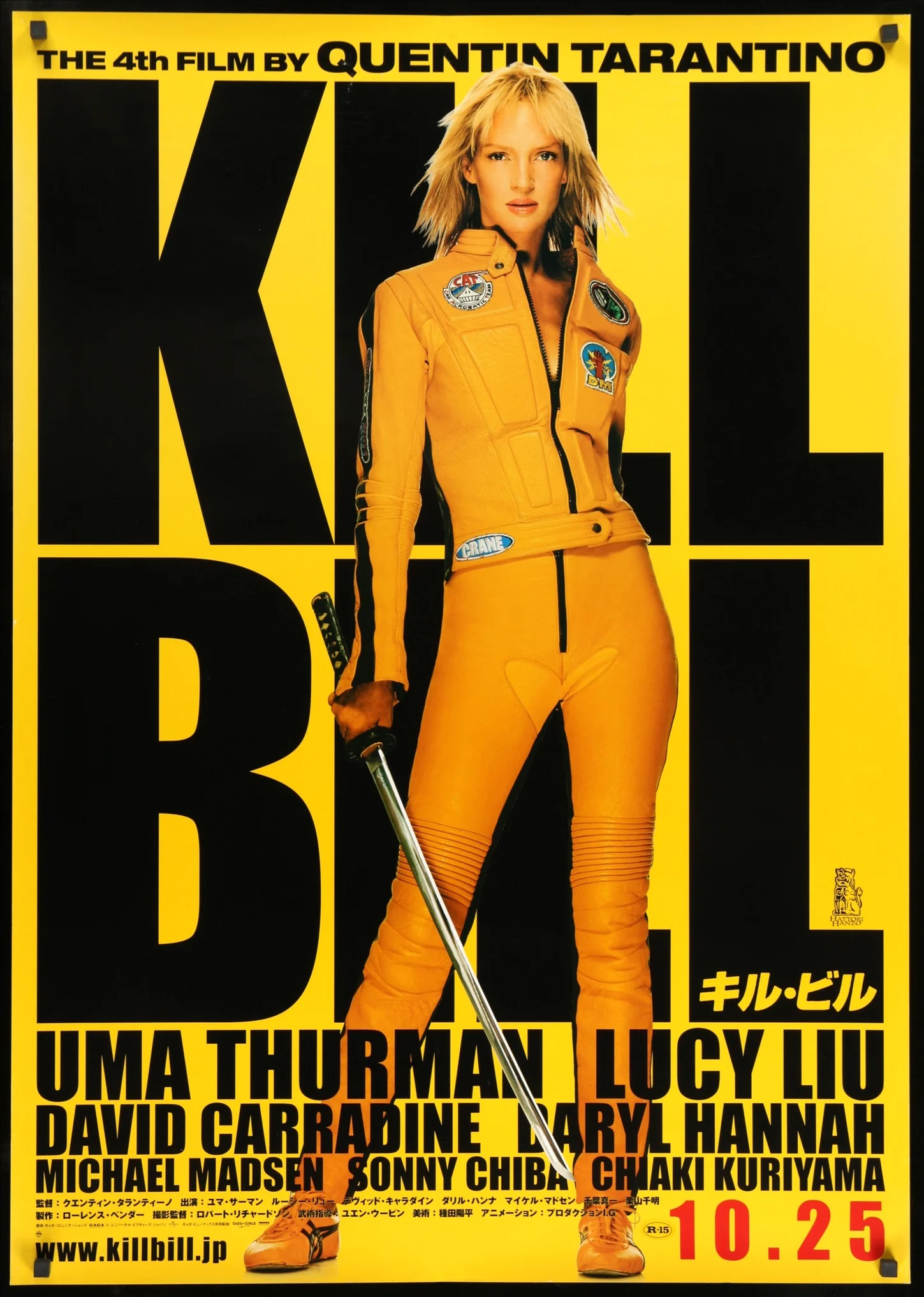
Kill Bill: Volume 1
A yellow jumpsuit, a long list of enemies and one woman who refuses to be finished.
Read the retrospective
→