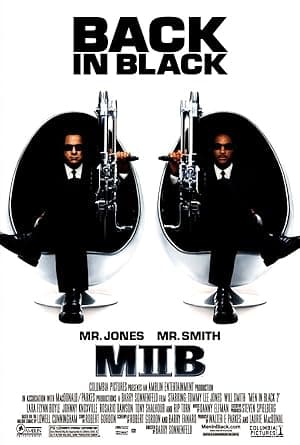
Men in Black II
Buddy cop banter, shapeshifting menace and a hero who refuses to stop trying.
Feature presentation
Men in Black II returns you to the slightly ridiculous, slightly brilliant world where suits, shades and secret government duty meet alien wig-outs. It’s Will Smith’s Agent J — pushing, jokey and utterly committed to dragging his old partner back into the fold — who gives the film its shove.
THE MOVIE
James Darrell Edwards III / Agent J is still the reason this movie works
Five years on from the first film, Men in Black II opens with a familiar engine: an extraterrestrial murder that forces Agent J back into the thick of things and, crucially, into hunting down his retired partner. That set-up gives the sequel an immediate personal rhythm — it’s not just another case file, it’s J trying to reconnect.
The villainous Serleena turns the film into something with teeth: a Kylothian shapeshifter after a mythic power known as the Light of Zartha, which raises the stakes beyond one alien gone rogue. In other words: there’s a proper McGuffin and a proper threat, and they matter because they force the partnership to change.
Barry Sonnenfeld returns to direct a compact, 86-minute action-comedy that trades big ideas for brisk, star-led momentum. With Will Smith as Agent J and Tommy Lee Jones as Agent K reprising their roles, the movie is built to be carried by personality — and by the tension between the junior agent who won’t let go and the mentor who has.
THE SETUP
The idea that sets Men in Black II in motion
At its simplest the film is a detective story: Agent J follows an alien murder trail that circles back to the man who taught him the job. That loop — former pupil tracing clues to his former teacher — gives the action a tidy emotional spine.
There’s an extra twist: Agent K has been neuralyzed. His memory has been erased and the plot depends on getting it back. As a device, it turns what could be a standard ‘stop the bad guy’ plot into a race to restore crucial knowledge.
The investigation spikes into personal territory when the Light of Zartha links to a human character whose origins become central to the mystery. The result is a film that mixes procedural tracking with a reveal that changes how the characters see their task.
The screenplay (credited to Robert Gordon and Barry Fanaro, based on Lowell Cunningham’s comic concept) mostly keeps things clear. It doesn’t tangle itself in overcomplication — the setup wants you to follow the case, but also to care about the people doing the following.
THE CHARACTER
Why James Darrell Edwards III / Agent J matters
James Darrell Edwards III — Agent J — is the engine. He’s the one who keeps the job from feeling like bureaucracy. The sequel’s inciting problem isn’t solved by procedure alone; it’s pushed forward by J’s insistence that people matter and that some duties mean sticking your neck out.
What the film gains from having J at its centre is momentum that’s both comic and humane. He’s the link between the slick spy set-up and the emotional stake of reconnecting with a mentor who has walked away, which is why the story keeps circling back to their relationship.
This is a direct sequel that expects you to follow the same duo again. Will Smith returns as J alongside Tommy Lee Jones as K; that continuity lets the script play variations on the same partnership rather than rebuild it from scratch.
So J isn’t just the wisecracking half of a buddy routine. He’s the character who makes the mission personal and who refuses to let the organisation’s rules be the final word — and that makes him memorable in a franchise built on secrecy and protocol.
UNDER THE SURFACE
Men in Black II has more on its mind than the plot suggests
On paper it’s an alien caper; underneath it’s mostly about relationships. Partnership and mentorship are baked into the plot: a younger agent chasing not only a perpetrator but the memory of the man who taught him to be a protector.
Memory and identity come in through K’s neuralyzed state. The film uses erased memory as a practical problem — key information is missing — but also as a question about who we are when we lose our past.
There’s another layer around secrecy and institutional duty. MIB is a place that expects personal sacrifice; the story keeps asking whether duty should overwrite private life, or whether people can carry both obligations at once.
Taken together these ideas stop Men in Black II from being merely a sequence of jokes and set-pieces. The emotional hit lands whenever the procedural thrust — tracking leads, recovering the Light — bumps into the human choices of its characters.
THE FILMMAKING
How Men in Black II was put together
Barry Sonnenfeld returned to the director’s chair, which matters because the sequel deliberately sits next to the original rather than trying to reinvent its tone. It’s a continuation with the same directorial voice steering the ship.
The credits list Greg Gardiner as director of photography and Bo Welch as production designer. Those names are there to keep visual and production continuity alongside Sonnenfeld’s approach.
What the filmmaking choices add up to is a film that privileges momentum and clarity over showy reinvention. For a sequel that has a tight running time, returning collaborators smooth the path between set-pieces and character beats.
In short: Men in Black II is assembled as a studio sequel that wants you to recognise its lineage — the same director, the same design team — and to settle into the world quickly so the story can get on with its business.
PRACTICAL EFFECTS
The effects work that gives Men in Black II its physical personality
The movie’s alien life feels tactile because Rick Baker and his makeup team are credited for the prosthetic creature work. That decision keeps many creatures grounded in physical craftsmanship rather than being wholly screen-born.
Men in Black II blends approaches: prosthetic makeup, animatronics and puppetry are used alongside CGI. Characters such as Frank the Pug are brought to life by voice performance combined with physical effects, which gives them a presence beyond a purely digital creation.
Mixing techniques like this means the film can pick the right tool for each gag or beat. A puppet or prosthetic can react in a different way to a computer model, and the movie uses that variety to shape its comic and creepy moments.
So while the sequel deploys standard studio tricks, it’s the on-set craft of prosthetics and puppetry, credited to Baker’s team, that helps the aliens feel like real, cheeky intruders in the human world.
PURE 00s
Men in Black II could not belong to any other decade
This is very much an early-2000s studio sequel: it opened in summer 2002, positioned for the big weekend and built around a franchise that worked at the end of the ‘90s. The timing is part of its DNA — a follow-up meant to deliver more of what audiences enjoyed the first time.
The film leans on a star-led buddy-cop dynamic: the whole enterprise is powered by the chemistry of a returning pair and the idea that familiar faces sell sequels. That strategy was a staple of the period’s studio thinking.
It’s also a movie that mixes high-concept creature effects with broad comedy and procedural beats — another hallmark of mainstream early-2000s tentpoles. The result is a film that feels of its time in how it packages spectacle for a family-friendly summer crowd.
Barry Sonnenfeld’s return and the presence of a full soundtrack release are small details that underline how Men in Black II was positioned: not a reinvention, but a reliable, big-studio continuation aimed squarely at an audience that wanted entertainment first.
THE LEGACY
Why Men in Black II still matters
The film matters partly because it continued a franchise that didn’t stop at two entries. It’s the middle chapter that led to further sequels and extensions of the Men in Black universe.
Another reason it’s remembered is the carnival of cameos and celebrity beats. The sequel expanded the comic use of well-known faces in tiny roles — an idea that contemporary press took note of at the time and that helped make the film feel plugged into pop culture moments.
It also keeps alive the franchise’s particular combination of procedural plotting and outlandish creature work, meaning Men in Black II remains a reference point for anyone tracing the series rather than a standalone reinvention.
So its legacy is modest but clear: it carried the franchise forward, kept the world populated with oddball aliens and celebrity cameos, and left a trail for later entries to follow.
THE VERDICT
Does Men in Black II still hold up?
If you’re asking whether it’s worth pressing play: yes, with a caveat. The film is a concise, 86-minute studio sequel that mixes a procedural investigation with a race to stop a shapeshifting antagonist hunting the Light of Zartha. It’s designed to move quickly and keep the jokes and monsters coming.
At its centre is a simple but effective emotional motor: J’s drive to protect Earth is tangled with his need to reconnect with the mentor who walked away. The plot hinges on restoring K’s memory so the pair can access knowledge vital to stopping the threat — that combination of personal stake and ticking mystery is precisely what the movie asks you to care about.
This is a film that succeeds most when it remembers why you came for it: the partnership. It’s not trying to be profound. It’s a star-led, genre-blending piece of summer entertainment from 2002, directed by the same filmmaker as the original and built to keep the franchise moving.
So watch it if you want compact, personality-driven sci-fi comedy where the junior agent refuses to let protocol be the end of the story. If nothing else, Men in Black II is a reminder that sometimes sequels exist to let characters push one another — and that push, even when wrapped in alien chaos, can still land.
Share this movie
Keep watching
More movies from the 00s

2002
The Pianist
A quiet life unmade by war — and a pianist who refuses to stop listening.
Read the retrospective
→
2006
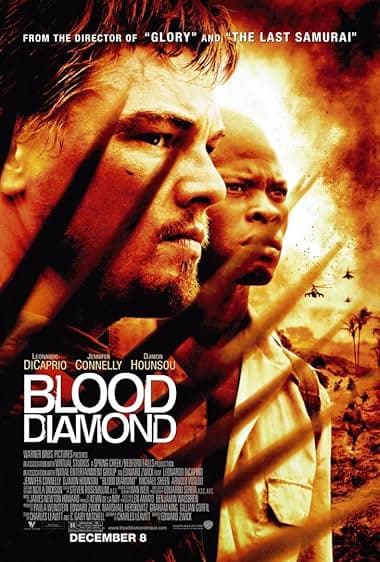
Blood Diamond
A mercenary, a fisherman and a pink diamond — and a film that still asks who pays for our jewellery.
Read the retrospective
→
2003
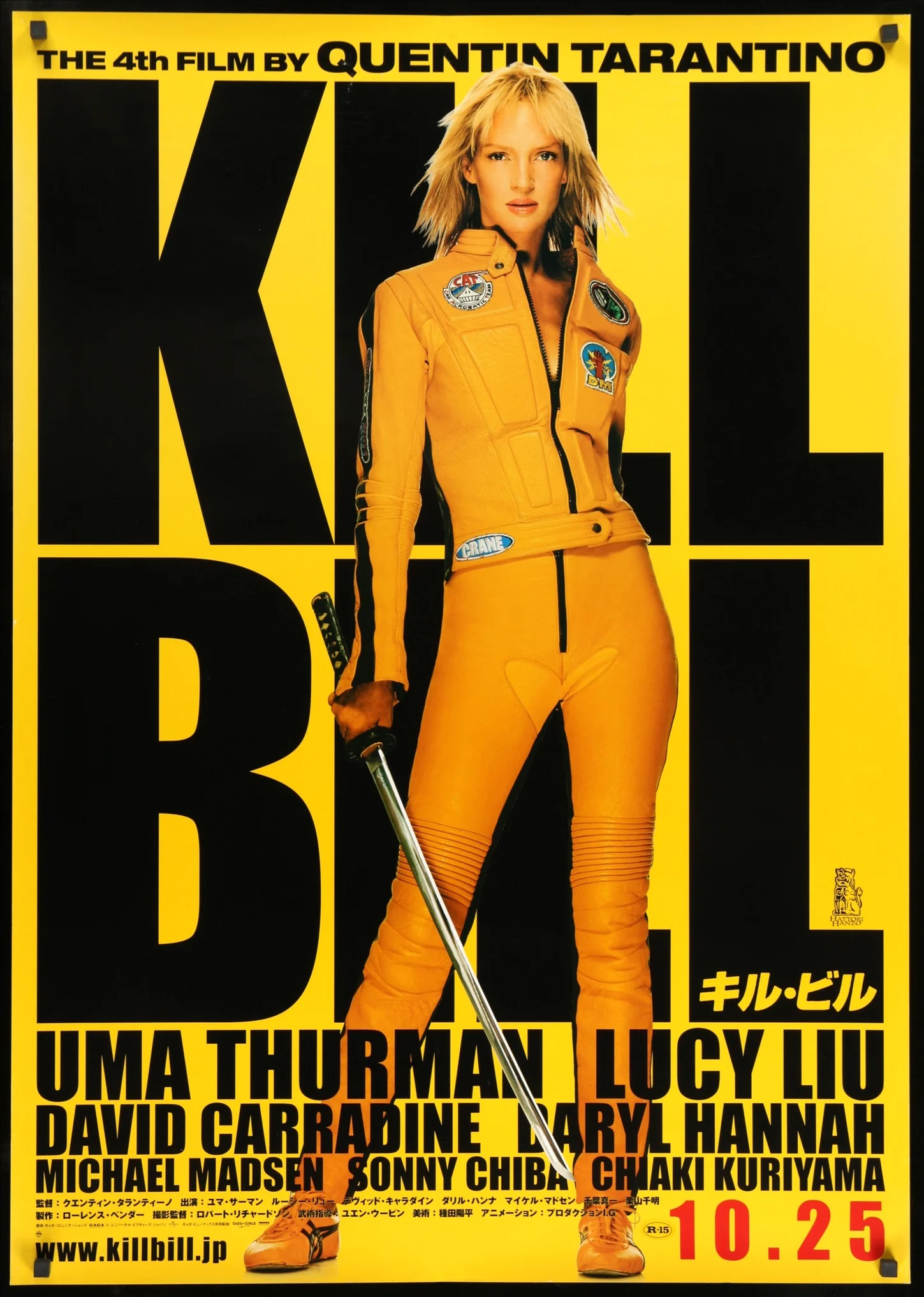
Kill Bill: Volume 1
A yellow jumpsuit, a long list of enemies and one woman who refuses to be finished.
Read the retrospective
→