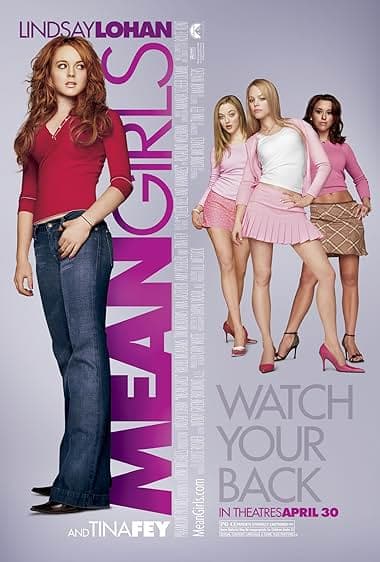
Mean Girls
An outsider shows us how the Plastics keep their world turning — and why it’s still worth watching.
Feature presentation
Mean Girls centres on Cady Heron, the homeschooled teenager who arrives from Africa and learns the rules of suburban high school the hard way. It’s a sharp, funny take on how popularity is built — and policed — and it landed in 2004 with a screenplay by Tina Fey and a director’s chair held by Mark Waters. If you remember the jokes, you probably remember Cady first.
THE MOVIE
Cady Heron is still the reason this movie works
What keeps Mean Girls alive in conversation is not just the one-liners or the outfits; it’s the central idea of a character who doesn’t come from that world. Cady Heron arrives having been homeschooled in Africa, and that naivety — the fact she’s genuinely ignorant of suburban high-school rituals — gives the film its engine.
That curiosity makes her the perfect point of view. After she befriends Janis Ian and Damian, Cady is pulled into the Plastics, the school’s most popular clique led by Regina George, and the story becomes a study in how popularity is constructed and policed by teenage girls.
Mark Waters directed the film, Tina Fey wrote the screenplay, and the whole thing runs a tidy 97 minutes — lean, sharp and precise about the social rules it wants to expose. Released in 2004, Mean Girls hooks you with its premise and then refuses to let the subject go until you’re laughing and slightly horrified in the same breath.
THE SETUP
The idea that sets Mean Girls in motion
At heart, Mean Girls is a story of infiltration. Cady is an outsider who, after a quick friendship with two outcasts, is invited into the inner circle of the Plastics. That arrangement—an outsider embedded inside the popular group—does the heavy lifting for the film’s comedy and conflict.
There’s a romantic wrinkle too. Cady’s attraction to Aaron Samuels complicates the plan and forces a choice between the mission she agreed to with her new friends and the new life she’s being offered inside the clique.
The screenplay comes from Tina Fey and is adapted from Rosalind Wiseman’s non-fiction look at teenage girl culture, which helps explain why the film often reads as satire with an eye for real social mechanisms rather than pure caricature.
Shot around Toronto from September to November 2003 and released the following spring, the film’s short, focused runtime keeps the setup brisk: you’re in, you see the rules, and the trouble starts quickly.
THE CHARACTER
Why Cady Heron matters
Cady matters because she’s the audience’s translator. Played by Lindsay Lohan, she’s someone whose lack of prior exposure to American high-school norms makes every petty rule and ritual look, briefly, absurd — and then, worryingly, inevitable.
Her naivety isn’t just cute set dressing. The fact she was homeschooled in Africa explains why she starts from curiosity rather than calculation, which in turn makes her moral choices feel active: she’s not born scheming, she learns to scheme, and that learning is the story.
She’s also a mirror. Through Cady we see how female friendships can be protective and poisonous in turns, how loyalties shift when territory is at stake, and how identity can be a performance learned to survive a social landscape.
And she has a family anchor; Neil Flynn plays her father, Chip Heron, a reminder that Cady’s world is larger than the lunchroom. That domestic context keeps her believable as a teenager caught between two homes: the one she left and the one she’s trying to navigate.
UNDER THE SURFACE
Mean Girls has more on its mind than the plot suggests
On the surface it’s a teen comedy about cliques and revenge, but underneath Mean Girls is really circling a few simple truths: how popularity is built, how it’s defended, and how social hierarchies make rules that people police for one another.
It’s also a film about female friendship and rivalry. The Plastics are territory; friendships act like maps that tell you where you’re allowed to stand. The movie stays sharp because it treats those relationships as strategic and emotional at once.
Relational aggression and gossip are treated as instruments — the Burn Book and the rituals around prom and lunchroom seating dramatise how small cruelties add up into real damage. The satire works because those devices feel recognisable, not exaggerated beyond recognition.
Finally, there’s identity and belonging: Cady’s outsider status makes the search for a place to belong feel urgent, while the presence of characters like Damian nods to the film’s attention to representation beyond straight, female-centred rivalry.
PURE 00s
Mean Girls could not belong to any other decade
Mean Girls arrived in the early 2000s when studio comedies were willing to centre teenage girls and let satire bite. Released in 2004, it joined a small but growing wave of films that treated high-school social life as worthy of sharp comedy.
Tina Fey’s script — adapted from a non-fiction book about teen behaviour — gives it that era’s signature mix of broad set pieces and eyebrow-raising social specificity. The film sits comfortably in a decade that balanced mainstream comedy with a willingness to lampoon social rituals.
The production was quick: principal photography wrapped late in 2003 and the film hit screens the following spring. That brisk timeline helped keep the film focused on the particular social observations it wanted to make.
And in the early 2000s conversation about representation, Daniel Franzese’s role as Damian gets named as a notable example of LGBTQ visibility in a mainstream teen comedy — a reminder that the film’s casting and characters reflected certain changes in the era’s cultural conversation.
WATCHING IT NOW
What has aged — and what hasn't
A lot of Mean Girls’ core is thematic rather than fashion-driven, which helps it hold up. Its concerns about female friendship, identity and belonging are not decade-specific — the social mechanics it shows still land.
The film’s approach to relational aggression and gossip remains a useful way to watch how exclusion works. The rituals it dramatises — who sits where, who gets invited — still feel recognisable, which makes the satire readable to new viewers.
Discussion of representation keeps the film in conversation: contemporary coverage often points to Damian as an early-2000s example of LGBTQ visibility in a mainstream teen comedy, which is both historically notable and still worth talking about when watching today.
Critics and later commentators have compared Mean Girls to earlier teen satires such as Clueless, which helps explain why it’s still referenced. That comparison also clarifies that Mean Girls functions as part of a lineage of films that use high school as a social laboratory.
THE LEGACY
Why Mean Girls still matters
Mean Girls left a lasting footprint because it’s relentlessly quotable and easily shared. That quotability helped the film build a meme-rich presence that keeps conversations about it alive long after its release.
The story has been remade and transplanted into new formats — a TV sequel, a stage musical and a later musical-film adaptation — which shows the script’s durable structure and the story’s flexibility for different audiences.
Tina Fey’s screenplay receives regular attention from writers’ organisations and critics who single it out among notable contemporary comedies. That recognition underlines how the film balances satire and accessible storytelling.
Put together, these strands explain why Mean Girls is often brought back into discussion: it provides sharp lines, specific social observation and a structure that directors and producers have felt was worth returning to.
THE VERDICT
Does Mean Girls still hold up?
Yes — but with a small, important rider. Mean Girls works today because it’s less about passing trends and more about the mechanics of belonging. Cady’s outsider perspective (she was homeschooled in Africa) means the film never assumes you already know how the rules operate; it shows them and lets you see their cruelty.
The infiltration plot — Janis and Damian recruiting Cady to undermine Regina — and the romantic complication with Aaron Samuels give the film some moral friction. That tension is what keeps the story from becoming a one-note roast and gives Cady real choices to make.
The movie uses devices such as the Burn Book and social rituals like prom to dramatise how gossip and exclusion enforce hierarchy; those devices still read clearly to modern viewers and help the satire land. And while it’s very much a teen comedy, it’s a satire that remembers to ask who pays for the jokes.
So yes: if you’re deciding whether to watch Mean Girls, go in expecting sharp satire wrapped in teen comedy. It’s funny, it’s pointed, and Cady — the character who arrives without the rulebook — is the reason the whole thing still cuts through.
Share this movie
Keep watching
More movies from the 00s

2002
The Pianist
A quiet life unmade by war — and a pianist who refuses to stop listening.
Read the retrospective
→
2006
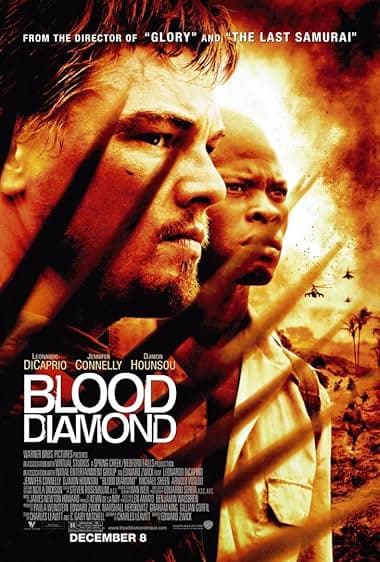
Blood Diamond
A mercenary, a fisherman and a pink diamond — and a film that still asks who pays for our jewellery.
Read the retrospective
→
2003
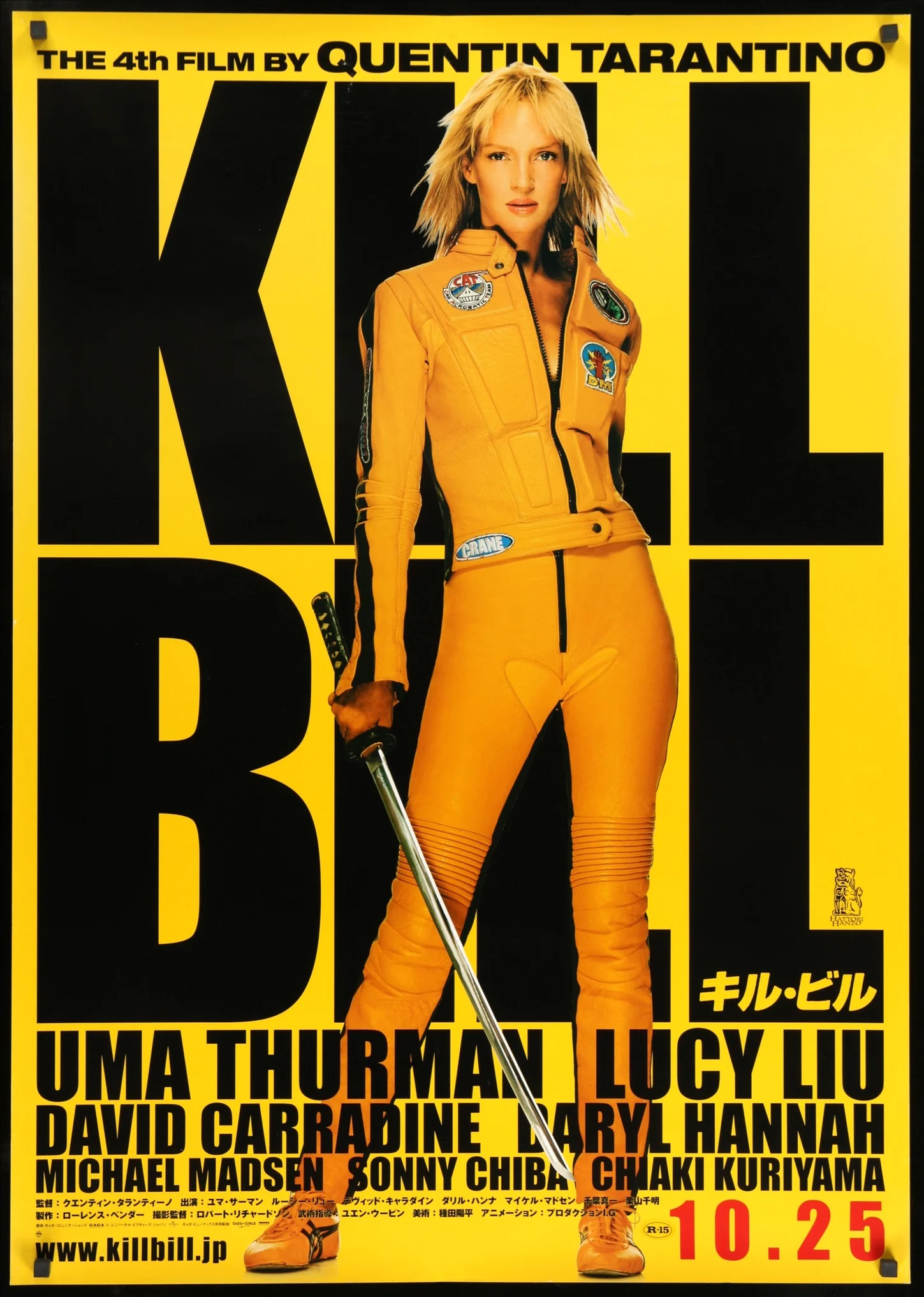
Kill Bill: Volume 1
A yellow jumpsuit, a long list of enemies and one woman who refuses to be finished.
Read the retrospective
→