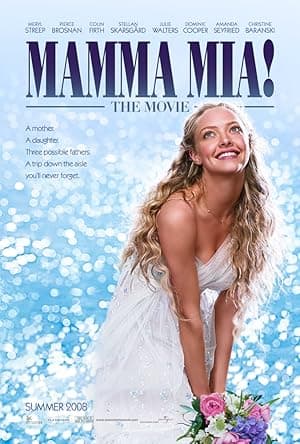
Mamma Mia!
A wedding, three possible dads and an entire soundtrack answering questions you didn’t know to ask.
Feature presentation
Mamma Mia! is the sort of film that announces itself by song and keeps talking with its cast of complicated, loudly loyal women. Phyllida Lloyd brought the stage jukebox musical to screen in 2008 and, at the heart of the spectacle, Donna Sheridan’s choices make the plot feel like more than a party trick.
THE MOVIE
Donna Sheridan is still the reason this movie works
Mamma Mia! does a bold thing from the outset: it takes ABBA’s catalogue and turns each catchy, emotional pop-song into a little narrative engine. The result is a film that’s less a sneaky jukebox and more a musical built entirely from hits — and that choice gives it instant theatricality.
The plot is straightforward and oddly charming. Sophie, a twenty-year-old bride-to-be, wants to be escorted down the aisle and so secretly invites three men who could be her father to her wedding on a Greek island. That setup sends the whole movie into motion: paternity becomes the plot’s question, memory the complication, and the wedding supplies the ticking clock.
But what keeps the thing grounded — and why people still return to it — is the personal knot at the centre. Donna Sheridan, Sophie's mother and an independent former singer/hotelier, is forced to face the men from her past when the invitations arrive. Phyllida Lloyd brought this stage conceit to film in 2008, and the movie’s energy comes from how it stages those collisions between past and present.
THE SETUP
The idea that sets Mamma Mia! in motion
The film keeps its mechanics deliciously simple. It’s an adaptation of a 1999 stage jukebox musical and it stages a romantic-comedy plot around ABBA songs that act as set pieces rather than background noise.
Sophie’s plan is the neat trick: she quietly invites three men who might be her father to her wedding so one of them can give her away. It’s a premise that promises comedy, awkward confrontations and the small explosions that follow when old romances are reopened.
Narratively, the set pieces do more than decorate. The screenplay repurposes ABBA numbers so that each musical moment comments on emotions or nudges the plot forward, keeping the stage-musical’s compact story intact while translating it for film.
That compactness is important: the whole movie is built around this one conceit — a daughter searching for a father and a mother who must reckon with the life she chose. It’s economical and, crucially, it leaves room for the characters to breathe.
THE CHARACTER
Why Donna Sheridan matters
Donna is not just the mother in a rom-com; she’s the film’s pivot. Presented as an independent former singer who runs a hotel, she’s built a life that looks self-contained — until Sophie’s invitations force the past back through the door.
The arrival of Sam, Harry and Bill is more than a paternity puzzle. Each man functions as a foil, revealing different chapters of Donna’s life and the choices that made her who she is now. The mystery of ‘which one is the father’ gives the script an engine, but the real interest is how those men illuminate Donna’s history.
Equally crucial are Donna’s friends, Tanya and Rosie. As former bandmates they bring laughter and loyalty; they are alternate models of how women can live, love and misbehave. Their presence stops the story becoming only about male answers and keeps it rooted in female solidarity.
So Donna matters because she’s where the film’s themes meet its jokes and songs. The plot revolves around her past, but the movie keeps returning to how she moves forward — which is, in the end, what makes the story feel alive rather than merely clever.
UNDER THE SURFACE
Mamma Mia! has more on its mind than the plot suggests
On paper it’s a sunlit musical about a wedding. Under the sequins, it’s quietly occupied with questions of family and paternity: what does 'father' actually mean, and how does that label shape Sophie’s sense of self?
Female friendship is woven through every scene. Donna, Rosie and Tanya are not wallpaper; they’re a small tribe whose banter and loyalty give the movie emotional ballast. Their relationships remind us that adult lives are stitched from companionship as much as romance.
Memory and the past matter because the story forces characters to revisit choices. The three men act like time machines, pulling up memories Donna thought she’d left on the island and asking whether those memories still fit the person she has become.
Finally, there’s the nostalgia element: the film is a jukebox musical that relies on pop-cultural warmth. It uses ABBA’s familiar music to prompt recognition and feeling — and in doing so asks the audience to supply some of the emotional colouring.
THE FILMMAKING
How Mamma Mia! was put together
The credits list Haris Zambarloukos as the principal cinematographer, Lesley Walker as the editor and Maria Djurkovic as production designer — names that indicate the film was assembled by experienced hands rather than a first-timer’s vanity project.
One obvious filmmaking choice is how the musical numbers are staged. They’re presented as theatrical set pieces adapted for the camera, which means the film leans into choreography and showmanship rather than pretending the songs spontaneously erupt from everyday life.
That staging decision matters because it keeps the movie honest about what it is: an on-screen musical that owes its shape to the stage. The screenplay and direction accept the artifice and play with it, rather than trying to bury the musical mechanics under realism.
Put together this way — with clear design and editing choices that favour spectacle — the film reads as a deliberate translation of stage theatricality into the language of cinema.
PURE 00s
Mamma Mia! could not belong to any other decade
Released in the summer of 2008, Mamma Mia! arrived in a moment when studios were willing to bankroll big-screen adaptations of stage musicals. It felt of a piece with the era’s appetite for known properties turned into family-friendly event pictures.
Its international commercial success — particularly in European and UK markets — is part of that tale: the film plugged into a late-00s market that rewarded nostalgia and familiar songs, and it rode that wave rather than trying to reinvent the musical.
That appetite for jukebox musicals and nostalgia-driven stories is part of what makes the film feel of its time. It’s not a period piece; it’s a product of a particular commercial moment when familiarity was a safe bet.
Ten years later the story was extended with a 2018 follow-up, which underlines how the original was designed to be durable in the marketplace as much as in the theatre.
WATCHING IT NOW
What has aged — and what hasn't
If you watch Mamma Mia! today, what endures most clearly are the human questions at its centre. The movie’s focus on family and paternity — the messy, non-neat ways families are made — still feels readable because those questions are evergreen.
Likewise, the film’s depiction of female friendship remains one of its strongest cards. Donna’s bond with Rosie and Tanya isn’t decorative; it’s structural. That aspect translates well to modern viewers who recognise the value of friendships that survive messy lives.
Conversely, anything that depends purely on the novelty of jukebox choreography or the comfort of familiar songs will hit different notes depending on your tolerance for pop-culture spectacle. But the thematic core — family and friendship — keeps the film anchored.
Put simply: the ideas under the sequins have aged better than the novelty of sequencing ABBA hits into plot punctuation.
THE LEGACY
Why Mamma Mia! still matters
Part of the film’s afterlife has been commercial rather than critical: it generated a high-selling soundtrack released alongside the film and sustained strong home-video interest, turning the movie into a long-lived franchise property.
That soundtrack did more than fill shelves; it kept the film in living rooms and party playlists, which is the kind of practical cultural staying power not every musical achieves.
The decision to make a sequel in 2018 that brings back the ensemble is further proof that the characters and premise had legs beyond a single outing — enough story and affection to justify revisiting the same world a decade later.
So Mamma Mia! remains notable not because it transformed cinema, but because it proved a reliable, pleasurable machine: it combined a marketable songbook with a compact emotional setup and characters people wanted to see again.
THE VERDICT
Does Mamma Mia! still hold up?
Yes — with a caveat. If you come for the songs, the tidy romantic conceit and a splashy, theatrical take on a wedding comedy, the movie still delivers precisely what it promises: a jukebox-musical adaptation that uses ABBA numbers as narrative beats.
If you come for emotional nuance alone, the film is thinner; its pleasures are communal and performative rather than quietly interior. But the trade-off works because the central conflict — Sophie’s search for a father and Donna’s confrontation with her past — gives the spectacle a real human hinge.
What makes it worth watching today is that hinge. Donna Sheridan’s life, her friendships with Rosie and Tanya, and the way the three men reveal different versions of her past keep the movie tethered to real choices and enduring questions about family.
So watch it as the thing it set out to be: a 109-minute summer musical from 2008 that turns a compact romantic-comedy premise into a singalong about memory, parenthood and loyalty. It won’t surprise you, but it will remind you why that particular kind of big-hearted pop-theatre can still feel like company.
Share this movie
Keep watching
More movies from the 00s
2002
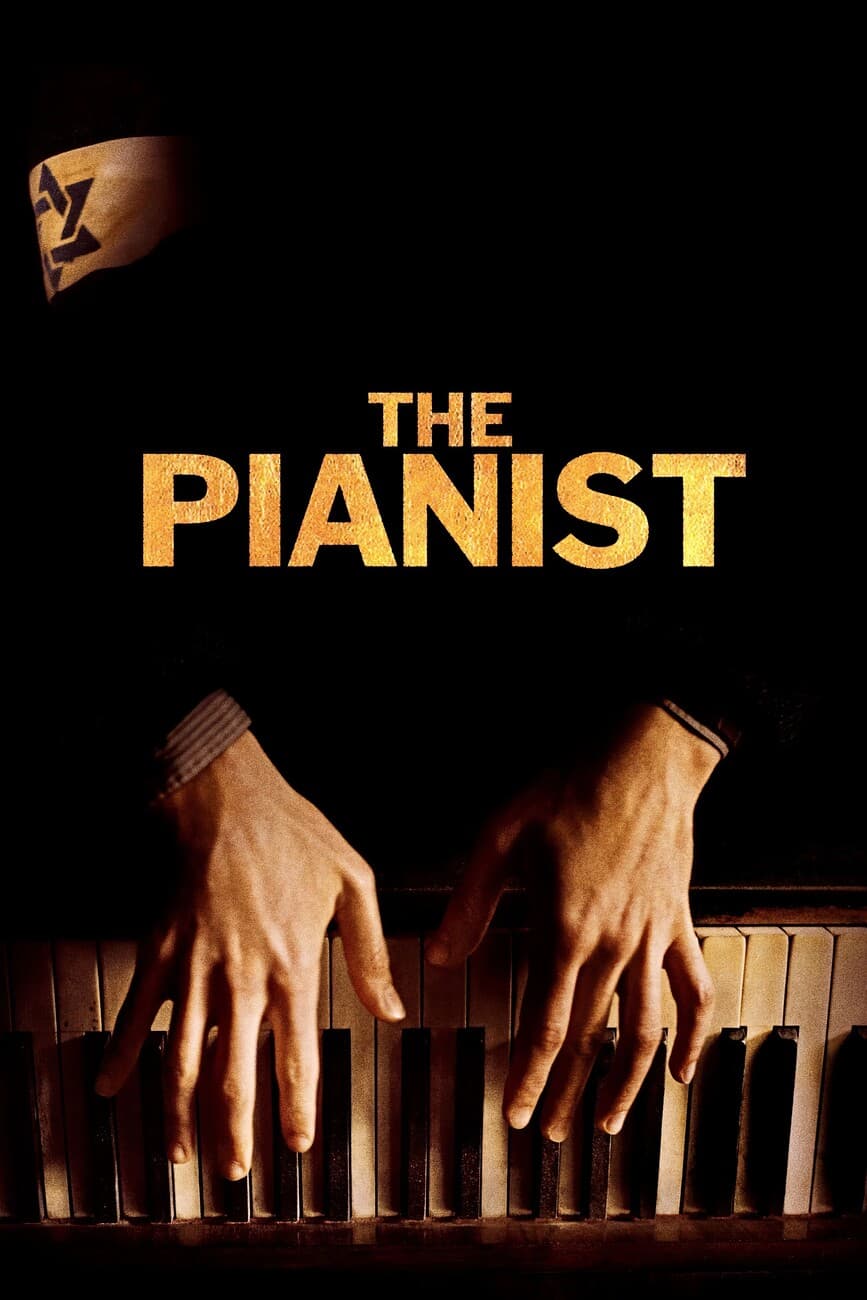
The Pianist
A quiet life unmade by war — and a pianist who refuses to stop listening.
Read the retrospective
→
2006
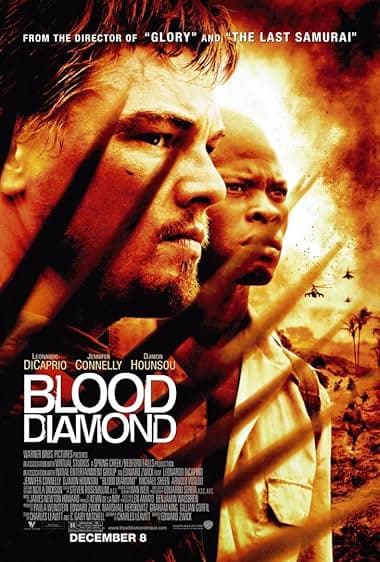
Blood Diamond
A mercenary, a fisherman and a pink diamond — and a film that still asks who pays for our jewellery.
Read the retrospective
→
2003
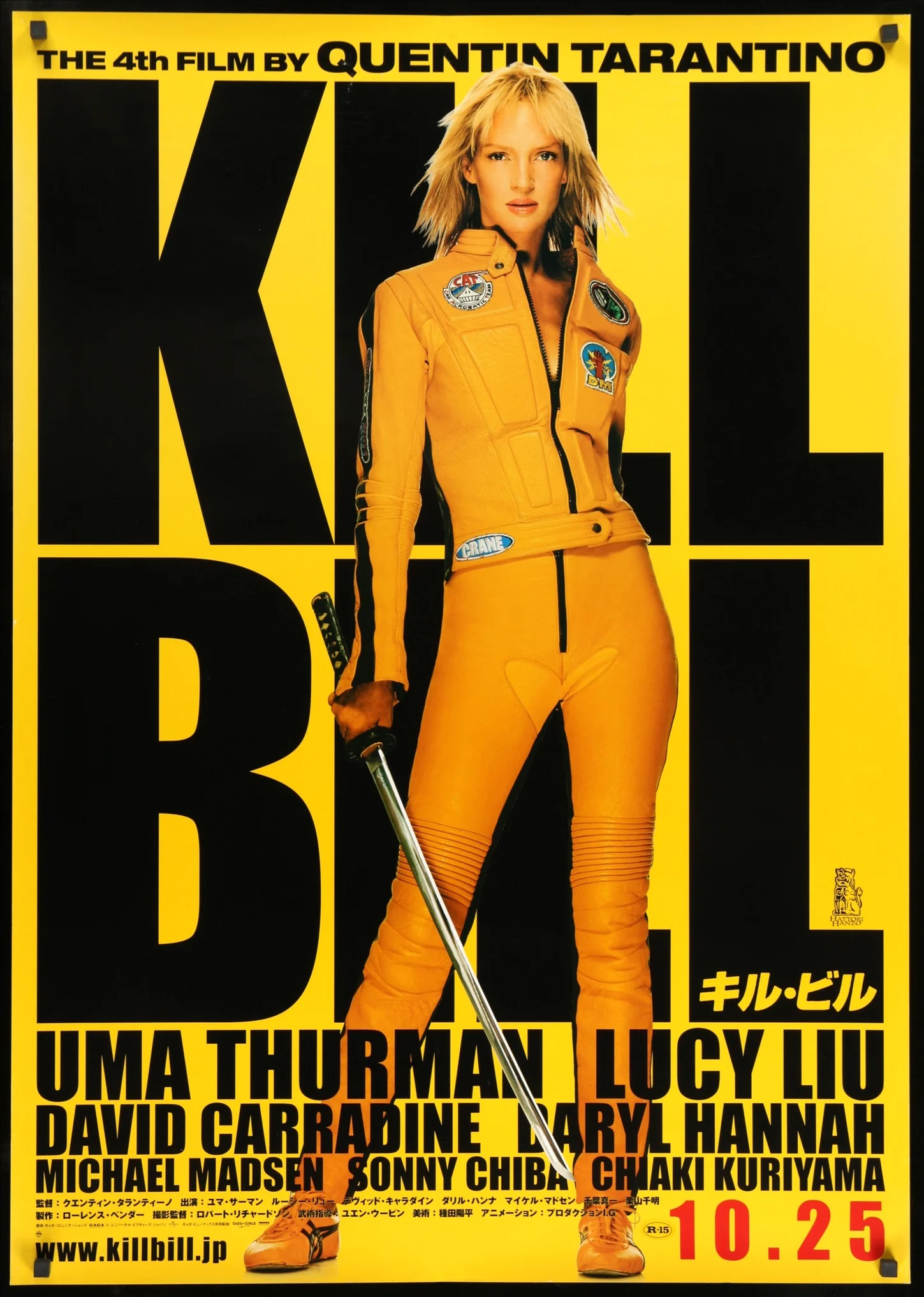
Kill Bill: Volume 1
A yellow jumpsuit, a long list of enemies and one woman who refuses to be finished.
Read the retrospective
→