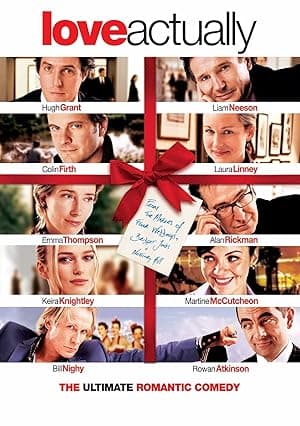
Feature presentation
Love Actually is the kind of film that arrives wearing two hats: a big, cheerful Christmas rom-com and a slightly rickety experiment in how many human emotions you can squeeze into 135 minutes. Richard Curtis stitched together an ensemble of strangers, lovers and relatives and let them bump into one another across the holidays — and somehow a quietly awkward Prime Minister becomes the film’s emotional lodestar.
THE MOVIE
The Prime Minister (David) is still the reason this movie works
If you try to name Love Actually’s single hero you’ll be defeated by the credits. It’s an ensemble by trade: half a dozen short lives braided together across the five weeks before Christmas, finished off with an epilogue after New Year.
Amid that crowd, the Prime Minister stands out because he’s visibly living two lives at once — the public, poised politician and the private bloke who gets floored by an office crush. That tension between what people must be in public and what they secretly feel is a simple trick, but it gives the whole film a human hinge.
Richard Curtis wrote and directed the picture, and he purposely ties the arcs together by letting characters share radios, TV moments and public events. It’s that web of small, accidental connections — rather than a single through-line — that makes Love Actually feel like a festive neighbourhood rather than a conventional romance.
THE SETUP
The idea that sets Love Actually in motion
Rather than follow one protagonist, the film hops between a string of short storylines that all live in the same holiday period. Think of it as a collage: separate pieces, but placed close enough to suggest a bigger picture.
Curtis uses cross-cutting and recurring public touchpoints — radio shows, TV moments and an airport gathering — to stitch those vignettes together so they don’t feel wholly isolated. The connective tissue is deliberate; it lets the film move quickly while still giving the audience little moments of recognition.
Each storyline has its own spark: an appointment that changes the Prime Minister’s life, a family dealing with loss, a writer confronting infidelity. There isn’t one villain to defeat; the conflicts are more domestic and stubborn — misunderstandings, grief, distance — which keeps the emotional stakes recognisable.
That structure works because it treats romantic and familial trouble as common, fallible things. You don’t need a sweeping plot to feel weighty; you just need believable obstacles and the time to let a handful of them land.
THE PERFORMANCE
Why Emma Thompson's performance matters
Emma Thompson’s Karen is the film’s quiet anchor. Critics and subsequent retrospectives have repeatedly pointed to Thompson’s scenes as emotionally striking, and there’s one particular sequence — underscored by Joni Mitchell’s 'Both Sides Now' — that many people single out.
That moment isn’t a flashy set piece. It’s the opposite: the camera stays with Karen as the rest of the world spins, and the scene lets a private hurt breathe in public. The contrast between domestic reality and the movie’s broader rom-com merriment gives her scenes a weight other arcs occasionally lack.
Put simply: when Love Actually wants you to feel something real rather than chuckle at an awkward flirtation, it often turns to Karen. Her storyline buys the film emotional credibility in a way that some lighter vignettes don’t need to attempt.
That critical attention isn’t accidental. Thompson’s episodes act as the film’s moral and emotional reference points — small, steady beacons amid the film’s busy intercutting.
UNDER THE SURFACE
Love Actually has more on its mind than the plot suggests
On its surface Love Actually is a holiday rom-com. Underneath, it’s a study in interconnectedness: many kinds of love are shown and linked by small overlaps and shared locations so the film feels like a single social organism rather than a collection of skits.
Curtis is interested in different varieties of attachment — romantic, familial, platonic — and he treats them as variations on the same human need. That gives the film breadth; it isn’t only about falling in love, but about staying with people, losing them, and making awkward but heartfelt attempts to reach across gaps.
The Jamie–Aurelia storyline brings another idea into focus: communication and language. Their arc foregrounds how much effort is required to bridge cultural and linguistic differences, and how patience and small gestures can do the heavy lifting when words fail.
Finally, several arcs put public faces next to private vulnerabilities. When a character has to behave like a public figure — a politician, a celebrity — the film delights in showing the private cost of that performance. It’s a tidy trick: use public roles to reveal private loneliness.
THE FILMMAKING
How Love Actually was put together
Love Actually is clearly a studio-scale British picture: it lists specific, high-profile crew in key creative slots — Michael Coulter on cinematography and Nick Moore on editing — which tells you Curtis was assembling a conventional feature rather than a guerrilla-style indie.
Production design and costume work are credited to named department heads, which matters because this is a film that relies on recognisable, lived-in sets and clothes to sell its version of Christmas London. The film’s look and the way scenes are slotted together depend on those crafts being steady and reliable.
Working Title and the co-production partners handled the business side while Universal took distribution — a common arrangement for British films aiming for both domestic and international reach. That production context helps explain the movie’s cast list and its broad, crowd-pleasing ambitions.
In short: Love Actually was put together as a mainstream ensemble picture with experienced hands in the technical departments, and that steady crew is what lets the film juggle its many tonal shifts without collapsing.
PURE 00s
Love Actually could not belong to any other decade
This is very much an early-2000s British mainstream product: star-heavy, transatlantic in feel and built on the Working Title–Richard Curtis model that dominated a strand of romantic comedy at the time.
Its multi-vignette, city-focused format slots it neatly alongside other 2000s anthology films: that period liked trying the same theme on lots of different faces, and Love Actually’s structure is a textbook example.
The fact it was Curtis’s feature directorial debut is telling — he was already a recognised screenwriter and handed the project the hallmarks of his voice, while the industry machinery around the film aimed it at broad seasonal audiences.
Released in 2003, the film sits squarely in the early part of the decade when ensemble holiday stories were a comfortable bet for studios and audiences alike.
THE LEGACY
Why Love Actually still matters
Two concrete things explain why people still return to the film: it received a 20th-anniversary 4K restoration and global re-release in late 2023, and Richard Curtis brought many original cast members back for a short follow-up in 2017.
A restoration and re-release is a tidy, industry-approved way of saying the film still has an audience to be served. It’s a practical indicator: studios don’t organise 4K treatments for titles they don’t think will find viewers again.
The Comic Relief short that reunited the cast is another signal that the characters have remained recognisable enough to be worth revisiting in a charity sketch format.
Those two facts don’t prove the movie is flawless, but they show Love Actually has kept a place in the public’s holiday rotation and in the professional memory of its makers and performers.
THE VERDICT
Does Love Actually still hold up?
Yes — with a small, honest caveat. Love Actually still works as a holiday ensemble because its structure gives you both the cosy pleasures of romantic comedy and occasional emotional jolts that actually land. The film’s many short storylines let you dip in and out, and that variety is the point: some threads are light and funny, others are properly wrenching.
The Prime Minister’s arc remains a strong example of what the film does best: translate a public role into a private surprise, and let that mismatch generate warmth rather than melodrama. Similarly, moments centred on grief or quiet domestic embarrassment — the scenes people often single out — are what give the film depth beyond its seasonal cheer.
If you’re worried about unevenness, that concern is valid: the movie’s ambition is also its flaw. With more than a dozen characters, not every vignette will hit for every viewer. But when it does hit, it hits memorably — the kind of moment that justifies the film’s sprawling approach.
So should you watch it today? If you want a film that still makes a case for connection in all its messy forms — public and private, spoken and unspoken — Love Actually remains a worthwhile, often warm, sometimes awkward, and occasionally moving slice of festive cinema. And if nothing else, the Prime Minister gives you a neat reason to keep watching.
Share this movie
Keep watching
More movies from the 00s

2002
The Pianist
A quiet life unmade by war — and a pianist who refuses to stop listening.
Read the retrospective
→
2006
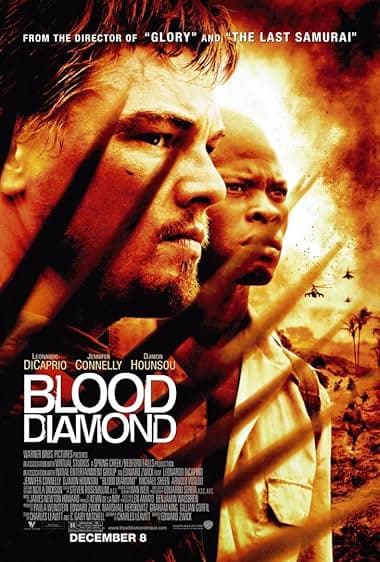
Blood Diamond
A mercenary, a fisherman and a pink diamond — and a film that still asks who pays for our jewellery.
Read the retrospective
→
2003
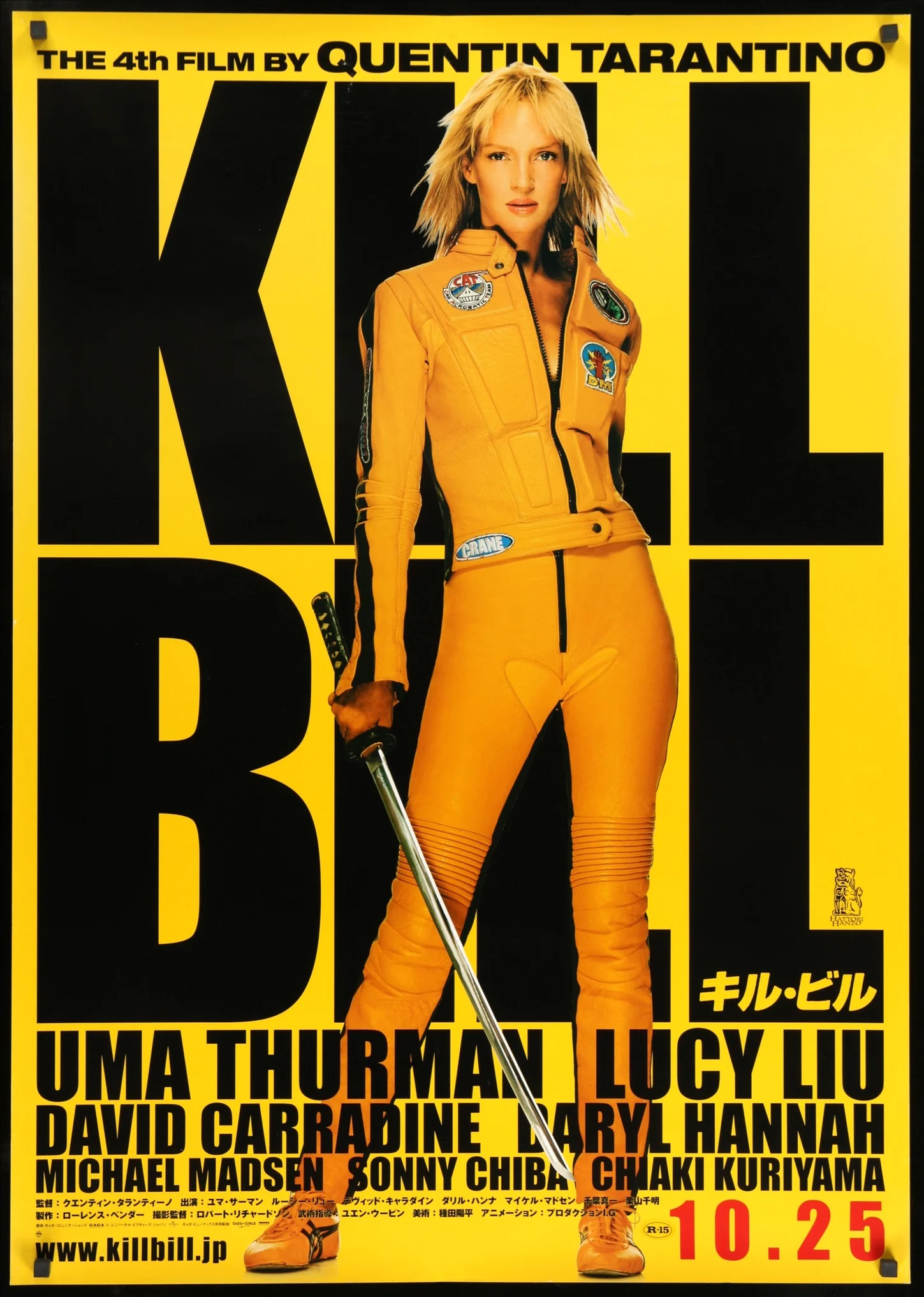
Kill Bill: Volume 1
A yellow jumpsuit, a long list of enemies and one woman who refuses to be finished.
Read the retrospective
→