Feature presentation
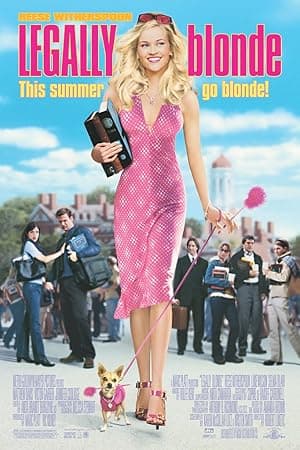
Legally Blonde is the kind of film that still sneaks up on you: light, sharp and surprisingly stubborn about who gets to be clever. It begins with a dumped sorority president chasing a lost boyfriend to Harvard Law and ends up turning courtroom procedure into a wedge against old assumptions about femininity and competence. If you remember the jokes, you might not remember how neatly the film balances charm with a proper bit of argumentative muscle.
THE MOVIE
Elle Woods is still the reason this movie works
You don't need a thesis to spot the movie's engine: Elle Woods, a fashion-merchandising sorority president from Los Angeles, decides to follow her ex to Harvard Law after he dumps her for wanting someone 'more serious.' It's an obvious setup — romantic slight leads to grand gesture — but Legally Blonde turns that simple inciting move into something sharper than revenge fantasy.
Directed by Robert Luketic and running a brisk 96 minutes, the film uses that premise to pull off a small sleight of hand. What starts as a quest to win a man back steadily becomes an argument with the world that wrote Elle off in the first place.
Reese Witherspoon plays Elle Woods, and the movie keeps returning to a handful of ideas — challenging stereotypes about femininity, the friction between appearance and competence, and the value of female friendship and mentorship — so that the comedy never feels empty or merely fashionable.
THE SETUP
The idea that sets Legally Blonde in motion
At face value the plot is tidy: Elle follows an ex to an elite law school. The move could have been a half-baked rom-com stunt, but the screenplay keeps feeding that premise into genuine law-school mechanics — admissions videos, Socratic classrooms, internships and courtroom appearances — so Elle's environment feels like an active part of the story rather than just a backdrop.
The second act tightens when the film introduces a murder trial involving fitness entrepreneur Brooke Taylor Windham. It's the kind of set piece that gives Elle a real field to prove herself in, and it reframes the stakes beyond personal redemption.
Crucially, the trial isn't decided by a sentimental speech. Elle notices a factual inconsistency in a witness’s account about having her hair permed, and that detail becomes a pivotal point in undermining testimony. A fashion-related observation, turned into legal evidence — it neatly collapses the movie’s two obsessions.
That structure — personal motive, institutional challenge, courtroom test — is why the setup works. The film keeps the mechanics of law school visible while letting Elle's personal growth drive the beats, so the story never feels like it’s cheating by swapping in a deus ex machina.
THE CHARACTER
Why Elle Woods matters
Elle matters because she refuses to be flattened into a single idea. Her initial motivation is blunt — a breakup pushed her to chase a boyfriend — but the film stages that desire as the first move in a longer, more interesting transformation.
Over the course of the story she pivots from chasing approval to asserting intellectual confidence and professional ambition. That shift is what makes her more than a punchline: she learns to take the institutions that dismissed her seriously, on her own terms.
Elle's connections keep her grounded. Her friendship with Paulette offers a personal, non-academic relationship that humanises her and provides a subplot about empowerment, while rivals like Vivian start as opponents and end up complicating what 'success' and 'seriousness' can look like for women.
Put simply, the movie builds Elle as someone who can hold two things at once: a love of style and a commitment to proving her competence. That combination is what gives the whole film its forward motion.
THE PERFORMANCE
Why Reese Witherspoon's performance matters
Contemporary reviewers singled out Reese Witherspoon as the film's anchoring presence, and that's a practical point rather than star worship: the movie leans on a single performer to carry both the jokes and the earnest beats.
What that means on screen is that Witherspoon provides a centre the audience can follow. The film asks you to believe that Elle is underestimated and then to cheer when she upends those expectations; the whole structure depends on the lead making both sides believable.
Because the screenplay gives Elle clear, tangible wins — small legal discoveries, moments of respect from classmates and mentors — Witherspoon's role is less about mystique and more about maintaining momentum. The performance keeps the emotional through-line intact.
UNDER THE SURFACE
Legally Blonde has more on its mind than the plot suggests
On the surface it's a bright comedy about a fish-out-of-water in an ivory-tower world. Underneath, the film keeps nudging at a few serious ideas: mainly the business of underestimating women because of how they look or what they enjoy.
Appearance versus competence is not an abstract slogan here; it's dramatized. Elle's fashion sense becomes a tool rather than a handicap when she uses what she knows — even seemingly trivial details — to spot a legal inconsistency. The movie turns prejudice against her into evidence she can exploit.
Female friendship and mentorship are written into the film's support structure. Allies like Emmett and personal relationships such as Paulette's provide resources Elle can't get from textbooks alone; they help her translate confidence into competence.
Finally, ambition and self-determination thread through Elle's arc. She begins with a personal reason to enroll at law school, but the film lets that motive evolve into an independent professional drive. That progression keeps the movie from being merely a congratulatory rom-com stunt.
THE FILMMAKING
How Legally Blonde was put together
One of the film's clearest choices is to make style a language. Production design, costuming and the overall colour approach favour a high-gloss, fashion-forward presentation that constantly reminds you who Elle is while creating a visual contrast with Harvard's more sober, muted settings.
That contrast isn't just cosmetic: by visually separating Elle from her surroundings the film keeps the tension between appearance and institutional seriousness in frame. It makes her look like an obvious oddity — which is the point — and then invites the audience to re-evaluate that reading as the story progresses.
In other words, the filmmaking openly curates Elle's world so the story can stage the argument about judgment in visual terms as well as narrative ones.
For a director making his feature debut, those choices help the movie speak clearly and quickly; the look is part of the film’s shorthand.
PURE 00s
Legally Blonde could not belong to any other decade
Released in the summer of 2001, Legally Blonde arrived at a moment when mainstream comedies were increasingly willing to centre young women in workplace or education settings. That timing helped the film find space to be both funny and institutionally pointed.
Its blend of rom-com setup and career-or-competence storylines is very much of the early-2000s mainstream: personable leads, digestible stakes, and a tone that mixes light comedy with a recognisable path to self-improvement.
The quick follow-up with a 2003 theatrical sequel speaks to how neatly the original packaged Elle as a lead who could carry more stories, a common instinct of the period when studios were eager to expand successful female-centred properties.
So while the film's style and marketing show their era, its structural choices — putting a young woman into an institution to be tested and to learn — are what really tie it to that moment in cinema.
THE LEGACY
Why Legally Blonde still matters
One simple reason the film has a footprint is that it grew into a small multimedia franchise: a 2003 theatrical sequel, direct-to-video spin-offs, and a stage musical adapted from the source material kept the story alive across formats.
Another practical point is that the role of Elle Woods became closely associated with Reese Witherspoon's career in the years that followed. The part helped raise her profile and made Elle a recurring reference when talking about smart, stylish female leads.
Those are concrete outcomes: the movie didn't vanish after its initial run. It seeded further versions of the story and helped shape how studios saw certain female-driven comedies as repeatable properties.
So its legacy is less a single grand claim and more a cluster of continuations and career effects that kept Elle's particular mix of charm and competence in circulation.
THE VERDICT
Does Legally Blonde still hold up?
Yes — with a clear qualification. If you watch it as a tight, 96-minute comedy that stages a neat argument about being underestimated, it mostly delivers. The film is explicit about its starting point: Elle follows her ex to law school after he leaves her for someone 'more serious,' and that frank motivation never pretends to be anything else.
What matters is the journey. Once Elle is at Harvard she faces classmates and faculty who judge her on appearance, and the movie gives her tangible ways to respond: study, internships and ultimately a courtroom moment where she exposes a witness’s inconsistency about a perm. That combination of procedural beats and personal growth is what keeps the story persuasive.
The supporting parts matter too: Emmett functions as an ally who recognises Elle’s abilities, and characters who begin as rivals, like Vivian, are allowed to evolve rather than remain caricatures. Those relationships let the film make its point about friendship and mentorship without being didactic.
So if you want something that still entertains while arguing that dresses and brains can coexist, Legally Blonde is worth revisiting. It’s not a radical reinvention of the rom-com, but it’s a clever, well-paced 2001 comedy that keeps a serious little case in its back pocket.
Share this movie
Keep watching
More movies from the 00s

2002
The Pianist
A quiet life unmade by war — and a pianist who refuses to stop listening.
Read the retrospective
→
2006
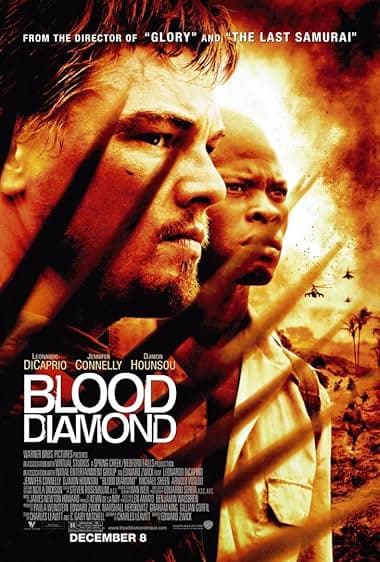
Blood Diamond
A mercenary, a fisherman and a pink diamond — and a film that still asks who pays for our jewellery.
Read the retrospective
→
2003
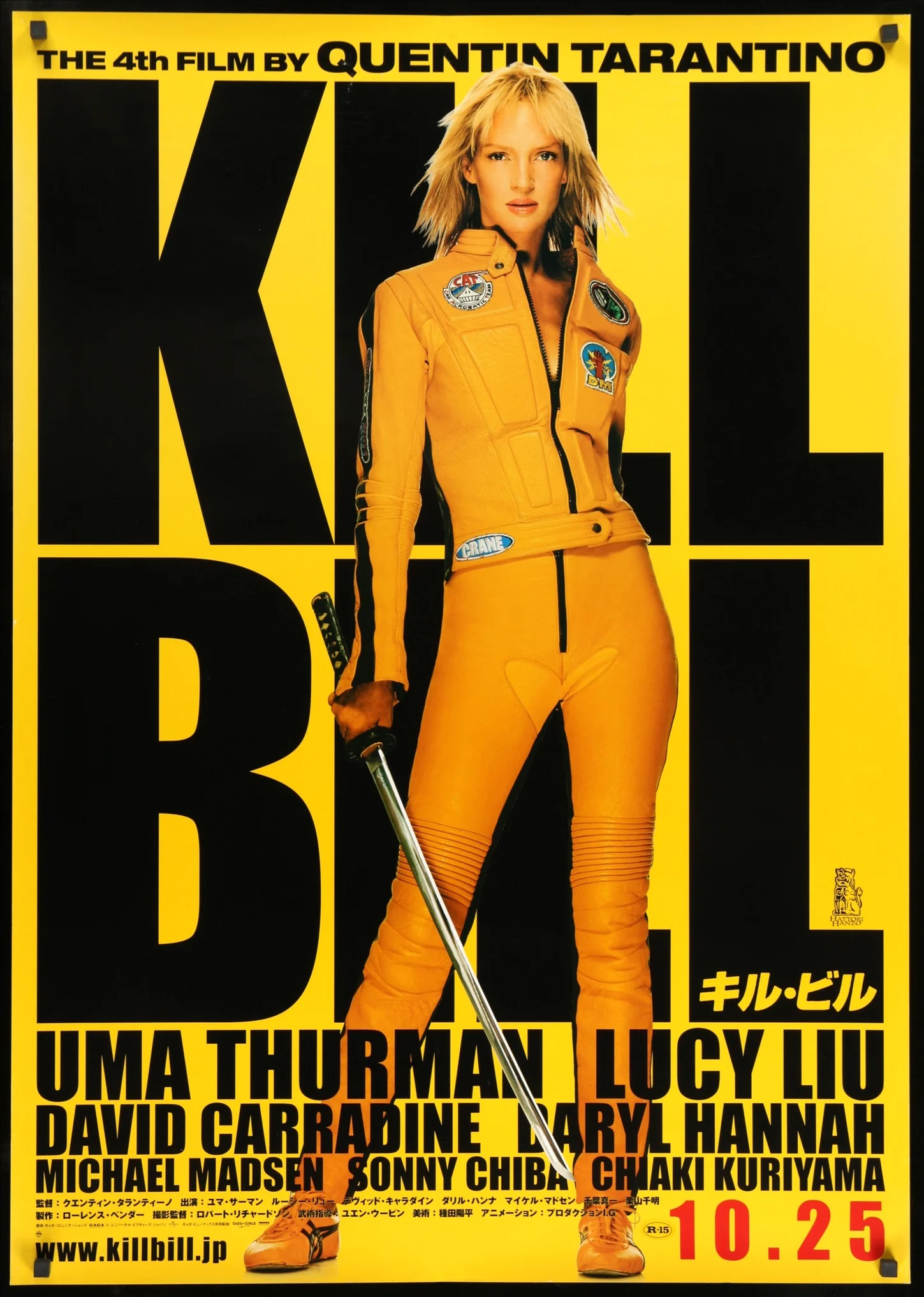
Kill Bill: Volume 1
A yellow jumpsuit, a long list of enemies and one woman who refuses to be finished.
Read the retrospective
→