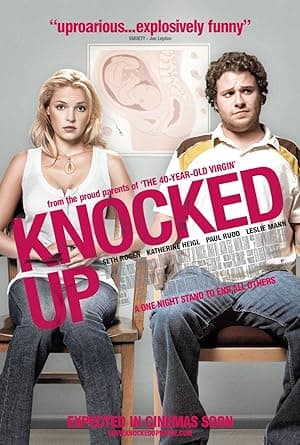
Knocked Up
One drunken night, an unexpected baby — and Ben Stone, who somehow keeps the whole thing honest.
Feature presentation
Knocked Up is the Judd Apatow romcom that starts with a one-night stand and then refuses to treat the pregnancy as a punchline. The film sets an amiable, aimless bloke and a career-minded woman on a collision course with grown-up decisions — and the result is often messy, frequently funny and quietly unromantic in ways that still matter.
THE MOVIE
Ben Stone is still the reason this movie works
Knocked Up hangs on a simple, awkward engine: a one-night stand between Alison and Ben leads to an unplanned pregnancy, and suddenly two very different lives have to talk to each other. That central mismatch — a career-minded woman and a cheerful, directionless bloke — is the film’s declarative problem and its comic promise.
What keeps the film feeling immediate isn’t the scenario so much as the people. Ben Stone arrives as an amiable slacker, the kind of guy whose life invites affection and exasperation in equal measure; the pregnancy forces that contrast into sharp relief. The movie then spends most of its time watching how those different halves try to meet somewhere in the middle.
It’s very much an Apatow picture: written, produced and directed by Judd Apatow and built around an ensemble where improvisation is allowed to breathe. That looseness — the give-and-take between the leads and the crowd around them — is how a personal story about unexpected parenthood becomes something rather larger.
THE SETUP
The idea that sets Knocked Up in motion
The film’s inciting image is straightforward: Alison discovers she’s pregnant after a drunken encounter with Ben. That discovery isn’t a throwaway gag — it’s the structural hinge the rest of the story hangs from.
From there the movie does what good romantic comedies often do: it stages a series of conversations and confrontations that reveal character more than plot. Alison brings a different set of expectations to the pregnancy than Ben, and those expectations create the drama.
At its centre is a tension between Alison’s career-minded life and Ben’s arrested-development lifestyle. The question the film keeps returning to isn’t only whether they’ll stay together, but whether either of them will change enough to raise a child.
A lot of Knocked Up advances as conversational set-pieces — talky scenes that lean on the cast’s chemistry and improvisational instincts instead of twisty plotting. It’s a movie that earns its emotional beats through extended, messy human exchanges.
THE CHARACTER
Why Ben Stone matters
Ben Stone is the film’s emotional fulcrum. He turns up as an amiable but aimless figure, the sort of bloke people like and then sigh about when his life choices are considered more closely.
That amiability matters because it makes the stakes ambiguous. He’s not a villain; he’s someone who needs to be nudged — by friends, by family, by circumstance — into taking responsibility. His trajectory is less about a sudden moral conversion and more about gradual, often halting behavioural change.
The movie sets him against a married couple — Debbie and Pete — who act as a model of domestic life. Their presence highlights what Ben (and Alison) would be walking toward, and it gives the film somewhere practical to point: domesticity is possible, even if it looks boring on the surface.
Around Ben is a peer group of roommates and friends who both enable his arrested development and, crucially, confront him. That network makes his eventual movement believable: he doesn’t change in isolation, he’s pushed and pulled by people who care enough to call him out.
UNDER THE SURFACE
Knocked Up has more on its mind than the plot suggests
On the surface it’s a romantic comedy about an unplanned pregnancy. Under the surface it’s asking what happens when two people with different priorities are forced into a future neither planned for.
Unexpected parenthood is the obvious theme, but the film uses that situation to interrogate male maturation. Ben’s arrival as a slacker isn’t just comic shorthand; it’s a prompt for questions about how grown-up men are supposed to behave when responsibility arrives uninvited.
Family and sibling dynamics also crop up repeatedly. Alison’s family life, and the contrast with Pete and Debbie’s marriage, gives the film reference points for what family might look like — practical examples rather than lecture-room statements.
Finally there’s the business of career versus family. Alison’s choices are shown to have trade-offs. The film doesn’t solve that tension, but it allows the argument to unfold in domestic conversations rather than tidy, on-the-nose speeches.
THE FILMMAKING
How Knocked Up was put together
Apatow’s approach here is practical and ensemble-focused. The production used multiple cameras to capture improvisation and to allow long, uninterrupted exchanges — the sort of setup that encourages actors to play off each other freely.
That choice feeds directly into the movie’s rhythm: extended set-pieces where the conversation itself is the engine. Rather than chopping dialogue into quick beats, the camera arrangement lets scenes breathe and lets comic, revealing moments arrive naturally.
The film’s credits also remind you it’s a collaborative assembly: Eric Edwards is listed as cinematographer, Brent White and Craig Alpert as editors, and Jefferson Sage as production designer. Those roles supplied the technical scaffolding that kept the improvisational performances coherent.
Put simply: the filmmaking choices are designed to support the ensemble and the talky scenes that carry the story, rather than to impose a formal trick on the material.
PRACTICAL EFFECTS
The effects work that gives Knocked Up its physical personality
For a film about pregnancy, some of the most literal craft work happens off-camera. Makeup artist Matthew Mungle built three prosthetic pregnancy bellies to show Alison’s progression through pregnancy — a physical device that lets the story keep its visual continuity.
There’s also a sequence that required old-fashioned muscle: an on-set hydraulic ram was used on a mounted bedroom platform to simulate an earthquake. It’s a reminder that even comedies sometimes need practical engineering to sell a moment.
And then there’s the small, deliberate grime — the production created a filthy look for a pool using instant tea, painted sides and floating detritus to achieve the right feel. It’s a tiny touch, but those details help make scenes feel lived-in rather than studio-clean.
PURE 00s
Knocked Up could not belong to any other decade
Knocked Up is very much an early-2000s animal: it sits inside Judd Apatow’s cycle of R-rated ensemble comedies that followed The 40-Year-Old Virgin and leaned on recurring performers and an improvisation-friendly set-up.
Many of the cast were collaborators from Apatow’s earlier projects in television and film, which gives the movie a communal feel — a troupe comfortable with each other and ready to riff, scene after scene.
The film’s 2007 release places it near the height of that Apatow moment, a period when ensemble-driven, talk-heavy comedies were a recognisable strand of mainstream comedy.
Even institutional recognition hints at its place in the decade: AFI selected Knocked Up as one of its Movies of the Year for 2007, which is a neat bookend for where it sits in the 00s conversation.
WATCHING IT NOW
What has aged — and what hasn't
A lot of the movie’s thematic scaffolding still reads clearly today: family and sibling dynamics remain central, and the film’s scenes about negotiating responsibility feel recognisable to anyone who’s ever had to talk about parenthood seriously.
The tension between career and family — especially for Alison — is another strand that keeps the film from feeling entirely of a moment. Those conversations about trade-offs still land, because they’re grounded in ordinary decision-making rather than headline-ready pronouncements.
The central relationship, the one-night stand turned pregnancy, still works as a premise: it forces characters into adult conversations they wouldn’t otherwise have. That situation remains a useful way to interrogate what it means to grow up.
Finally, the improvisation-friendly casting choice also helps the film age in a particular way: the supporting players — many using their own names — give the world texture, which keeps the movie lively when you rewatch it.
THE LEGACY
Why Knocked Up still matters
Part of Knocked Up’s afterlife is institutional: AFI selected it as one of its Movies of the Year for 2007, which keeps it visible in decade-roundups and festival histories.
There’s also a practical legacy in the spin-off: Judd Apatow returned to the same neighbourhood of characters for This Is 40, following Pete and Debbie and underlining that the world he built had more to say beyond the original story.
The film’s soundtrack project — Strange Weirdos, produced by Loudon Wainwright III and Joe Henry — is another strand of its footprint, a reminder that the movie aimed to be a cultural package rather than a single gag.
Finally, the original screenplay received a Writers Guild nomination, which is a decent marker that the industry saw the film as more than throwaway comedy.
THE VERDICT
Does Knocked Up still hold up?
Yes — with a couple of important reservations. The film’s premise (a one-night stand resulting in pregnancy) still provides a solid dramatic engine: it forces conversations about responsibility that feel earned rather than manufactured.
The central conflict — Alison’s career-minded expectations against Ben’s arrested-development lifestyle — still gives the movie its emotional stakes. Because the film chooses to play those stakes out in long, improvised scenes rather than tidy plot turns, the results can be messy, but that mess is often the point.
There are moments of visual and narrative shorthand — insert shots that track the fetus’s development act as a recurring motif — but overall the movie’s heartbeat is conversational. If you like character-led comedy that lets awkwardness breathe, Knocked Up still delivers.
So if you’re choosing whether to watch it now: go for the messy human talk, the domestic contrasts that still ring true, and Ben Stone’s slow, believable nudging toward responsibility. It’s not flawless, but it remains one of the sharper, more human mainstream comedies of its moment.
Share this movie
Keep watching
More movies from the 00s
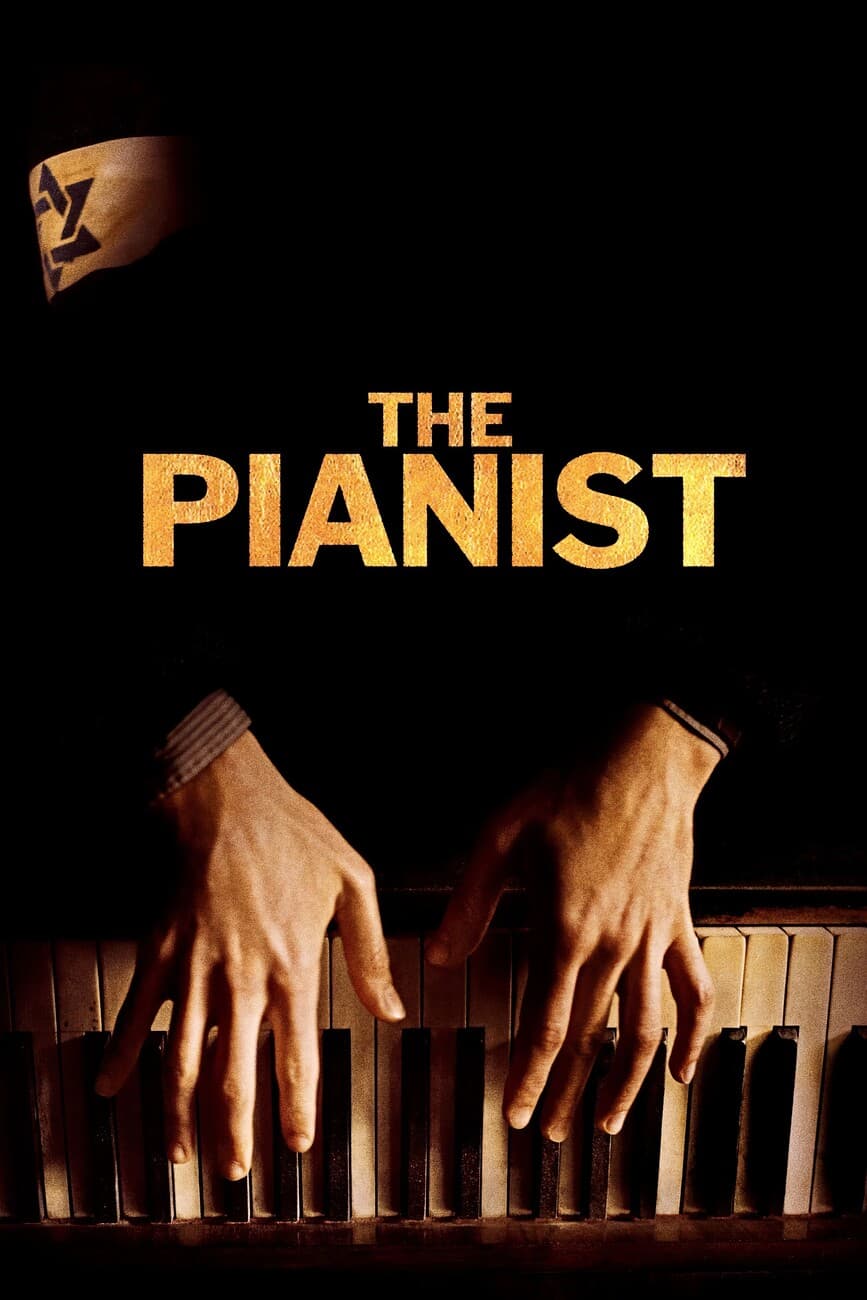
2002
The Pianist
A quiet life unmade by war — and a pianist who refuses to stop listening.
Read the retrospective
→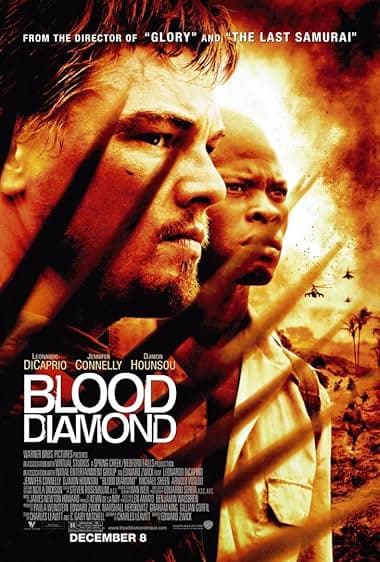
2006
Blood Diamond
A mercenary, a fisherman and a pink diamond — and a film that still asks who pays for our jewellery.
Read the retrospective
→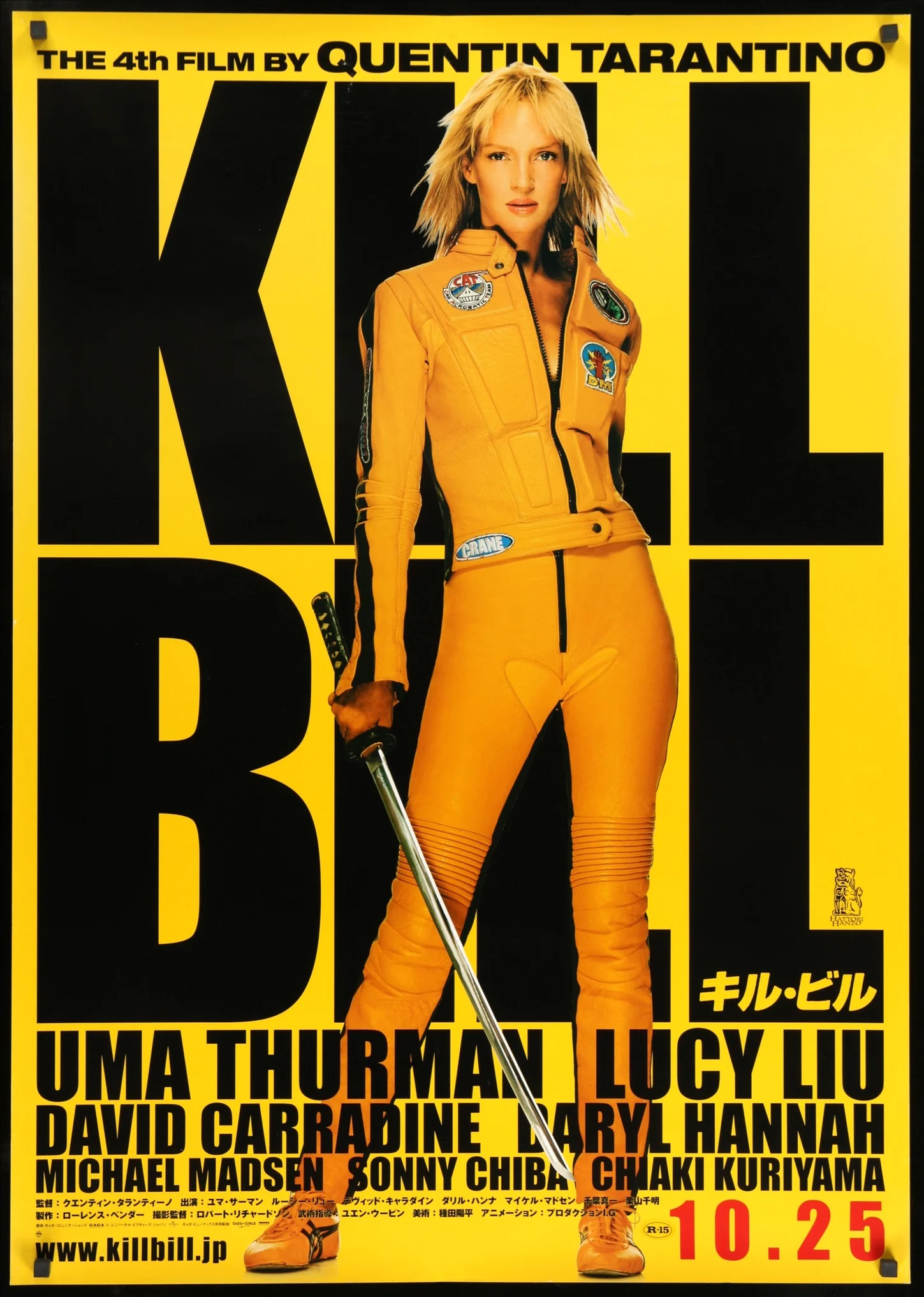
2003
Kill Bill: Volume 1
A yellow jumpsuit, a long list of enemies and one woman who refuses to be finished.
Read the retrospective
→