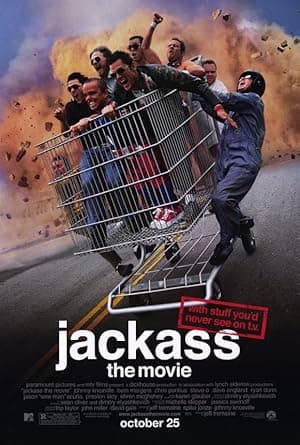
Jackass: The Movie
A mess of daft, dangerous laughs — and Himself at the centre of the chaos.
Feature presentation
Watching Jackass: The Movie is an acquired taste with a very specific flavour: loud, rude, and utterly committed to the joke of bodily danger. It turned a parade of stunts and pranks into something that could sit in a cinema and make a crowd howl — or squirm. This piece looks at why that works, who holds it together, and whether the shock still lands two decades on.
THE MOVIE
Himself is still the reason this movie works
There isn’t a plot to follow so much as a promise: watch this lot do stupid and dangerous things and laugh. Jackass: The Movie stitches together stunts, hidden-camera pranks and short recurring bits and leans into shock as an honest form of entertainment.
That structure — not a story but a sequence of performed ideas — requires a focal point. The cast appear on-screen as themselves and repeatedly volunteer to be humiliated or hurt; that willingness is the engine that keeps an 85-minute runtime from stalling.
Jeff Tremaine directed the theatrical leap from small-screen mischief to a bigger, louder cinema presentation. The result is less a conventional film than a live exhibition of spectacle: physical risk front and centre, and a troupe whose camaraderie helps sell every cringe-worthy gag.
THE SETUP
The idea that sets Jackass: The Movie in motion
If you need a plot, this isn’t the place to find one. The movie deliberately refuses narrative mechanics in favour of a succession of staged stunts and pranks.
Each segment arrives with the modest dramatic guarantee that someone will try something daft, it will go wrong — often very wrong — and the camera will be there to record the fall-out.
Crucially, most of these moments feel presented as planned performances rather than accidental documentary finds: a troupe executing pre-arranged ideas for maximum reaction.
That setup — performed stunts as the organising principle — is why the film feels like an extended variety show rather than a miniature feature film.
THE CHARACTER
Why Himself matters
Johnny Knoxville is credited as playing Himself, but in practice that label means he is the troupe’s ringleader and the on-screen focal performer who draws attention and keeps the mood moving.
The movie is full of contributors — Bam Margera, Steve-O, Ryan Dunn, Chris Pontius, Wee Man, Dave England, Preston Lacy and Ehren McGhehey all appear as themselves — yet the show needs a centre. Knoxville fills that role.
Having the cast appear as themselves makes the humiliation feel like a mutual agreement: these are friends who consent to the joke, and that shared willingness shapes how the audience reads each stunt.
Producers on the release include Jeff Tremaine, Spike Jonze and Johnny Knoxville, which helps explain why the film feels like an expanded, theatrical version of the same group energy that fuelled the TV show.
THE PERFORMANCE
Why Johnny Knoxville's performance matters
Contemporary coverage singled Knoxville out as the central on-screen presence — the guy who invites the worst of the jokes and often takes the biggest hits.
That centrality matters because someone has to hold attention across a parade of sketches and stunts. Knoxville’s role as the focal performer gives the film a personality it would otherwise lack.
With no conventional arc to carry, the film relies on identifiable energy: a ringleader you recognise and return to between bits.
Put simply: the movie’s coherence depends on having a reliable frontman — and contemporary response marked Knoxville as that frontman.
UNDER THE SURFACE
Jackass: The Movie has more on its mind than the plot suggests
At surface level it’s shock and gross-out comedy. But that deliberate testing of taste sits inside a clearly framed R-rated theatrical context: the film is consciously transgressive.
Risk and spectacle drive almost everything. The stunts are entertainment because they confront viewers with real bodily danger and endurance — a kind of livewire tension between curiosity and discomfort.
There’s also a specific flavour of masculine camaraderie at play: troupe members repeatedly share risk and humiliation, which reads like an agreement to shoulder the joke together.
Finally, performative self-harm as entertainment is the uncomfortable centre: the film asks the audience to enjoy watching people injure themselves for laughs, and it never disguises that asking.
THE FILMMAKING
How Jackass: The Movie was put together
The movie was shot over several months using multiple Digital Beta cameras. That approach feels practical rather than showy — you want coverage of messy stunts from various angles, fast.
Shooting across months with that many cameras allowed the filmmakers to capture staged stunts and hidden-camera setups without pretending anything was improvised documentary gold.
Because the feature is assembled as a collection of bits rather than a single narrative, the editing has to knit energy and surprise together instead of continuity or character development.
In short: the filmmaking choices are pragmatic. They serve the simple need to record risk clearly and repeatedly so each gag can land in front of an audience.
PRACTICAL EFFECTS
The effects work that gives Jackass: The Movie its physical personality
Most of the shocks and grosses are achieved through practical, in-camera setups rather than digital trickery. That keeps the film feeling tactile and immediate.
Production reporting lists an array of props and animals used in those practical stunts — everything from alligators to mousetraps, wasabi and firecrackers — which tells you how literal the physical humour is.
Because the effects are practical, there’s an unavoidable sense of consequence: what you see often feels like it really happened to someone, rather than being stitched together in post.
That physicality is essential to how the film wants to make you react: laughter, disgust, awe — often all at once.
PURE 00s
Jackass: The Movie could not belong to any other decade
This was the early 2000s making a theatrical career out of what worked on cable: a direct adaptation of the MTV series brought that small-screen energy to cinemas in October 2002.
Its theatrical release came at a moment when reality-style programming and gross-out comedy were finding mainstream theatrical footing — Jackass moved that TV sensibility into a bigger venue.
Paramount partnered with MTV Films to open the movie in major cities on 25 October 2002, an industry-sized stamp of approval for what had been a cult cable show.
The box-office numbers underline that the experiment worked as a business proposition: a strong opening weekend and solid domestic run showed there was an audience for this particular brand of shock-comedy on the big screen.
THE LEGACY
Why Jackass: The Movie still matters
The film opened at number one on its opening weekend and had a box-office run that proved a TV stunt show could survive — and pay — in theatres. That commercial success mattered for how the franchise continued.
Because it translated MTV mischief into a viable theatrical product, it became the first feature entry in a multi-film Jackass franchise with direct sequels in the years that followed.
Its legacy is therefore straightforward: it demonstrated a template for making the leap from small-screen shock to cinema spectacle and gave the troupe a longer runway for their brand of comedy.
Whether you admire that model or find it morally awkward, the practical consequence was that the format endured beyond one televised run.
THE VERDICT
Does Jackass: The Movie still hold up?
If you go looking for plot, character development or subtlety you will leave unimpressed. The film is an 85-minute assemblage of stunts and pranks designed to shock, gross out and provoke laughter — and it does exactly that.
What determines whether it ‘holds up’ is whether that bargain still appeals: spectacle and bodily risk for the sake of a communal reaction. The movie foregrounds endurance and danger, and the troupe’s mutual participation turns individual humiliation into shared comedy.
Johnny Knoxville remains the focal point who stitches the material together; contemporary coverage picked him out as the on-screen ringleader, and the film leans on that presence to keep momentum between larger bits. The theatrical release also broadened the material’s scope, allowing bigger props and more ambitious setups than the TV shorts.
So should you watch it now? If you’re curious about an early-00s moment when reality TV met theatrical stunt spectacle, or you enjoy gag-driven physical comedy with a clear ‘we all agreed to this’ spirit, it still delivers. If the central conceit — people hurting themselves for laughs — puts you off, the film will feel as uncompromising as it ever was.
Share this movie
Keep watching
More movies from the 00s

2002
The Pianist
A quiet life unmade by war — and a pianist who refuses to stop listening.
Read the retrospective
→
2006
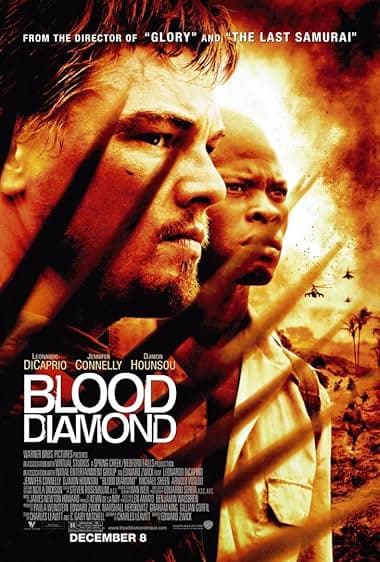
Blood Diamond
A mercenary, a fisherman and a pink diamond — and a film that still asks who pays for our jewellery.
Read the retrospective
→
2003
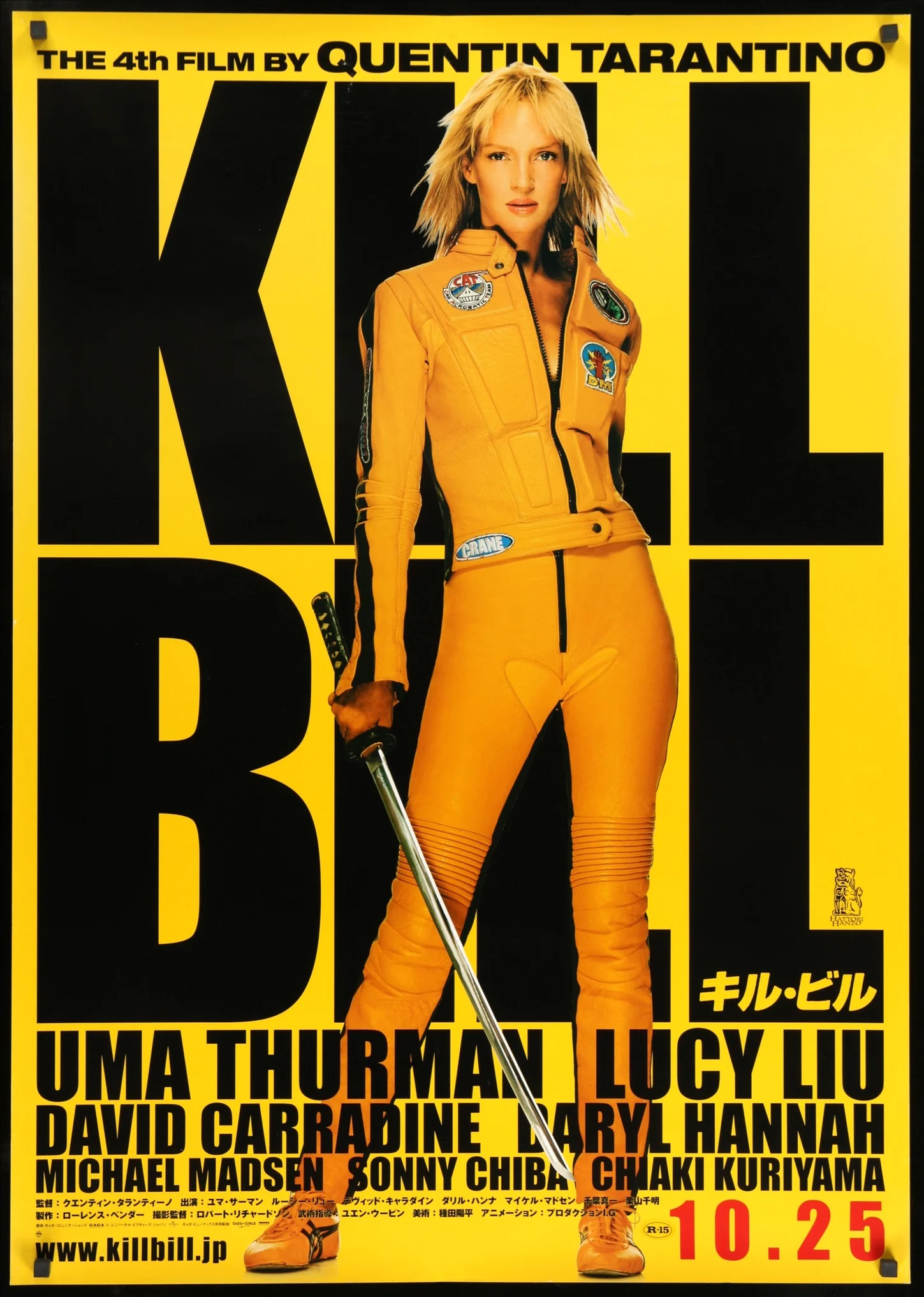
Kill Bill: Volume 1
A yellow jumpsuit, a long list of enemies and one woman who refuses to be finished.
Read the retrospective
→