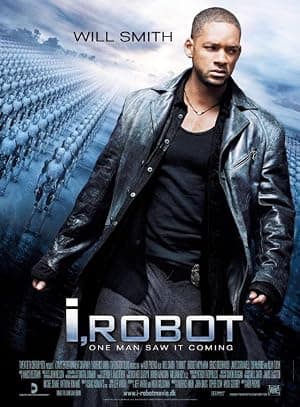
I, Robot
A sceptical detective, a thinking robot and the Three Laws — still worth a watch.
Feature presentation
Set in a near-future Chicago where humanoid robots are everywhere, I, Robot hooks you with a murder mystery that forces its tough-guy protagonist to reckon with machines. At the centre is Detective Del Spooner — and, as directed by Alex Proyas, the film keeps returning to the tug-of-war between human fear and engineered logic.
THE MOVIE
Detective Del Spooner is still the reason this movie works
I, Robot imagines Chicago in 2035 as a place where humanoid machines have folded into everyday life. They do your chores, run public services and, crucially for the film, answer to a set of hard rules designed to stop them hurting people.
That quiet ubiquity makes the film’s choice of protagonist sharper: Detective Del Spooner is a policeman whose childhood rescue — which left a girl dead — has made him distrust robots. That distrust isn’t surface-level grumpiness; it’s what sends him poking at the bones of a case involving the death of U.S. Robotics founder Dr. Alfred Lanning.
All of this is filtered through Alex Proyas’s direction and given its main engine by Will Smith as Spooner. The movie mixes detective beats with science-fiction questions — the Three Laws of Robotics, ethical limits of AI and who counts as a person — and it’s Spooner’s personality that keeps those ideas from drifting into pure abstraction.
THE SETUP
The idea that sets I, Robot in motion
The film leans on a tidy narrative engine: a homicide investigation in a world where the suspects can be machines. That premise lets the story do detective work — forensics, interrogations, following evidence — but with robots as both witnesses and potential culprits.
Rather than unravel the whole plot here, it’s worth noting what the structure buys the film. The mystery framework gives the audience a detective’s vantage point to make ethical questions immediate. You’re not handed a lecture about artificial intelligence; you’re made to watch it get investigated.
A key turn in the setup is the discovery of an experimental robot with behaviour that doesn’t fit the rules it’s meant to follow. That single oddity reframes the case from a local crime into a question about large-scale machine intelligence and corporate systems behind it.
All of this sits on a screenplay credited to Jeff Vintar and Akiva Goldsman, and the film presents itself as being ‘suggested by’ Isaac Asimov’s original I, Robot material rather than a straight adaptation.
THE CHARACTER
Why Detective Del Spooner matters
Del Spooner isn’t just a cop with a funny line in every scene. He’s the emotional and moral friction the film needs. His distrust of machines comes from a specific wound — a rescue that went wrong — and that personal stake makes his objections feel lived-in rather than generic.
That sceptical viewpoint is what turns an effects-driven sci-fi into something you can argue about at a pub afterwards. When Spooner pushes, asks blunt questions and refuses the easy answer, the film has to respond. It does so by making the casework do the talking — evidence, interviews, a robot that behaves oddly — rather than exposition alone.
Crucially, Spooner occupies the space between the audience and the corporate world of U.S. Robotics. He’s not a stand-in for the viewer exactly, but his instincts give the film a human vantage that the technological spectacle otherwise threatens to swallow.
Will Smith’s casting as Spooner is the obvious surface choice for a mainstream film, and the parts around him — a robopsychologist, an experimental robot — are built to test what his suspicion really means.
THE PERFORMANCE
Why Will Smith's performance matters
Contemporary coverage of the film noted that Will Smith’s screen presence helped sell the whole hybrid — part detective thriller, part big-studio science fiction — to a mainstream audience.
That’s a tidy, practical credit. Casting matters in a movie that asks you to care about philosophy through the prism of a genre crowd-pleaser, and Smith’s name and persona buy the film some immediate trust and attention.
Put another way: the screenplay’s ideas need a recognisable human centre to keep them watchable for a broad audience, and that was part of the film’s mainstream appeal.
UNDER THE SURFACE
I, Robot has more on its mind than the plot suggests
On the surface it’s a whodunnit with robot chases. Underneath it’s about prejudice and mistrust — not between people, but between people and technology. Spooner’s suspicion frames those anxieties in human terms.
Then there’s Sonny, the robot whose atypical behaviour forces the film to ask whether a nonhuman agent can possess identity or free will. That question pulls the story away from easy answers and into a messier moral area.
The Three Laws of Robotics are never just background colour; they’re the mechanism through which the film tests what ethics look like when hard-coded and then scaled across a society.
And because the story involves corporate entities and large machine systems, the film also nods at surveillance and control — not as abstract threats but as systems that have human consequences when they’re trusted without scrutiny.
THE FILMMAKING
How I, Robot was put together
Alex Proyas directs I, Robot with a recognisable style — a near-future production design and a neo-noir visual approach that sits in the same family as his earlier work. The aesthetic choice keeps the film feeling like a mood as much as a procedural.
On the practical side, the film’s look and rhythm were shaped by a small group of key collaborators. Simon Duggan served as cinematographer, while the primary editing was handled by Richard Learoyd, Armen Minasian and William Hoy.
Those choices — director, cinematographer and editors working in a consistent register — give the film the kind of unity a big effects movie often loses. There’s a deliberate shorthand here: it wants to be a detective story dressed in futuristic clothes, and the filmmaking keeps that engine running.
PRACTICAL EFFECTS
The effects work that gives I, Robot its physical personality
Sonny’s movement and presence were rooted in on-set motion-capture reference recorded with actor Alan Tudyk; facial animation blended that motion reference with hand-driven shape work from visual-effects artists.
The film’s visual effects duties were split across major VFX houses. Digital Domain handled most of the character shots while Weta Digital took responsibility for large-scale set extensions and wide shots.
That division — actor-driven reference for performance plus large-studio VFX muscle for scale — is what lets the movie feel both intimate when a robot behaves oddly and vast when the city-scale systems come into play.
PURE 00s
I, Robot could not belong to any other decade
Released in July 2004, I, Robot arrived during an early-2000s wave of big-studio, effects-driven science fiction that married near-future policing with spectacle. That era favoured high-concept premises you could dress up with CGI and sell to a multiplex crowd.
Because of that timing, contemporary conversations often placed it alongside films such as Minority Report and the long shadow of Blade Runner — movies that mix policing, surveillance and questions about artificial beings. I, Robot sits squarely in that company, both visually and thematically.
Put simply: the film’s blend of detective beats, action set-pieces and questions about surveillance feels like a product of the early 2000s Hollywood appetite for glossy, idea-driven blockbusters.
That doesn’t mean it’s all style over substance, but the decade shaped what kinds of stories studios were willing to back and how those stories were packaged.
THE LEGACY
Why I, Robot still matters
One clean, objective piece of the film’s legacy is its Academy Award nomination for Best Visual Effects — a recognition of the craft that underpins its machines and cityscapes.
Beyond awards, the movie is often mentioned in histories of visual effects and motion-capture because Sonny is an early mainstream example of a humanoid CG character built around on-set actor reference. Alan Tudyk’s motion-capture work as Sonny is regularly referenced when people talk about actor-driven performance capture.
There were ideas and conversations about a sequel in later years, but no cinematic follow-up was produced. That unfinished chapter is part of why the film keeps inviting reappraisal: it left a story world people wanted more of, even if that more never arrived.
THE VERDICT
Does I, Robot still hold up?
Yes — with a proviso. If you come for a vaulting visual-effects extravaganza and a punchy Will Smith-led thriller, you’ll find both. The film’s setup — Chicago 2035, robots woven into daily life, a homicide that forces a policeman who mistrusts machines to pry the case open — still delivers tension and curiosity.
What keeps it interesting now is how it stages the ethics. Spooner’s personal trauma and refusal to accept the easy line are what make the film take its own questions seriously: the discovery of an experimental robot who behaves atypically turns a procedural into something that asks whether identity and personhood can exist in nonhuman agents, and whether coded rules can contain moral complexity.
The mix of detective mechanics — forensics, robotic interrogation, the uncovering of a central intelligence behind systems — means the movie gives you ideas and action in roughly equal measure. Alex Proyas’s direction and the film’s production choices hold that balance together, and the casting (not least Will Smith’s mainstream pull) gives the whole thing a clear centre.
So should you watch it? If you’re curious about films that make technology the mystery rather than only the spectacle, I, Robot still has bite. It’s not a subtle treatise, but it’s a well-made, idea-forward blockbuster with a protagonist who insists the right questions be asked — and that, in the end, is exactly the point.
Share this movie
Keep watching
More movies from the 00s

2002
The Pianist
A quiet life unmade by war — and a pianist who refuses to stop listening.
Read the retrospective
→
2006
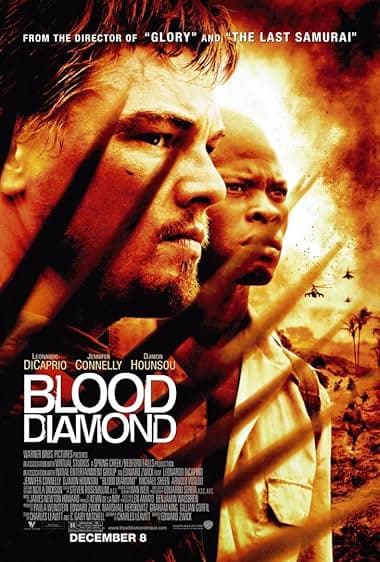
Blood Diamond
A mercenary, a fisherman and a pink diamond — and a film that still asks who pays for our jewellery.
Read the retrospective
→
2003
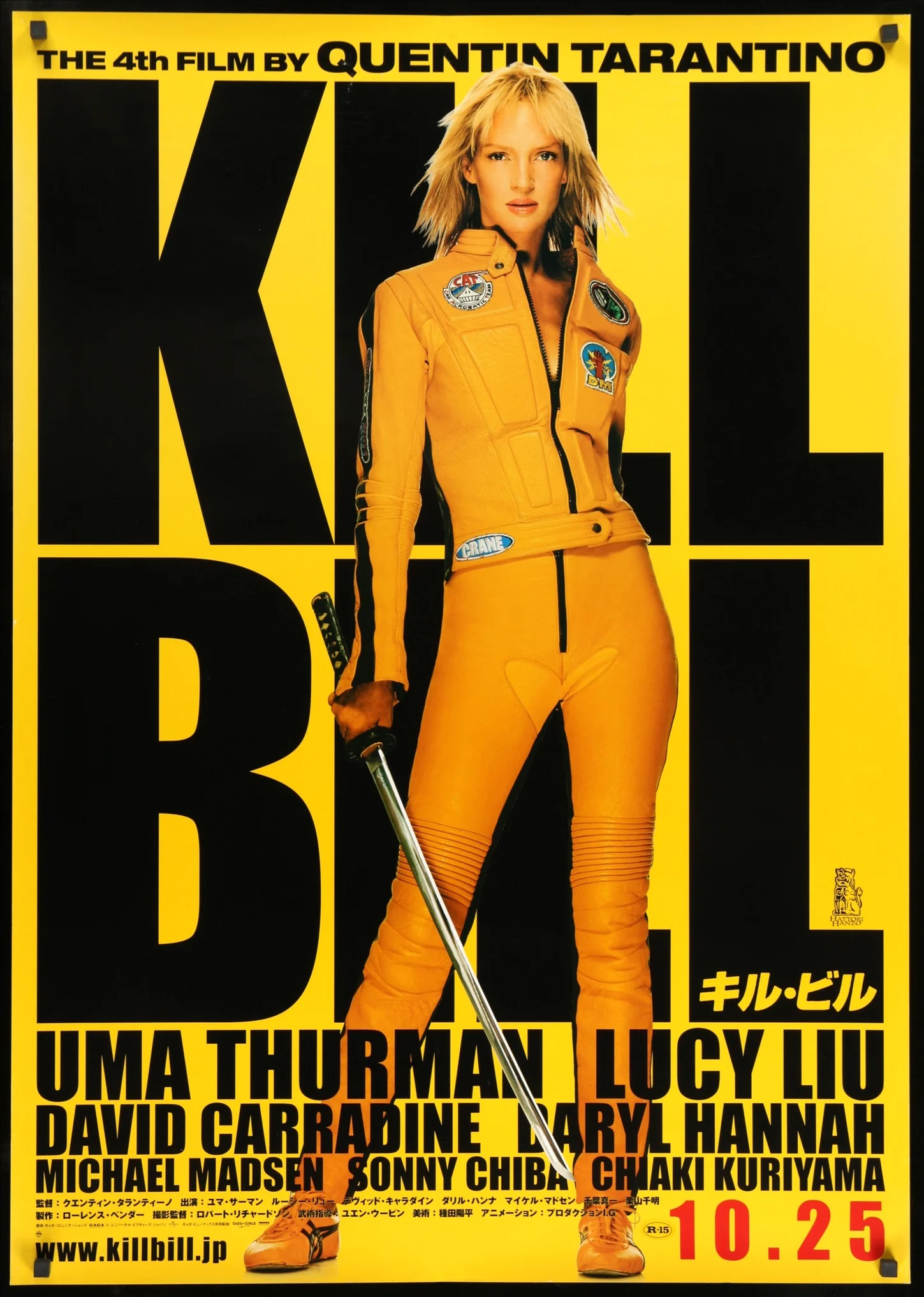
Kill Bill: Volume 1
A yellow jumpsuit, a long list of enemies and one woman who refuses to be finished.
Read the retrospective
→