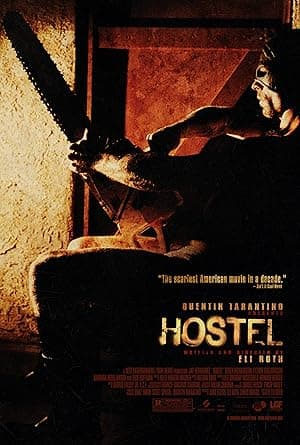
Hostel
Backpackers, bad choices and a market for cruelty — Paxton is the one you end up routing for.
Feature presentation
Hostel hooks you with a very simple, very recognisable bait: young Americans abroad, promised sex and freedom, tempted into the wrong place. It’s not just the shocks that keep people talking; it’s that the film hands the story to a character — Paxton Rodriguez — whose choices turn a nightmare into something you can follow, root for and, at times, flinch alongside.
THE MOVIE
Paxton Rodriguez is still the reason this movie works
You can describe Hostel as a simple hook: a handful of American travellers on the loose in Europe are steered towards a shabby-sounding hostel by the promise of attractive local company. That is the invitation — and the trap.
What lifts the film beyond a lurid premise is how those choices land. Paxton Rodriguez is one of the lead tourists whose decisions and actions drive the later escape and vengeance sections of the plot, so the film doesn’t let the violence feel abstract; it arrives through someone whose mistakes you can follow.
Eli Roth wrote and directed the picture, and he keeps it tight — a 94-minute horror-thriller-splatter with a blunt appetite for discomfort. Under the surface sits the ugly business model that makes the story possible: commodified violence, packaged for wealthy spectators. That combination is why people still talk about it.
THE SETUP
The idea that sets Hostel in motion
The film’s engine is a piece of very human bait: the protagonists are persuaded to head to a hostel described as full of beautiful local women. It’s a believable enough temptation for young travellers, and the movie uses that plausibility smartly.
From there the central conflict reveals itself: the hostel is a front. Behind its doors sits an organised operation that sells abducted tourists to wealthy clients, who pay to watch — and take part in — torture and killing.
The mechanics are straightforward and cruel: seduction and drugging make victims pliable, intermediaries move them through the network, and an ‘Elite Hunting Club’ stages live events for paying customers. The horror is both physical and transactional.
Without tipping the ending, the film keeps certain practical facts in play: the group splits up after arrival, one traveller vanishes early, and local corruption — police and intermediaries — is part of how the system keeps functioning.
THE CHARACTER
Why Paxton Rodriguez matters
Paxton is the film’s practical centre. He’s one of the Americans dragged into the mess, and crucially he’s the person whose choices steer the film from victim-story into action-led flight and retribution.
That shift matters. Once the story pivots away from shock-at-all-costs and toward someone trying to fix what’s happened, the stakes become easier to care about. Paxton’s decisions give the audience a place to stand amid the chaos.
You don’t need a grand speech or tidy psychology for him to register. The plot hands him responsibility and momentum, and the film rests on how believable those moments feel within its brutal world.
So when people remember Hostel, they often remember that it wasn’t only a parade of excess — it was also about a traveller pushed into making hard choices. Paxton is where the film earns its forward motion.
UNDER THE SURFACE
Hostel has more on its mind than the plot suggests
On the surface the movie is a survival thriller. Underneath it’s asking a few nasty questions about markets: what happens when violence becomes a commodity for people with money and no conscience?
That commodified violence turns suffering into product. The film’s organised market for torture reframes cruelty as entertainment, and that framing asks viewers to notice their own role as spectators — are we simply consuming spectacle, or are we implicated in it?
Linked to that is the film’s frankness about sex tourism and vulnerability. The initial lure is sexual freedom, and the story draws a line from casual entitlement to catastrophic consequence. It’s deliberately discomforting.
Finally, there’s a class angle: the people who pay to watch and wound aren’t nameless monsters; they’re wealthy clients whose money buys them moral impunity. The movie uses that contrast — rich predator, exposed victim — to sharpen its bite.
THE FILMMAKING
How Hostel was put together
There’s a compactness to the technical credits that suits this film. The cinematography credit goes to Milan Chadima and George Folsey Jr. handled editing duties, which keeps the movie lean and fast-paced.
That tight assembly matters because the film’s impact relies on momentum. It doesn’t luxuriate; it moves. The production choices keep the audience aligned with the characters’ forward motion, which is exactly what a 94-minute thriller needs.
PRACTICAL EFFECTS
The effects work that gives Hostel its physical personality
Hostel’s on-screen injuries feel deliberately physical because the production leaned on practical make-up and prosthetics. KNB EFX Group supervised those sequences, which give the film a tactile, gruesome texture.
Where necessary, the production blended prosthetics with visual effects to make certain injuries read on camera. It’s a pragmatic mix: the prosthetics give you something real to look at; the digital work stitches it where needed.
That attention to physical detail is part of why the violence can feel so immediate — you’re looking at carefully constructed trauma rather than purely generated imagery.
In short: the film’s personality is partly manufactured in the make-up chair, and that craft is central to its sensation of bodily horror.
PURE 00s
Hostel could not belong to any other decade
Hostel is of its moment. It premiered in Toronto’s Midnight Madness in September 2005 and hit wide U.S. cinemas in January 2006, placing it squarely inside a horror cycle that included Saw and other R-rated shockers.
That timing mattered because the mid-2000s birthed a public debate about on-screen brutality. The term 'torture porn' entered mainstream criticism in early 2006, and this film was repeatedly named in those conversations.
The production choices also speak to the era: an American director and producers shooting in Eastern Europe — Prague and Český Krumlov among the locations — was a common cost-effective model of the time, and it shaped the film’s setting and atmosphere.
So it’s not nostalgia for a look or a playlist. The film sits in the 00s because of what it argued about screen violence, how it was produced and where it premiered within the festival and theatrical calendar.
THE LEGACY
Why Hostel still matters
The film launched a continuing series — it wasn’t a one-off — so its story world continued to matter to producers and audiences for a while after the first release.
Beyond franchise mechanics, Hostel kept showing up in criticism and scholarship as a case study for debates about extreme onscreen violence and what some called 'torture porn.' Those conversations weren’t compliments; they were cultural reckonings the film forced into the open.
There’s also a business lesson embedded in its afterlife: made on a modest budget and doing very healthy commercial numbers, it became an example in industry conversations about how low-budget horror could be a viable model in the 2000s.
Put together — franchise, debate, commercial example — and you can see why it didn’t vanish after opening weekend. It lodged itself in several different conversations at once.
THE VERDICT
Does Hostel still hold up?
If you’re wondering whether it’s worth watching now, start with what the film sets out to do. It’s a compact horror-thriller about a small group of travellers tricked into a savage market where wealthy clients pay to inflict pain. That premise still registers: it’s blunt and precise.
The story mechanics — seduction, drugging, trafficking into an Elite Hunting Club, and a group that splits with one person disappearing early — keep the plot focused. The film doesn’t meander; it keeps moving toward consequences that matter to the characters, especially Paxton and Josh.
Paxton is the narrative fulcrum: the film gives him responsibility and action to carry the escape and revenge sections, and that makes the experience feel like more than an exercise in shock. The theme of commodified violence — cruelty sold as entertainment by the powerful — still lands as an ugly, smart idea.
So yes, watch it if you can tolerate its intensity and want a mid-00s horror that pairs nasty spectacle with a character who holds the line. It’s not escapism; it’s a calculated, uncomfortable ride. And sometimes movies that make you squirm are the ones that get under your skin for a reason.
Share this movie
Keep watching
More movies from the 00s
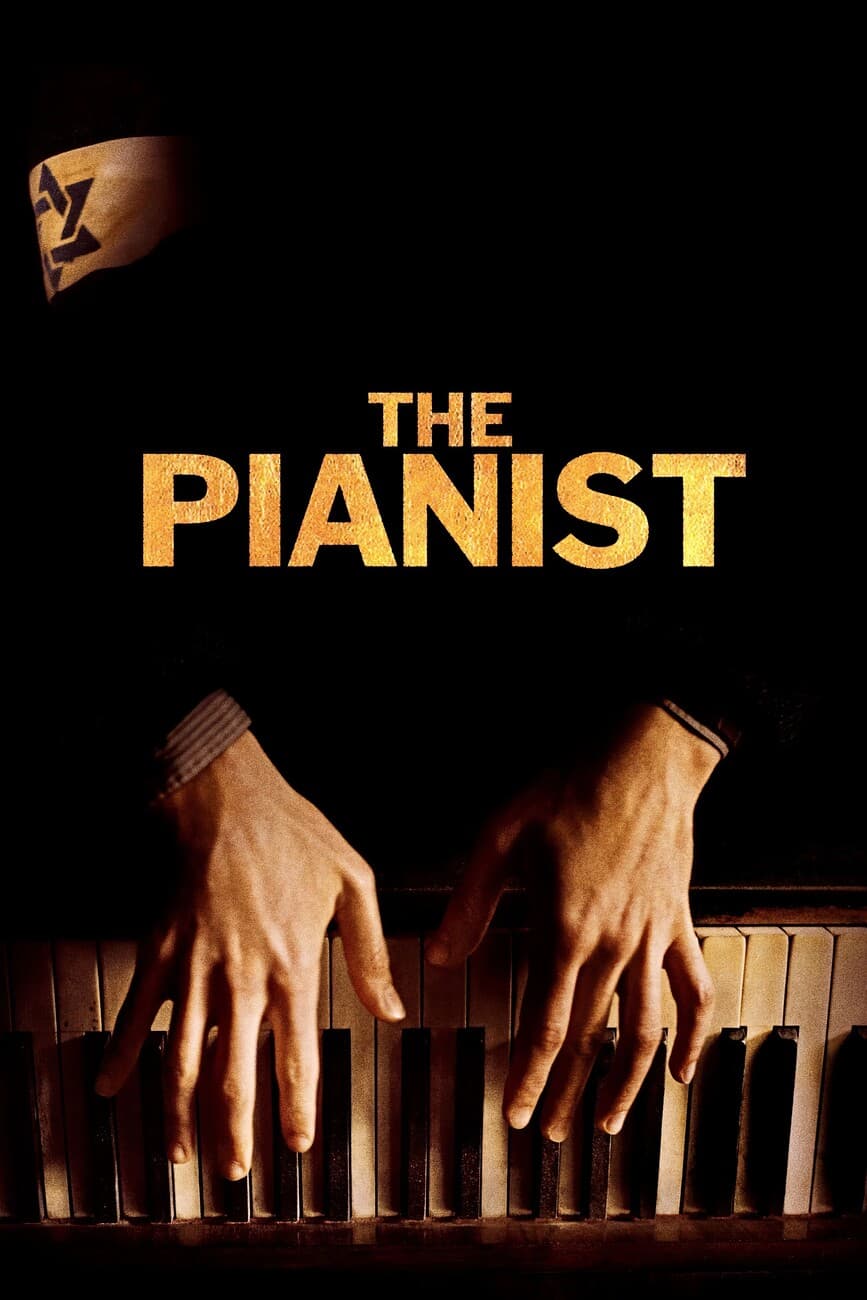
2002
The Pianist
A quiet life unmade by war — and a pianist who refuses to stop listening.
Read the retrospective
→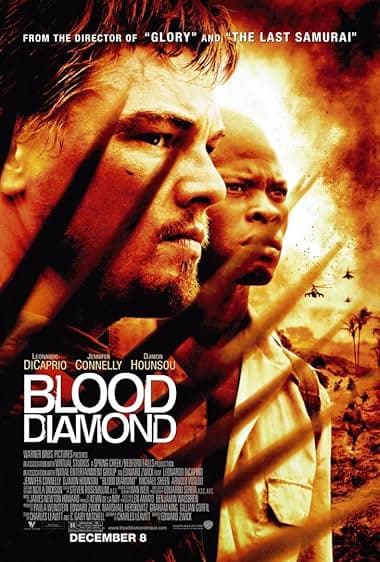
2006
Blood Diamond
A mercenary, a fisherman and a pink diamond — and a film that still asks who pays for our jewellery.
Read the retrospective
→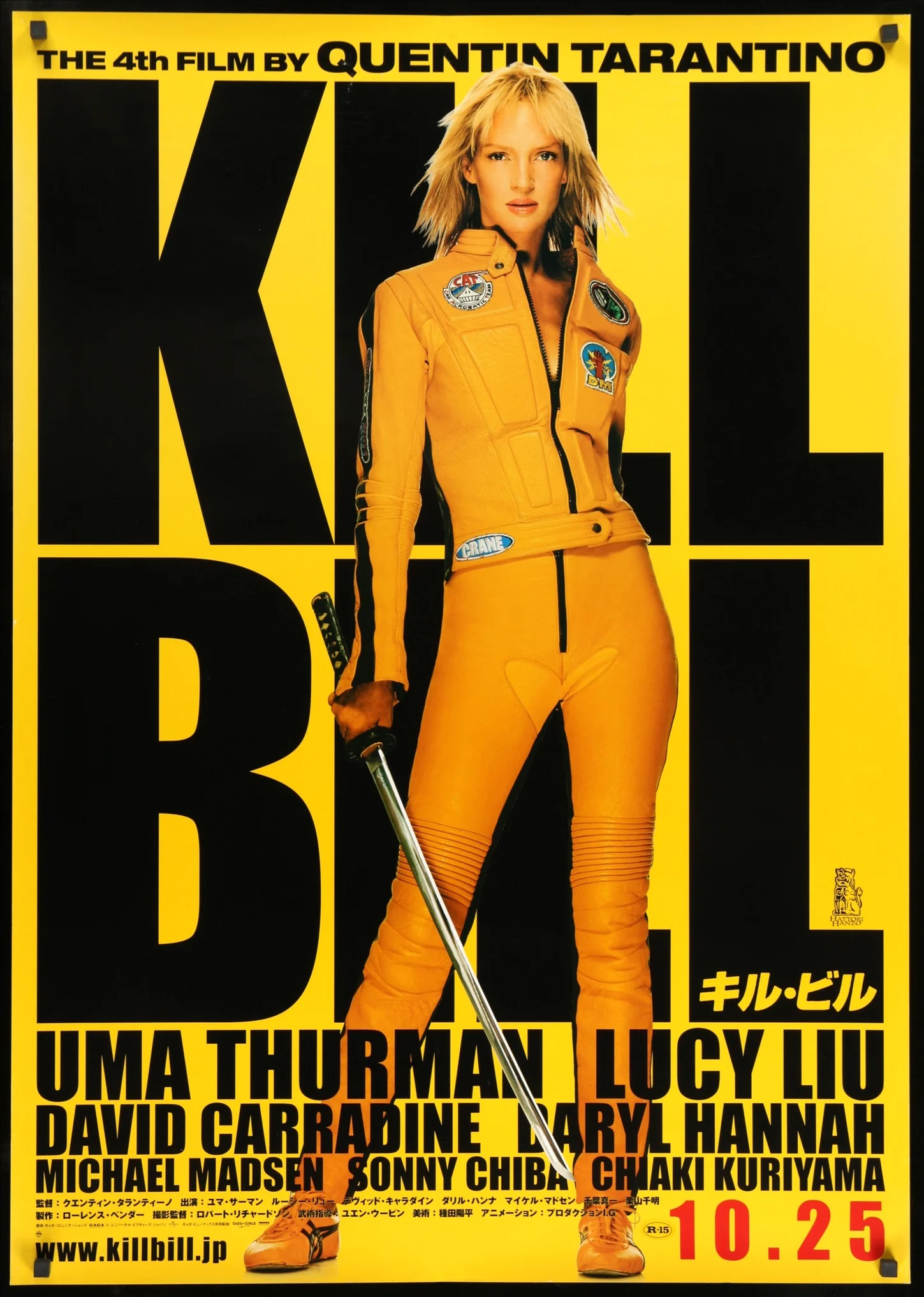
2003
Kill Bill: Volume 1
A yellow jumpsuit, a long list of enemies and one woman who refuses to be finished.
Read the retrospective
→