
Hellboy
A demon who brushes his teeth, questions his destiny and turns found family into a superhero origin story.
Feature presentation
Hellboy still feels like a film somebody stubbornly insisted on making: odd, affectionate and a little stubbornly unglamorous. Guillermo del Toro took a comic-book antihero, leaned hard into monsters and makeup, and made a movie that wants to be both a pulp adventure and a warm bedside story about belonging.
THE MOVIE
Hellboy (Anung Un Rama) is still the reason this movie works
It begins with Nazis fiddling with forces they do not understand — a World War II ritual that drops an infant demon into our world and hands the movie its single most useful contradiction: something born for destruction who grows up to help protect us.
From that jolt the film settles into its central business. Hellboy, raised by Professor Bruttenholm and working for the B.P.R.D., is the muscle in a team that is equal parts government agency and strange family. That set-up lets the movie do two things at once: big, pulpy action and quieter questions about choice.
At the centre of it all is the red guy himself. Guillermo del Toro directs the carnival; Ron Perlman brings the character to life; and the story keeps circling one steady idea — what does it mean for a born demon to keep choosing humanity?
THE SETUP
The idea that sets Hellboy in motion
Hellboy’s main problem is a tidy, dramatic one: he’s a walking prophecy and a walking contradiction. The film frames him as a potential apocalyptic instrument while giving him every reason to refuse that role.
That opposition — fate banging on the door and a character who resists it — is the engine. The inciting present-day conflict centres on Grigori Rasputin’s return and the B.P.R.D.’s scramble to stop an occult plan before it becomes something catastrophic.
Del Toro wrote and directed the picture (with Peter Briggs credited on the story), and he keeps the action clear: supernatural threat, government team, stakes up high. But crucially, the film lets the question of Hellboy’s choice live beside the spectacle, so the plot always has a human hinge.
It works because the premise gives both purpose and friction — Hellboy can beat up monsters and also be a character forced to reckon with who he might become.
THE CHARACTER
Why Hellboy (Anung Un Rama) matters
Hellboy is memorable because he’s a package of opposites that stays interesting. He’s literally a demon-sized plot device — the ‘Right Hand of Doom’ and all that — and he’s a bloke with jokes, doubts and loyalties. The film keeps steering between those poles.
His relationship with Professor Trevor 'Broom' Bruttenholm gives the character emotional ballast. Broom isn’t a shadowy mentor; he’s the adoptive parent who makes Hellboy’s choices mean something, and that connection keeps the bigger mythic stuff grounded.
Liz Sherman’s guilt over her pyrokinetic abilities and her link to Hellboy add another layer: this is not just a one-man rebellion against destiny, it’s a small group of damaged people trying to look after one another.
Casting details underline the character’s texture: Ron Perlman plays Hellboy, and Doug Jones provides Abe Sapien’s physical performance — choices that help the B.P.R.D. feel like a unit, not just a collection of weirdos.
THE PERFORMANCE
Why Ron Perlman's performance matters
There was a real worry at the time that a bulky, hornless red demon in piles of prosthetics would read as a stunt rather than a person. Contemporary critics pushed back on that — Roger Ebert in particular noted that Perlman made an ‘impossible character really work’ under heavy makeup.
Reviews also highlighted the ensemble chemistry, especially the way Perlman and Selma Blair helped make the comic-book material feel emotionally rooted rather than flimsy pulp.
All of which matters because the film’s success depends on a viewer believing Hellboy as a character, not just as a special-effects headline. The critical response suggests Perlman’s casting, and the way he inhabited the role, was central to achieving that belief.
So when the movie asks you to care about a demon choosing humanity, you’re not being asked to buy cheap theatrics — you’re being asked to invest in someone the film has taken care to make feel human.
UNDER THE SURFACE
Hellboy has more on its mind than the plot suggests
At face value Hellboy is monster-fighting popcorn. Beneath that, it keeps returning to the same questions: what makes you who you are, and who gets to say? The film frames Hellboy as someone born for one purpose who chooses another.
Found family is woven into the action: Broom and the B.P.R.D. are not just colleagues; they’re the people who teach Hellboy how to be on our side. That contrast — family by choice versus destiny by birth — gives the big moments real stakes.
There’s also a tug-of-war between fate and free will. The plot brings prophecy and doom into the frame, and Hellboy’s choices push against those forces in ways that feel emotionally coherent rather than tacked on.
Finally, the film plays myth against modernity. Ancient rituals, Rasputin and folklore bump up against a government bureau and a contemporary world, and that clash makes the supernatural elements land with a little extra bite.
THE FILMMAKING
How Hellboy was put together
A big part of the film’s personality is its look and the way it stages strange things. Cinematographer Guillermo Navarro and production design work lean into Mike Mignola’s comic-world sensibility, giving the movie a distinct visual identity that sits apart from glossy superhero fare.
Del Toro intentionally choreographed some creature moments with an old-school rhythm in mind — he’s talked about staging action as a nod to the deliberate movement of classic creature cinema, favouring wide frames that let the creatures play against the space.
Those choices matter because they keep the world feeling tactile and lived-in. The film’s technical crew — from Navarro to editor Peter Amundson and production designer Stephen Scott — are all part of shaping that specific, slightly gothic tone.
In short: the filmmaking isn’t just competent spectacle. It’s a set of deliberate decisions to make Hellboy look and feel like a comic-book fable translated into real locations and physical presence.
PRACTICAL EFFECTS
The effects work that gives Hellboy its physical personality
One of the film’s clearest commitments is to making its creatures and characters feel physical. Prosthetic and creature work was led by Rick Baker’s Cinovation Studios, with additional designs and fabrication by Spectral Motion, and that hands-on approach gives the film a particular tactile personality.
Doug Jones’s work as the physical performer inside the Abe Sapien suit is an obvious example: the character’s presence is built from suit performance and prosthetics, not just a voice track or a digital shell.
The production mixed suit-based creature work and practical prosthetics with visual effects where necessary, and the makeup team’s success was recognised within the industry — the film’s prosthetic and makeup work earned awards attention.
That balance — making creatures feel like they occupy the same air as the actors — helps the movie keep a consistent atmosphere between the human and the monstrous.
PURE 00s
Hellboy could not belong to any other decade
Hellboy sits in an interesting moment: it was part of the early-2000s wave of comic-book adaptations but came before studios standardised the massive shared-universe model that followed. It feels like a film made when there was still room to try oddball takes on comic material.
That oddness is also visible in the backstory: del Toro faced prolonged development hurdles, which tell you something about how studios then treated comic properties with non-obvious titles and stranger premises.
The production’s use of Prague and surrounding Czech locations is another 2000s fingerprint — many genre films of the era shot in Eastern Europe for both cost reasons and the architectural options those locations offered.
Released in 2004, Hellboy represents a period when a director’s personal taste could still shape a mainstream comic adaptation in a distinctly auteur-driven way.
WATCHING IT NOW
What has aged — and what hasn't
Some of Hellboy’s strengths are things that don’t date: the central questions about identity and belonging still land because they’re character-first. The idea of a being choosing humanity is as resonant now as it was then.
The found-family dynamic also holds up. Hellboy’s relationships — the protective adoptive father figure, the friends who stand by him — are straightforward and emotionally clear, which helps the movie remain watchable even when the plot gets busy.
A couple of production choices age more obviously. The film adapts Seed of Destruction but also adds new connective sequences and a film-original FBI agent; those additions are part of the movie’s personality, and whether you like them depends on whether you want a purer comic translation or a slightly different cinematic story.
Meanwhile, elements such as Abe Sapien’s physical performance still read well because the role was realised through suit work and careful physical acting rather than being entirely screen-created — that physicality keeps the character feeling present today.
THE LEGACY
Why Hellboy still matters
The movie kept enough momentum to generate a direct sequel in 2008, reuniting del Toro and a number of the original cast, which underlines that this was not a one-off oddity but a two-film run with a continuing cinematic continuity.
That two-film stretch also helped support animated tie-ins and a broader Hellboy presence beyond the comics, so the film’s life extended into related adaptations.
Industry recognition followed the technical achievements: the film won the Saturn Award for Best Make-Up and picked up multiple genre nominations, a useful reminder that the movie’s craft was taken seriously by its peers.
Put simply: Hellboy matters because it proved a darker, stranger comic-book lead could be translated to screen with personality and care — and with enough craft to be noticed.
THE VERDICT
Does Hellboy still hold up?
Yes — but with a small asterisk. If you go for Hellboy as a mood and a set of dependable questions about choice, family and resisting destiny, it still delivers. The movie’s premise — a demon raised to protect humanity facing a resurgent Rasputin-led occult threat — gives it honest dramatic weight, and that weight is carried by clear character relationships.
Ron Perlman’s central turn is the glue; his casting as Hellboy is specifically the thing contemporary reviewers pointed to when explaining why the film’s emotional commitments worked. The adoptive father figure of Professor Bruttenholm and Liz Sherman’s guilt-driven arc keep the stakes human even amid the supernatural noise.
Production choices — from del Toro’s direction to the mix of practical creature work and visual effects — create a world that still feels particular rather than generic. The film knows what it is: a pulp fable with a conscience.
If you’re curious now, watch it for the character work first and the monsters second. Hellboy still makes the case that who you choose to be matters more than what you were born to be.
Share this movie
Keep watching
More movies from the 00s

2002
The Pianist
A quiet life unmade by war — and a pianist who refuses to stop listening.
Read the retrospective
→
2006
Blood Diamond
A mercenary, a fisherman and a pink diamond — and a film that still asks who pays for our jewellery.
Read the retrospective
→
2003
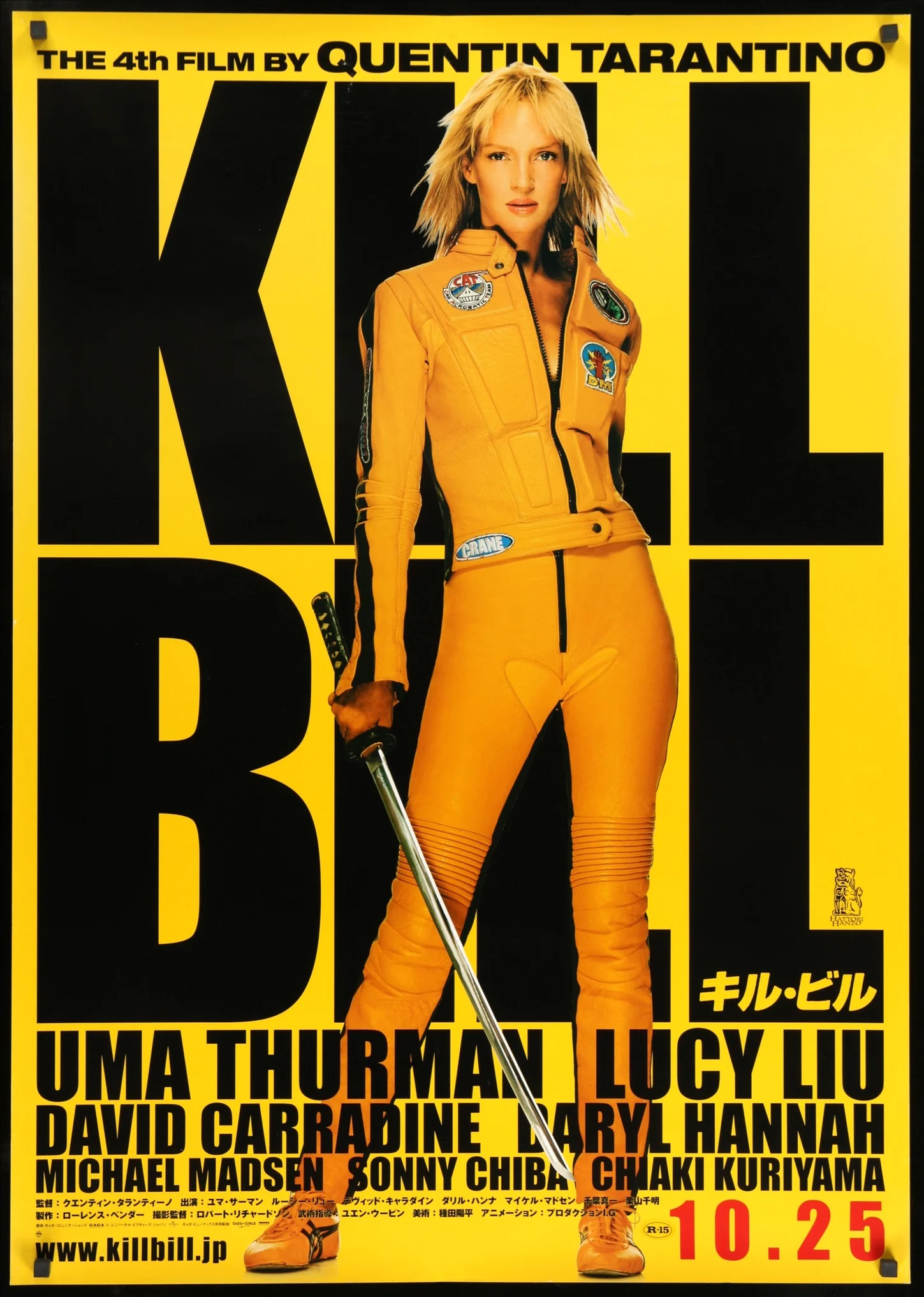
Kill Bill: Volume 1
A yellow jumpsuit, a long list of enemies and one woman who refuses to be finished.
Read the retrospective
→