Feature presentation
Ridley Scott's Hannibal picks up the story a decade after The Silence of the Lambs and deliberately leans on its most dangerous inhabitant: Hannibal Lecter. The film trades small-town for international stakes — Florence and Washington — and turns obsession, disguise and political muscle into the engine of its plot. It’s the kind of expensive, stage-managed thriller the early 2000s loved: familiar faces, new tensions, and the occasional grotesque surprise.
THE MOVIE
Hannibal Lecter is still the reason this movie works
The blunt truth is simple: this movie exists because Hannibal Lecter exists. Ridley Scott took Thomas Harris's 1999 sequel and built a globe-trotting thriller around one very particular predator — urbane, cultured and living under cover in Florence — and let him chew through other people's agendas.
That setup gives the picture a shape. Clarice Starling is no green trainee here but a ten-year FBI veteran whose career has been dented by a botched raid and political interference; placing her opposite a fugitive who has cultivated a public persona lets the film trade on disguise and duplicity as much as on chase scenes.
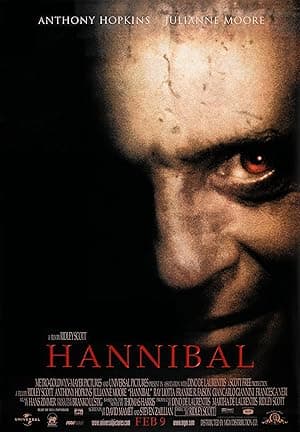
All the ingredients are on the poster: Anthony Hopkins back as Hannibal Lecter, Julianne Moore stepping into Clarice's shoes, Gary Oldman as the vengeful Mason Verger and a runtime long enough to let obsession and revenge do some serious work.
THE SETUP
The idea that sets Hannibal in motion
Hannibal picks the plot up roughly a decade after the events many viewers already know, and it immediately widens the lens. The central push comes from Mason Verger — a man consumed by revenge who uses money and influence to make the hunt for Lecter official.
That means the film is part crime‑thriller, part political manoeuvre: Verger's bounty and his manipulation of official channels turn the manhunt into something institutional and ugly, not just personal vengeance.
The chase travels between Florence and the United States, which keeps the action feeling international rather than confined to a single jurisdiction; it becomes as much about jurisdiction and image as it is about capture.
What holds those pieces together is the idea that obsession can warp institutions — and that arranging an ambush can look, on paper, like doing one's duty.
THE CHARACTER
Why Hannibal Lecter matters
Hannibal Lecter is the lens through which the film sees the rest of the world. Presented as an urbane, cultured fugitive in Florence, he isn't hiding in a cave; he's performing civility, and that performance makes his manipulations sharper.
That public persona — refined, social, apparently harmless — is what makes him unnerving. He is visible but deceptive; the danger is not that he is unseen, but that people misread him.
The movie pins its emotional tension on the Lecter–Clarice relationship. Clarice is older, professionally embattled, and her interactions with Lecter form the movie's central axis: he's the provocation and she's the measuring stick.
THE PERFORMANCE
Why Julianne Moore's performance matters
Contemporary reviews made a point of noting that Julianne Moore's Clarice was intentionally different from Jodie Foster's earlier interpretation.
That choice matters because the film isn't trying to reboot the same Clarice; it wants an older, more compromised agent who can plausibly be pulled back into Lecter's orbit.
So Moore's turn is presented as a deliberate rethinking rather than an imitation — a fresh Clarice for a very different chapter of the story.
UNDER THE SURFACE
Hannibal has more on its mind than the plot suggests
On the surface it's a cat-and-mouse thriller; under the surface it's a movie obsessed with obsession. Mason Verger's pursuit of Lecter is not just revenge, it's fixation weaponised with money and influence.
That money-and-power angle brings in corruption: the hunt isn't pure law enforcement, it's a campaign financed to get a specific, personal outcome. The film spends a lot of time where private grudges meet public machinery.
Identity and disguise thread through everything. Lecter reinventing himself in Florence — a public persona that masks a private predator — lets the film probe how appearance and cultivation can conceal intent.
And because the characters operate in those blurred moral zones, moral ambiguity becomes the default: heroes and villains trade places whenever convenience, ambition or obsession requires it.
PRACTICAL EFFECTS
The effects work that gives Hannibal its physical personality
A movie with this much theatrical gore needs believable physical craft, and Hannibal leans on that. Make‑up supervisor Greg Cannom led the prosthetic work for Mason Verger — a process that reportedly took multiple hours a day and produced an extensive silicone‑based disfigurement.
That commitment to complex prosthetics gives the film a tactile unpleasantness that CGI alone would struggle to mimic; Verger's appearance becomes part of the story's emotional texture.
The film's notorious Paul Krendler sequence was achieved by combining make‑up work, puppetry and CGI. It’s a hybrid approach: practical methods at the centre, digital help where movement or impossibility demanded it.
Put simply, the movie treats body modification and physical grotesquerie as design choices — and those choices keep the film feeling physically specific rather than abstractly horrific.
PURE 00s
Hannibal could not belong to any other decade
Hannibal arrived in February 2001 as a high-profile sequel to a very recent classic, and that timing matters. The early 2000s studios liked built‑in audiences and literary franchises, and this film is exactly that: a big studio returning to familiar property.
Ridley Scott was attached while finishing Gladiator and even recruited crew from that production, which places Hannibal stylistically near the late‑1990s/early‑2000s appetite for showy, well-resourced studio pictures.
Shooting in Florence and intercutting U.S. locations gives the film an international sheen that felt very much like the era’s taste for spectacle with pedigree.
It’s a sequel that expects an audience to bring baggage — a 2000s comfort with packing a story full of named parts, production gloss and thematic ambition.
THE LEGACY
Why Hannibal still matters
Hannibal's place in film history is straightforward: it continues the cinematic story of Hannibal Lecter and Clarice Starling and sits inside the wider Lecter franchise.
Some of what people still talk about springs from production choices that were noisy at the time — most notably the recasting of Clarice, with Julianne Moore taking over a role Jodie Foster had first made famous.
The film’s prosthetic and character design — especially Gary Oldman’s Mason Verger — has remained a talking point in conversations about high‑end make‑up work in early‑2000s studio films.
THE VERDICT
Does Hannibal still hold up?
If you're watching Hannibal for Hannibal Lecter, you will get what you came for. Anthony Hopkins returns to the role and the film makes his urbane, manipulative fugitive the centre of the machine — a cultivated public persona that keeps the tension taut between appearance and intent.
If you’re interested in a thriller that mixes personal vendetta and institutional rot, the movie serves that combination: Mason Verger is a disfigured, wealthy antagonist driven by revenge and willing to use bribery and political pressure to trap Lecter, and that campaign provides most of the plot’s teeth.
There are trade‑offs. The screenplay credit goes to David Mamet and Steven Zaillian, with published histories noting Zaillian substantially rewrote an earlier draft; that production history shows in the film’s tonal shifts between courtroom manoeuvre, international manhunt and grotesque spectacle. Whether those shifts charm or irritate depends on how much variety you want in your thriller.
On balance: watch it if you like a big, well‑crafted studio sequel that hands Hannibal Lecter centre stage and isn't shy about mixing politicking with body horror. It’s very much a product of its moment — expensive, arranged and a little theatrical — and if that sounds like your cup of tea, there’s still plenty to chew on.
Share this movie
Keep watching
More movies from the 00s
2002
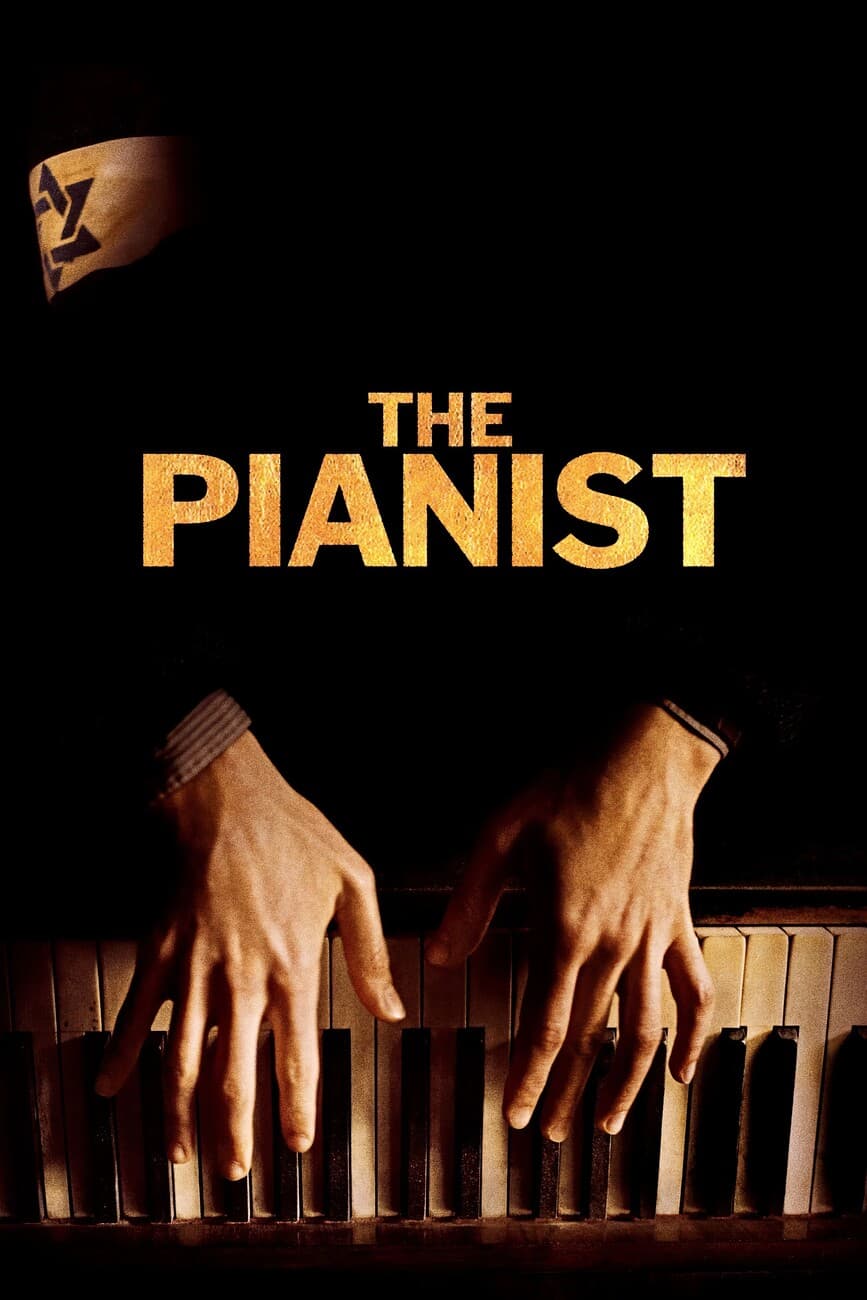
The Pianist
A quiet life unmade by war — and a pianist who refuses to stop listening.
Read the retrospective
→
2006
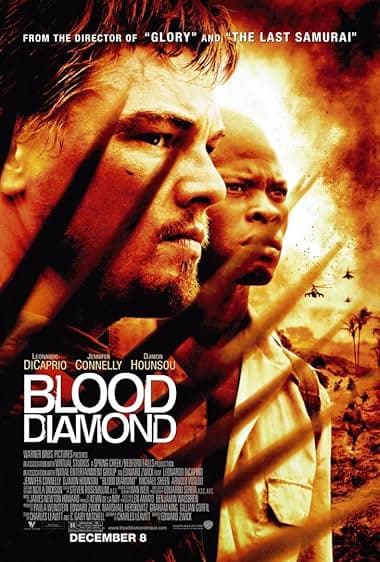
Blood Diamond
A mercenary, a fisherman and a pink diamond — and a film that still asks who pays for our jewellery.
Read the retrospective
→
2003
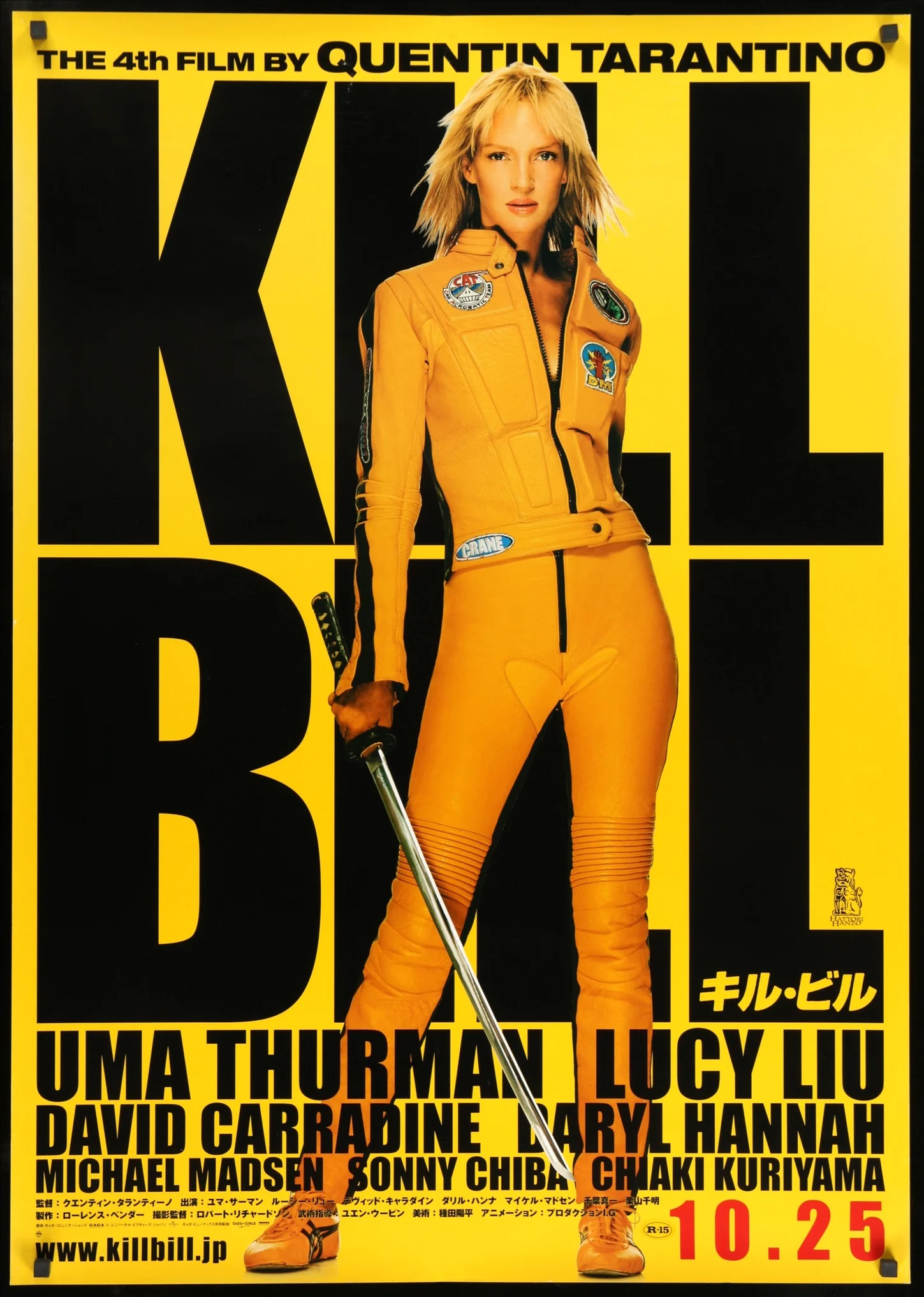
Kill Bill: Volume 1
A yellow jumpsuit, a long list of enemies and one woman who refuses to be finished.
Read the retrospective
→